[{"id":378827571432,"handle":"10-10-premium-sale","title":"10.10 Premium Sale","updated_at":"2026-06-13T19:00:48+08:00","body_html":"","published_at":"2022-02-25T13:13:19+08:00","sort_order":"manual","template_suffix":"","disjunctive":false,"rules":[{"column":"variant_price","relation":"greater_than","condition":"79"},{"column":"type","relation":"not_equals","condition":"Damaged Label"},{"column":"variant_inventory","relation":"greater_than","condition":"0"},{"column":"tag","relation":"equals","condition":"High Margin"}],"published_scope":"global","image":{"created_at":"2021-11-09T17:28:57+08:00","alt":"","width":1080,"height":300,"src":"\/\/popupwine.com.sg\/cdn\/shop\/collections\/11.11_Collection_Banner_2_adaf6d3e-0e37-48ca-b84b-6516d737ea3e.jpg?v=1695619296"}},{"id":378822164712,"handle":"10-10-red-wine-sale","title":"10.10 RED WINE SALE","updated_at":"2026-06-14T19:00:42+08:00","body_html":"","published_at":"2022-02-25T13:08:13+08:00","sort_order":"best-selling","template_suffix":"","disjunctive":false,"rules":[{"column":"tag","relation":"equals","condition":"red"},{"column":"is_price_reduced","relation":"is_set","condition":""},{"column":"variant_inventory","relation":"greater_than","condition":"0"},{"column":"tag","relation":"equals","condition":"High Margin"}],"published_scope":"global","image":{"created_at":"2021-11-09T17:30:39+08:00","alt":"","width":1080,"height":300,"src":"\/\/popupwine.com.sg\/cdn\/shop\/collections\/11.11_Collection_Banner_2_a5a29b8e-b8a7-4fa2-990a-cab1fa827504.jpg?v=1695619349"}},{"id":404272742632,"handle":"10-10-sale","title":"10.10 SALE","updated_at":"2026-06-14T19:00:42+08:00","body_html":"","published_at":"2022-07-04T13:27:02+08:00","sort_order":"manual","template_suffix":"collection","disjunctive":false,"rules":[{"column":"tag","relation":"equals","condition":"High Margin"},{"column":"variant_inventory","relation":"greater_than","condition":"0"},{"column":"is_price_reduced","relation":"is_set","condition":""}],"published_scope":"global","image":{"created_at":"2022-07-04T13:41:52+08:00","alt":"","width":1080,"height":300,"src":"\/\/popupwine.com.sg\/cdn\/shop\/collections\/1234.webp?v=1695619275"}},{"id":409216319720,"handle":"11-11-premium-wine-sale","title":"11.11 PREMIUM WINE SALE","updated_at":"2026-06-13T19:00:48+08:00","body_html":"","published_at":"2022-11-10T11:49:35+08:00","sort_order":"manual","template_suffix":"","disjunctive":false,"rules":[{"column":"tag","relation":"equals","condition":"High Margin"},{"column":"variant_price","relation":"greater_than","condition":"79"},{"column":"variant_inventory","relation":"greater_than","condition":"0"},{"column":"title","relation":"not_contains","condition":"pack"}],"published_scope":"global","image":{"created_at":"2022-11-10T11:49:33+08:00","alt":null,"width":1080,"height":300,"src":"\/\/popupwine.com.sg\/cdn\/shop\/collections\/11.11_Collection_Banner_2_18656188-1047-4d32-a8ed-fba8f0f2ed9f.webp?v=1668052173"}},{"id":409216155880,"handle":"11-11-red-wine-sale","title":"11.11 RED WINE SALE","updated_at":"2026-06-14T19:00:42+08:00","body_html":"","published_at":"2022-11-10T11:46:27+08:00","sort_order":"manual","template_suffix":"","disjunctive":false,"rules":[{"column":"tag","relation":"equals","condition":"High Margin"},{"column":"tag","relation":"equals","condition":"red"},{"column":"variant_inventory","relation":"greater_than","condition":"0"}],"published_scope":"global","image":{"created_at":"2022-11-10T11:46:25+08:00","alt":null,"width":1080,"height":300,"src":"\/\/popupwine.com.sg\/cdn\/shop\/collections\/11.11_Collection_Banner_2_4c346e76-2037-4b19-8579-6e4d47f4260c.webp?v=1668051985"}},{"id":409231294696,"handle":"11-11-sale","title":"11.11 SALE","updated_at":"2026-06-14T19:00:42+08:00","body_html":"","published_at":"2022-11-11T06:41:25+08:00","sort_order":"manual","template_suffix":"collection","disjunctive":false,"rules":[{"column":"tag","relation":"equals","condition":"High Margin"},{"column":"variant_inventory","relation":"greater_than","condition":"0"}],"published_scope":"global","image":{"created_at":"2024-10-21T10:14:48+08:00","alt":null,"width":1080,"height":300,"src":"\/\/popupwine.com.sg\/cdn\/shop\/collections\/11-11-sale-pop-up-wine_a6ad50a1-f736-49d5-84e5-09dd0ae9b09e.jpg?v=1729476888"}},{"id":427082481896,"handle":"2-2-premium-sale","title":"2.2 Premium Sale","updated_at":"2026-06-13T19:00:48+08:00","body_html":"","published_at":"2025-01-30T17:19:05+08:00","sort_order":"manual","template_suffix":"","disjunctive":false,"rules":[{"column":"tag","relation":"equals","condition":"High Margin"},{"column":"variant_price","relation":"greater_than","condition":"79"},{"column":"title","relation":"not_contains","condition":"PACK"},{"column":"variant_inventory","relation":"greater_than","condition":"0"}],"published_scope":"global","image":{"created_at":"2025-01-30T17:19:04+08:00","alt":null,"width":1080,"height":300,"src":"\/\/popupwine.com.sg\/cdn\/shop\/collections\/6.6_Collection_Banner_64e03e20-e58c-4e87-b688-9e1a2c7af342.webp?v=1738228744"}},{"id":427082186984,"handle":"2-2-red-wine-sale","title":"2.2 RED WINE SALE","updated_at":"2026-06-14T19:00:42+08:00","body_html":"","published_at":"2025-01-30T17:05:15+08:00","sort_order":"manual","template_suffix":"","disjunctive":false,"rules":[{"column":"tag","relation":"equals","condition":"High Margin"},{"column":"tag","relation":"equals","condition":"red"},{"column":"variant_inventory","relation":"greater_than","condition":"0"}],"published_scope":"global","image":{"created_at":"2025-01-30T17:05:14+08:00","alt":null,"width":1080,"height":300,"src":"\/\/popupwine.com.sg\/cdn\/shop\/collections\/6.6_Collection_Banner_05c6b7cf-81fc-49aa-bbe7-b7c5db7e4b99.webp?v=1738227914"}},{"id":427081892072,"handle":"2-2-sale","title":"2.2 SALE","updated_at":"2026-06-14T19:00:42+08:00","body_html":"","published_at":"2025-01-30T16:35:52+08:00","sort_order":"manual","template_suffix":"","disjunctive":false,"rules":[{"column":"tag","relation":"equals","condition":"High Margin"},{"column":"variant_inventory","relation":"greater_than","condition":"0"}],"published_scope":"global","image":{"created_at":"2025-01-30T16:35:51+08:00","alt":null,"width":1080,"height":300,"src":"\/\/popupwine.com.sg\/cdn\/shop\/collections\/6.6_Collection_Banner.webp?v=1738226151"}},{"id":427082612968,"handle":"2-2-sale-packs","title":"2.2 SALE PACKS","updated_at":"2026-06-10T11:27:10+08:00","body_html":"","published_at":"2025-01-30T17:31:56+08:00","sort_order":"manual","template_suffix":"","disjunctive":false,"rules":[{"column":"type","relation":"equals","condition":"Mixed Box"},{"column":"variant_inventory","relation":"greater_than","condition":"0"}],"published_scope":"global","image":{"created_at":"2025-01-30T17:31:55+08:00","alt":null,"width":1080,"height":300,"src":"\/\/popupwine.com.sg\/cdn\/shop\/collections\/6.6_Collection_Banner_9a251933-4610-4de7-85ee-bcfc3eee62b5.webp?v=1738229515"}},{"id":417324171496,"handle":"3-3-premium-wine-sale","title":"3.3 Premium Wine Sale","updated_at":"2026-06-12T19:00:42+08:00","body_html":"","published_at":"2024-02-20T18:15:49+08:00","sort_order":"manual","template_suffix":"","disjunctive":false,"rules":[{"column":"tag","relation":"equals","condition":"High Margin"},{"column":"variant_price","relation":"greater_than","condition":"79"},{"column":"variant_inventory","relation":"greater_than","condition":"0"},{"column":"title","relation":"not_contains","condition":"gift"},{"column":"title","relation":"not_contains","condition":"pack"}],"published_scope":"global","image":{"created_at":"2024-02-20T18:15:47+08:00","alt":null,"width":1080,"height":300,"src":"\/\/popupwine.com.sg\/cdn\/shop\/collections\/3.3_Banner_638f4153-8928-48c1-bca2-8d9ab17225b2.webp?v=1708424148"}},{"id":417323876584,"handle":"3-3-red-wine-sale","title":"3.3 Red Wine Sale","updated_at":"2026-06-14T19:00:42+08:00","body_html":"","published_at":"2024-02-20T18:01:05+08:00","sort_order":"manual","template_suffix":"","disjunctive":false,"rules":[{"column":"tag","relation":"equals","condition":"red"},{"column":"tag","relation":"equals","condition":"High Margin"},{"column":"variant_inventory","relation":"greater_than","condition":"1"}],"published_scope":"global","image":{"created_at":"2024-02-20T18:01:28+08:00","alt":null,"width":1080,"height":300,"src":"\/\/popupwine.com.sg\/cdn\/shop\/collections\/3.3_Banner_24317b05-b2fb-49e0-b5f1-a4fb1d84067f.webp?v=1708423288"}},{"id":417323843816,"handle":"3-3-sale","title":"3.3 Sale","updated_at":"2026-06-14T19:00:42+08:00","body_html":"\u003cspan data-mce-fragment=\"1\"\u003e200+ WINES \u0026amp; CHAMPAGNE ON SALE\u003c\/span\u003e","published_at":"2024-02-20T17:55:40+08:00","sort_order":"manual","template_suffix":"","disjunctive":false,"rules":[{"column":"tag","relation":"equals","condition":"High Margin"},{"column":"variant_inventory","relation":"greater_than","condition":"0"}],"published_scope":"global","image":{"created_at":"2024-02-20T17:55:38+08:00","alt":null,"width":1080,"height":300,"src":"\/\/popupwine.com.sg\/cdn\/shop\/collections\/3.3_Banner.webp?v=1708422938"}},{"id":418305278184,"handle":"4-4-premium-wine-sale","title":"4.4 Premium Wine Sale","updated_at":"2026-06-13T19:00:48+08:00","body_html":"","published_at":"2024-03-19T14:51:04+08:00","sort_order":"best-selling","template_suffix":"","disjunctive":false,"rules":[{"column":"tag","relation":"equals","condition":"High Margin"},{"column":"variant_price","relation":"greater_than","condition":"79"},{"column":"variant_inventory","relation":"greater_than","condition":"1"}],"published_scope":"global","image":{"created_at":"2024-03-19T14:51:03+08:00","alt":null,"width":1080,"height":300,"src":"\/\/popupwine.com.sg\/cdn\/shop\/collections\/New_Year_Website_Collection_Banner_3244cd45-2f97-46e8-af65-c5c3f5e6ff64.webp?v=1710831063"}},{"id":418304229608,"handle":"4-4-red-wine-sale","title":"4.4 Red Wine Sale","updated_at":"2026-06-14T19:00:42+08:00","body_html":"","published_at":"2024-03-19T14:32:50+08:00","sort_order":"manual","template_suffix":"","disjunctive":false,"rules":[{"column":"tag","relation":"equals","condition":"High Margin"},{"column":"tag","relation":"equals","condition":"red"},{"column":"variant_inventory","relation":"greater_than","condition":"1"}],"published_scope":"global","image":{"created_at":"2024-03-19T14:32:48+08:00","alt":null,"width":1080,"height":300,"src":"\/\/popupwine.com.sg\/cdn\/shop\/collections\/New_Year_Website_Collection_Banner_d6fd86a9-4f75-40f4-ad36-74839ba6b294.webp?v=1710829968"}},{"id":418303770856,"handle":"4-4-sale","title":"4.4 Sale","updated_at":"2026-06-14T19:00:42+08:00","body_html":"","published_at":"2024-03-19T14:21:56+08:00","sort_order":"manual","template_suffix":"","disjunctive":false,"rules":[{"column":"tag","relation":"equals","condition":"High Margin"},{"column":"variant_inventory","relation":"greater_than","condition":"1"}],"published_scope":"global","image":{"created_at":"2024-03-19T14:21:54+08:00","alt":null,"width":1080,"height":300,"src":"\/\/popupwine.com.sg\/cdn\/shop\/collections\/New_Year_Website_Collection_Banner_53cefd37-a30e-4ee4-bd2c-a2451b132793.webp?v=1710829314"}},{"id":412821684456,"handle":"5-5-premium-sale","title":"5.5 Premium Sale","updated_at":"2026-06-13T19:00:48+08:00","body_html":"","published_at":"2023-05-02T12:49:05+08:00","sort_order":"best-selling","template_suffix":"","disjunctive":false,"rules":[{"column":"tag","relation":"equals","condition":"High Margin"},{"column":"variant_price","relation":"greater_than","condition":"79"},{"column":"variant_inventory","relation":"greater_than","condition":"0"}],"published_scope":"global","image":{"created_at":"2023-05-02T12:49:20+08:00","alt":null,"width":1080,"height":300,"src":"\/\/popupwine.com.sg\/cdn\/shop\/collections\/5.5_Collection_Banner_328893cc-cb52-415b-aa46-abc40e5c457c.png?v=1683002960"}},{"id":412821717224,"handle":"5-5-red-wine-sale","title":"5.5 RED WINE SALE","updated_at":"2026-06-14T19:00:42+08:00","body_html":"","published_at":"2023-05-02T12:54:51+08:00","sort_order":"manual","template_suffix":"","disjunctive":false,"rules":[{"column":"tag","relation":"equals","condition":"High Margin"},{"column":"tag","relation":"equals","condition":"red"},{"column":"variant_inventory","relation":"greater_than","condition":"0"}],"published_scope":"global","image":{"created_at":"2023-05-02T12:54:50+08:00","alt":"","width":1080,"height":300,"src":"\/\/popupwine.com.sg\/cdn\/shop\/collections\/Pagefly_EDM_Banner_with_Text.png?v=1683003345"}},{"id":412821651688,"handle":"5-5-sale","title":"5.5 Sale","updated_at":"2026-06-14T19:00:42+08:00","body_html":"","published_at":"2023-05-02T12:46:28+08:00","sort_order":"manual","template_suffix":"","disjunctive":false,"rules":[{"column":"tag","relation":"equals","condition":"High Margin"},{"column":"variant_inventory","relation":"greater_than","condition":"0"}],"published_scope":"global","image":{"created_at":"2023-05-02T12:47:24+08:00","alt":null,"width":1080,"height":300,"src":"\/\/popupwine.com.sg\/cdn\/shop\/collections\/5.5_Collection_Banner.png?v=1683002844"}},{"id":413001842920,"handle":"6-6-premium-sale","title":"6.6 Premium Sale","updated_at":"2026-06-13T19:00:48+08:00","body_html":"","published_at":"2023-05-29T11:53:16+08:00","sort_order":"manual","template_suffix":"","disjunctive":false,"rules":[{"column":"tag","relation":"equals","condition":"High Margin"},{"column":"variant_price","relation":"greater_than","condition":"80"},{"column":"title","relation":"not_contains","condition":"PACK"},{"column":"variant_inventory","relation":"greater_than","condition":"0"}],"published_scope":"global","image":{"created_at":"2023-05-29T11:53:15+08:00","alt":null,"width":1080,"height":300,"src":"\/\/popupwine.com.sg\/cdn\/shop\/collections\/6.6_Collection_Banner_120b2a77-8fd1-42c4-8c35-6299c5134135.png?v=1685332395"}},{"id":413001941224,"handle":"6-6-red-wine-sale","title":"6.6 RED WINE SALE","updated_at":"2026-06-14T19:00:42+08:00","body_html":"","published_at":"2023-05-29T11:55:38+08:00","sort_order":"manual","template_suffix":"","disjunctive":false,"rules":[{"column":"tag","relation":"equals","condition":"High Margin"},{"column":"tag","relation":"equals","condition":"red"},{"column":"variant_inventory","relation":"greater_than","condition":"0"}],"published_scope":"global","image":{"created_at":"2023-05-29T11:55:37+08:00","alt":null,"width":1080,"height":300,"src":"\/\/popupwine.com.sg\/cdn\/shop\/collections\/6.6_Collection_Banner_33c43b27-f54c-4bfc-8f08-8fd91f54631b.png?v=1685332538"}},{"id":413001810152,"handle":"6-6-sale","title":"6.6 SALE","updated_at":"2026-06-14T19:00:42+08:00","body_html":"","published_at":"2023-05-29T11:51:57+08:00","sort_order":"manual","template_suffix":"","disjunctive":false,"rules":[{"column":"tag","relation":"equals","condition":"High Margin"},{"column":"variant_inventory","relation":"greater_than","condition":"0"}],"published_scope":"global","image":{"created_at":"2023-05-29T11:51:56+08:00","alt":null,"width":1080,"height":300,"src":"\/\/popupwine.com.sg\/cdn\/shop\/collections\/6.6_Collection_Banner.png?v=1685332316"}},{"id":412473721064,"handle":"monthly-sale","title":"6.6 Wine Sale","updated_at":"2026-06-14T19:00:42+08:00","body_html":"","published_at":"2023-03-27T15:24:07+08:00","sort_order":"manual","template_suffix":"pf-b71720bc","disjunctive":false,"rules":[{"column":"tag","relation":"equals","condition":"High Margin"},{"column":"variant_inventory","relation":"greater_than","condition":"0"}],"published_scope":"global"},{"id":413338763496,"handle":"7-7-premium-wine-sale","title":"7.7 PREMIUM WINE SALE","updated_at":"2026-06-13T19:00:48+08:00","body_html":"","published_at":"2023-07-03T19:01:16+08:00","sort_order":"price-asc","template_suffix":"","disjunctive":false,"rules":[{"column":"tag","relation":"equals","condition":"High Margin"},{"column":"variant_price","relation":"greater_than","condition":"80"},{"column":"variant_inventory","relation":"greater_than","condition":"0"}],"published_scope":"global","image":{"created_at":"2023-07-03T19:01:15+08:00","alt":null,"width":1080,"height":300,"src":"\/\/popupwine.com.sg\/cdn\/shop\/collections\/7.7_BANNER_fd560960-5d02-435f-b39a-1eb032448a29.jpg?v=1688382076"}},{"id":413338927336,"handle":"7-7-red-wine-sale","title":"7.7 RED WINE SALE","updated_at":"2026-06-14T19:00:42+08:00","body_html":"","published_at":"2023-07-03T19:10:43+08:00","sort_order":"manual","template_suffix":"","disjunctive":false,"rules":[{"column":"tag","relation":"equals","condition":"High Margin"},{"column":"tag","relation":"equals","condition":"red"},{"column":"variant_inventory","relation":"greater_than","condition":"0"}],"published_scope":"global","image":{"created_at":"2023-07-03T19:11:05+08:00","alt":null,"width":1080,"height":300,"src":"\/\/popupwine.com.sg\/cdn\/shop\/collections\/7.7_BANNER_8a47bbce-dfce-4eb4-afde-0546ffc9af63.jpg?v=1688382666"}},{"id":413339058408,"handle":"7-7-sale","title":"7.7 SALE","updated_at":"2026-06-14T19:00:42+08:00","body_html":"","published_at":"2023-07-03T19:20:13+08:00","sort_order":"manual","template_suffix":"","disjunctive":false,"rules":[{"column":"tag","relation":"equals","condition":"High Margin"},{"column":"variant_inventory","relation":"greater_than","condition":"1"}],"published_scope":"global","image":{"created_at":"2023-07-03T19:20:12+08:00","alt":null,"width":1080,"height":300,"src":"\/\/popupwine.com.sg\/cdn\/shop\/collections\/7.7_BANNER_1cc08d4b-77ef-4d03-ae2e-965887205ff5.jpg?v=1688383212"}},{"id":413540319464,"handle":"8-8-premium-wine-sale","title":"8.8 PREMIUM WINE SALE","updated_at":"2026-06-13T19:00:48+08:00","body_html":"","published_at":"2023-07-31T13:38:22+08:00","sort_order":"manual","template_suffix":"","disjunctive":false,"rules":[{"column":"tag","relation":"equals","condition":"High Margin"},{"column":"variant_price","relation":"greater_than","condition":"79"},{"column":"variant_inventory","relation":"greater_than","condition":"0"}],"published_scope":"global","image":{"created_at":"2023-07-31T13:38:20+08:00","alt":null,"width":1080,"height":300,"src":"\/\/popupwine.com.sg\/cdn\/shop\/collections\/8.8_Collection_Banner_1264b16c-5a68-43e8-ae2d-2ac86270c9cc.webp?v=1690781901"}},{"id":413540188392,"handle":"8-8-red-wine-sale","title":"8.8 RED WINE SALE","updated_at":"2026-06-14T19:00:42+08:00","body_html":"","published_at":"2023-07-31T13:34:15+08:00","sort_order":"manual","template_suffix":"","disjunctive":false,"rules":[{"column":"tag","relation":"equals","condition":"High Margin"},{"column":"tag","relation":"equals","condition":"red"},{"column":"variant_inventory","relation":"greater_than","condition":"0"}],"published_scope":"global","image":{"created_at":"2023-07-31T13:34:13+08:00","alt":null,"width":1080,"height":300,"src":"\/\/popupwine.com.sg\/cdn\/shop\/collections\/8.8_Collection_Banner_0fd4e65f-4708-42c1-83e3-5d51c62d4527.webp?v=1690781653"}},{"id":413540155624,"handle":"8-8-sale","title":"8.8 SALE","updated_at":"2026-06-14T19:00:42+08:00","body_html":"","published_at":"2023-07-31T13:27:30+08:00","sort_order":"manual","template_suffix":"","disjunctive":false,"rules":[{"column":"tag","relation":"equals","condition":"High Margin"},{"column":"variant_inventory","relation":"greater_than","condition":"1"}],"published_scope":"global","image":{"created_at":"2023-07-31T13:27:29+08:00","alt":null,"width":1080,"height":300,"src":"\/\/popupwine.com.sg\/cdn\/shop\/collections\/8.8_Collection_Banner.webp?v=1690781249"}},{"id":22715961,"handle":"all","title":"All","updated_at":"2026-06-14T19:00:42+08:00","body_html":"PREMIUM WINES - DELIVERED TODAY - FROM THE WORLD'S BEST GROWING WINE REGIONS","published_at":"2019-08-08T18:04:10+08:00","sort_order":"manual","template_suffix":"","disjunctive":false,"rules":[{"column":"variant_price","relation":"greater_than","condition":"0"},{"column":"type","relation":"not_contains","condition":"Event"},{"column":"title","relation":"not_contains","condition":"beer"},{"column":"type","relation":"not_contains","condition":"Damaged Label"},{"column":"title","relation":"not_contains","condition":"Christmas Gift-Wrap \u0026 Personalised Christmas Card"},{"column":"title","relation":"not_contains","condition":"Event"},{"column":"title","relation":"not_contains","condition":"Glasses"},{"column":"type","relation":"not_contains","condition":"Events"},{"column":"type","relation":"not_contains","condition":"Hire"},{"column":"type","relation":"not_contains","condition":"Christmas Food"},{"column":"type","relation":"not_contains","condition":"Christmas"},{"column":"type","relation":"not_contains","condition":"Event Catering"},{"column":"type","relation":"not_contains","condition":"Wine Catering"},{"column":"type","relation":"not_contains","condition":"Event Equipment"},{"column":"type","relation":"not_contains","condition":"Events\/Media"},{"column":"type","relation":"not_contains","condition":"Warehouse Equipment"},{"column":"type","relation":"not_contains","condition":"Office Equipment"},{"column":"type","relation":"not_contains","condition":"OFFICE"},{"column":"variant_inventory","relation":"greater_than","condition":"0"}],"published_scope":"global","image":{"created_at":"2016-07-13T08:42:14+08:00","alt":null,"width":1733,"height":1155,"src":"\/\/popupwine.com.sg\/cdn\/shop\/collections\/Stocksy_txp91860811H1X000_Medium_433874-2.jpg?v=1468370534"}},{"id":413894377704,"handle":"all-collection","title":"All Collection","updated_at":"2026-06-14T19:00:42+08:00","body_html":"\u003cp\u003eSAME-DAY DELIVERY\u003c\/p\u003e","published_at":"2023-09-21T11:53:33+08:00","sort_order":"price-asc","template_suffix":"","disjunctive":false,"rules":[{"column":"variant_price","relation":"greater_than","condition":"10"}],"published_scope":"global","image":{"created_at":"2023-09-21T11:53:47+08:00","alt":null,"width":1733,"height":1155,"src":"\/\/popupwine.com.sg\/cdn\/shop\/collections\/Stocksy_txp91860811H1X000_Medium_433874-2.webp?v=1695268427"}},{"id":420355834088,"handle":"all-wine-collection","title":"All Wine Collection","updated_at":"2026-06-14T19:00:42+08:00","body_html":"","published_at":"2024-05-31T13:45:23+08:00","sort_order":"price-asc","template_suffix":"","disjunctive":false,"rules":[{"column":"variant_price","relation":"greater_than","condition":"10"},{"column":"vendor","relation":"not_equals","condition":"B28 - Consignment"},{"column":"vendor","relation":"not_equals","condition":"ARDBEG"},{"column":"vendor","relation":"not_equals","condition":"ANTIQUARY"},{"column":"vendor","relation":"not_equals","condition":"Arran"},{"column":"vendor","relation":"not_equals","condition":"Amrut"},{"column":"vendor","relation":"not_equals","condition":"Le Vigne Whisky"},{"column":"vendor","relation":"not_equals","condition":"DAILUAINE"},{"column":"vendor","relation":"not_equals","condition":"Douglas Laing \u0026 Co"},{"column":"type","relation":"not_equals","condition":"Event"},{"column":"type","relation":"not_equals","condition":"Event Catering"},{"column":"type","relation":"not_equals","condition":"Events"},{"column":"type","relation":"not_equals","condition":"Wine Tasting"},{"column":"type","relation":"not_equals","condition":"Wine Catering"}],"published_scope":"global","image":{"created_at":"2024-05-31T13:45:57+08:00","alt":null,"width":1733,"height":1155,"src":"\/\/popupwine.com.sg\/cdn\/shop\/collections\/Stocksy_txp91860811H1X000_Medium_433874-2_1cf65e94-c571-4078-be92-abd0b6cf3db9.webp?v=1717134357"}},{"id":441064521960,"handle":"bar-store-closing-wine-sale","title":"Bar \u0026 Store Closing Down Sale","updated_at":"2026-06-14T19:00:42+08:00","body_html":"\u003cp\u003eUp to \u003cstrong data-start=\"478\" data-end=\"514\"\u003e50% off wine, Champagne \u0026amp; whisky\u003c\/strong\u003e! Shop online or visit our store before \u003cstrong data-start=\"554\" data-end=\"569\"\u003eDecember 30\u003c\/strong\u003e to secure the best deals.\u003c\/p\u003e","published_at":"2025-12-18T18:10:51+08:00","sort_order":"best-selling","template_suffix":"","disjunctive":false,"rules":[{"column":"tag","relation":"equals","condition":"High Margin"},{"column":"variant_inventory","relation":"greater_than","condition":"0"}],"published_scope":"global","image":{"created_at":"2025-12-18T18:10:50+08:00","alt":null,"width":1080,"height":300,"src":"\/\/popupwine.com.sg\/cdn\/shop\/collections\/Warehouse_Collection_Banner_1.jpg?v=1766052650"}},{"id":441063964904,"handle":"bar-store-closing-sale","title":"Bar \u0026 Store Closing Sale","updated_at":"2026-06-14T19:00:42+08:00","body_html":"\u003cp\u003eVisit Pop Up Wine’s bar at Upper Thomson \u003cstrong data-start=\"2009\" data-end=\"2053\"\u003ebefore it closes for good on 30 December\u003c\/strong\u003e. Shop \u003cstrong data-start=\"2060\" data-end=\"2092\"\u003eover 200 award-winning wines\u003c\/strong\u003e at closing-sale prices and grab limited-stock bottles before they’re gone. Can’t make it in person? Our \u003cstrong data-start=\"2197\" data-end=\"2226\"\u003eonline store remains open\u003c\/strong\u003e for delivery.\u003c\/p\u003e","published_at":"2025-12-18T17:49:21+08:00","sort_order":"best-selling","template_suffix":"pf-ed908053","disjunctive":false,"rules":[{"column":"tag","relation":"equals","condition":"High Margin"},{"column":"variant_inventory","relation":"greater_than","condition":"0"}],"published_scope":"global"},{"id":409231786216,"handle":"black-friday","title":"Black Friday","updated_at":"2026-06-14T19:00:42+08:00","body_html":"","published_at":"2022-11-11T07:59:24+08:00","sort_order":"manual","template_suffix":"pf-8ea88873","disjunctive":false,"rules":[{"column":"tag","relation":"equals","condition":"High Margin"},{"column":"variant_inventory","relation":"greater_than","condition":"0"}],"published_scope":"global"},{"id":409233195240,"handle":"black-friday-premium-wine-sale","title":"BLACK FRIDAY PREMIUM WINE SALE","updated_at":"2026-06-13T19:00:48+08:00","body_html":"","published_at":"2022-11-11T09:53:28+08:00","sort_order":"manual","template_suffix":"","disjunctive":false,"rules":[{"column":"tag","relation":"equals","condition":"High Margin"},{"column":"variant_price","relation":"greater_than","condition":"79"},{"column":"variant_inventory","relation":"greater_than","condition":"0"}],"published_scope":"global","image":{"created_at":"2022-11-11T09:53:26+08:00","alt":null,"width":1080,"height":300,"src":"\/\/popupwine.com.sg\/cdn\/shop\/collections\/Black_Friday_Website_Collection_Banner_8410b2eb-7808-480e-a5a0-fe4f4b2a258a.png?v=1668131607"}},{"id":409233785064,"handle":"black-friday-red-wine-sale","title":"BLACK FRIDAY RED WINE SALE","updated_at":"2026-06-14T19:00:42+08:00","body_html":"","published_at":"2022-11-11T10:45:55+08:00","sort_order":"manual","template_suffix":"","disjunctive":false,"rules":[{"column":"tag","relation":"equals","condition":"High Margin"},{"column":"tag","relation":"equals","condition":"red"},{"column":"variant_compare_at_price","relation":"greater_than","condition":"0"},{"column":"variant_inventory","relation":"greater_than","condition":"0"}],"published_scope":"global","image":{"created_at":"2022-11-11T10:45:53+08:00","alt":null,"width":1080,"height":300,"src":"\/\/popupwine.com.sg\/cdn\/shop\/collections\/Black_Friday_Website_Collection_Banner_aeba91b2-a092-4ebc-9b05-44c86211609c.png?v=1668134753"}},{"id":409232605416,"handle":"black-friday-sale-1","title":"BLACK FRIDAY SALE","updated_at":"2026-06-14T19:00:42+08:00","body_html":"","published_at":"2022-11-11T09:09:18+08:00","sort_order":"manual","template_suffix":"","disjunctive":false,"rules":[{"column":"tag","relation":"equals","condition":"High Margin"}],"published_scope":"global","image":{"created_at":"2022-11-11T09:09:15+08:00","alt":null,"width":1080,"height":300,"src":"\/\/popupwine.com.sg\/cdn\/shop\/collections\/Black_Friday_Website_Collection_Banner_886dd99a-f41e-48a9-85d5-55789b3e9f69.png?v=1668128956"}},{"id":411388838120,"handle":"chinese-new-year-festive-wines","title":"CHINESE NEW YEAR FESTIVE WINES","updated_at":"2026-06-13T19:00:48+08:00","body_html":"","published_at":"2023-01-17T09:55:41+08:00","sort_order":"manual","template_suffix":"","disjunctive":false,"rules":[{"column":"variant_price","relation":"greater_than","condition":"49"},{"column":"tag","relation":"equals","condition":"High Margin"},{"column":"title","relation":"not_contains","condition":"gift"},{"column":"title","relation":"not_contains","condition":"pack"}],"published_scope":"global","image":{"created_at":"2023-01-17T09:56:10+08:00","alt":null,"width":1080,"height":300,"src":"\/\/popupwine.com.sg\/cdn\/shop\/collections\/CNY_Website_Collection_Banner_65808a7c-4c2f-4920-898a-fde9e8121625.png?v=1704899153"}},{"id":409780715752,"handle":"chinese-new-year-sale","title":"Chinese New Year Sale","updated_at":"2026-06-14T19:00:42+08:00","body_html":"\u003cp\u003e\u003cspan data-mce-fragment=\"1\"\u003e2\u003c\/span\u003e\u003cspan data-mce-fragment=\"1\"\u003e00+ WINES ON SALE\u003c\/span\u003e\u003c\/p\u003e","published_at":"2022-12-27T16:44:06+08:00","sort_order":"price-asc","template_suffix":"","disjunctive":false,"rules":[{"column":"tag","relation":"equals","condition":"High Margin"},{"column":"variant_inventory","relation":"greater_than","condition":"0"}],"published_scope":"global","image":{"created_at":"2022-12-27T16:44:04+08:00","alt":null,"width":1696,"height":848,"src":"\/\/popupwine.com.sg\/cdn\/shop\/collections\/can_you_create_me_a_thin_banner_for_collection_that_is_CNY_theme_also.jpg?v=1769066819"}},{"id":415860424936,"handle":"christmas-wine-gifts","title":"Christmas Wine \u0026 Gifts","updated_at":"2026-06-14T19:00:42+08:00","body_html":"","published_at":"2023-12-22T14:58:32+08:00","sort_order":"manual","template_suffix":"","disjunctive":false,"rules":[{"column":"tag","relation":"equals","condition":"High Margin"},{"column":"variant_inventory","relation":"greater_than","condition":"0"}],"published_scope":"global","image":{"created_at":"2023-12-22T14:58:30+08:00","alt":null,"width":1080,"height":300,"src":"\/\/popupwine.com.sg\/cdn\/shop\/collections\/Stocksy_txpf0f271d6wnG300_Small_1611818_d14fa1f6-b3cb-4468-910e-a0d35c0a401c.webp?v=1703228311"}},{"id":405997486312,"handle":"cisco","title":"CISCO","updated_at":"2026-06-14T19:00:42+08:00","body_html":"","published_at":"2022-08-12T11:17:21+08:00","sort_order":"best-selling","template_suffix":"","disjunctive":false,"rules":[{"column":"tag","relation":"equals","condition":"High Margin"},{"column":"variant_inventory","relation":"greater_than","condition":"0"}],"published_scope":"global"},{"id":393888858344,"handle":"black-friday-sale","title":"CYBER MONDAY SALE","updated_at":"2026-06-14T19:00:42+08:00","body_html":"","published_at":"2021-11-23T09:12:14+08:00","sort_order":"best-selling","template_suffix":"collection","disjunctive":false,"rules":[{"column":"tag","relation":"equals","condition":"high margin"}],"published_scope":"web"},{"id":393704800488,"handle":"easter-red-wine-sale","title":"EASTER RED WINE SALE","updated_at":"2026-06-14T19:00:42+08:00","body_html":"","published_at":"2021-11-19T18:03:30+08:00","sort_order":"price-asc","template_suffix":"","disjunctive":false,"rules":[{"column":"tag","relation":"equals","condition":"red"},{"column":"tag","relation":"equals","condition":"High Margin"},{"column":"is_price_reduced","relation":"is_set","condition":""},{"column":"variant_inventory","relation":"greater_than","condition":"0"}],"published_scope":"web","image":{"created_at":"2021-11-19T18:03:28+08:00","alt":null,"width":1080,"height":300,"src":"\/\/popupwine.com.sg\/cdn\/shop\/collections\/Black_Friday_Website_Collection_Banner_5e1bb3d1-fcb4-4ca9-a39e-65084be8a80b.png?v=1649236277"}},{"id":393702113512,"handle":"easter-wine-sale","title":"EASTER WINE SALE 2022","updated_at":"2026-06-14T19:00:42+08:00","body_html":"","published_at":"2021-11-19T16:03:23+08:00","sort_order":"price-asc","template_suffix":"","disjunctive":false,"rules":[{"column":"is_price_reduced","relation":"is_set","condition":""},{"column":"variant_inventory","relation":"greater_than","condition":"0"}],"published_scope":"web","image":{"created_at":"2021-11-19T17:59:45+08:00","alt":null,"width":1080,"height":300,"src":"\/\/popupwine.com.sg\/cdn\/shop\/collections\/Black_Friday_Website_Collection_Banner.png?v=1649236139"}},{"id":416300007656,"handle":"family-chinese-new-year-gifts","title":"FAMILY CHINESE NEW YEAR GIFTS","updated_at":"2026-06-13T19:00:48+08:00","body_html":"","published_at":"2024-01-10T09:53:24+08:00","sort_order":"manual","template_suffix":"","disjunctive":false,"rules":[{"column":"tag","relation":"equals","condition":"High Margin"},{"column":"variant_price","relation":"greater_than","condition":"79"},{"column":"type","relation":"not_contains","condition":"Valentine"},{"column":"type","relation":"not_contains","condition":"pack"}],"published_scope":"global","image":{"created_at":"2024-01-10T09:53:23+08:00","alt":null,"width":1080,"height":300,"src":"\/\/popupwine.com.sg\/cdn\/shop\/collections\/CNY_Website_Collection_Banner_f00a8549-8eb2-42a5-a314-9151ff40c4f7.png?v=1704898930"}},{"id":413626237160,"handle":"high-margin-wines","title":"High Margin Wines","updated_at":"2026-06-14T19:00:42+08:00","body_html":"","published_at":"2023-08-07T15:55:06+08:00","sort_order":"price-asc","template_suffix":"","disjunctive":false,"rules":[{"column":"tag","relation":"equals","condition":"High Margin"},{"column":"title","relation":"not_contains","condition":"pack"}],"published_scope":"global"},{"id":416455819496,"handle":"warehouse-sale-wine-tasting","title":"Le Petit Wine Warehouse Sale","updated_at":"2026-06-14T19:00:42+08:00","body_html":"","published_at":"2024-01-16T10:03:55+08:00","sort_order":"manual","template_suffix":"","disjunctive":false,"rules":[{"column":"type","relation":"not_contains","condition":"Event Catering"},{"column":"type","relation":"not_contains","condition":"event equipment"},{"column":"type","relation":"not_contains","condition":"Event"},{"column":"type","relation":"not_contains","condition":"Events\/Media"},{"column":"type","relation":"not_contains","condition":"Hire"},{"column":"type","relation":"not_contains","condition":"Events"},{"column":"type","relation":"not_contains","condition":"Gifts"},{"column":"type","relation":"not_contains","condition":"Event Catering"},{"column":"type","relation":"not_contains","condition":"Wine Catering"},{"column":"variant_inventory","relation":"greater_than","condition":"1"}],"published_scope":"global","image":{"created_at":"2024-01-16T10:03:53+08:00","alt":null,"width":1080,"height":300,"src":"\/\/popupwine.com.sg\/cdn\/shop\/collections\/Warehouse_Collection_Banner.jpg?v=1775700301"}},{"id":209076682903,"handle":"mixed-wine-boxes","title":"Mixed Wine Boxes","updated_at":"2026-06-10T11:27:06+08:00","body_html":"\u003cmeta charset=\"utf-8\"\u003e\n\u003ch3\u003ePREMIUM VALUE MIXED WINE BOXES IN SINGAPORE - DELIVERED TODAY - FROM THE WORLD'S BEST GROWING WINE REGIONS\u003c\/h3\u003e","published_at":"2020-07-27T11:07:09+08:00","sort_order":"price-asc","template_suffix":"","disjunctive":false,"rules":[{"column":"type","relation":"equals","condition":"Mixed Box"},{"column":"variant_inventory","relation":"greater_than","condition":"0"}],"published_scope":"global","image":{"created_at":"2020-07-27T11:17:35+08:00","alt":"Mixed wine boxes in Singapore","width":1200,"height":413,"src":"\/\/popupwine.com.sg\/cdn\/shop\/collections\/pexels-photo-87224_edited.jpg?v=1613112881"}},{"id":188931652,"handle":"new","title":"New","updated_at":"2026-06-14T19:00:42+08:00","body_html":"","published_at":"2016-07-21T08:43:00+08:00","sort_order":"manual","template_suffix":"","disjunctive":false,"rules":[{"column":"type","relation":"not_contains","condition":"Event"},{"column":"variant_inventory","relation":"greater_than","condition":"1"}],"published_scope":"global"},{"id":378823049448,"handle":"new-wines","title":"NEW WINES","updated_at":"2026-06-14T19:00:42+08:00","body_html":"","published_at":"2021-11-09T16:03:44+08:00","sort_order":"created-desc","template_suffix":"","disjunctive":false,"rules":[{"column":"variant_price","relation":"greater_than","condition":"0"},{"column":"title","relation":"not_contains","condition":"gift"},{"column":"title","relation":"not_contains","condition":"catering"},{"column":"variant_inventory","relation":"greater_than","condition":"0"}],"published_scope":"global"},{"id":395242930408,"handle":"new-year-wines","title":"NEW YEAR","updated_at":"2026-06-14T19:00:42+08:00","body_html":"CELEBRATE WITH AWARD-WINNING WINES","published_at":"2021-12-23T14:17:45+08:00","sort_order":"manual","template_suffix":"","disjunctive":false,"rules":[{"column":"tag","relation":"equals","condition":"High Margin"},{"column":"variant_inventory","relation":"greater_than","condition":"0"}],"published_scope":"global","image":{"created_at":"2021-12-24T11:00:56+08:00","alt":null,"width":1080,"height":300,"src":"\/\/popupwine.com.sg\/cdn\/shop\/collections\/New_Year_Website_Collection_Banner.png?v=1640314856"}},{"id":395158192360,"handle":"new-year","title":"NEW YEAR Landing Page","updated_at":"2026-06-14T19:00:42+08:00","body_html":"","published_at":"2021-12-21T15:16:34+08:00","sort_order":"manual","template_suffix":"pf-11a4201d","disjunctive":false,"rules":[{"column":"tag","relation":"equals","condition":"High Margin"},{"column":"variant_inventory","relation":"greater_than","condition":"0"}],"published_scope":"global"},{"id":279333339287,"handle":"open-house-wine-tasting-sale","title":"OPEN HOUSE WINE TASTING \u0026 SALE","updated_at":"2026-06-14T19:00:42+08:00","body_html":"","published_at":"2022-02-25T13:07:11+08:00","sort_order":"manual","template_suffix":"collection","disjunctive":false,"rules":[{"column":"variant_price","relation":"greater_than","condition":"19"},{"column":"title","relation":"not_contains","condition":"CATERING"}],"published_scope":"global"},{"id":378889732328,"handle":"open-house-wine-tasting-sale-1","title":"Open House Wine Tasting \u0026 Sale","updated_at":"2026-06-14T19:00:42+08:00","body_html":"","published_at":"2021-11-10T13:39:26+08:00","sort_order":"manual","template_suffix":"collection","disjunctive":false,"rules":[{"column":"variant_price","relation":"greater_than","condition":"19"},{"column":"title","relation":"not_contains","condition":"CATERING"}],"published_scope":"global","image":{"created_at":"2023-07-13T10:31:53+08:00","alt":null,"width":1080,"height":300,"src":"\/\/popupwine.com.sg\/cdn\/shop\/collections\/Warehouse_Collection_Banner.webp?v=1693297028"}},{"id":409588105448,"handle":"organic-wine","title":"Organic Wine","updated_at":"2026-06-14T19:00:42+08:00","body_html":"\u003ch3 data-mce-fragment=\"1\"\u003eTHE BEST PREMIUM\u003cspan data-mce-fragment=\"1\"\u003e ORGANIC WINE IN SINGAPORE\u003c\/span\u003e - DELIVERED TODAY\u003c\/h3\u003e","published_at":"2022-12-08T19:30:19+08:00","sort_order":"price-asc","template_suffix":"","disjunctive":true,"rules":[{"column":"vendor","relation":"equals","condition":"Bottega"},{"column":"vendor","relation":"equals","condition":"Dog Point"},{"column":"vendor","relation":"equals","condition":"Hedonist"},{"column":"vendor","relation":"equals","condition":"Mas de Lavail"},{"column":"vendor","relation":"equals","condition":"McHenry Hohnen"},{"column":"vendor","relation":"equals","condition":"Chateau Saint Julian"},{"column":"vendor","relation":"equals","condition":"Chateau Maucoil"},{"column":"vendor","relation":"equals","condition":"Neudorf"},{"column":"vendor","relation":"equals","condition":"Domaine Duseigneur"},{"column":"vendor","relation":"equals","condition":"Corymbia"},{"column":"vendor","relation":"equals","condition":"Ata Rangi"},{"column":"vendor","relation":"equals","condition":"Equis Croze"},{"column":"vendor","relation":"equals","condition":"SWINNEY"},{"column":"vendor","relation":"equals","condition":"Clos de Centenaires"},{"column":"vendor","relation":"equals","condition":"Amisfield"},{"column":"vendor","relation":"equals","condition":"Arimia"},{"column":"vendor","relation":"equals","condition":"Nanny Goat"},{"column":"vendor","relation":"equals","condition":"Bindi"},{"column":"vendor","relation":"equals","condition":"Grosset"},{"column":"vendor","relation":"equals","condition":"MAXIME BLIN"},{"column":"vendor","relation":"equals","condition":"Poderi Colla"},{"column":"vendor","relation":"equals","condition":"Melifera"},{"column":"vendor","relation":"equals","condition":"Chateau Marquis de Terme"},{"column":"vendor","relation":"equals","condition":"Domaine de la Mordoree"},{"column":"title","relation":"contains","condition":"Top Chardonnay Selection - 3 Pack Value"},{"column":"title","relation":"contains","condition":"Taste the World – Mixed Reds Under $45"},{"column":"title","relation":"contains","condition":"Simply Italian – Value Wine Collection"},{"column":"title","relation":"contains","condition":"Bordeaux Perfection Chateaux Premium Selection"},{"column":"title","relation":"contains","condition":"Nature’s Finest – Premium Organic Wine Collection"},{"column":"title","relation":"contains","condition":"d'Estoublon Luxe Trio - Gin, Roséblood \u0026 Champagne: 3 Pack Value"},{"column":"title","relation":"contains","condition":"Iconic Reds - Shiraz \u0026 Cabernet Sauvignon"},{"column":"title","relation":"contains","condition":"Flavours of Australia Red Wine Selection"},{"column":"title","relation":"contains","condition":"Vineyard Treasures Margaret River Red Selection"},{"column":"title","relation":"contains","condition":"Bordeaux \u0026 Beyond French Mixed Selection"},{"column":"title","relation":"contains","condition":"French White Wine Treasures - 6 Pack Value"},{"column":"title","relation":"contains","condition":"Margaret River Premium Wine Mixed ~ 6 Pack Value"},{"column":"title","relation":"contains","condition":"The Ultimate New Zealand Wine Journey – 6 Pack Value"},{"column":"title","relation":"contains","condition":"Elegant Reds \u0026 Whites – Curated 6 Bottle Selection"},{"column":"title","relation":"contains","condition":"The Italian Excellence Collection"},{"column":"title","relation":"contains","condition":"Bachelor Bucks Party for 10"},{"column":"title","relation":"contains","condition":"Taste the World – International Wine Selection"},{"column":"title","relation":"contains","condition":"Sommeliers' Favourites Singapore’s Top Wine"},{"column":"title","relation":"contains","condition":"Top Wine Spectator Premium Mixed Pack - 6 Pack Value"},{"column":"title","relation":"contains","condition":"Luxe French Red Wine Collection 6 Pack Value"},{"column":"title","relation":"contains","condition":"Decanter Award Winners Premium Mixed - 6 Pack Value"},{"column":"title","relation":"contains","condition":"Legacy of Bordeaux – Xavier Milhade Selection"},{"column":"title","relation":"contains","condition":"Bordeaux New Selection Under $45"},{"column":"title","relation":"contains","condition":"Chardonnay Connection – French \u0026 Aussie Favorites"}],"published_scope":"global","image":{"created_at":"2022-12-08T19:31:17+08:00","alt":null,"width":889,"height":355,"src":"\/\/popupwine.com.sg\/cdn\/shop\/collections\/pexels-photo-66636-large_edited_copy_f0af6ace-ff60-4a7a-a6c5-3d6b2e5a087a.webp?v=1670499077"}},{"id":407557865704,"handle":"premium-bargain","title":"Premium Bargains","updated_at":"2026-06-13T19:00:48+08:00","body_html":"","published_at":"2022-09-20T11:09:45+08:00","sort_order":"manual","template_suffix":"","disjunctive":false,"rules":[{"column":"variant_price","relation":"greater_than","condition":"59"},{"column":"type","relation":"not_contains","condition":"Wine Catering"},{"column":"type","relation":"not_contains","condition":"Gifts"},{"column":"variant_inventory","relation":"greater_than","condition":"0"}],"published_scope":"global","image":{"created_at":"2023-09-28T00:30:22+08:00","alt":"Premium Bargains - Pop Up Wine","width":1024,"height":284,"src":"\/\/popupwine.com.sg\/cdn\/shop\/collections\/586de058-dd62-4a22-96a6-cb32fb2c8064.jpg?v=1695832223"}},{"id":415861276904,"handle":"premium-red-wine","title":"Premium Red Wine","updated_at":"2026-06-13T19:00:48+08:00","body_html":"\u003ch3 data-mce-fragment=\"1\"\u003ePREMIUM RED WINE IN SINGAPORE- DELIVERED TODAY\u003cspan data-mce-fragment=\"1\"\u003e \u003c\/span\u003e- FROM THE WORLD'S BEST GROWING WINE REGIONS\u003c\/h3\u003e","published_at":"2023-12-22T16:17:15+08:00","sort_order":"price-asc","template_suffix":"","disjunctive":false,"rules":[{"column":"tag","relation":"equals","condition":"red"},{"column":"variant_price","relation":"greater_than","condition":"79"},{"column":"variant_inventory","relation":"greater_than","condition":"2"}],"published_scope":"global","image":{"created_at":"2023-12-22T16:17:14+08:00","alt":null,"width":866,"height":433,"src":"\/\/popupwine.com.sg\/cdn\/shop\/collections\/Pop_Up_Wine_Tasting_1_edited_7291c70f-126a-4c52-81fe-b24c470b066a.jpg?v=1703233034"}},{"id":409683263720,"handle":"premium-wine-1","title":"Premium Wine","updated_at":"2026-06-13T19:00:48+08:00","body_html":"","published_at":"2022-12-19T14:48:49+08:00","sort_order":"best-selling","template_suffix":"","disjunctive":false,"rules":[{"column":"tag","relation":"equals","condition":"High Margin"},{"column":"variant_price","relation":"greater_than","condition":"79"},{"column":"title","relation":"not_contains","condition":"PACK"},{"column":"variant_inventory","relation":"greater_than","condition":"0"}],"published_scope":"global","image":{"created_at":"2022-12-19T14:48:47+08:00","alt":"Premium Wine - Pop Up Wine","width":1080,"height":300,"src":"\/\/popupwine.com.sg\/cdn\/shop\/collections\/123_41a87d84-9ab8-43d8-a539-e4c2ebc256ec.webp?v=1695832209"}},{"id":363775880,"handle":"premium-wine","title":"Premium Wine \u0026 Whisky","updated_at":"2026-06-13T19:00:48+08:00","body_html":"\u003cmeta charset=\"utf-8\"\u003e\n\u003ch3\u003ePREMIUM\u003cspan\u003e WINE \u0026amp; WHISKY IN SINGAPORE\u003c\/span\u003e - DELIVERED TODAY\u003c\/h3\u003e","published_at":"2019-08-01T16:32:35+08:00","sort_order":"manual","template_suffix":"","disjunctive":false,"rules":[{"column":"variant_price","relation":"greater_than","condition":"80"},{"column":"type","relation":"not_equals","condition":"box"},{"column":"title","relation":"not_contains","condition":"Pack"},{"column":"title","relation":"not_contains","condition":"Gift"},{"column":"title","relation":"not_contains","condition":"party"},{"column":"variant_inventory","relation":"greater_than","condition":"2"}],"published_scope":"global","image":{"created_at":"2023-09-28T01:29:22+08:00","alt":"Premium wine delivered in Singapre","width":889,"height":355,"src":"\/\/popupwine.com.sg\/cdn\/shop\/collections\/premium-wine-and-whisky-pop-up-wine.jpg?v=1695835763"}},{"id":378822557928,"handle":"premium-wine-sale-open-house-wine-tasting-sale","title":"PREMIUM WINE SALE - OPEN HOUSE WINE TASTING \u0026 SALE","updated_at":"2026-06-13T19:00:48+08:00","body_html":"","published_at":"2022-02-25T13:11:40+08:00","sort_order":"price-asc","template_suffix":"","disjunctive":false,"rules":[{"column":"tag","relation":"equals","condition":"High Margin"},{"column":"variant_price","relation":"greater_than","condition":"60"},{"column":"title","relation":"not_contains","condition":"GIFT"}],"published_scope":"global","image":{"created_at":"2023-09-28T00:30:31+08:00","alt":"PREMIUM WINE SALE - OPEN HOUSE WINE TASTING \u0026 SALE - Pop Up Wine","width":1080,"height":300,"src":"\/\/popupwine.com.sg\/cdn\/shop\/collections\/11.11_Collection_Banner_2_35eff3cc-1dd6-4c47-a53e-1ab821c84263.jpg?v=1695832232"}},{"id":276697219223,"handle":"premium-high-margin-wines","title":"premium-high-margin-wines","updated_at":"2026-06-13T19:00:48+08:00","body_html":"","published_at":"2021-09-07T12:15:56+08:00","sort_order":"price-asc","template_suffix":"","disjunctive":false,"rules":[{"column":"tag","relation":"equals","condition":"High Margin"},{"column":"variant_price","relation":"greater_than","condition":"80"},{"column":"title","relation":"not_contains","condition":"pack"}],"published_scope":"global"},{"id":405997715688,"handle":"primetime","title":"PrimeTime","updated_at":"2026-06-14T19:00:42+08:00","body_html":"","published_at":"2022-08-12T11:21:42+08:00","sort_order":"best-selling","template_suffix":"","disjunctive":false,"rules":[{"column":"tag","relation":"equals","condition":"High Margin"},{"column":"variant_inventory","relation":"greater_than","condition":"0"}],"published_scope":"global"},{"id":213950660759,"handle":"red-wine","title":"Red Wine","updated_at":"2026-06-14T19:00:42+08:00","body_html":"\u003cmeta charset=\"utf-8\"\u003e\n\u003ch3\u003ePREMIUM RED WINE IN SINGAPORE- DELIVERED TODAY\u003cspan\u003e \u003c\/span\u003e- FROM THE WORLD'S BEST GROWING WINE REGIONS\u003c\/h3\u003e","published_at":"2020-08-20T11:08:35+08:00","sort_order":"price-asc","template_suffix":"","disjunctive":false,"rules":[{"column":"tag","relation":"equals","condition":"red"},{"column":"variant_inventory","relation":"greater_than","condition":"0"}],"published_scope":"global","image":{"created_at":"2023-09-28T00:30:34+08:00","alt":"Woman pouring a glass of red wine in singapore","width":866,"height":433,"src":"\/\/popupwine.com.sg\/cdn\/shop\/collections\/Pop_Up_Wine_Tasting_1_edited_e798e4aa-fe12-43fa-a5da-c548753959a4.jpg?v=1695832234"}},{"id":412727345384,"handle":"red-wine-open-house-wine-tasting-sale","title":"RED WINE - OPEN HOUSE WINE TASTING \u0026 SALE","updated_at":"2026-06-14T19:00:42+08:00","body_html":"","published_at":"2023-04-17T16:59:31+08:00","sort_order":"manual","template_suffix":"","disjunctive":false,"rules":[{"column":"tag","relation":"equals","condition":"RED"},{"column":"variant_inventory","relation":"greater_than","condition":"0"}],"published_scope":"global","image":{"created_at":"2023-09-28T01:29:29+08:00","alt":"RED WINE - OPEN HOUSE WINE TASTING \u0026 SALE - Pop Up Wine","width":1080,"height":300,"src":"\/\/popupwine.com.sg\/cdn\/shop\/collections\/red-wine-open-house-wine-tasting-and-sale-pop-up-wine.png?v=1695835769"}},{"id":416456245480,"handle":"red-wine-warehouse-sale","title":"RED WINE WAREHOUSE SALE","updated_at":"2026-06-14T19:00:42+08:00","body_html":"","published_at":"2024-01-16T10:32:15+08:00","sort_order":"manual","template_suffix":"","disjunctive":false,"rules":[{"column":"tag","relation":"equals","condition":"red"},{"column":"variant_inventory","relation":"greater_than","condition":"1"}],"published_scope":"global","image":{"created_at":"2024-01-16T10:32:28+08:00","alt":null,"width":1080,"height":300,"src":"\/\/popupwine.com.sg\/cdn\/shop\/collections\/Warehouse_Collection_Banner_814c1060-087b-472f-b1bb-aceef99ae182.jpg?v=1775700677"}},{"id":409780486376,"handle":"reunion-dinner","title":"REUNION DINNER","updated_at":"2026-06-13T19:00:48+08:00","body_html":"\u003ch3 data-mce-fragment=\"1\"\u003e\u003cspan data-mce-fragment=\"1\"\u003eWINE \u0026amp; WHISKY \u003c\/span\u003e\u003c\/h3\u003e","published_at":"2022-12-27T16:24:19+08:00","sort_order":"best-selling","template_suffix":"","disjunctive":false,"rules":[{"column":"variant_price","relation":"greater_than","condition":"49"},{"column":"title","relation":"not_contains","condition":"Pack"},{"column":"title","relation":"not_contains","condition":"Gift"},{"column":"title","relation":"not_contains","condition":"party"},{"column":"title","relation":"not_contains","condition":"EXPOSÉ"},{"column":"variant_inventory","relation":"greater_than","condition":"1"}],"published_scope":"global","image":{"created_at":"2023-09-28T00:30:16+08:00","alt":"REUNION DINNER - Pop Up Wine","width":1696,"height":848,"src":"\/\/popupwine.com.sg\/cdn\/shop\/collections\/can_you_create_me_a_thin_banner_for_collection_that_is_CNY_theme_also_3f74c799-2ca2-45f8-aa4a-99e231e50cd1.jpg?v=1769066920"}},{"id":24333621,"handle":"sale","title":"Sale","updated_at":"2026-06-14T19:00:42+08:00","body_html":"\u003c!--\u003ch3\u003eOur sale wines represent unquestionable value of up to 40% off where you will buy them elsewhere in Singapore. All are direct imports so have been carefully cellared since launch. All are excellent drinking. \u003c\/h3\u003e--\u003e\n\u003ch3\u003e\u003cspan\u003eGet in While they Last \u003c\/span\u003e\u003c\/h3\u003e","published_at":"2022-04-21T13:44:06+08:00","sort_order":"price-asc","template_suffix":"","disjunctive":false,"rules":[{"column":"is_price_reduced","relation":"is_set","condition":""},{"column":"type","relation":"not_contains","condition":"Damaged Label"},{"column":"tag","relation":"equals","condition":"High Margin"},{"column":"variant_inventory","relation":"greater_than","condition":"0"}],"published_scope":"global","image":{"created_at":"2023-09-28T00:30:31+08:00","alt":"Sale - Pop Up Wine","width":1080,"height":300,"src":"\/\/popupwine.com.sg\/cdn\/shop\/collections\/Sale_Collection_Banner.jpg?v=1695832232"}},{"id":402647122152,"handle":"sale-limited-supply","title":"Sale Limited Supply","updated_at":"2026-06-14T19:00:42+08:00","body_html":"","published_at":"2022-05-30T16:57:58+08:00","sort_order":"best-selling","template_suffix":"pf-837d7817","disjunctive":false,"rules":[{"column":"is_price_reduced","relation":"is_set","condition":""},{"column":"type","relation":"not_contains","condition":"Damaged Label"},{"column":"tag","relation":"equals","condition":"High Margin"},{"column":"variant_inventory","relation":"greater_than","condition":"0"}],"published_scope":"web"},{"id":405346713832,"handle":"samridhi-selection","updated_at":"2026-06-12T19:00:42+08:00","published_at":"2022-07-29T15:46:45+08:00","sort_order":"best-selling","template_suffix":"","published_scope":"web","title":"Samridhi Selection","body_html":""},{"id":397116113128,"handle":"tax-free-wine","title":"Tax Free Wine","updated_at":"2026-06-13T19:00:48+08:00","body_html":"","published_at":"2022-02-01T09:46:39+08:00","sort_order":"best-selling","template_suffix":"","disjunctive":false,"rules":[{"column":"variant_price","relation":"greater_than","condition":"79"},{"column":"title","relation":"not_contains","condition":"pack"},{"column":"type","relation":"not_contains","condition":"Gifts"},{"column":"type","relation":"not_contains","condition":"whisky"},{"column":"type","relation":"not_contains","condition":"Single Malt"},{"column":"type","relation":"not_contains","condition":"Easter"},{"column":"type","relation":"not_contains","condition":"Christmas"},{"column":"type","relation":"not_contains","condition":"New Year"},{"column":"type","relation":"not_contains","condition":"CNY"},{"column":"type","relation":"not_contains","condition":"Mother's Day"},{"column":"type","relation":"not_contains","condition":"Chocolate"},{"column":"vendor","relation":"not_contains","condition":"THE B28 WHISKY"},{"column":"vendor","relation":"not_contains","condition":"The B28 WHISKY - Consignment"},{"column":"variant_inventory","relation":"greater_than","condition":"1"}],"published_scope":"global"},{"id":414223270120,"handle":"test","title":"Test","updated_at":"2026-06-14T19:00:42+08:00","body_html":"","published_at":"2023-10-16T18:06:45+08:00","sort_order":"price-asc","template_suffix":"","disjunctive":false,"rules":[{"column":"variant_inventory","relation":"greater_than","condition":"1"},{"column":"variant_inventory","relation":"less_than","condition":"21"}],"published_scope":"global"},{"id":264160870551,"handle":"top-picks-wines","title":"TOP PICKS","updated_at":"2026-06-14T19:00:42+08:00","body_html":"","published_at":"2021-04-13T12:38:32+08:00","sort_order":"price-asc","template_suffix":"","disjunctive":false,"rules":[{"column":"tag","relation":"equals","condition":"High Margin"}],"published_scope":"global"},{"id":405508653288,"handle":"top-rated-wines","title":"Top Rated Wines","updated_at":"2026-06-14T19:00:42+08:00","body_html":"","published_at":"2022-08-03T13:42:51+08:00","sort_order":"best-selling","template_suffix":"","disjunctive":false,"rules":[{"column":"variant_inventory","relation":"greater_than","condition":"0"},{"column":"tag","relation":"equals","condition":"High Margin"}],"published_scope":"global","image":{"created_at":"2023-09-28T01:29:46+08:00","alt":"Top Rated Wines - Pop Up Wine","width":1080,"height":300,"src":"\/\/popupwine.com.sg\/cdn\/shop\/collections\/top-rated-wines-pop-up-wine.webp?v=1695835786"}},{"id":412242215144,"handle":"top-value-wines","title":"Top Value Wines","updated_at":"2026-06-14T19:00:42+08:00","body_html":"","published_at":"2023-03-13T17:20:52+08:00","sort_order":"manual","template_suffix":"","disjunctive":false,"rules":[{"column":"variant_price","relation":"greater_than","condition":"39"},{"column":"title","relation":"not_contains","condition":"WINE DISCOVERY ~ ITALIAN WINE THUR 20 APRIL 2023 ~ 6:30-8:30PM"},{"column":"title","relation":"not_contains","condition":"INTRODUCTION TO WINE ~ THUR 30 MARCH 2023 ~ 6:30-8:30PM"},{"column":"title","relation":"not_contains","condition":"gift"},{"column":"variant_inventory","relation":"greater_than","condition":"1"}],"published_scope":"global"},{"id":396119179496,"handle":"top-wines-2021","title":"Top Wines 2021","updated_at":"2026-06-14T19:00:42+08:00","body_html":"","published_at":"2022-01-12T19:02:40+08:00","sort_order":"best-selling","template_suffix":"collection","disjunctive":false,"rules":[{"column":"tag","relation":"equals","condition":"High Margin"}],"published_scope":"web"},{"id":404110147816,"handle":"top-wines-mid-2022","title":"Top Wines Mid 2022","updated_at":"2026-06-14T19:00:42+08:00","body_html":"","published_at":"2022-06-29T15:13:04+08:00","sort_order":"best-selling","template_suffix":"","disjunctive":false,"rules":[{"column":"tag","relation":"equals","condition":"High Margin"}],"published_scope":"global"},{"id":394597499112,"handle":"awarded-wines","title":"Top World Wine Award Winners","updated_at":"2026-06-13T19:00:48+08:00","body_html":"Gold, Silver \u0026amp; Bronze winners. Decanter, Wine Spectator, Halliday Wine Companion, International Wine \u0026amp; Spirit Challenge and more Top World Wine Awards.","published_at":"2021-12-08T12:57:01+08:00","sort_order":"price-asc","template_suffix":"","disjunctive":true,"rules":[{"column":"title","relation":"contains","condition":"Amisfield Sauvignon Blanc"},{"column":"title","relation":"contains","condition":"Billecart Salmon Brut Reserve NV Champagne"},{"column":"title","relation":"contains","condition":"Billecart Salmon Brut Rose"},{"column":"title","relation":"contains","condition":"Billecart Salmon Nicolas Francois Brut"},{"column":"title","relation":"contains","condition":"Chateau L'Enclos Carbonnieux Pessac Blanc"},{"column":"title","relation":"contains","condition":"Chateau Larose-Trintaudon Cru Bourgeois Superieur"},{"column":"title","relation":"contains","condition":"La Lacroix Martillac Blanc"},{"column":"title","relation":"contains","condition":"Chateau Marquis de Terme, Margaux"},{"column":"title","relation":"contains","condition":"Maucoil"},{"column":"title","relation":"contains","condition":"Clos du Marquis', Saint-Julien"},{"column":"title","relation":"contains","condition":"Conterno Fantino - Barolo Vigna del Gris"},{"column":"title","relation":"contains","condition":"Domaine du Bois Rosier"},{"column":"title","relation":"contains","condition":"Domaine Duseigneur Odyssée Villages"},{"column":"title","relation":"contains","condition":"Domaine La Décelle \"Le Carré\""},{"column":"title","relation":"contains","condition":"Domaine de la Mordoree Chateauneuf-du-Pape La Dame Voyageuse"},{"column":"title","relation":"contains","condition":"Duval-Leroy Rosé Prestige Brut Premier Cru"},{"column":"title","relation":"contains","condition":"Equis Croze"},{"column":"title","relation":"contains","condition":"Giant Steps"},{"column":"title","relation":"contains","condition":"Illuminati - Montepulciano d'Abruzzo Riserva 'Zanna'"},{"column":"title","relation":"contains","condition":"Jasper Hill"},{"column":"title","relation":"contains","condition":"Lavau"},{"column":"title","relation":"contains","condition":"Matané Il Matane Primitivo Di Mandura"},{"column":"title","relation":"contains","condition":"Penley Estate Tolmer Cabernet Sauvignon"},{"column":"title","relation":"contains","condition":"Renato Ratti Barolo 'Marcenasco' Nebbiolo"},{"column":"title","relation":"contains","condition":"Rocca delle Macie"},{"column":"title","relation":"contains","condition":"Ser Gioveto Toscana \"Super Tuscan\""},{"column":"title","relation":"contains","condition":"Roccato Toscana \"Super Tuscan\" Cabernet Sauvignon"},{"column":"title","relation":"contains","condition":"Sergioveto Chianti Classico Riserva"},{"column":"title","relation":"contains","condition":"Tenuta Fizzano Chianti Classico Gran Selezione"},{"column":"title","relation":"contains","condition":"Tar \u0026 Roses The Rose Shiraz"},{"column":"title","relation":"contains","condition":"Tenuta Di Biserno Insoglio Del Cinghiale IGT"},{"column":"title","relation":"contains","condition":"Tenuta Argentiera"},{"column":"title","relation":"contains","condition":"Tenuta San Guido Bolgheri Sassicaia"},{"column":"title","relation":"contains","condition":"Rocca delle Macie Premium Wine Collection"},{"column":"type","relation":"equals","condition":"Mixed Box"}],"published_scope":"global","image":{"created_at":"2023-09-28T00:30:58+08:00","alt":"Top World Wine Award Winners - Pop Up Wine","width":1080,"height":300,"src":"\/\/popupwine.com.sg\/cdn\/shop\/collections\/Awards_Shopify_Collection_Banner.jpg?v=1695832259"}},{"id":409386483944,"handle":"under-100","title":"under $100","updated_at":"2026-06-14T19:00:42+08:00","body_html":"","published_at":"2022-11-22T09:42:12+08:00","sort_order":"manual","template_suffix":"","disjunctive":true,"rules":[{"column":"variant_price","relation":"less_than","condition":"101"},{"column":"variant_inventory","relation":"greater_than","condition":"0"},{"column":"title","relation":"not_equals","condition":"South East Asia's Wine Boom ~ Expert Discussion ~ Pop Up Wine Warehouse ~ Thurs 27 April ~ 6-7:30pm"}],"published_scope":"global","image":{"created_at":"2023-09-28T01:29:49+08:00","alt":"under $100 - Pop Up Wine","width":1080,"height":300,"src":"\/\/popupwine.com.sg\/cdn\/shop\/collections\/under-dollar100-pop-up-wine.webp?v=1695835790"}},{"id":407327080680,"handle":"under-60","title":"Under $60","updated_at":"2026-06-14T19:00:42+08:00","body_html":"","published_at":"2022-09-14T12:28:00+08:00","sort_order":"best-selling","template_suffix":"","disjunctive":true,"rules":[{"column":"variant_price","relation":"less_than","condition":"60"},{"column":"title","relation":"not_contains","condition":"South East Asia's Wine Boom ~ Expert Discussion ~ Pop Up Wine Warehouse ~ Thurs 27 April ~ 6-7:30pm"},{"column":"title","relation":"not_contains","condition":"Pack"}],"published_scope":"global","image":{"created_at":"2023-09-28T01:30:05+08:00","alt":"Under $60 - Pop Up Wine","width":1080,"height":300,"src":"\/\/popupwine.com.sg\/cdn\/shop\/collections\/under-dollar60-pop-up-wine.jpg?v=1695835805"}},{"id":416456376552,"handle":"warehouse-premium-wine-sale","title":"WAREHOUSE PREMIUM WINE SALE","updated_at":"2026-06-13T19:00:48+08:00","body_html":"","published_at":"2024-01-16T10:38:48+08:00","sort_order":"manual","template_suffix":"","disjunctive":false,"rules":[{"column":"tag","relation":"equals","condition":"High Margin"},{"column":"variant_price","relation":"greater_than","condition":"69"},{"column":"type","relation":"not_contains","condition":"Gifts"},{"column":"type","relation":"not_contains","condition":"CNY"},{"column":"type","relation":"not_contains","condition":"Valentine"},{"column":"title","relation":"not_contains","condition":"pack"}],"published_scope":"global","image":{"created_at":"2024-01-16T10:38:46+08:00","alt":null,"width":1080,"height":300,"src":"\/\/popupwine.com.sg\/cdn\/shop\/collections\/Warehouse_Collection_Banner_eadd80e7-316d-4da6-85af-008f4b37eebb.jpg?v=1775700684"}},{"id":416455622888,"handle":"warehouse-sale","title":"WAREHOUSE SALE","updated_at":"2026-06-14T19:00:42+08:00","body_html":"","published_at":"2024-01-16T09:49:03+08:00","sort_order":"manual","template_suffix":"pf-2a56a4c7","disjunctive":false,"rules":[{"column":"type","relation":"not_contains","condition":"Event Catering"},{"column":"type","relation":"not_contains","condition":"event equipment"},{"column":"type","relation":"not_contains","condition":"Beer"},{"column":"type","relation":"not_contains","condition":"Hire"},{"column":"variant_inventory","relation":"greater_than","condition":"0"}],"published_scope":"global"},{"id":413895557352,"handle":"wine-party-packs-collection","title":"Wine Party Packs Collection","updated_at":"2026-06-10T00:44:34+08:00","body_html":"\u003cp\u003ePremium Value Mixed Boxes in Singapore - Delivered Today!\u003c\/p\u003e","published_at":"2023-09-21T17:55:52+08:00","sort_order":"manual","template_suffix":"","disjunctive":false,"rules":[{"column":"type","relation":"equals","condition":"Mixed Box"}],"published_scope":"global","image":{"created_at":"2023-09-21T17:55:50+08:00","alt":"Wine Party Packs Collection - Pop Up Wine","width":1200,"height":413,"src":"\/\/popupwine.com.sg\/cdn\/shop\/collections\/pexels-photo-87224_edited.webp?v=1695832275"}},{"id":409683230952,"handle":"wine-sale","title":"WINE SALE","updated_at":"2026-06-14T19:00:42+08:00","body_html":"","published_at":"2022-12-19T14:34:23+08:00","sort_order":"manual","template_suffix":"","disjunctive":true,"rules":[{"column":"type","relation":"equals","condition":"BLANC"},{"column":"type","relation":"equals","condition":"Barbaresco"},{"column":"type","relation":"equals","condition":"Bordeaux Red Blend"},{"column":"type","relation":"equals","condition":"Bordeaux"},{"column":"type","relation":"equals","condition":"Cabernet Merlot"},{"column":"type","relation":"equals","condition":"Cabernet"},{"column":"type","relation":"equals","condition":"Cabernet Sauvignon"},{"column":"type","relation":"equals","condition":"Cabernet Sauvignon Merlot"},{"column":"type","relation":"equals","condition":"Cabernet Sauvignon, Merlot Shiraz"},{"column":"type","relation":"equals","condition":"Cabernet Shiraz"},{"column":"type","relation":"equals","condition":"Cabernet – Grenache – Syrah"},{"column":"type","relation":"equals","condition":"Carignan Noir"},{"column":"type","relation":"equals","condition":"Chardonnay"},{"column":"type","relation":"equals","condition":"Chardonnay Box"},{"column":"type","relation":"equals","condition":"Chianti"},{"column":"type","relation":"equals","condition":"Châteauneuf-du-Pape"},{"column":"type","relation":"equals","condition":"GSM - Grenache, Syrah Mourvedre"},{"column":"type","relation":"equals","condition":"Gamay"},{"column":"type","relation":"equals","condition":"Gamay Box"},{"column":"type","relation":"equals","condition":"Grenache"},{"column":"type","relation":"equals","condition":"Grenache, Syrah"},{"column":"type","relation":"equals","condition":"Grenache, Syrah, Cinsault"},{"column":"type","relation":"equals","condition":"Malbec"},{"column":"type","relation":"equals","condition":"Merlot"},{"column":"type","relation":"equals","condition":"Mixed Box"},{"column":"type","relation":"equals","condition":"Montepulciano"},{"column":"type","relation":"equals","condition":"Mourvedre"},{"column":"type","relation":"equals","condition":"Nebbiolo"},{"column":"type","relation":"equals","condition":"Pinot Grigio"},{"column":"type","relation":"equals","condition":"Pinot Gris"},{"column":"type","relation":"equals","condition":"Pinot Gris \/ Grigio"},{"column":"type","relation":"equals","condition":"Pinot Gris Box"},{"column":"type","relation":"equals","condition":"Pinot Noir"},{"column":"type","relation":"equals","condition":"Pinot Noir Box"},{"column":"type","relation":"equals","condition":"Primitivo"},{"column":"type","relation":"equals","condition":"Red"},{"column":"type","relation":"equals","condition":"Red Blend"},{"column":"type","relation":"equals","condition":"Red Blend Box"},{"column":"type","relation":"equals","condition":"Red Box"},{"column":"type","relation":"equals","condition":"Riesling"},{"column":"type","relation":"equals","condition":"Riesling Box"},{"column":"type","relation":"equals","condition":"Rosé"},{"column":"type","relation":"equals","condition":"Roussanne"},{"column":"type","relation":"equals","condition":"Roussanne Box"},{"column":"type","relation":"equals","condition":"Sangiovese"},{"column":"type","relation":"equals","condition":"SAUTERNES"},{"column":"type","relation":"equals","condition":"Sauvignon Blanc"},{"column":"type","relation":"equals","condition":"Sauvignon Blanc Semillion"},{"column":"type","relation":"equals","condition":"Shiraz"},{"column":"type","relation":"equals","condition":"Vermentino"},{"column":"type","relation":"equals","condition":"White Blend"},{"column":"type","relation":"equals","condition":"Vernaccia"},{"column":"type","relation":"equals","condition":"Viognier"}],"published_scope":"global","image":{"created_at":"2022-12-19T14:34:21+08:00","alt":"WINE SALE - Pop Up Wine","width":1080,"height":300,"src":"\/\/popupwine.com.sg\/cdn\/shop\/collections\/123_c3dbec93-84c8-425b-999a-33984817bd0c.webp?v=1695832275"}}]
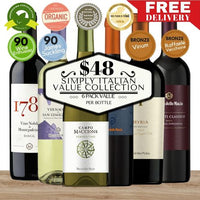
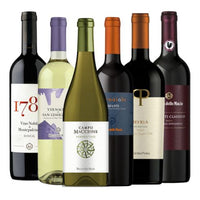
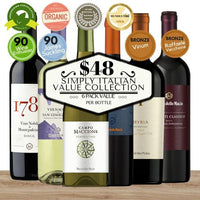
Experience the best of Italy with Italy in a Box, a curated selection of mixed wines from the country’s top wine regions. Each bottle highlights Italy’s signature elegance, vibrant fruit, and smooth, balanced structure, offering an authentic taste of Italian winemaking. Perfect for wine lovers, gifting, or discovering Italy from the comfort of home, this pack brings diversity, quality, and excitement to every sip. Whether for casual dinners, celebrations, or tastings, Italy in a Box is your passport to Italy’s finest wines.
1 x Rocca delle Macie Vernaiolo Chianti 2023 - Tuscany, Italy
90/100 James Suckling
Organic - currently undergoing certification
James Suckling "A juicy, fruity and delicious Chianti with cherries, raspberries and warm spices on the nose. It’s medium-bodied with fine tannins. Round and juicy, with a velvety core of cherries and a satisfying finish."
Rocca delle Macìe was established in 1973, when film producer Italo Zingarelli – of Ettore Scola’s “We All Loved Each Other So Much” fame, and also the wildly popular series of films featuring comedy duo Bud Spencer and Terence Hill (including “They Call Me Trinity” and “Trinity Is Still My Name”) – decided to realize his lifelong dream by acquiring the “Le Macìe” estate – extending across 93 hectares (230 acres) in all, of which only two were under vine – in order to create a winery in the heart of the Chianti Classico zone.
The Chianti region in Italy's Tuscany wine growing region is split between Chianti and Chianti Classico. Accordingly, two separate DOCG designations apply to wines from the Chianti region: the Chianti Classico DOCG for the heartland of Chianti, and Chianti DOCG for all other Chianti regions. (In 1984, the Chianti region was promoted from DOC to DOCG - Italy’s highest classification - and in 1996, Chianti Classico - the historic heartland of the region - DOCG was created, which gave autonomy to that region. In the last 20 years, a consortium of Chianti Classico producers have researched new Sangiovese clones, replanted vineyards, updated cellar practices and generally made Chianti Classico DOCG a world-class appellation. Chianti Classico must contain a minimum of 75% Sangiovese. In the 2014 edition of its annual compendium of wine ratings, Gambero Rosso noted that Chianti Classico DOCG wines were noteworthy for their “significant return to a more defined style, true to tradition.” The typical Chianti Classico wine is a ruby-red, Sangiovese-based wine with aromas of violets and cherries and a hint of earthy spice.
The Chianti DOCG designation covers wines from six Chianti sub-zones (Colli Pisane, Colli Fiorentini, Colli Senesi, Colli Aretini, Montalbano and Rufina) as well as all other Chianti wines. The Chianti Classico DOCG is located in the very center of Tuscany, between Florence and Sienna.
1 x Vernaccia di San Gimignano 2022 - Tuscany, Italy
Bronze - Robert Parker, Wine Advocate (2012)
Rocca delle Macìe was established in 1973, when film producer Italo Zingarelli – of Ettore Scola’s “We All Loved Each Other So Much” fame, and also the wildly popular series of films featuring comedy duo Bud Spencer and Terence Hill (including “They Call Me Trinity” and “Trinity Is Still My Name”) – decided to realize his lifelong dream by acquiring the “Le Macìe” estate – extending across 93 hectares (230 acres) in all, of which only two were under vine – in order to create a winery in the heart of the Chianti Classico zone.
The Chianti region in Italy's Tuscany wine growing region is split between Chianti and Chianti Classico. Accordingly, two separate DOCG designations apply to wines from the Chianti region: the Chianti Classico DOCG for the heartland of Chianti, and Chianti DOCG for all other Chianti regions. (In 1984, the Chianti region was promoted from DOC to DOCG - Italy’s highest classification - and in 1996, Chianti Classico - the historic heartland of the region - DOCG was created, which gave autonomy to that region. In the last 20 years, a consortium of Chianti Classico producers have researched new Sangiovese clones, replanted vineyards, updated cellar practices and generally made Chianti Classico DOCG a world-class appellation. Chianti Classico must contain a minimum of 75% Sangiovese. In the 2014 edition of its annual compendium of wine ratings, Gambero Rosso noted that Chianti Classico DOCG wines were noteworthy for their “significant return to a more defined style, true to tradition.” The typical Chianti Classico wine is a ruby-red, Sangiovese-based wine with aromas of violets and cherries and a hint of earthy spice.
The Chianti DOCG designation covers wines from six Chianti sub-zones (Colli Pisane, Colli Fiorentini, Colli Senesi, Colli Aretini, Montalbano and Rufina) as well as all other Chianti wines. The Chianti Classico DOCG is located in the very center of Tuscany, between Florence and Sienna."
Vernaccia di San Gimignano is a wine served on the tables of popes and kings, it was the first DOC in Italy. Perfect to be combined with fish, white meats, cheeses. Vernaccia di San Gimignano is planted in over 730 hectares of vineyards in the heart of Tuscany in a extraordinary land, rich in biodiversity.
Winemaker "An intense bouquet of red fruits which burst through to the palate. Rich and smooth, with a wellbalanced finish.
Wimemaker "Rocca delle Macìe has combined experience and expertise to create three different types of wine using Primitivo and Negroamaro grapes, which are vinified and bottled in the Puglia Region, under the watchful eye of the Zingarelli family’s chief winemaker, Luca Francioni. The Primitivo grapes of this wine come from selected vineyards located in southern Puglia, where the traditional Alberello basso vine training method is employed."
Vinum "An intense bouquet of red fruits, persistent with hints of blackcurrant and wild berries and lightly spiced thyme and aromatic herbs. Rich and smooth, with good body and a well balanced and persistent finish. 30% of the wine is aged in barriques for 12 months and 70% for the same period in stainless steel. Ideal with meat, game or seasoned cheeses.
100% Primitivo
The PietraPura range is a successful collaboration with famous winery group, Rocca delle Macìe which makes the most of the native vines of the Salento area to create wines that express the very best of the terroir. Rocca delle Macìe has combined experience and expertise to create three different types of wine using Primitivo and Negroamaro grapes. Mandus and Cotis, two expressions of Primitivo di Manduria DOC, Dolceluna – Primitivo Dolce Naturale DOCG- and Negramaro -Salento IGT- represent the high end of the range and are produced using grapes cultivated in vineyards selected by Rocca delle Macìe’s technicians. The grapes are then vinified and bottled in the Puglia Region, under the watchful eye of the Zingarelli family’s chief winemaker, Luca Francioni.
Puglia, also known as Apulia, is a long, narrow region comprising the heel of southern Italy's boot. Puglia is a major producer of both wine grapes and table grapes. Its name comes from a-pulvia, or “lack of rain” in Roman. The terroir is influenced by a sunny, warm Mediterranean climate with breezes from the Adriatic sea and fertile soil rich in limestone. The Puglian wine region is divided into three subregions: Foggia in the north, Bari and Taranto in the center, and Brindisi and Lecce in the south.
After Veneto, Puglia is tied with Sicily as the second biggest wine region in Italy. The Puglia area is mostly home to grape growers, rather than wine producers. However, there are winemakers producing quality wines in Puglia in smaller quantities. In addition to grapes, Puglia produces 40 percent of Italy's olive oil.
The grape of most interest to non-Italians is the early-ripening Primitivo, a speciality of the Gioia del Colle plain just south of Bari and Manduria, the western coast of the heel just south of Taranto. DNA analysis has proved what many had suspected all along, that this vine variety is one and the same as California's Zinfandel.
Primitivo is a dark-skinned grape known for producing inky, tannic wines, particularly Primitivo di Manduria and its naturally sweet Dolce Naturale variant. Although there have been contentious and long-running debates about the variety's geographical origins, there is little question that Primitivo's modern-day home is in southern Italy, particularly Puglia.
1 x Rocca delle Macie Chianti Classico Famiglia Zingarelli 2022 - Tuscany, Italy
92/100 5 Stars Wine - The Book - Vinitaly (2021 vintage) 91/100 Falstaff (2021 vintage)
Organic - currently undergoing certification
Falstaff "Medium ruby red with slightly lightening rim. Amarena cherry and fresh plum nose, then slightly savoury and forest floor. Well balanced on the palate, with fine-grained tannin and plenty of red fruit, medium-long finish." (2021 vintage)
Rocca delle Macìe was established in 1973, when film producer Italo Zingarelli – of Ettore Scola’s “We All Loved Each Other So Much” fame, and also the wildly popular series of films featuring comedy duo Bud Spencer and Terence Hill (including “They Call Me Trinity” and “Trinity Is Still My Name”) – decided to realize his lifelong dream by acquiring the “Le Macìe” estate – extending across 93 hectares (230 acres) in all, of which only two were under vine – in order to create a winery in the heart of the Chianti Classico zone.
The company estate now extends to more than 500 hectares (1250 acres) with, in total, more than 200 (500 acres) used as vineyards and 22 (54 acres) as olive groves, subdivided across the company’s six estates: Le Macìe, Sant’Alfonso, Fizzano e le Tavolelle in the Chianti Classico Area, in addition to the Campomaccione and Casa Maria estates in the Morellino di Scansano Area (Maremma).
The Chianti region in Italy's Tuscany wine growing region is split between Chianti and Chianti Classico. Accordingly, two separate DOCG designations apply to wines from the Chianti region: the Chianti Classico DOCG for the heartland of Chianti, and Chianti DOCG for all other Chianti regions. (In 1984, the Chianti region was promoted from DOC to DOCG - Italy’s highest classification - and in 1996, Chianti Classico - the historic heartland of the region - DOCG was created, which gave autonomy to that region. In the last 20 years, a consortium of Chianti Classico producers have researched new Sangiovese clones, replanted vineyards, updated cellar practices and generally made Chianti Classico DOCG a world-class appellation. Chianti Classico must contain a minimum of 75% Sangiovese. In the 2014 edition of its annual compendium of wine ratings, Gambero Rosso noted that Chianti Classico DOCG wines were noteworthy for their “significant return to a more defined style, true to tradition.” The typical Chianti Classico wine is a ruby-red, Sangiovese-based wine with aromas of violets and cherries and a hint of earthy spice.
The Chianti DOCG designation covers wines from six Chianti sub-zones (Colli Pisane, Colli Fiorentini, Colli Senesi, Colli Aretini, Montalbano and Rufina) as well as all other Chianti wines. The Chianti Classico DOCG is located in the very center of Tuscany, between Florence and Sienna.
Tuscany is Italy's third most planted region (behind Sicily and Apulia) but it is eighth in terms of output. After Piedmont and the Veneto, Tuscany produces the third-highest volume of DOC/DOCG wines. More than 80% of the regions' production is in red wine, with the Sangiovese grape being Tuscany's' most prominent grape. Trebbiano is the leading white variety of the region.
1 x Campo Maccione Vermentino 2023 - Tuscany, Italy
James Suckling "A delicious, fruity and subtle vermentino with aromas of pears, ripe peaches and wild herbs on the nose, following through to a medium body with fresh acidity. Seductive and minerally at the center, with a delicious core of crunchy fruit in the crisp finish"
Wine Enthusiast "The nose is fresh and clean, with aromas of lemon, lime, ocean air and bike tire. On the palate, a backbone of hazelnuts and almonds creates a savory feel, although green and yellow apple flavors and more citrus preserve a piercing quality. Tannins are present, even within a river of acid."
Raffaele Vecchione - Wines Critic "In its sensory profile, it reveals notes of magnolia, gardenia, jasmine, acacia, lemon peel, and white pepper. Full-bodied, with a "fat" mouthfeel, it finishes warm and enveloping. Sweet on the finish."
100% Vermentino Alcohol: 13%
Rocca delle Macìe was established in 1973, when film producer Italo Zingarelli – of Ettore Scola’s “We All Loved Each Other So Much” fame, and also the wildly popular series of films featuring comedy duo Bud Spencer and Terence Hill (including “They Call Me Trinity” and “Trinity Is Still My Name”) – decided to realize his lifelong dream by acquiring the “Le Macìe” estate – extending across 93 hectares (230 acres) in all, of which only two were under vine – in order to create a winery in the heart of the Chianti Classico zone.
Enjoy this wine made on the Zingarelli family’s Maremma estates. Morellino di Scansano takes center-stage but has been complemented over the years by white and rosé wines bearing the recently created Maremma DOC denomination, along with Typical Geographical Indication (IGT) wines in a more modern style that nevertheless respects the Tuscan tradition.
Vermentino (“vur-men-teeno”) is a light-bodied white wine that grows mostly in Italy on the island of Sardinia. What’s exciting about Vermentino is it can be deliciously complex in taste in similar style to Sauvignon Blanc; One style is richer and creamier and the other is lighter, more floral and zestier. Because Vermentino is so unknown, you can find high quality wines for a great value. Wines with similar body and taste profile include Albariño, Grüner Veltliner, Sauvignon Blanc, Sémillon, Soave and Verdejo. Despite the typical light-bodied character of Vermentino, it’s actually quite complex to taste. A glass of classic Sardinia Vermentino will offer up lively aromas of pear, white peach, lime and pink grapefruit with subtle notes of crushed rocks and citrus zest. On the palate, Vermentino is almost always dry and somewhat oily with flavors of grapefruit and citrus, with a crushed rocky minerality and saltiness. On the finish, it can be a bit snappy with bitterness similar to the taste of grapefruit pith or, if it’s on the riper side, fresh almond. In Provence, Vermentino is called Rolle (“roll”). It’s the secret ingredient to the region’s top-rated Rosé.
The Chianti region in Italy's Tuscany wine growing region is split between Chianti and Chianti Classico. Accordingly, two separate DOCG designations apply to wines from the Chianti region: the Chianti Classico DOCG for the heartland of Chianti, and Chianti DOCG for all other Chianti regions. (In 1984, the Chianti region was promoted from DOC to DOCG - Italy’s highest classification - and in 1996, Chianti Classico - the historic heartland of the region - DOCG was created, which gave autonomy to that region. In the last 20 years, a consortium of Chianti Classico producers have researched new Sangiovese clones, replanted vineyards, updated cellar practices and generally made Chianti Classico DOCG a world-class appellation. Chianti Classico must contain a minimum of 75% Sangiovese. In the 2014 edition of its annual compendium of wine ratings, Gambero Rosso noted that Chianti Classico DOCG wines were noteworthy for their “significant return to a more defined style, true to tradition.” The typical Chianti Classico wine is a ruby-red, Sangiovese-based wine with aromas of violets and cherries and a hint of earthy spice.
1 x Rocca delle Macie 1787 Vino Nobile di Montepulciano 2019 - Tuscany, Italy
Bronze - Vironelli
Organic - currently undergoing certification
Natalie Mclean ''Very pleasant and full-bodied with generous dark fleshy fruit, dark spices and smoke. Superb craftsmanship in this DOCG wine. It finishes with smoke and dried herbs. Try it with prime rib tonight''
Vinello "This Italian wine delights with its elegantly dry taste......offers aromas of plums, blackberries and violets, rounded off by other fruity nuances."
Natalie Mclean ''Vintages Wine Panel: The nose suggests raspberry, spice and strawberry with a minty herbal tone. Very well made, dry, round and balanced, this medium bodied wine has medium tannins and acidity, with lovely soft cranberry, spice and floral flavours. Juicy, crisp and with a lovely full finish. Try it tonight. My note: Very pleasant and full-bodied with generous dark fleshy fruit, dark spices and smoke. Superb craftsmanship."
Heather Wall ''This medium-bodied red wine is pale garnet in colour with aromas and flavours peaking now. Blackcurrant leaf, cassis, horse saddle, clove, eucalyptus and earthy. The wine is dry with polished tannins."
Rocca delle Macìe was established in 1973, when film producer Italo Zingarelli – of Ettore Scola’s “We All Loved Each Other So Much” fame, and also the wildly popular series of films featuring comedy duo Bud Spencer and Terence Hill (including “They Call Me Trinity” and “Trinity Is Still My Name”) – decided to realize his lifelong dream by acquiring the “Le Macìe” estate – extending across 93 hectares (230 acres) in all, of which only two were under vine – in order to create a winery in the heart of the Chianti Classico zone.
Vino Nobile di Montepulciano is a red wine with a Denominazione di Origine Controllata e Garantita status produced in the vineyards surrounding the town of Montepulciano, Italy. The wine is made primarily from the Sangiovese grape varietal (known locally as Prugnolo gentile) (minimum 70%), blended with Canaiolo Nero (10%–20%) and small amounts of other local varieties such as Mammolo. The wine is aged for 2 years (at least 1 year in oak barrels); three years if it is a riserva. The wine should not be confused with Montepulciano d'Abruzzo, a red wine made from the Montepulciano grape in the Abruzzo region of east-central Italy.
Experience the best of Italy with Italy in a Box, a curated selection of mixed wines from the country’s top wine regions. Each bottle highlights Italy’s signature elegance, vibrant fruit, and smooth, balanced structure, offering an authentic taste of Italian winemaking. Perfect for wine lovers, gifting, or discovering Italy from the comfort of home, this pack brings diversity, quality, and excitement to every sip. Whether for casual dinners, celebrations, or tastings, Italy in a Box is your passport to Italy’s finest wines.
1 x Rocca delle Macie Vernaiolo Chianti 2023 - Tuscany, Italy
90/100 James Suckling
Organic - currently undergoing certification
James Suckling "A juicy, fruity and delicious Chianti with cherries, raspberries and warm spices on the nose. It’s medium-bodied with fine tannins. Round and juicy, with a velvety core of cherries and a satisfying finish."
Rocca delle Macìe was established in 1973, when film producer Italo Zingarelli – of Ettore Scola’s “We All Loved Each Other So Much” fame, and also the wildly popular series of films featuring comedy duo Bud Spencer and Terence Hill (including “They Call Me Trinity” and “Trinity Is Still My Name”) – decided to realize his lifelong dream by acquiring the “Le Macìe” estate – extending across 93 hectares (230 acres) in all, of which only two were under vine – in order to create a winery in the heart of the Chianti Classico zone.
The Chianti region in Italy's Tuscany wine growing region is split between Chianti and Chianti Classico. Accordingly, two separate DOCG designations apply to wines from the Chianti region: the Chianti Classico DOCG for the heartland of Chianti, and Chianti DOCG for all other Chianti regions. (In 1984, the Chianti region was promoted from DOC to DOCG - Italy’s highest classification - and in 1996, Chianti Classico - the historic heartland of the region - DOCG was created, which gave autonomy to that region. In the last 20 years, a consortium of Chianti Classico producers have researched new Sangiovese clones, replanted vineyards, updated cellar practices and generally made Chianti Classico DOCG a world-class appellation. Chianti Classico must contain a minimum of 75% Sangiovese. In the 2014 edition of its annual compendium of wine ratings, Gambero Rosso noted that Chianti Classico DOCG wines were noteworthy for their “significant return to a more defined style, true to tradition.” The typical Chianti Classico wine is a ruby-red, Sangiovese-based wine with aromas of violets and cherries and a hint of earthy spice.
The Chianti DOCG designation covers wines from six Chianti sub-zones (Colli Pisane, Colli Fiorentini, Colli Senesi, Colli Aretini, Montalbano and Rufina) as well as all other Chianti wines. The Chianti Classico DOCG is located in the very center of Tuscany, between Florence and Sienna.
1 x Vernaccia di San Gimignano 2022 - Tuscany, Italy
Bronze - Robert Parker, Wine Advocate (2012)
Rocca delle Macìe was established in 1973, when film producer Italo Zingarelli – of Ettore Scola’s “We All Loved Each Other So Much” fame, and also the wildly popular series of films featuring comedy duo Bud Spencer and Terence Hill (including “They Call Me Trinity” and “Trinity Is Still My Name”) – decided to realize his lifelong dream by acquiring the “Le Macìe” estate – extending across 93 hectares (230 acres) in all, of which only two were under vine – in order to create a winery in the heart of the Chianti Classico zone.
The Chianti region in Italy's Tuscany wine growing region is split between Chianti and Chianti Classico. Accordingly, two separate DOCG designations apply to wines from the Chianti region: the Chianti Classico DOCG for the heartland of Chianti, and Chianti DOCG for all other Chianti regions. (In 1984, the Chianti region was promoted from DOC to DOCG - Italy’s highest classification - and in 1996, Chianti Classico - the historic heartland of the region - DOCG was created, which gave autonomy to that region. In the last 20 years, a consortium of Chianti Classico producers have researched new Sangiovese clones, replanted vineyards, updated cellar practices and generally made Chianti Classico DOCG a world-class appellation. Chianti Classico must contain a minimum of 75% Sangiovese. In the 2014 edition of its annual compendium of wine ratings, Gambero Rosso noted that Chianti Classico DOCG wines were noteworthy for their “significant return to a more defined style, true to tradition.” The typical Chianti Classico wine is a ruby-red, Sangiovese-based wine with aromas of violets and cherries and a hint of earthy spice.
The Chianti DOCG designation covers wines from six Chianti sub-zones (Colli Pisane, Colli Fiorentini, Colli Senesi, Colli Aretini, Montalbano and Rufina) as well as all other Chianti wines. The Chianti Classico DOCG is located in the very center of Tuscany, between Florence and Sienna."
Vernaccia di San Gimignano is a wine served on the tables of popes and kings, it was the first DOC in Italy. Perfect to be combined with fish, white meats, cheeses. Vernaccia di San Gimignano is planted in over 730 hectares of vineyards in the heart of Tuscany in a extraordinary land, rich in biodiversity.
Winemaker "An intense bouquet of red fruits which burst through to the palate. Rich and smooth, with a wellbalanced finish.
Wimemaker "Rocca delle Macìe has combined experience and expertise to create three different types of wine using Primitivo and Negroamaro grapes, which are vinified and bottled in the Puglia Region, under the watchful eye of the Zingarelli family’s chief winemaker, Luca Francioni. The Primitivo grapes of this wine come from selected vineyards located in southern Puglia, where the traditional Alberello basso vine training method is employed."
Vinum "An intense bouquet of red fruits, persistent with hints of blackcurrant and wild berries and lightly spiced thyme and aromatic herbs. Rich and smooth, with good body and a well balanced and persistent finish. 30% of the wine is aged in barriques for 12 months and 70% for the same period in stainless steel. Ideal with meat, game or seasoned cheeses.
100% Primitivo
The PietraPura range is a successful collaboration with famous winery group, Rocca delle Macìe which makes the most of the native vines of the Salento area to create wines that express the very best of the terroir. Rocca delle Macìe has combined experience and expertise to create three different types of wine using Primitivo and Negroamaro grapes. Mandus and Cotis, two expressions of Primitivo di Manduria DOC, Dolceluna – Primitivo Dolce Naturale DOCG- and Negramaro -Salento IGT- represent the high end of the range and are produced using grapes cultivated in vineyards selected by Rocca delle Macìe’s technicians. The grapes are then vinified and bottled in the Puglia Region, under the watchful eye of the Zingarelli family’s chief winemaker, Luca Francioni.
Puglia, also known as Apulia, is a long, narrow region comprising the heel of southern Italy's boot. Puglia is a major producer of both wine grapes and table grapes. Its name comes from a-pulvia, or “lack of rain” in Roman. The terroir is influenced by a sunny, warm Mediterranean climate with breezes from the Adriatic sea and fertile soil rich in limestone. The Puglian wine region is divided into three subregions: Foggia in the north, Bari and Taranto in the center, and Brindisi and Lecce in the south.
After Veneto, Puglia is tied with Sicily as the second biggest wine region in Italy. The Puglia area is mostly home to grape growers, rather than wine producers. However, there are winemakers producing quality wines in Puglia in smaller quantities. In addition to grapes, Puglia produces 40 percent of Italy's olive oil.
The grape of most interest to non-Italians is the early-ripening Primitivo, a speciality of the Gioia del Colle plain just south of Bari and Manduria, the western coast of the heel just south of Taranto. DNA analysis has proved what many had suspected all along, that this vine variety is one and the same as California's Zinfandel.
Primitivo is a dark-skinned grape known for producing inky, tannic wines, particularly Primitivo di Manduria and its naturally sweet Dolce Naturale variant. Although there have been contentious and long-running debates about the variety's geographical origins, there is little question that Primitivo's modern-day home is in southern Italy, particularly Puglia.
1 x Rocca delle Macie Chianti Classico Famiglia Zingarelli 2022 - Tuscany, Italy
92/100 5 Stars Wine - The Book - Vinitaly (2021 vintage) 91/100 Falstaff (2021 vintage)
Organic - currently undergoing certification
Falstaff "Medium ruby red with slightly lightening rim. Amarena cherry and fresh plum nose, then slightly savoury and forest floor. Well balanced on the palate, with fine-grained tannin and plenty of red fruit, medium-long finish." (2021 vintage)
Rocca delle Macìe was established in 1973, when film producer Italo Zingarelli – of Ettore Scola’s “We All Loved Each Other So Much” fame, and also the wildly popular series of films featuring comedy duo Bud Spencer and Terence Hill (including “They Call Me Trinity” and “Trinity Is Still My Name”) – decided to realize his lifelong dream by acquiring the “Le Macìe” estate – extending across 93 hectares (230 acres) in all, of which only two were under vine – in order to create a winery in the heart of the Chianti Classico zone.
The company estate now extends to more than 500 hectares (1250 acres) with, in total, more than 200 (500 acres) used as vineyards and 22 (54 acres) as olive groves, subdivided across the company’s six estates: Le Macìe, Sant’Alfonso, Fizzano e le Tavolelle in the Chianti Classico Area, in addition to the Campomaccione and Casa Maria estates in the Morellino di Scansano Area (Maremma).
The Chianti region in Italy's Tuscany wine growing region is split between Chianti and Chianti Classico. Accordingly, two separate DOCG designations apply to wines from the Chianti region: the Chianti Classico DOCG for the heartland of Chianti, and Chianti DOCG for all other Chianti regions. (In 1984, the Chianti region was promoted from DOC to DOCG - Italy’s highest classification - and in 1996, Chianti Classico - the historic heartland of the region - DOCG was created, which gave autonomy to that region. In the last 20 years, a consortium of Chianti Classico producers have researched new Sangiovese clones, replanted vineyards, updated cellar practices and generally made Chianti Classico DOCG a world-class appellation. Chianti Classico must contain a minimum of 75% Sangiovese. In the 2014 edition of its annual compendium of wine ratings, Gambero Rosso noted that Chianti Classico DOCG wines were noteworthy for their “significant return to a more defined style, true to tradition.” The typical Chianti Classico wine is a ruby-red, Sangiovese-based wine with aromas of violets and cherries and a hint of earthy spice.
The Chianti DOCG designation covers wines from six Chianti sub-zones (Colli Pisane, Colli Fiorentini, Colli Senesi, Colli Aretini, Montalbano and Rufina) as well as all other Chianti wines. The Chianti Classico DOCG is located in the very center of Tuscany, between Florence and Sienna.
Tuscany is Italy's third most planted region (behind Sicily and Apulia) but it is eighth in terms of output. After Piedmont and the Veneto, Tuscany produces the third-highest volume of DOC/DOCG wines. More than 80% of the regions' production is in red wine, with the Sangiovese grape being Tuscany's' most prominent grape. Trebbiano is the leading white variety of the region.
1 x Campo Maccione Vermentino 2023 - Tuscany, Italy
James Suckling "A delicious, fruity and subtle vermentino with aromas of pears, ripe peaches and wild herbs on the nose, following through to a medium body with fresh acidity. Seductive and minerally at the center, with a delicious core of crunchy fruit in the crisp finish"
Wine Enthusiast "The nose is fresh and clean, with aromas of lemon, lime, ocean air and bike tire. On the palate, a backbone of hazelnuts and almonds creates a savory feel, although green and yellow apple flavors and more citrus preserve a piercing quality. Tannins are present, even within a river of acid."
Raffaele Vecchione - Wines Critic "In its sensory profile, it reveals notes of magnolia, gardenia, jasmine, acacia, lemon peel, and white pepper. Full-bodied, with a "fat" mouthfeel, it finishes warm and enveloping. Sweet on the finish."
100% Vermentino Alcohol: 13%
Rocca delle Macìe was established in 1973, when film producer Italo Zingarelli – of Ettore Scola’s “We All Loved Each Other So Much” fame, and also the wildly popular series of films featuring comedy duo Bud Spencer and Terence Hill (including “They Call Me Trinity” and “Trinity Is Still My Name”) – decided to realize his lifelong dream by acquiring the “Le Macìe” estate – extending across 93 hectares (230 acres) in all, of which only two were under vine – in order to create a winery in the heart of the Chianti Classico zone.
Enjoy this wine made on the Zingarelli family’s Maremma estates. Morellino di Scansano takes center-stage but has been complemented over the years by white and rosé wines bearing the recently created Maremma DOC denomination, along with Typical Geographical Indication (IGT) wines in a more modern style that nevertheless respects the Tuscan tradition.
Vermentino (“vur-men-teeno”) is a light-bodied white wine that grows mostly in Italy on the island of Sardinia. What’s exciting about Vermentino is it can be deliciously complex in taste in similar style to Sauvignon Blanc; One style is richer and creamier and the other is lighter, more floral and zestier. Because Vermentino is so unknown, you can find high quality wines for a great value. Wines with similar body and taste profile include Albariño, Grüner Veltliner, Sauvignon Blanc, Sémillon, Soave and Verdejo. Despite the typical light-bodied character of Vermentino, it’s actually quite complex to taste. A glass of classic Sardinia Vermentino will offer up lively aromas of pear, white peach, lime and pink grapefruit with subtle notes of crushed rocks and citrus zest. On the palate, Vermentino is almost always dry and somewhat oily with flavors of grapefruit and citrus, with a crushed rocky minerality and saltiness. On the finish, it can be a bit snappy with bitterness similar to the taste of grapefruit pith or, if it’s on the riper side, fresh almond. In Provence, Vermentino is called Rolle (“roll”). It’s the secret ingredient to the region’s top-rated Rosé.
The Chianti region in Italy's Tuscany wine growing region is split between Chianti and Chianti Classico. Accordingly, two separate DOCG designations apply to wines from the Chianti region: the Chianti Classico DOCG for the heartland of Chianti, and Chianti DOCG for all other Chianti regions. (In 1984, the Chianti region was promoted from DOC to DOCG - Italy’s highest classification - and in 1996, Chianti Classico - the historic heartland of the region - DOCG was created, which gave autonomy to that region. In the last 20 years, a consortium of Chianti Classico producers have researched new Sangiovese clones, replanted vineyards, updated cellar practices and generally made Chianti Classico DOCG a world-class appellation. Chianti Classico must contain a minimum of 75% Sangiovese. In the 2014 edition of its annual compendium of wine ratings, Gambero Rosso noted that Chianti Classico DOCG wines were noteworthy for their “significant return to a more defined style, true to tradition.” The typical Chianti Classico wine is a ruby-red, Sangiovese-based wine with aromas of violets and cherries and a hint of earthy spice.
1 x Rocca delle Macie 1787 Vino Nobile di Montepulciano 2019 - Tuscany, Italy
Bronze - Vironelli
Organic - currently undergoing certification
Natalie Mclean ''Very pleasant and full-bodied with generous dark fleshy fruit, dark spices and smoke. Superb craftsmanship in this DOCG wine. It finishes with smoke and dried herbs. Try it with prime rib tonight''
Vinello "This Italian wine delights with its elegantly dry taste......offers aromas of plums, blackberries and violets, rounded off by other fruity nuances."
Natalie Mclean ''Vintages Wine Panel: The nose suggests raspberry, spice and strawberry with a minty herbal tone. Very well made, dry, round and balanced, this medium bodied wine has medium tannins and acidity, with lovely soft cranberry, spice and floral flavours. Juicy, crisp and with a lovely full finish. Try it tonight. My note: Very pleasant and full-bodied with generous dark fleshy fruit, dark spices and smoke. Superb craftsmanship."
Heather Wall ''This medium-bodied red wine is pale garnet in colour with aromas and flavours peaking now. Blackcurrant leaf, cassis, horse saddle, clove, eucalyptus and earthy. The wine is dry with polished tannins."
Rocca delle Macìe was established in 1973, when film producer Italo Zingarelli – of Ettore Scola’s “We All Loved Each Other So Much” fame, and also the wildly popular series of films featuring comedy duo Bud Spencer and Terence Hill (including “They Call Me Trinity” and “Trinity Is Still My Name”) – decided to realize his lifelong dream by acquiring the “Le Macìe” estate – extending across 93 hectares (230 acres) in all, of which only two were under vine – in order to create a winery in the heart of the Chianti Classico zone.
Vino Nobile di Montepulciano is a red wine with a Denominazione di Origine Controllata e Garantita status produced in the vineyards surrounding the town of Montepulciano, Italy. The wine is made primarily from the Sangiovese grape varietal (known locally as Prugnolo gentile) (minimum 70%), blended with Canaiolo Nero (10%–20%) and small amounts of other local varieties such as Mammolo. The wine is aged for 2 years (at least 1 year in oak barrels); three years if it is a riserva. The wine should not be confused with Montepulciano d'Abruzzo, a red wine made from the Montepulciano grape in the Abruzzo region of east-central Italy.