



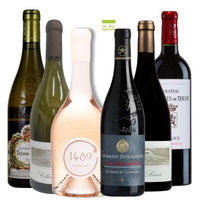
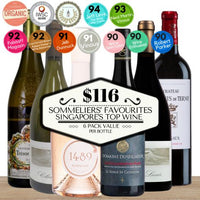
Sommeliers' Favourites Singapore’s Top Wine
Curated by leading sommeliers in Singapore, this premium wine selection showcases the most-loved bottles enjoyed across top restaurants and wine bars. From elegant reds to crisp whites, each wine has been chosen for its outstanding quality, food-pairing versatility, and consistent popularity with discerning local palates. Whether for entertaining, gifting, or your own collection, this is a taste of Singapore’s refined wine culture – in one exclusive set.
1 x Clos Louis Maury Red 2014 - Languedoc-Roussillon France
Winemaker "The color is slightly evolved garnet. The nose is expressive, on candied cherry, cocoa, incense, sweet spices. The palate is round, opulent, generously displaying a soft substance of unreal sweetness. Aromatically, we remain in the world of cherry and chocolate, but we do not feel any heaviness thanks to a beautiful underlying freshness."
Black Grenache, Syrah and Carignan
In the historic region of Roussillon, France, two prestigious winegrower families, The Cazes and Batlle families carry on their familiies traditiion of wine making since the late 19th century. Their latest addition, Le Clos Louis, takes up the legacy.
"Le Clos Louis" is the confidential project of Bruno Cazes. On 1.5 hectares and a black shale terroir, he produces a single high-end cuvée, up to 6,000 bottles a year. This is one of Roussillon's best kept secrets." La Passion du Vin
Le Clos Louis, is a significant vineyard, and lies near the iconic Cathar castles and the charming village of Maury, one of the oldest appelations in Roussillon, designated in 1936. This well-kept vineyard, situated on a single hillside, is shrouded in family secrets. Its unique soil, composed of secondary schistous marl, allows the roots to reach deep for vital moisture. The black shales retain warmth during the day and release it at night, ensuring optimal grape ripening conditions.
Dedicated to tradition and quality, the winegrower family upholds their noble profession, with each bottle of wine reflecting the essence of their land and heritage. With Louis at the helm, they continue to produce wines that embody the history and character of the region.
Côtes Catalanes is a significant IGP in southern France's Languedoc-Roussillon region, coinciding with the Pyrénées-Orientales department. It embraces diverse grape varieties and allows for a range of wine styles. The IGP covers a wide range of terroir that can be broadly described as Mediterranean, with garrigue-covered hills and a hot, dry climate. The poor, dry soils are well suited to viticulture, forcing vine roots to travel deep into the soil to find water. Low rainfall leads to a concentration of flavors in the grapes.
Most of the vineyards lie on east-facing slopes that are open to marine influences. Sea breezes help to refresh vineyards during the hot, sunny days, and winds from the snow-covered caps of the Pyrenees cool vineyards at night, ensuring grapes develop acidity along with flavor.
The classic Mediterranean varieties – Grenache, Mourvèdre, Cinsaut and Carignan – dominate the wines made under the denomination, and as such enjoy the best vineyard sites. "
Grenache is a red-wine grape grown extensively in France, Spain, Australia and the United States and is one of the most widely distributed grapes in the world. Grenache is the French name for the grape, but it has a number of synonyms. In Spain, where it is one of the country's flagship varieties, it is known as Garnacha, and on the island of Sardinia it has been known for centuries as Cannonau. In France, Grenache is most widely planted in the southern Rhone Valley and throughout both Provence and Languedoc-Roussillon. It is most commonly found alongside Syrah and Mourvedre in the classic Southern Rhone Blend (notably in Cotes du Rhone wines), and is the main grape variety in Chateauneuf-du-Pape.
Syrah is a dark-skinned red wine grape. Its origins have been popularly debated, but its modern viticultural home is unquestionably the northern Rhône Valley of eastern France. In Australia, Syrah is the flagship variety and has developed such a distinct personality that it is essentially regarded as a distinct variety, is commonly known as Shiraz.
Carignan (also known as Mazuelo, Bovale Grande, Cariñena, Carinyena, Samsó, Carignane, and Carignano) is a red grape variety of Spanish origin that is more commonly found in French wine but is widely planted throughout the western Mediterranean and around the globe. Along with Aramon, it was considered one of the main grapes responsible for France's wine lake and was a substantial producer in jug wine production in California's Central Valley but in recent years, it has been reborn as a flagship wine for many cellars in the south of France as well as in Catalonia.
1 x Domaine Duseigneur Le Songe de Catherine Chateauneuf-du-Pape Rouge 2019 - Rhone, France
94/100 Josh Raynolds, Vinous
95/100 Jeb Dunnuck (2016 vintage)
Bronze - Rober Parker, Wine Advocate (2016 vintage)
Organic
Josh Raynolds, Vinous "Glistening ruby-red. Ripe and blue fruits, potpourri, incense and exotic spices, on the expansive nose. Stains the palate with sappy boysenberry, raspberry and floral pastille flavors energized by building mineral and white pepper notes. Conveys depth and power but comes off lively. Delivers emphatic floral lift on the impressive long, gently tannic finish."
Jeb Dunnuck "Ripe, opulent notes of red currants, blackberries, toasted spice, graphite, and candle wax all give way to a rounded, sexy 2016 that has sweet tannin, beautiful purity of fruit, and impressive concentration. It’s beautifully done, layered, and incredibly well- balanced." (2016 vintage)
Rober Parker, Wine Advocate "..........the 2016 Chateauneuf du Pape le Songe de Catherine is still on the super ripe side of the spectrum. Vanilla, chocolate and dried black cherries all come together in this full-bodied, warm wine that ends on notes of leather and dried spices." (2016 vintage)
Winemaker "The 2019 vintage is superb, rich in color, and beautifully crafted."
100% Grenache
Alcohol: 13%
Catherine of Siena , Saint and Doctor of the Church, went to Avignon in 1376 as ambassador from Florence and persuaded Pope Gregory XI to return to Rome to reestablish the Papacy there. Throughout her life she had dreams and mystical visions. God appears to him in the form of a tree whose roots are united with the earth and the top with the sky.
Bernard Duseigneur "Seizing the opportunity that nature gives us; that is the essence of biodynamics for me"
Bernard Duseigneur, hailing from a lineage of winemakers, assumed control of the family's domaine in 2002 after a stint in investment banking. Returning to his Mediterranean origins, he continued the legacy of his father and brother, ultimately settling in Châteauneuf-du-Pape on the left bank of the Rhône.
In Châteauneuf-du-Pape, the terroir isn't solely defined by iconic orange pebbles; it comprises diverse soils like red clays, limestone, sandstone sands, and loams from the Rhone's banks. Acknowledging that exceptional terroir alone isn't enough for quality wines, Bernard prioritizes soil vitality. His team nurtures a diverse flora and fauna that mobilize trace elements, fostering symbiosis between plant and soil.
1 x Château Maucoil Châteauneuf-du-Pape Trésor White (Organic) 2014 - Rhône Valley, France
90/100 Wine Spectator
90/100 Wine Enthusiast
90/100 Robert Parker
30% Grenache Blanc, 30% Clairette, 30% Bourboulenc and 10% Roussanne
Wine Enthusiast "This is a rich, toasty white Châteauneuf-du-Pape. Notes of honey, melon and pineapple mark the nose and palate, while the finish is warm and long, with lingering hints of popcorn and roasted nuts."
Jeb Dunnuck "More tropical in character with plenty of pineapple, peach and subtle brioche, the 2014 Châteauneuf du Pape Blanc Tresor des Papes is medium-bodied, beautifully textured, and lengthy with a dry finish. This shows a touch more class and purity than the traditional cuvée and should have a longer drink window as well."
The history of Château Maucoil began several centuries ago. Ancient documents state that its first occupants were Romans who set up a base for Caesar’s legions. Later, Joseph de La Pise, Lord of Maucoil and archivist of the House of Orange-Nassau, the Dutch royal family, inherited the estate and the castle which was built in 1624. From then on, winegrowing became an intrinsic part of the history of Château Maucoil.
The 45 hectares of vines in the Châteauneuf-du-Pape appellation have been organic agriculture since 2011. Château Maucoil uses ancient methods such as furrowing, forming mounds and ploughing to tend the vineyard.
Originally from Bordeaux, the Lavau family who now own Château Maucoil, have been involved with winemaking for generations, and have had vineyards ranging from Bordeaux to Tunisia. In 1964 they were seduced by the richness and quality of the Provencal soil and settled down to make wine in the Rhone Valley.
Châteauneuf-du-Pape is a historic village between the towns of Orange and Avignon, in France's southern Rhône Valley. It is famous for powerful, full-bodied red wines made predominantly from the classic southern Rhône grape trio: Grenache, Syrah and Mourvèdre. These three varieties are behind the vast majority of the appellation's red wines, although a total of eighteen are approved for use – a mix of red and white grape varieties.
Southern Rhone White Blend is a blanket term used to describe the various combinations of white wine grapes used in the southern half of the Rhone Valley. The principal varieties involved in a white wine from the southern Rhone are any combination of Grenache Blanc, Marsanne, Roussanne, Viognier, Ugni Blanc, Clairette, Bourboulenc and Picpoul.
1 x Château d'Estoublon Roseblood 1489 Rosé (Organic) 2022 - Provence, France
New launch! Owned by former French President Nicolas Sarkozy, and his Supermodel & singer-songwriter wife, Carla Bruni, and Jean-Guillaume Prats of Château Lafite fame.
Decanter "Château d’Estoublon has a long winemaking history, and is today owned by some of France’s big names, including Jean-Guillaume Prats of Château Lafite fame, and former President and First Lady Nicolas Sarkozy and Carla Bruni. This is only the second vintage of Roseblood, a blend of Grenache and Cinsault with a dash of Tibouren. It’s impressive, a similar price to Whispering Angel but with more going on and real depth of flavour: tart strawberry and raspberry, with floral notes of peonies, some firm peach and apricot fruit, and a mineral streak. Serious rosé but so delicious. "
Winemaker "Beautiful light pink color with light peach reflections. The nose is floral with aromas of delicate white flowers. on the palate, the attack is tangy, with notes of fresh plum and cartons. A structured rosé with a full finish supported by great freshness."
Grenache, Cinsault, Mourvèdre.
Alcohol: 12%
Roseblood is the iconic celebrity wine brand of former French President Nicolas Sarkozy, his wife, model-turned First lady, Carla Bruni, and Jean-Guillaume Prats of Château Lafite fame.
Roseblood wines are produced at the famous Château d'Estoublon, a prestigious winery nestled in the heart of Provence, France. Château d'Estoublon was established in 1489 and embodies the best of French elegance, a legacy of wine-making excellence, and the essence of Provence's terroir and heritage.
Château d'Estoublon wines benefit from the South of France's unique microclimate and limestone-rich soils, imparting wines with unparalleled depth and complexity. From the sun-kissed slopes to the cool, mistral-kissed valleys, each parcel of land contributes to the harmonious symphony of flavors found in every bottle.
Château d'Estoublon combines traditional winemaking and contemporary techniques to create wines of exceptional quality and character. From hand-harvesting the estate grapes, to its comittment to sustainability, and organic agriculture, the estate is currently converting to biodynamics.
Château d'Estoublon wines benefit from the South of France's unique microclimate and limestone-rich soils, imparting wines with unparalleled depth and complexity. From the sun-kissed slopes to the cool, mistral-kissed valleys, each parcel of land contributes to the harmonious symphony of flavors found in every bottle.
Château d'Estoublon combines traditional winemaking and contemporary techniques to create wines of exceptional quality and character. From hand-harvesting the estate grapes, to its comittment to sustainability, and organic agriculture, the estate is currently converting to biodynamics.
Provence is a wine region in the far southeastern corner of France best known for the quality of its rosé wines and for its warm, mild climate. The vineyards of Provence cover an area of France's south-eastern coastline that measures roughly 200 kilometres from east to west. In this definitively Mediterranean climate – no Provencal vineyard is more than 55km (25 miles) from the Mediterranean – the vines enjoy around 3000 sunshine hours per year.
1 x Clos Louis Blanc 2020 - Catalanes, France
Winemaker "The color is clear and glassy. The flavours and colours are numerous, dense and smooth. The nose is complex with aromas of fresh fruit, grapefruit, candied lemon, mango, lined with spices, cardamom and delicate aromas of lime blossom. In the mouth: the taste is generous, typical of low yield wines. There is a nice balance of acidity and freshness and a beautiful aromatic persistence with a very pleasant mineral finish."
This wine reveals the high potential of these white grape varieties on the specific black schist terroir.
65% White Grenache 35% White Carignan
In the historic region of Roussillon, France, two prestigious winegrower families, The Cazes and Batlle families carry on their familiies traditiion of wine making since the late 19th century. Their latest addition, Le Clos Louis, takes up the legacy.
"Le Clos Louis" is the confidential project of Bruno Cazes. On 1.5 hectares and a black shale terroir, he produces a single high-end cuvée, up to 6,000 bottles a year. This is one of Roussillon's best kept secrets." La Passion du Vin
Le Clos Louis, is a significant vineyard, and lies near the iconic Cathar castles and the charming village of Maury, one of the oldest appelations in Roussillon, designated in 1936. This well-kept vineyard, situated on a single hillside, is shrouded in family secrets. Its unique soil, composed of secondary schistous marl, allows the roots to reach deep for vital moisture. The black shales retain warmth during the day and release it at night, ensuring optimal grape ripening conditions.
Dedicated to tradition and quality, the winegrower family upholds their noble profession, with each bottle of wine reflecting the essence of their land and heritage. With Louis at the helm, they continue to produce wines that embody the history and character of the region.
White Grenache, or Grenache Blanc, is a white wine grape related to the red grape Grenache Noir. Both are part of the Grenache family grown in many global wine regions. Grenache Blanc grapes produce aromatic white wines with citrus, stone fruit, and floral notes. The style varies from light to full-bodied due to factors like climate and winemaking. It's grown in places like Rhône Valley, France (often blended), and other French regions, as well as Spain, the US (California), Australia, and South Africa. The variety's increasing popularity has sparked more experimentation and exploration in winemaking.
Côtes Catalanes is a significant IGP in southern France's Languedoc-Roussillon region, coinciding with the Pyrénées-Orientales department. It embraces diverse grape varieties and allows for a range of wine styles. The IGP covers a wide range of terroir that can be broadly described as Mediterranean, with garrigue-covered hills and a hot, dry climate. The poor, dry soils are well suited to viticulture, forcing vine roots to travel deep into the soil to find water. Low rainfall leads to a concentration of flavors in the grapes.
Most of the vineyards lie on east-facing slopes that are open to marine influences. Sea breezes help to refresh vineyards during the hot, sunny days, and winds from the snow-covered caps of the Pyrenees cool vineyards at night, ensuring grapes develop acidity along with flavor.
The classic Mediterranean varieties – Grenache, Mourvèdre, Cinsaut and Carignan – dominate the wines made under the denomination, and as such enjoy the best vineyard sites.
Carignan Blanc is a white-skinned mutation of the Carignan grape variety that is found in the wines of southern France and northwestern Spain. It is usually seen in full-bodied blended white wines with other local varieties, and in particular Grenache Blanc, Terret and Viognier. Varietally, Carignan Blanc makes a fresh, citrussy wine with good acidity. While Carignan Blanc is not as widely planted as it once was, it is still found throughout the vineyards of the Mediterranean coast, particularly in the Languedoc-Roussillon region.
1 x Chateau Marquis de Terme, Margaux (Organic) 2016 - Bordeaux , France
94/100 Jeff Leve, The Wine Cellar Insider
93/100 Neal Martin, Vinous
92/100 Lisa Perrotti-Brown, Robert Parker's Wine Advocate
92/100 Falstaff Magazin
92/100 Wine Enthusiast
91/100 Decanter
91/100 Jeb Dunnuck
90/100 Wine Spectator
Silver, International Wine & Spirit Competition
Organic
Jeff Leve “...Soft, polished, round and with fruit to spare, this is showing great today and will only get better with time...floral nuances to the licorice, cherry, black raspberry and smoky overtones. ”
Neal Martin, Vinous “...Elegant and cohesive, this is a fine Margaux .........crushed violet and incense infusing the vivacious black fruit. The lightly spiced, medium-bodied palate features supple tannins, a fine bead of acidity and a pinch of white pepper on the finish.”
Julia Harding MW “Deep cherry. Fragrant with sweet dark-red and black fruit and a touch of oak sweetness. Firm, chewy, not trying to charm at the moment but it’s all in place, just needs to open and blossom.”
Wine Spectator "Warm in feel, with dark plum, cassis and cherry compote flavors forming the core. Generally open in feel, with light cocoa, tobacco and alder notes adding spine and texture to offset the tasty fruit."
60% Cabernet Sauvignon, 35% Merlot and 5% Petit Verdot
Chateau Marquis de Terme is a Bordeaux wine estate founded in 1661.
Château Marquis de Terme’s Margaux wine is a legendary Bordeaux wine estate, classified as a 'Quatrième Cru (Fourth Growth) Classé' in the 1855 Classification of Bordeaux wines. American President Thomas Jefferson - himself a wine connoisseur, visited Bordeaux in 1787 - declaring Château Marquis de Terme as one of the 16 best Bordeaux wines he tasted.
Chateau Marquis de Terme began organic farming on a small parcel of vines with their first organic wine being the 2013 vintage. They are now farming their vineyards entirely organically achieving organic certification in 2017. Sitting on the doorstep of Margaux, Château Marquis de Terme is emblematic of both how many Bordeaux châteaux were once created and of the famous Margaux terroir. Though a Grand Cru Classé and world-renowned wine, the family owned estate is dedicated to premium wine-making and world class organic practices. The location of the estate at the heart of the Margaux appellation offers a climate that is heavily influenced by both the Gironde estuary and Bay of Biscay, as well as the sheltering effects of the coastal pine forests that protect the vines from the westerly and northwesterly winds.
Margaux is an important appellation in the Haut-Médoc district of Bordeaux, southwestern France. The appellation is famous for producing supple, perfumed wines, predominantly from Cabernet Sauvignon. The Margaux appellation contains 21 cru classé properties from the 1855 Bordeaux Classification (20 of which still exist), more than any other Left Bank appellation.
Bordeaux, in the southwest of France, needs little introduction as one of the world's most famous, prestigious and prolific wine regions. Its three trump cards are diversity, quality and quantity. The majority of Bordeaux wines (nearly 90 percent of production volume) are the dry, medium- and full-bodied red Bordeaux Blends that established its reputation. The finest (and most expensive) of these come from the great châteaux of the Haut-Médoc and the Right Bank appellations Saint-Émilion and Pomerol. The legendary reds are complemented by high-quality white wines, both dry styles (particularly from Pessac-Léognan) and the sweet, botrytized nectars of Sauternes.
A Bordeaux Blend is any combination of those grape varieties typically used to make the red wines of Bordeaux. Cabernet Sauvignon is widely accepted as a compulsory component of any Bordeaux Blend along with Merlot. In fact, the majority of Bordeaux Blend wines are often made exclusively from a blend of these two varieties. The remaining components are Cabernet Franc, Petit Verdot and Malbec.
Curated by leading sommeliers in Singapore, this premium wine selection showcases the most-loved bottles enjoyed across top restaurants and wine bars. From elegant reds to crisp whites, each wine has been chosen for its outstanding quality, food-pairing versatility, and consistent popularity with discerning local palates. Whether for entertaining, gifting, or your own collection, this is a taste of Singapore’s refined wine culture – in one exclusive set.
1 x Clos Louis Maury Red 2014 - Languedoc-Roussillon France
Winemaker "The color is slightly evolved garnet. The nose is expressive, on candied cherry, cocoa, incense, sweet spices. The palate is round, opulent, generously displaying a soft substance of unreal sweetness. Aromatically, we remain in the world of cherry and chocolate, but we do not feel any heaviness thanks to a beautiful underlying freshness."
Black Grenache, Syrah and Carignan
In the historic region of Roussillon, France, two prestigious winegrower families, The Cazes and Batlle families carry on their familiies traditiion of wine making since the late 19th century. Their latest addition, Le Clos Louis, takes up the legacy.
"Le Clos Louis" is the confidential project of Bruno Cazes. On 1.5 hectares and a black shale terroir, he produces a single high-end cuvée, up to 6,000 bottles a year. This is one of Roussillon's best kept secrets." La Passion du Vin
Le Clos Louis, is a significant vineyard, and lies near the iconic Cathar castles and the charming village of Maury, one of the oldest appelations in Roussillon, designated in 1936. This well-kept vineyard, situated on a single hillside, is shrouded in family secrets. Its unique soil, composed of secondary schistous marl, allows the roots to reach deep for vital moisture. The black shales retain warmth during the day and release it at night, ensuring optimal grape ripening conditions.
Dedicated to tradition and quality, the winegrower family upholds their noble profession, with each bottle of wine reflecting the essence of their land and heritage. With Louis at the helm, they continue to produce wines that embody the history and character of the region.
Côtes Catalanes is a significant IGP in southern France's Languedoc-Roussillon region, coinciding with the Pyrénées-Orientales department. It embraces diverse grape varieties and allows for a range of wine styles. The IGP covers a wide range of terroir that can be broadly described as Mediterranean, with garrigue-covered hills and a hot, dry climate. The poor, dry soils are well suited to viticulture, forcing vine roots to travel deep into the soil to find water. Low rainfall leads to a concentration of flavors in the grapes.
Most of the vineyards lie on east-facing slopes that are open to marine influences. Sea breezes help to refresh vineyards during the hot, sunny days, and winds from the snow-covered caps of the Pyrenees cool vineyards at night, ensuring grapes develop acidity along with flavor.
The classic Mediterranean varieties – Grenache, Mourvèdre, Cinsaut and Carignan – dominate the wines made under the denomination, and as such enjoy the best vineyard sites. "
Grenache is a red-wine grape grown extensively in France, Spain, Australia and the United States and is one of the most widely distributed grapes in the world. Grenache is the French name for the grape, but it has a number of synonyms. In Spain, where it is one of the country's flagship varieties, it is known as Garnacha, and on the island of Sardinia it has been known for centuries as Cannonau. In France, Grenache is most widely planted in the southern Rhone Valley and throughout both Provence and Languedoc-Roussillon. It is most commonly found alongside Syrah and Mourvedre in the classic Southern Rhone Blend (notably in Cotes du Rhone wines), and is the main grape variety in Chateauneuf-du-Pape.
Syrah is a dark-skinned red wine grape. Its origins have been popularly debated, but its modern viticultural home is unquestionably the northern Rhône Valley of eastern France. In Australia, Syrah is the flagship variety and has developed such a distinct personality that it is essentially regarded as a distinct variety, is commonly known as Shiraz.
Carignan (also known as Mazuelo, Bovale Grande, Cariñena, Carinyena, Samsó, Carignane, and Carignano) is a red grape variety of Spanish origin that is more commonly found in French wine but is widely planted throughout the western Mediterranean and around the globe. Along with Aramon, it was considered one of the main grapes responsible for France's wine lake and was a substantial producer in jug wine production in California's Central Valley but in recent years, it has been reborn as a flagship wine for many cellars in the south of France as well as in Catalonia.
1 x Domaine Duseigneur Le Songe de Catherine Chateauneuf-du-Pape Rouge 2019 - Rhone, France
94/100 Josh Raynolds, Vinous
95/100 Jeb Dunnuck (2016 vintage)
Bronze - Rober Parker, Wine Advocate (2016 vintage)
Organic
Josh Raynolds, Vinous "Glistening ruby-red. Ripe and blue fruits, potpourri, incense and exotic spices, on the expansive nose. Stains the palate with sappy boysenberry, raspberry and floral pastille flavors energized by building mineral and white pepper notes. Conveys depth and power but comes off lively. Delivers emphatic floral lift on the impressive long, gently tannic finish."
Jeb Dunnuck "Ripe, opulent notes of red currants, blackberries, toasted spice, graphite, and candle wax all give way to a rounded, sexy 2016 that has sweet tannin, beautiful purity of fruit, and impressive concentration. It’s beautifully done, layered, and incredibly well- balanced." (2016 vintage)
Rober Parker, Wine Advocate "..........the 2016 Chateauneuf du Pape le Songe de Catherine is still on the super ripe side of the spectrum. Vanilla, chocolate and dried black cherries all come together in this full-bodied, warm wine that ends on notes of leather and dried spices." (2016 vintage)
Winemaker "The 2019 vintage is superb, rich in color, and beautifully crafted."
100% Grenache
Alcohol: 13%
Catherine of Siena , Saint and Doctor of the Church, went to Avignon in 1376 as ambassador from Florence and persuaded Pope Gregory XI to return to Rome to reestablish the Papacy there. Throughout her life she had dreams and mystical visions. God appears to him in the form of a tree whose roots are united with the earth and the top with the sky.
Bernard Duseigneur "Seizing the opportunity that nature gives us; that is the essence of biodynamics for me"
Bernard Duseigneur, hailing from a lineage of winemakers, assumed control of the family's domaine in 2002 after a stint in investment banking. Returning to his Mediterranean origins, he continued the legacy of his father and brother, ultimately settling in Châteauneuf-du-Pape on the left bank of the Rhône.
In Châteauneuf-du-Pape, the terroir isn't solely defined by iconic orange pebbles; it comprises diverse soils like red clays, limestone, sandstone sands, and loams from the Rhone's banks. Acknowledging that exceptional terroir alone isn't enough for quality wines, Bernard prioritizes soil vitality. His team nurtures a diverse flora and fauna that mobilize trace elements, fostering symbiosis between plant and soil.
1 x Château Maucoil Châteauneuf-du-Pape Trésor White (Organic) 2014 - Rhône Valley, France
90/100 Wine Spectator
90/100 Wine Enthusiast
90/100 Robert Parker
30% Grenache Blanc, 30% Clairette, 30% Bourboulenc and 10% Roussanne
Wine Enthusiast "This is a rich, toasty white Châteauneuf-du-Pape. Notes of honey, melon and pineapple mark the nose and palate, while the finish is warm and long, with lingering hints of popcorn and roasted nuts."
Jeb Dunnuck "More tropical in character with plenty of pineapple, peach and subtle brioche, the 2014 Châteauneuf du Pape Blanc Tresor des Papes is medium-bodied, beautifully textured, and lengthy with a dry finish. This shows a touch more class and purity than the traditional cuvée and should have a longer drink window as well."
The history of Château Maucoil began several centuries ago. Ancient documents state that its first occupants were Romans who set up a base for Caesar’s legions. Later, Joseph de La Pise, Lord of Maucoil and archivist of the House of Orange-Nassau, the Dutch royal family, inherited the estate and the castle which was built in 1624. From then on, winegrowing became an intrinsic part of the history of Château Maucoil.
The 45 hectares of vines in the Châteauneuf-du-Pape appellation have been organic agriculture since 2011. Château Maucoil uses ancient methods such as furrowing, forming mounds and ploughing to tend the vineyard.
Originally from Bordeaux, the Lavau family who now own Château Maucoil, have been involved with winemaking for generations, and have had vineyards ranging from Bordeaux to Tunisia. In 1964 they were seduced by the richness and quality of the Provencal soil and settled down to make wine in the Rhone Valley.
Châteauneuf-du-Pape is a historic village between the towns of Orange and Avignon, in France's southern Rhône Valley. It is famous for powerful, full-bodied red wines made predominantly from the classic southern Rhône grape trio: Grenache, Syrah and Mourvèdre. These three varieties are behind the vast majority of the appellation's red wines, although a total of eighteen are approved for use – a mix of red and white grape varieties.
Southern Rhone White Blend is a blanket term used to describe the various combinations of white wine grapes used in the southern half of the Rhone Valley. The principal varieties involved in a white wine from the southern Rhone are any combination of Grenache Blanc, Marsanne, Roussanne, Viognier, Ugni Blanc, Clairette, Bourboulenc and Picpoul.
1 x Château d'Estoublon Roseblood 1489 Rosé (Organic) 2022 - Provence, France
New launch! Owned by former French President Nicolas Sarkozy, and his Supermodel & singer-songwriter wife, Carla Bruni, and Jean-Guillaume Prats of Château Lafite fame.
Decanter "Château d’Estoublon has a long winemaking history, and is today owned by some of France’s big names, including Jean-Guillaume Prats of Château Lafite fame, and former President and First Lady Nicolas Sarkozy and Carla Bruni. This is only the second vintage of Roseblood, a blend of Grenache and Cinsault with a dash of Tibouren. It’s impressive, a similar price to Whispering Angel but with more going on and real depth of flavour: tart strawberry and raspberry, with floral notes of peonies, some firm peach and apricot fruit, and a mineral streak. Serious rosé but so delicious. "
Winemaker "Beautiful light pink color with light peach reflections. The nose is floral with aromas of delicate white flowers. on the palate, the attack is tangy, with notes of fresh plum and cartons. A structured rosé with a full finish supported by great freshness."
Grenache, Cinsault, Mourvèdre.
Alcohol: 12%
Roseblood is the iconic celebrity wine brand of former French President Nicolas Sarkozy, his wife, model-turned First lady, Carla Bruni, and Jean-Guillaume Prats of Château Lafite fame.
Roseblood wines are produced at the famous Château d'Estoublon, a prestigious winery nestled in the heart of Provence, France. Château d'Estoublon was established in 1489 and embodies the best of French elegance, a legacy of wine-making excellence, and the essence of Provence's terroir and heritage.
Château d'Estoublon wines benefit from the South of France's unique microclimate and limestone-rich soils, imparting wines with unparalleled depth and complexity. From the sun-kissed slopes to the cool, mistral-kissed valleys, each parcel of land contributes to the harmonious symphony of flavors found in every bottle.
Château d'Estoublon combines traditional winemaking and contemporary techniques to create wines of exceptional quality and character. From hand-harvesting the estate grapes, to its comittment to sustainability, and organic agriculture, the estate is currently converting to biodynamics.
Château d'Estoublon wines benefit from the South of France's unique microclimate and limestone-rich soils, imparting wines with unparalleled depth and complexity. From the sun-kissed slopes to the cool, mistral-kissed valleys, each parcel of land contributes to the harmonious symphony of flavors found in every bottle.
Château d'Estoublon combines traditional winemaking and contemporary techniques to create wines of exceptional quality and character. From hand-harvesting the estate grapes, to its comittment to sustainability, and organic agriculture, the estate is currently converting to biodynamics.
Provence is a wine region in the far southeastern corner of France best known for the quality of its rosé wines and for its warm, mild climate. The vineyards of Provence cover an area of France's south-eastern coastline that measures roughly 200 kilometres from east to west. In this definitively Mediterranean climate – no Provencal vineyard is more than 55km (25 miles) from the Mediterranean – the vines enjoy around 3000 sunshine hours per year.
1 x Clos Louis Blanc 2020 - Catalanes, France
Winemaker "The color is clear and glassy. The flavours and colours are numerous, dense and smooth. The nose is complex with aromas of fresh fruit, grapefruit, candied lemon, mango, lined with spices, cardamom and delicate aromas of lime blossom. In the mouth: the taste is generous, typical of low yield wines. There is a nice balance of acidity and freshness and a beautiful aromatic persistence with a very pleasant mineral finish."
This wine reveals the high potential of these white grape varieties on the specific black schist terroir.
65% White Grenache 35% White Carignan
In the historic region of Roussillon, France, two prestigious winegrower families, The Cazes and Batlle families carry on their familiies traditiion of wine making since the late 19th century. Their latest addition, Le Clos Louis, takes up the legacy.
"Le Clos Louis" is the confidential project of Bruno Cazes. On 1.5 hectares and a black shale terroir, he produces a single high-end cuvée, up to 6,000 bottles a year. This is one of Roussillon's best kept secrets." La Passion du Vin
Le Clos Louis, is a significant vineyard, and lies near the iconic Cathar castles and the charming village of Maury, one of the oldest appelations in Roussillon, designated in 1936. This well-kept vineyard, situated on a single hillside, is shrouded in family secrets. Its unique soil, composed of secondary schistous marl, allows the roots to reach deep for vital moisture. The black shales retain warmth during the day and release it at night, ensuring optimal grape ripening conditions.
Dedicated to tradition and quality, the winegrower family upholds their noble profession, with each bottle of wine reflecting the essence of their land and heritage. With Louis at the helm, they continue to produce wines that embody the history and character of the region.
White Grenache, or Grenache Blanc, is a white wine grape related to the red grape Grenache Noir. Both are part of the Grenache family grown in many global wine regions. Grenache Blanc grapes produce aromatic white wines with citrus, stone fruit, and floral notes. The style varies from light to full-bodied due to factors like climate and winemaking. It's grown in places like Rhône Valley, France (often blended), and other French regions, as well as Spain, the US (California), Australia, and South Africa. The variety's increasing popularity has sparked more experimentation and exploration in winemaking.
Côtes Catalanes is a significant IGP in southern France's Languedoc-Roussillon region, coinciding with the Pyrénées-Orientales department. It embraces diverse grape varieties and allows for a range of wine styles. The IGP covers a wide range of terroir that can be broadly described as Mediterranean, with garrigue-covered hills and a hot, dry climate. The poor, dry soils are well suited to viticulture, forcing vine roots to travel deep into the soil to find water. Low rainfall leads to a concentration of flavors in the grapes.
Most of the vineyards lie on east-facing slopes that are open to marine influences. Sea breezes help to refresh vineyards during the hot, sunny days, and winds from the snow-covered caps of the Pyrenees cool vineyards at night, ensuring grapes develop acidity along with flavor.
The classic Mediterranean varieties – Grenache, Mourvèdre, Cinsaut and Carignan – dominate the wines made under the denomination, and as such enjoy the best vineyard sites.
Carignan Blanc is a white-skinned mutation of the Carignan grape variety that is found in the wines of southern France and northwestern Spain. It is usually seen in full-bodied blended white wines with other local varieties, and in particular Grenache Blanc, Terret and Viognier. Varietally, Carignan Blanc makes a fresh, citrussy wine with good acidity. While Carignan Blanc is not as widely planted as it once was, it is still found throughout the vineyards of the Mediterranean coast, particularly in the Languedoc-Roussillon region.
1 x Chateau Marquis de Terme, Margaux (Organic) 2016 - Bordeaux , France
94/100 Jeff Leve, The Wine Cellar Insider
93/100 Neal Martin, Vinous
92/100 Lisa Perrotti-Brown, Robert Parker's Wine Advocate
92/100 Falstaff Magazin
92/100 Wine Enthusiast
91/100 Decanter
91/100 Jeb Dunnuck
90/100 Wine Spectator
Silver, International Wine & Spirit Competition
Organic
Jeff Leve “...Soft, polished, round and with fruit to spare, this is showing great today and will only get better with time...floral nuances to the licorice, cherry, black raspberry and smoky overtones. ”
Neal Martin, Vinous “...Elegant and cohesive, this is a fine Margaux .........crushed violet and incense infusing the vivacious black fruit. The lightly spiced, medium-bodied palate features supple tannins, a fine bead of acidity and a pinch of white pepper on the finish.”
Julia Harding MW “Deep cherry. Fragrant with sweet dark-red and black fruit and a touch of oak sweetness. Firm, chewy, not trying to charm at the moment but it’s all in place, just needs to open and blossom.”
Wine Spectator "Warm in feel, with dark plum, cassis and cherry compote flavors forming the core. Generally open in feel, with light cocoa, tobacco and alder notes adding spine and texture to offset the tasty fruit."
60% Cabernet Sauvignon, 35% Merlot and 5% Petit Verdot
Chateau Marquis de Terme is a Bordeaux wine estate founded in 1661.
Château Marquis de Terme’s Margaux wine is a legendary Bordeaux wine estate, classified as a 'Quatrième Cru (Fourth Growth) Classé' in the 1855 Classification of Bordeaux wines. American President Thomas Jefferson - himself a wine connoisseur, visited Bordeaux in 1787 - declaring Château Marquis de Terme as one of the 16 best Bordeaux wines he tasted.
Chateau Marquis de Terme began organic farming on a small parcel of vines with their first organic wine being the 2013 vintage. They are now farming their vineyards entirely organically achieving organic certification in 2017. Sitting on the doorstep of Margaux, Château Marquis de Terme is emblematic of both how many Bordeaux châteaux were once created and of the famous Margaux terroir. Though a Grand Cru Classé and world-renowned wine, the family owned estate is dedicated to premium wine-making and world class organic practices. The location of the estate at the heart of the Margaux appellation offers a climate that is heavily influenced by both the Gironde estuary and Bay of Biscay, as well as the sheltering effects of the coastal pine forests that protect the vines from the westerly and northwesterly winds.
Margaux is an important appellation in the Haut-Médoc district of Bordeaux, southwestern France. The appellation is famous for producing supple, perfumed wines, predominantly from Cabernet Sauvignon. The Margaux appellation contains 21 cru classé properties from the 1855 Bordeaux Classification (20 of which still exist), more than any other Left Bank appellation.
Bordeaux, in the southwest of France, needs little introduction as one of the world's most famous, prestigious and prolific wine regions. Its three trump cards are diversity, quality and quantity. The majority of Bordeaux wines (nearly 90 percent of production volume) are the dry, medium- and full-bodied red Bordeaux Blends that established its reputation. The finest (and most expensive) of these come from the great châteaux of the Haut-Médoc and the Right Bank appellations Saint-Émilion and Pomerol. The legendary reds are complemented by high-quality white wines, both dry styles (particularly from Pessac-Léognan) and the sweet, botrytized nectars of Sauternes.
A Bordeaux Blend is any combination of those grape varieties typically used to make the red wines of Bordeaux. Cabernet Sauvignon is widely accepted as a compulsory component of any Bordeaux Blend along with Merlot. In fact, the majority of Bordeaux Blend wines are often made exclusively from a blend of these two varieties. The remaining components are Cabernet Franc, Petit Verdot and Malbec.