[{"id":378827571432,"handle":"10-10-premium-sale","title":"10.10 Premium Sale","updated_at":"2026-06-13T19:00:48+08:00","body_html":"","published_at":"2022-02-25T13:13:19+08:00","sort_order":"manual","template_suffix":"","disjunctive":false,"rules":[{"column":"variant_price","relation":"greater_than","condition":"79"},{"column":"type","relation":"not_equals","condition":"Damaged Label"},{"column":"variant_inventory","relation":"greater_than","condition":"0"},{"column":"tag","relation":"equals","condition":"High Margin"}],"published_scope":"global","image":{"created_at":"2021-11-09T17:28:57+08:00","alt":"","width":1080,"height":300,"src":"\/\/popupwine.com.sg\/cdn\/shop\/collections\/11.11_Collection_Banner_2_adaf6d3e-0e37-48ca-b84b-6516d737ea3e.jpg?v=1695619296"}},{"id":404272742632,"handle":"10-10-sale","title":"10.10 SALE","updated_at":"2026-06-14T19:00:42+08:00","body_html":"","published_at":"2022-07-04T13:27:02+08:00","sort_order":"manual","template_suffix":"collection","disjunctive":false,"rules":[{"column":"tag","relation":"equals","condition":"High Margin"},{"column":"variant_inventory","relation":"greater_than","condition":"0"},{"column":"is_price_reduced","relation":"is_set","condition":""}],"published_scope":"global","image":{"created_at":"2022-07-04T13:41:52+08:00","alt":"","width":1080,"height":300,"src":"\/\/popupwine.com.sg\/cdn\/shop\/collections\/1234.webp?v=1695619275"}},{"id":413703045352,"handle":"10-10-sale-packs","title":"10.10 SALE PACKS","updated_at":"2026-06-13T08:21:02+08:00","body_html":"","published_at":"2023-08-21T18:04:33+08:00","sort_order":"manual","template_suffix":"","disjunctive":false,"rules":[{"column":"title","relation":"contains","condition":"PACK"},{"column":"title","relation":"not_contains","condition":"GIFT"},{"column":"tag","relation":"equals","condition":"High Margin"},{"column":"variant_inventory","relation":"greater_than","condition":"0"}],"published_scope":"global","image":{"created_at":"2023-08-21T18:04:32+08:00","alt":null,"width":1080,"height":300,"src":"\/\/popupwine.com.sg\/cdn\/shop\/collections\/New_Year_Website_Collection_Banner_8fd0d03d-c4d4-45fa-bf0c-6666712de687.webp?v=1695619252"}},{"id":409231294696,"handle":"11-11-sale","title":"11.11 SALE","updated_at":"2026-06-14T19:00:42+08:00","body_html":"","published_at":"2022-11-11T06:41:25+08:00","sort_order":"manual","template_suffix":"collection","disjunctive":false,"rules":[{"column":"tag","relation":"equals","condition":"High Margin"},{"column":"variant_inventory","relation":"greater_than","condition":"0"}],"published_scope":"global","image":{"created_at":"2024-10-21T10:14:48+08:00","alt":null,"width":1080,"height":300,"src":"\/\/popupwine.com.sg\/cdn\/shop\/collections\/11-11-sale-pop-up-wine_a6ad50a1-f736-49d5-84e5-09dd0ae9b09e.jpg?v=1729476888"}},{"id":424645558504,"handle":"11-11-sale-packs","title":"11.11 SALE PACKS","updated_at":"2026-06-13T08:21:03+08:00","body_html":"","published_at":"2024-11-06T09:15:13+08:00","sort_order":"manual","template_suffix":"","disjunctive":false,"rules":[{"column":"title","relation":"contains","condition":"Pack"},{"column":"variant_inventory","relation":"greater_than","condition":"0"}],"published_scope":"global","image":{"created_at":"2024-11-06T09:15:12+08:00","alt":null,"width":1080,"height":300,"src":"\/\/popupwine.com.sg\/cdn\/shop\/collections\/11-11-sale-pop-up-wine_40e11b5f-5772-4261-baed-4aa44ca55689.jpg?v=1730855712"}},{"id":427081892072,"handle":"2-2-sale","title":"2.2 SALE","updated_at":"2026-06-14T19:00:42+08:00","body_html":"","published_at":"2025-01-30T16:35:52+08:00","sort_order":"manual","template_suffix":"","disjunctive":false,"rules":[{"column":"tag","relation":"equals","condition":"High Margin"},{"column":"variant_inventory","relation":"greater_than","condition":"0"}],"published_scope":"global","image":{"created_at":"2025-01-30T16:35:51+08:00","alt":null,"width":1080,"height":300,"src":"\/\/popupwine.com.sg\/cdn\/shop\/collections\/6.6_Collection_Banner.webp?v=1738226151"}},{"id":427082612968,"handle":"2-2-sale-packs","title":"2.2 SALE PACKS","updated_at":"2026-06-10T11:27:10+08:00","body_html":"","published_at":"2025-01-30T17:31:56+08:00","sort_order":"manual","template_suffix":"","disjunctive":false,"rules":[{"column":"type","relation":"equals","condition":"Mixed Box"},{"column":"variant_inventory","relation":"greater_than","condition":"0"}],"published_scope":"global","image":{"created_at":"2025-01-30T17:31:55+08:00","alt":null,"width":1080,"height":300,"src":"\/\/popupwine.com.sg\/cdn\/shop\/collections\/6.6_Collection_Banner_9a251933-4610-4de7-85ee-bcfc3eee62b5.webp?v=1738229515"}},{"id":417323843816,"handle":"3-3-sale","title":"3.3 Sale","updated_at":"2026-06-14T19:00:42+08:00","body_html":"\u003cspan data-mce-fragment=\"1\"\u003e200+ WINES \u0026amp; CHAMPAGNE ON SALE\u003c\/span\u003e","published_at":"2024-02-20T17:55:40+08:00","sort_order":"manual","template_suffix":"","disjunctive":false,"rules":[{"column":"tag","relation":"equals","condition":"High Margin"},{"column":"variant_inventory","relation":"greater_than","condition":"0"}],"published_scope":"global","image":{"created_at":"2024-02-20T17:55:38+08:00","alt":null,"width":1080,"height":300,"src":"\/\/popupwine.com.sg\/cdn\/shop\/collections\/3.3_Banner.webp?v=1708422938"}},{"id":417381056744,"handle":"3-3-six-packs-sale","title":"3.3 Six Packs Sale","updated_at":"2026-06-13T08:21:02+08:00","body_html":"","published_at":"2024-02-21T10:45:15+08:00","sort_order":"manual","template_suffix":"","disjunctive":false,"rules":[{"column":"title","relation":"contains","condition":"Pack"},{"column":"variant_inventory","relation":"greater_than","condition":"0"}],"published_scope":"global","image":{"created_at":"2024-02-21T10:45:14+08:00","alt":null,"width":1080,"height":300,"src":"\/\/popupwine.com.sg\/cdn\/shop\/collections\/3.3_Banner_f99e41e5-86ee-42da-81b9-310354e1f01e.webp?v=1708483514"}},{"id":418305278184,"handle":"4-4-premium-wine-sale","title":"4.4 Premium Wine Sale","updated_at":"2026-06-13T19:00:48+08:00","body_html":"","published_at":"2024-03-19T14:51:04+08:00","sort_order":"best-selling","template_suffix":"","disjunctive":false,"rules":[{"column":"tag","relation":"equals","condition":"High Margin"},{"column":"variant_price","relation":"greater_than","condition":"79"},{"column":"variant_inventory","relation":"greater_than","condition":"1"}],"published_scope":"global","image":{"created_at":"2024-03-19T14:51:03+08:00","alt":null,"width":1080,"height":300,"src":"\/\/popupwine.com.sg\/cdn\/shop\/collections\/New_Year_Website_Collection_Banner_3244cd45-2f97-46e8-af65-c5c3f5e6ff64.webp?v=1710831063"}},{"id":418303770856,"handle":"4-4-sale","title":"4.4 Sale","updated_at":"2026-06-14T19:00:42+08:00","body_html":"","published_at":"2024-03-19T14:21:56+08:00","sort_order":"manual","template_suffix":"","disjunctive":false,"rules":[{"column":"tag","relation":"equals","condition":"High Margin"},{"column":"variant_inventory","relation":"greater_than","condition":"1"}],"published_scope":"global","image":{"created_at":"2024-03-19T14:21:54+08:00","alt":null,"width":1080,"height":300,"src":"\/\/popupwine.com.sg\/cdn\/shop\/collections\/New_Year_Website_Collection_Banner_53cefd37-a30e-4ee4-bd2c-a2451b132793.webp?v=1710829314"}},{"id":418307277032,"handle":"4-4-sale-six-packs","title":"4.4 SALE SIX PACKS","updated_at":"2026-06-13T08:21:03+08:00","body_html":"","published_at":"2024-03-19T15:42:10+08:00","sort_order":"manual","template_suffix":"","disjunctive":false,"rules":[{"column":"title","relation":"contains","condition":"pack"},{"column":"variant_inventory","relation":"greater_than","condition":"1"}],"published_scope":"global","image":{"created_at":"2024-03-19T15:42:08+08:00","alt":null,"width":1080,"height":300,"src":"\/\/popupwine.com.sg\/cdn\/shop\/collections\/New_Year_Website_Collection_Banner_1ff9f671-99ad-4c2c-9aed-c9fc0e8bcefd.webp?v=1710834128"}},{"id":412821684456,"handle":"5-5-premium-sale","title":"5.5 Premium Sale","updated_at":"2026-06-13T19:00:48+08:00","body_html":"","published_at":"2023-05-02T12:49:05+08:00","sort_order":"best-selling","template_suffix":"","disjunctive":false,"rules":[{"column":"tag","relation":"equals","condition":"High Margin"},{"column":"variant_price","relation":"greater_than","condition":"79"},{"column":"variant_inventory","relation":"greater_than","condition":"0"}],"published_scope":"global","image":{"created_at":"2023-05-02T12:49:20+08:00","alt":null,"width":1080,"height":300,"src":"\/\/popupwine.com.sg\/cdn\/shop\/collections\/5.5_Collection_Banner_328893cc-cb52-415b-aa46-abc40e5c457c.png?v=1683002960"}},{"id":412821651688,"handle":"5-5-sale","title":"5.5 Sale","updated_at":"2026-06-14T19:00:42+08:00","body_html":"","published_at":"2023-05-02T12:46:28+08:00","sort_order":"manual","template_suffix":"","disjunctive":false,"rules":[{"column":"tag","relation":"equals","condition":"High Margin"},{"column":"variant_inventory","relation":"greater_than","condition":"0"}],"published_scope":"global","image":{"created_at":"2023-05-02T12:47:24+08:00","alt":null,"width":1080,"height":300,"src":"\/\/popupwine.com.sg\/cdn\/shop\/collections\/5.5_Collection_Banner.png?v=1683002844"}},{"id":412821979368,"handle":"5-5-top-six-packs","title":"5.5 TOP SIX PACKS","updated_at":"2026-06-13T08:21:01+08:00","body_html":"","published_at":"2023-05-02T13:23:32+08:00","sort_order":"manual","template_suffix":"","disjunctive":false,"rules":[{"column":"title","relation":"contains","condition":"PACK"},{"column":"variant_inventory","relation":"greater_than","condition":"0"},{"column":"title","relation":"not_contains","condition":"GIFT"}],"published_scope":"global","image":{"created_at":"2023-05-02T13:23:30+08:00","alt":null,"width":1080,"height":300,"src":"\/\/popupwine.com.sg\/cdn\/shop\/collections\/5.5_Collection_Banner_9b853857-b975-4b41-9b20-35424e3f54ae.png?v=1683005011"}},{"id":413001810152,"handle":"6-6-sale","title":"6.6 SALE","updated_at":"2026-06-14T19:00:42+08:00","body_html":"","published_at":"2023-05-29T11:51:57+08:00","sort_order":"manual","template_suffix":"","disjunctive":false,"rules":[{"column":"tag","relation":"equals","condition":"High Margin"},{"column":"variant_inventory","relation":"greater_than","condition":"0"}],"published_scope":"global","image":{"created_at":"2023-05-29T11:51:56+08:00","alt":null,"width":1080,"height":300,"src":"\/\/popupwine.com.sg\/cdn\/shop\/collections\/6.6_Collection_Banner.png?v=1685332316"}},{"id":413001908456,"handle":"6-6-top-packs","title":"6.6 TOP PACKS","updated_at":"2026-06-13T08:21:01+08:00","body_html":"","published_at":"2023-05-29T11:54:37+08:00","sort_order":"manual","template_suffix":"","disjunctive":false,"rules":[{"column":"title","relation":"contains","condition":"pack"},{"column":"title","relation":"not_contains","condition":"gift"},{"column":"variant_inventory","relation":"greater_than","condition":"0"}],"published_scope":"global","image":{"created_at":"2023-05-29T11:54:35+08:00","alt":null,"width":1080,"height":300,"src":"\/\/popupwine.com.sg\/cdn\/shop\/collections\/6.6_Collection_Banner_a2916588-f660-4405-b559-9c53ef83171f.png?v=1685332475"}},{"id":412473721064,"handle":"monthly-sale","title":"6.6 Wine Sale","updated_at":"2026-06-14T19:00:42+08:00","body_html":"","published_at":"2023-03-27T15:24:07+08:00","sort_order":"manual","template_suffix":"pf-b71720bc","disjunctive":false,"rules":[{"column":"tag","relation":"equals","condition":"High Margin"},{"column":"variant_inventory","relation":"greater_than","condition":"0"}],"published_scope":"global"},{"id":413338763496,"handle":"7-7-premium-wine-sale","title":"7.7 PREMIUM WINE SALE","updated_at":"2026-06-13T19:00:48+08:00","body_html":"","published_at":"2023-07-03T19:01:16+08:00","sort_order":"price-asc","template_suffix":"","disjunctive":false,"rules":[{"column":"tag","relation":"equals","condition":"High Margin"},{"column":"variant_price","relation":"greater_than","condition":"80"},{"column":"variant_inventory","relation":"greater_than","condition":"0"}],"published_scope":"global","image":{"created_at":"2023-07-03T19:01:15+08:00","alt":null,"width":1080,"height":300,"src":"\/\/popupwine.com.sg\/cdn\/shop\/collections\/7.7_BANNER_fd560960-5d02-435f-b39a-1eb032448a29.jpg?v=1688382076"}},{"id":413339058408,"handle":"7-7-sale","title":"7.7 SALE","updated_at":"2026-06-14T19:00:42+08:00","body_html":"","published_at":"2023-07-03T19:20:13+08:00","sort_order":"manual","template_suffix":"","disjunctive":false,"rules":[{"column":"tag","relation":"equals","condition":"High Margin"},{"column":"variant_inventory","relation":"greater_than","condition":"1"}],"published_scope":"global","image":{"created_at":"2023-07-03T19:20:12+08:00","alt":null,"width":1080,"height":300,"src":"\/\/popupwine.com.sg\/cdn\/shop\/collections\/7.7_BANNER_1cc08d4b-77ef-4d03-ae2e-965887205ff5.jpg?v=1688383212"}},{"id":413338730728,"handle":"7-7-sale-packs","title":"7.7 SALE PACKS","updated_at":"2026-06-13T08:21:01+08:00","body_html":"","published_at":"2023-07-03T18:56:43+08:00","sort_order":"manual","template_suffix":"","disjunctive":false,"rules":[{"column":"title","relation":"contains","condition":"pack"},{"column":"title","relation":"not_contains","condition":"gift"},{"column":"variant_inventory","relation":"greater_than","condition":"0"}],"published_scope":"global","image":{"created_at":"2023-07-03T18:56:57+08:00","alt":null,"width":1080,"height":300,"src":"\/\/popupwine.com.sg\/cdn\/shop\/collections\/7.7_BANNER.jpg?v=1688381817"}},{"id":413540319464,"handle":"8-8-premium-wine-sale","title":"8.8 PREMIUM WINE SALE","updated_at":"2026-06-13T19:00:48+08:00","body_html":"","published_at":"2023-07-31T13:38:22+08:00","sort_order":"manual","template_suffix":"","disjunctive":false,"rules":[{"column":"tag","relation":"equals","condition":"High Margin"},{"column":"variant_price","relation":"greater_than","condition":"79"},{"column":"variant_inventory","relation":"greater_than","condition":"0"}],"published_scope":"global","image":{"created_at":"2023-07-31T13:38:20+08:00","alt":null,"width":1080,"height":300,"src":"\/\/popupwine.com.sg\/cdn\/shop\/collections\/8.8_Collection_Banner_1264b16c-5a68-43e8-ae2d-2ac86270c9cc.webp?v=1690781901"}},{"id":413540155624,"handle":"8-8-sale","title":"8.8 SALE","updated_at":"2026-06-14T19:00:42+08:00","body_html":"","published_at":"2023-07-31T13:27:30+08:00","sort_order":"manual","template_suffix":"","disjunctive":false,"rules":[{"column":"tag","relation":"equals","condition":"High Margin"},{"column":"variant_inventory","relation":"greater_than","condition":"1"}],"published_scope":"global","image":{"created_at":"2023-07-31T13:27:29+08:00","alt":null,"width":1080,"height":300,"src":"\/\/popupwine.com.sg\/cdn\/shop\/collections\/8.8_Collection_Banner.webp?v=1690781249"}},{"id":413540352232,"handle":"8-8-sale-packs","title":"8.8 SALE PACKS","updated_at":"2026-06-13T08:21:02+08:00","body_html":"","published_at":"2023-07-31T13:39:17+08:00","sort_order":"manual","template_suffix":"","disjunctive":false,"rules":[{"column":"title","relation":"contains","condition":"PACK"},{"column":"title","relation":"not_contains","condition":"GIFT"},{"column":"variant_inventory","relation":"greater_than","condition":"0"}],"published_scope":"global","image":{"created_at":"2023-07-31T13:39:16+08:00","alt":null,"width":1080,"height":300,"src":"\/\/popupwine.com.sg\/cdn\/shop\/collections\/8.8_Collection_Banner_3d204d57-7e20-4d73-8034-1ac30574d9f4.webp?v=1690781957"}},{"id":22715961,"handle":"all","title":"All","updated_at":"2026-06-14T19:00:42+08:00","body_html":"PREMIUM WINES - DELIVERED TODAY - FROM THE WORLD'S BEST GROWING WINE REGIONS","published_at":"2019-08-08T18:04:10+08:00","sort_order":"manual","template_suffix":"","disjunctive":false,"rules":[{"column":"variant_price","relation":"greater_than","condition":"0"},{"column":"type","relation":"not_contains","condition":"Event"},{"column":"title","relation":"not_contains","condition":"beer"},{"column":"type","relation":"not_contains","condition":"Damaged Label"},{"column":"title","relation":"not_contains","condition":"Christmas Gift-Wrap \u0026 Personalised Christmas Card"},{"column":"title","relation":"not_contains","condition":"Event"},{"column":"title","relation":"not_contains","condition":"Glasses"},{"column":"type","relation":"not_contains","condition":"Events"},{"column":"type","relation":"not_contains","condition":"Hire"},{"column":"type","relation":"not_contains","condition":"Christmas Food"},{"column":"type","relation":"not_contains","condition":"Christmas"},{"column":"type","relation":"not_contains","condition":"Event Catering"},{"column":"type","relation":"not_contains","condition":"Wine Catering"},{"column":"type","relation":"not_contains","condition":"Event Equipment"},{"column":"type","relation":"not_contains","condition":"Events\/Media"},{"column":"type","relation":"not_contains","condition":"Warehouse Equipment"},{"column":"type","relation":"not_contains","condition":"Office Equipment"},{"column":"type","relation":"not_contains","condition":"OFFICE"},{"column":"variant_inventory","relation":"greater_than","condition":"0"}],"published_scope":"global","image":{"created_at":"2016-07-13T08:42:14+08:00","alt":null,"width":1733,"height":1155,"src":"\/\/popupwine.com.sg\/cdn\/shop\/collections\/Stocksy_txp91860811H1X000_Medium_433874-2.jpg?v=1468370534"}},{"id":413894377704,"handle":"all-collection","title":"All Collection","updated_at":"2026-06-14T19:00:42+08:00","body_html":"\u003cp\u003eSAME-DAY DELIVERY\u003c\/p\u003e","published_at":"2023-09-21T11:53:33+08:00","sort_order":"price-asc","template_suffix":"","disjunctive":false,"rules":[{"column":"variant_price","relation":"greater_than","condition":"10"}],"published_scope":"global","image":{"created_at":"2023-09-21T11:53:47+08:00","alt":null,"width":1733,"height":1155,"src":"\/\/popupwine.com.sg\/cdn\/shop\/collections\/Stocksy_txp91860811H1X000_Medium_433874-2.webp?v=1695268427"}},{"id":420355834088,"handle":"all-wine-collection","title":"All Wine Collection","updated_at":"2026-06-14T19:00:42+08:00","body_html":"","published_at":"2024-05-31T13:45:23+08:00","sort_order":"price-asc","template_suffix":"","disjunctive":false,"rules":[{"column":"variant_price","relation":"greater_than","condition":"10"},{"column":"vendor","relation":"not_equals","condition":"B28 - Consignment"},{"column":"vendor","relation":"not_equals","condition":"ARDBEG"},{"column":"vendor","relation":"not_equals","condition":"ANTIQUARY"},{"column":"vendor","relation":"not_equals","condition":"Arran"},{"column":"vendor","relation":"not_equals","condition":"Amrut"},{"column":"vendor","relation":"not_equals","condition":"Le Vigne Whisky"},{"column":"vendor","relation":"not_equals","condition":"DAILUAINE"},{"column":"vendor","relation":"not_equals","condition":"Douglas Laing \u0026 Co"},{"column":"type","relation":"not_equals","condition":"Event"},{"column":"type","relation":"not_equals","condition":"Event Catering"},{"column":"type","relation":"not_equals","condition":"Events"},{"column":"type","relation":"not_equals","condition":"Wine Tasting"},{"column":"type","relation":"not_equals","condition":"Wine Catering"}],"published_scope":"global","image":{"created_at":"2024-05-31T13:45:57+08:00","alt":null,"width":1733,"height":1155,"src":"\/\/popupwine.com.sg\/cdn\/shop\/collections\/Stocksy_txp91860811H1X000_Medium_433874-2_1cf65e94-c571-4078-be92-abd0b6cf3db9.webp?v=1717134357"}},{"id":441064521960,"handle":"bar-store-closing-wine-sale","title":"Bar \u0026 Store Closing Down Sale","updated_at":"2026-06-14T19:00:42+08:00","body_html":"\u003cp\u003eUp to \u003cstrong data-start=\"478\" data-end=\"514\"\u003e50% off wine, Champagne \u0026amp; whisky\u003c\/strong\u003e! Shop online or visit our store before \u003cstrong data-start=\"554\" data-end=\"569\"\u003eDecember 30\u003c\/strong\u003e to secure the best deals.\u003c\/p\u003e","published_at":"2025-12-18T18:10:51+08:00","sort_order":"best-selling","template_suffix":"","disjunctive":false,"rules":[{"column":"tag","relation":"equals","condition":"High Margin"},{"column":"variant_inventory","relation":"greater_than","condition":"0"}],"published_scope":"global","image":{"created_at":"2025-12-18T18:10:50+08:00","alt":null,"width":1080,"height":300,"src":"\/\/popupwine.com.sg\/cdn\/shop\/collections\/Warehouse_Collection_Banner_1.jpg?v=1766052650"}},{"id":441063964904,"handle":"bar-store-closing-sale","title":"Bar \u0026 Store Closing Sale","updated_at":"2026-06-14T19:00:42+08:00","body_html":"\u003cp\u003eVisit Pop Up Wine’s bar at Upper Thomson \u003cstrong data-start=\"2009\" data-end=\"2053\"\u003ebefore it closes for good on 30 December\u003c\/strong\u003e. Shop \u003cstrong data-start=\"2060\" data-end=\"2092\"\u003eover 200 award-winning wines\u003c\/strong\u003e at closing-sale prices and grab limited-stock bottles before they’re gone. Can’t make it in person? Our \u003cstrong data-start=\"2197\" data-end=\"2226\"\u003eonline store remains open\u003c\/strong\u003e for delivery.\u003c\/p\u003e","published_at":"2025-12-18T17:49:21+08:00","sort_order":"best-selling","template_suffix":"pf-ed908053","disjunctive":false,"rules":[{"column":"tag","relation":"equals","condition":"High Margin"},{"column":"variant_inventory","relation":"greater_than","condition":"0"}],"published_scope":"global"},{"id":409231786216,"handle":"black-friday","title":"Black Friday","updated_at":"2026-06-14T19:00:42+08:00","body_html":"","published_at":"2022-11-11T07:59:24+08:00","sort_order":"manual","template_suffix":"pf-8ea88873","disjunctive":false,"rules":[{"column":"tag","relation":"equals","condition":"High Margin"},{"column":"variant_inventory","relation":"greater_than","condition":"0"}],"published_scope":"global"},{"id":409233195240,"handle":"black-friday-premium-wine-sale","title":"BLACK FRIDAY PREMIUM WINE SALE","updated_at":"2026-06-13T19:00:48+08:00","body_html":"","published_at":"2022-11-11T09:53:28+08:00","sort_order":"manual","template_suffix":"","disjunctive":false,"rules":[{"column":"tag","relation":"equals","condition":"High Margin"},{"column":"variant_price","relation":"greater_than","condition":"79"},{"column":"variant_inventory","relation":"greater_than","condition":"0"}],"published_scope":"global","image":{"created_at":"2022-11-11T09:53:26+08:00","alt":null,"width":1080,"height":300,"src":"\/\/popupwine.com.sg\/cdn\/shop\/collections\/Black_Friday_Website_Collection_Banner_8410b2eb-7808-480e-a5a0-fe4f4b2a258a.png?v=1668131607"}},{"id":409232605416,"handle":"black-friday-sale-1","title":"BLACK FRIDAY SALE","updated_at":"2026-06-14T19:00:42+08:00","body_html":"","published_at":"2022-11-11T09:09:18+08:00","sort_order":"manual","template_suffix":"","disjunctive":false,"rules":[{"column":"tag","relation":"equals","condition":"High Margin"}],"published_scope":"global","image":{"created_at":"2022-11-11T09:09:15+08:00","alt":null,"width":1080,"height":300,"src":"\/\/popupwine.com.sg\/cdn\/shop\/collections\/Black_Friday_Website_Collection_Banner_886dd99a-f41e-48a9-85d5-55789b3e9f69.png?v=1668128956"}},{"id":409232998632,"handle":"black-friday-six-pack-sale","title":"BLACK FRIDAY SIX PACK SALE","updated_at":"2026-06-13T08:21:01+08:00","body_html":"","published_at":"2022-11-11T09:43:03+08:00","sort_order":"manual","template_suffix":"","disjunctive":false,"rules":[{"column":"title","relation":"contains","condition":"pack"},{"column":"variant_inventory","relation":"greater_than","condition":"0"}],"published_scope":"global","image":{"created_at":"2022-11-11T09:43:02+08:00","alt":null,"width":1080,"height":300,"src":"\/\/popupwine.com.sg\/cdn\/shop\/collections\/Black_Friday_Website_Collection_Banner_47ac9f9c-4bae-4e96-9fc9-5d9de2e5017e.png?v=1668130983"}},{"id":59136901163,"handle":"boxes","title":"Boxes","updated_at":"2026-06-13T08:20:58+08:00","body_html":"\u003cmeta charset=\"utf-8\"\u003e\n\u003ch3\u003ePREMIUM VALUE PACKS - DELIVERED TODAY - FROM THE WORLD'S BEST GROWING WINE REGIONS\u003c\/h3\u003e","published_at":"2018-05-23T14:59:10+08:00","sort_order":"created-desc","template_suffix":"collection","disjunctive":false,"rules":[{"column":"title","relation":"contains","condition":"PACK"},{"column":"variant_inventory","relation":"greater_than","condition":"0"}],"published_scope":"global","image":{"created_at":"2018-05-23T16:00:52+08:00","alt":"","width":1200,"height":413,"src":"\/\/popupwine.com.sg\/cdn\/shop\/collections\/pexels-photo-87224_edited_1.jpg?v=1527062452"}},{"id":409869156584,"handle":"chinese-new-year-6-pack","title":"Chinese New Year 6 Pack","updated_at":"2026-06-13T08:21:02+08:00","body_html":"","published_at":"2023-01-03T10:28:10+08:00","sort_order":"manual","template_suffix":"","disjunctive":false,"rules":[{"column":"title","relation":"contains","condition":"PACK"},{"column":"variant_inventory","relation":"greater_than","condition":"1"}],"published_scope":"global","image":{"created_at":"2023-01-03T10:29:53+08:00","alt":null,"width":1696,"height":848,"src":"\/\/popupwine.com.sg\/cdn\/shop\/collections\/can_you_create_me_a_thin_banner_for_collection_that_is_CNY_theme_also_31931726-889b-489c-960a-0c54b7aa869b.jpg?v=1769066894"}},{"id":409780715752,"handle":"chinese-new-year-sale","title":"Chinese New Year Sale","updated_at":"2026-06-14T19:00:42+08:00","body_html":"\u003cp\u003e\u003cspan data-mce-fragment=\"1\"\u003e2\u003c\/span\u003e\u003cspan data-mce-fragment=\"1\"\u003e00+ WINES ON SALE\u003c\/span\u003e\u003c\/p\u003e","published_at":"2022-12-27T16:44:06+08:00","sort_order":"price-asc","template_suffix":"","disjunctive":false,"rules":[{"column":"tag","relation":"equals","condition":"High Margin"},{"column":"variant_inventory","relation":"greater_than","condition":"0"}],"published_scope":"global","image":{"created_at":"2022-12-27T16:44:04+08:00","alt":null,"width":1696,"height":848,"src":"\/\/popupwine.com.sg\/cdn\/shop\/collections\/can_you_create_me_a_thin_banner_for_collection_that_is_CNY_theme_also.jpg?v=1769066819"}},{"id":415860424936,"handle":"christmas-wine-gifts","title":"Christmas Wine \u0026 Gifts","updated_at":"2026-06-14T19:00:42+08:00","body_html":"","published_at":"2023-12-22T14:58:32+08:00","sort_order":"manual","template_suffix":"","disjunctive":false,"rules":[{"column":"tag","relation":"equals","condition":"High Margin"},{"column":"variant_inventory","relation":"greater_than","condition":"0"}],"published_scope":"global","image":{"created_at":"2023-12-22T14:58:30+08:00","alt":null,"width":1080,"height":300,"src":"\/\/popupwine.com.sg\/cdn\/shop\/collections\/Stocksy_txpf0f271d6wnG300_Small_1611818_d14fa1f6-b3cb-4468-910e-a0d35c0a401c.webp?v=1703228311"}},{"id":394297245928,"handle":"christmas-wine-pack","title":"CHRISTMAS WINE PACK","updated_at":"2026-06-13T08:21:02+08:00","body_html":"High quality Christmas Gift packs and hampers","published_at":"2021-12-01T13:51:41+08:00","sort_order":"manual","template_suffix":"","disjunctive":false,"rules":[{"column":"title","relation":"contains","condition":"6 pack"},{"column":"variant_inventory","relation":"greater_than","condition":"1"}],"published_scope":"global","image":{"created_at":"2021-12-03T11:36:48+08:00","alt":null,"width":1080,"height":300,"src":"\/\/popupwine.com.sg\/cdn\/shop\/collections\/Christmas_Website_Collection_Banner_fb0e4421-7183-4226-b275-47a4737fc0e0.jpg?v=1638502608"}},{"id":405997486312,"handle":"cisco","title":"CISCO","updated_at":"2026-06-14T19:00:42+08:00","body_html":"","published_at":"2022-08-12T11:17:21+08:00","sort_order":"best-selling","template_suffix":"","disjunctive":false,"rules":[{"column":"tag","relation":"equals","condition":"High Margin"},{"column":"variant_inventory","relation":"greater_than","condition":"0"}],"published_scope":"global"},{"id":446633148648,"handle":"critics-top-wines","updated_at":"2026-06-13T19:00:48+08:00","published_at":"2026-05-20T21:24:14+08:00","sort_order":"price-asc","template_suffix":"","published_scope":"global","title":"CRITICS TOP WINES","body_html":""},{"id":393888858344,"handle":"black-friday-sale","title":"CYBER MONDAY SALE","updated_at":"2026-06-14T19:00:42+08:00","body_html":"","published_at":"2021-11-23T09:12:14+08:00","sort_order":"best-selling","template_suffix":"collection","disjunctive":false,"rules":[{"column":"tag","relation":"equals","condition":"high margin"}],"published_scope":"web"},{"id":394004889832,"handle":"easter-six-packs-sale","title":"EASTER SIX PACK SALE","updated_at":"2026-06-13T08:20:59+08:00","body_html":"","published_at":"2021-11-25T11:11:36+08:00","sort_order":"best-selling","template_suffix":"","disjunctive":false,"rules":[{"column":"tag","relation":"equals","condition":"High Margin"},{"column":"title","relation":"contains","condition":"pack"},{"column":"variant_inventory","relation":"greater_than","condition":"0"}],"published_scope":"global","image":{"created_at":"2021-11-25T11:12:22+08:00","alt":null,"width":1080,"height":300,"src":"\/\/popupwine.com.sg\/cdn\/shop\/collections\/Black_Friday_Website_Collection_Banner_69da59a0-7625-4aff-9843-ec62a4966646.png?v=1649237193"}},{"id":393702113512,"handle":"easter-wine-sale","title":"EASTER WINE SALE 2022","updated_at":"2026-06-14T19:00:42+08:00","body_html":"","published_at":"2021-11-19T16:03:23+08:00","sort_order":"price-asc","template_suffix":"","disjunctive":false,"rules":[{"column":"is_price_reduced","relation":"is_set","condition":""},{"column":"variant_inventory","relation":"greater_than","condition":"0"}],"published_scope":"web","image":{"created_at":"2021-11-19T17:59:45+08:00","alt":null,"width":1080,"height":300,"src":"\/\/popupwine.com.sg\/cdn\/shop\/collections\/Black_Friday_Website_Collection_Banner.png?v=1649236139"}},{"id":416300007656,"handle":"family-chinese-new-year-gifts","title":"FAMILY CHINESE NEW YEAR GIFTS","updated_at":"2026-06-13T19:00:48+08:00","body_html":"","published_at":"2024-01-10T09:53:24+08:00","sort_order":"manual","template_suffix":"","disjunctive":false,"rules":[{"column":"tag","relation":"equals","condition":"High Margin"},{"column":"variant_price","relation":"greater_than","condition":"79"},{"column":"type","relation":"not_contains","condition":"Valentine"},{"column":"type","relation":"not_contains","condition":"pack"}],"published_scope":"global","image":{"created_at":"2024-01-10T09:53:23+08:00","alt":null,"width":1080,"height":300,"src":"\/\/popupwine.com.sg\/cdn\/shop\/collections\/CNY_Website_Collection_Banner_f00a8549-8eb2-42a5-a314-9151ff40c4f7.png?v=1704898930"}},{"id":413630890216,"handle":"free-delivery","title":"Free Wine Delivery","updated_at":"2026-06-13T08:21:02+08:00","body_html":"\u003cspan data-mce-fragment=\"1\"\u003eGet free shipping on these popular wines\u003c\/span\u003e","published_at":"2023-08-08T11:23:15+08:00","sort_order":"manual","template_suffix":"","disjunctive":false,"rules":[{"column":"title","relation":"contains","condition":"PACK"},{"column":"variant_price","relation":"greater_than","condition":"199"},{"column":"variant_inventory","relation":"greater_than","condition":"0"}],"published_scope":"global","image":{"created_at":"2023-08-08T11:23:13+08:00","alt":null,"width":1080,"height":300,"src":"\/\/popupwine.com.sg\/cdn\/shop\/collections\/11.11_Collection_Banner_1_cfb592ed-7a42-45b8-aa11-5461cbcfbffb.webp?v=1691464993"}},{"id":416455819496,"handle":"warehouse-sale-wine-tasting","title":"Le Petit Wine Warehouse Sale","updated_at":"2026-06-14T19:00:42+08:00","body_html":"","published_at":"2024-01-16T10:03:55+08:00","sort_order":"manual","template_suffix":"","disjunctive":false,"rules":[{"column":"type","relation":"not_contains","condition":"Event Catering"},{"column":"type","relation":"not_contains","condition":"event equipment"},{"column":"type","relation":"not_contains","condition":"Event"},{"column":"type","relation":"not_contains","condition":"Events\/Media"},{"column":"type","relation":"not_contains","condition":"Hire"},{"column":"type","relation":"not_contains","condition":"Events"},{"column":"type","relation":"not_contains","condition":"Gifts"},{"column":"type","relation":"not_contains","condition":"Event Catering"},{"column":"type","relation":"not_contains","condition":"Wine Catering"},{"column":"variant_inventory","relation":"greater_than","condition":"1"}],"published_scope":"global","image":{"created_at":"2024-01-16T10:03:53+08:00","alt":null,"width":1080,"height":300,"src":"\/\/popupwine.com.sg\/cdn\/shop\/collections\/Warehouse_Collection_Banner.jpg?v=1775700301"}},{"id":395849826536,"handle":"limited-supply-red-wine","updated_at":"2026-06-12T19:00:42+08:00","published_at":"2022-01-06T16:33:09+08:00","sort_order":"best-selling","template_suffix":"","published_scope":"global","title":"LIMITED - RED WINE","body_html":"Last chance to secure these popular wines before they sell out!","image":{"created_at":"2023-09-28T01:29:11+08:00","alt":"LIMITED - RED WINE - Pop Up Wine","width":1080,"height":300,"src":"\/\/popupwine.com.sg\/cdn\/shop\/collections\/limited-red-wine-pop-up-wine.jpg?v=1695835752"}},{"id":395849859304,"handle":"limited-supply-white-wine","updated_at":"2026-06-07T23:39:55+08:00","published_at":"2022-01-06T16:33:46+08:00","sort_order":"best-selling","template_suffix":"","published_scope":"global","title":"LIMITED - WHITE WINE","body_html":"","image":{"created_at":"2023-10-23T17:53:29+08:00","alt":"LIMITED - WHITE WINE - Pop Up Wine","width":1080,"height":300,"src":"\/\/popupwine.com.sg\/cdn\/shop\/collections\/limited-white-wine-pop-up-wine_b0e95f46-e469-4070-b59f-fbc5ffe67a87.jpg?v=1698054810"}},{"id":416057688296,"handle":"limited-supply-box","title":"LIMITED CASES","updated_at":"2026-06-13T15:55:58+08:00","body_html":"\u003cspan data-mce-fragment=\"1\"\u003eLast chance to secure these popular wines before they sell out!\u003c\/span\u003e","published_at":"2024-01-02T16:18:39+08:00","sort_order":"best-selling","template_suffix":"","disjunctive":false,"rules":[{"column":"title","relation":"contains","condition":"pack"},{"column":"variant_inventory","relation":"greater_than","condition":"1"},{"column":"variant_inventory","relation":"less_than","condition":"11"},{"column":"tag","relation":"equals","condition":"High Margin"}],"published_scope":"global","image":{"created_at":"2024-01-02T16:19:19+08:00","alt":null,"width":1080,"height":300,"src":"\/\/popupwine.com.sg\/cdn\/shop\/collections\/Limited_Edition_Website_Collection_Banner_9594d193-fb35-4ca4-882d-edff866f31d6.webp?v=1704183559"}},{"id":209076682903,"handle":"mixed-wine-boxes","title":"Mixed Wine Boxes","updated_at":"2026-06-10T11:27:06+08:00","body_html":"\u003cmeta charset=\"utf-8\"\u003e\n\u003ch3\u003ePREMIUM VALUE MIXED WINE BOXES IN SINGAPORE - DELIVERED TODAY - FROM THE WORLD'S BEST GROWING WINE REGIONS\u003c\/h3\u003e","published_at":"2020-07-27T11:07:09+08:00","sort_order":"price-asc","template_suffix":"","disjunctive":false,"rules":[{"column":"type","relation":"equals","condition":"Mixed Box"},{"column":"variant_inventory","relation":"greater_than","condition":"0"}],"published_scope":"global","image":{"created_at":"2020-07-27T11:17:35+08:00","alt":"Mixed wine boxes in Singapore","width":1200,"height":413,"src":"\/\/popupwine.com.sg\/cdn\/shop\/collections\/pexels-photo-87224_edited.jpg?v=1613112881"}},{"id":422386860264,"handle":"hallidays-awarded-wines","title":"More Halliday Favourites ","updated_at":"2026-06-14T19:00:42+08:00","body_html":"","published_at":"2024-08-13T15:58:50+08:00","sort_order":"manual","template_suffix":"","disjunctive":true,"rules":[{"column":"title","relation":"contains","condition":"In Dreams"},{"column":"title","relation":"contains","condition":"Chapman Grove"},{"column":"title","relation":"contains","condition":"Atticus"},{"column":"title","relation":"contains","condition":"Majella"},{"column":"title","relation":"contains","condition":"Tar \u0026 Roses"},{"column":"title","relation":"contains","condition":"Innocent"},{"column":"title","relation":"contains","condition":"JJ HAHN"},{"column":"title","relation":"contains","condition":"Willow"},{"column":"title","relation":"contains","condition":"Patrick"},{"column":"title","relation":"contains","condition":"Plantagenet"},{"column":"title","relation":"contains","condition":"Pikes"},{"column":"title","relation":"contains","condition":"Brokenwood"},{"column":"title","relation":"contains","condition":"Kilikanoon"},{"column":"title","relation":"contains","condition":"McHenry Hohnen"},{"column":"title","relation":"contains","condition":"Hewitson"},{"column":"title","relation":"contains","condition":"Teusner"},{"column":"title","relation":"contains","condition":"Clonakilla"},{"column":"title","relation":"contains","condition":"Brown Hill"},{"column":"title","relation":"contains","condition":"Kalleske"},{"column":"title","relation":"contains","condition":"Pike"},{"column":"title","relation":"contains","condition":"Lenton Brae"},{"column":"title","relation":"contains","condition":"Giant Steps"},{"column":"title","relation":"contains","condition":"TarraWarra"},{"column":"title","relation":"contains","condition":"Penley"},{"column":"title","relation":"contains","condition":"Rob Dolan"},{"column":"title","relation":"contains","condition":"Woodlands"},{"column":"title","relation":"contains","condition":"Corymbia"},{"column":"title","relation":"contains","condition":"Swinney"},{"column":"title","relation":"contains","condition":"Grosset"},{"column":"title","relation":"contains","condition":"Yabby"},{"column":"title","relation":"contains","condition":"Bindi Dixon"},{"column":"title","relation":"contains","condition":"Henschke"},{"column":"title","relation":"contains","condition":"Under $150 World’s Best Reds - 6 Pack Value"},{"column":"title","relation":"contains","condition":"Top Wine Spectator Premium Mixed Pack - 6 Pack Value"},{"column":"title","relation":"contains","condition":"Sommelier Select Organic Mixed Six Wine - 6 Pack Value"},{"column":"title","relation":"contains","condition":"Best Rated Decanter Mixed - 6 Pack Value"},{"column":"title","relation":"contains","condition":"Top Critic Rated 90+\/100 Luxe Mixed - 6 Pack Value"},{"column":"title","relation":"contains","condition":"Sommelier Select Organic Mixed Six Wine - 6 Pack Value"},{"column":"title","relation":"contains","condition":"Top Critic Rated 90+\/100 Luxe Mixed - 6 Pack Value"},{"column":"title","relation":"contains","condition":"Decanter Award Winners Premium Mixed - 6 Pack Value"},{"column":"title","relation":"contains","condition":"New Zealand Luxe Mixed Wine - 6 Pack Value"},{"column":"title","relation":"contains","condition":"Champagne \u0026 Wine Top Spectator's Selection - 6 Pack Value"},{"column":"title","relation":"contains","condition":"Cabernet Sauvignon \u0026 Shiraz Premium Mixed - 6 Pack Value"},{"column":"title","relation":"contains","condition":"Pikes \u0026 Joyce Premium Red Wine Collection"},{"column":"title","relation":"contains","condition":"Australian Red Wine Mixed - 6 Pack Value"},{"column":"title","relation":"contains","condition":"South Australia Premium Wine Mixed - 6 Pack Value"},{"column":"title","relation":"contains","condition":"Margaret River Premium Mixed Red ~ 6 Pack Value"},{"column":"title","relation":"contains","condition":"Aussie \u0026 New Zealand Premium Mixed - 6 Pack Value"},{"column":"title","relation":"contains","condition":"Bordeaux Premium Mixed Wine - 6 Pack Value"},{"column":"title","relation":"contains","condition":"Under $45 Award Winners - 6 Pack Value"},{"column":"title","relation":"contains","condition":"Coonawarra Australia Premium Mixed Wine - 6 Pack Value"},{"column":"title","relation":"contains","condition":"Healthy Savings Organic Wines Mixed Six Under $50 - 6 Pack Value"},{"column":"title","relation":"contains","condition":"Barossa Valley Mixed Red - 6 Pack Value"},{"column":"title","relation":"contains","condition":"Willow Bridge Mixed Wine - 6 Pack Value"}],"published_scope":"global"},{"id":188931652,"handle":"new","title":"New","updated_at":"2026-06-14T19:00:42+08:00","body_html":"","published_at":"2016-07-21T08:43:00+08:00","sort_order":"manual","template_suffix":"","disjunctive":false,"rules":[{"column":"type","relation":"not_contains","condition":"Event"},{"column":"variant_inventory","relation":"greater_than","condition":"1"}],"published_scope":"global"},{"id":378823049448,"handle":"new-wines","title":"NEW WINES","updated_at":"2026-06-14T19:00:42+08:00","body_html":"","published_at":"2021-11-09T16:03:44+08:00","sort_order":"created-desc","template_suffix":"","disjunctive":false,"rules":[{"column":"variant_price","relation":"greater_than","condition":"0"},{"column":"title","relation":"not_contains","condition":"gift"},{"column":"title","relation":"not_contains","condition":"catering"},{"column":"variant_inventory","relation":"greater_than","condition":"0"}],"published_scope":"global"},{"id":395242930408,"handle":"new-year-wines","title":"NEW YEAR","updated_at":"2026-06-14T19:00:42+08:00","body_html":"CELEBRATE WITH AWARD-WINNING WINES","published_at":"2021-12-23T14:17:45+08:00","sort_order":"manual","template_suffix":"","disjunctive":false,"rules":[{"column":"tag","relation":"equals","condition":"High Margin"},{"column":"variant_inventory","relation":"greater_than","condition":"0"}],"published_scope":"global","image":{"created_at":"2021-12-24T11:00:56+08:00","alt":null,"width":1080,"height":300,"src":"\/\/popupwine.com.sg\/cdn\/shop\/collections\/New_Year_Website_Collection_Banner.png?v=1640314856"}},{"id":395158192360,"handle":"new-year","title":"NEW YEAR Landing Page","updated_at":"2026-06-14T19:00:42+08:00","body_html":"","published_at":"2021-12-21T15:16:34+08:00","sort_order":"manual","template_suffix":"pf-11a4201d","disjunctive":false,"rules":[{"column":"tag","relation":"equals","condition":"High Margin"},{"column":"variant_inventory","relation":"greater_than","condition":"0"}],"published_scope":"global"},{"id":409777438952,"handle":"ny-dinner-party","title":"NY DINNER \u0026 PARTY PACK","updated_at":"2026-06-13T08:21:01+08:00","body_html":"","published_at":"2022-12-27T10:38:28+08:00","sort_order":"manual","template_suffix":"","disjunctive":false,"rules":[{"column":"title","relation":"contains","condition":"PACK"},{"column":"variant_inventory","relation":"greater_than","condition":"0"}],"published_scope":"global","image":{"created_at":"2022-12-27T10:38:26+08:00","alt":null,"width":1080,"height":300,"src":"\/\/popupwine.com.sg\/cdn\/shop\/collections\/11.11_Collection_Banner_1_f697f233-bcc1-475e-975e-8ab75403f0c8.webp?v=1672190725"}},{"id":396318802152,"handle":"open-house-sale-top-six-packs-sale","title":"OPEN HOUSE SALE - TOP SIX PACKS SALE","updated_at":"2026-06-13T08:20:59+08:00","body_html":"","published_at":"2022-01-17T18:04:14+08:00","sort_order":"manual","template_suffix":"","disjunctive":false,"rules":[{"column":"title","relation":"contains","condition":"pack"},{"column":"title","relation":"not_contains","condition":"GIFT"},{"column":"title","relation":"not_contains","condition":"3 pack"},{"column":"variant_inventory","relation":"greater_than","condition":"0"},{"column":"tag","relation":"equals","condition":"High Margin"}],"published_scope":"global","image":{"created_at":"2022-01-17T18:04:11+08:00","alt":"","width":1080,"height":300,"src":"\/\/popupwine.com.sg\/cdn\/shop\/collections\/CNY_Website_Collection_Banner_8f32fcd0-fb20-4053-87d2-3c9245845f56.png?v=1679971097"}},{"id":279333339287,"handle":"open-house-wine-tasting-sale","title":"OPEN HOUSE WINE TASTING \u0026 SALE","updated_at":"2026-06-14T19:00:42+08:00","body_html":"","published_at":"2022-02-25T13:07:11+08:00","sort_order":"manual","template_suffix":"collection","disjunctive":false,"rules":[{"column":"variant_price","relation":"greater_than","condition":"19"},{"column":"title","relation":"not_contains","condition":"CATERING"}],"published_scope":"global"},{"id":378889732328,"handle":"open-house-wine-tasting-sale-1","title":"Open House Wine Tasting \u0026 Sale","updated_at":"2026-06-14T19:00:42+08:00","body_html":"","published_at":"2021-11-10T13:39:26+08:00","sort_order":"manual","template_suffix":"collection","disjunctive":false,"rules":[{"column":"variant_price","relation":"greater_than","condition":"19"},{"column":"title","relation":"not_contains","condition":"CATERING"}],"published_scope":"global","image":{"created_at":"2023-07-13T10:31:53+08:00","alt":null,"width":1080,"height":300,"src":"\/\/popupwine.com.sg\/cdn\/shop\/collections\/Warehouse_Collection_Banner.webp?v=1693297028"}},{"id":409588105448,"handle":"organic-wine","title":"Organic Wine","updated_at":"2026-06-14T19:00:42+08:00","body_html":"\u003ch3 data-mce-fragment=\"1\"\u003eTHE BEST PREMIUM\u003cspan data-mce-fragment=\"1\"\u003e ORGANIC WINE IN SINGAPORE\u003c\/span\u003e - DELIVERED TODAY\u003c\/h3\u003e","published_at":"2022-12-08T19:30:19+08:00","sort_order":"price-asc","template_suffix":"","disjunctive":true,"rules":[{"column":"vendor","relation":"equals","condition":"Bottega"},{"column":"vendor","relation":"equals","condition":"Dog Point"},{"column":"vendor","relation":"equals","condition":"Hedonist"},{"column":"vendor","relation":"equals","condition":"Mas de Lavail"},{"column":"vendor","relation":"equals","condition":"McHenry Hohnen"},{"column":"vendor","relation":"equals","condition":"Chateau Saint Julian"},{"column":"vendor","relation":"equals","condition":"Chateau Maucoil"},{"column":"vendor","relation":"equals","condition":"Neudorf"},{"column":"vendor","relation":"equals","condition":"Domaine Duseigneur"},{"column":"vendor","relation":"equals","condition":"Corymbia"},{"column":"vendor","relation":"equals","condition":"Ata Rangi"},{"column":"vendor","relation":"equals","condition":"Equis Croze"},{"column":"vendor","relation":"equals","condition":"SWINNEY"},{"column":"vendor","relation":"equals","condition":"Clos de Centenaires"},{"column":"vendor","relation":"equals","condition":"Amisfield"},{"column":"vendor","relation":"equals","condition":"Arimia"},{"column":"vendor","relation":"equals","condition":"Nanny Goat"},{"column":"vendor","relation":"equals","condition":"Bindi"},{"column":"vendor","relation":"equals","condition":"Grosset"},{"column":"vendor","relation":"equals","condition":"MAXIME BLIN"},{"column":"vendor","relation":"equals","condition":"Poderi Colla"},{"column":"vendor","relation":"equals","condition":"Melifera"},{"column":"vendor","relation":"equals","condition":"Chateau Marquis de Terme"},{"column":"vendor","relation":"equals","condition":"Domaine de la Mordoree"},{"column":"title","relation":"contains","condition":"Top Chardonnay Selection - 3 Pack Value"},{"column":"title","relation":"contains","condition":"Taste the World – Mixed Reds Under $45"},{"column":"title","relation":"contains","condition":"Simply Italian – Value Wine Collection"},{"column":"title","relation":"contains","condition":"Bordeaux Perfection Chateaux Premium Selection"},{"column":"title","relation":"contains","condition":"Nature’s Finest – Premium Organic Wine Collection"},{"column":"title","relation":"contains","condition":"d'Estoublon Luxe Trio - Gin, Roséblood \u0026 Champagne: 3 Pack Value"},{"column":"title","relation":"contains","condition":"Iconic Reds - Shiraz \u0026 Cabernet Sauvignon"},{"column":"title","relation":"contains","condition":"Flavours of Australia Red Wine Selection"},{"column":"title","relation":"contains","condition":"Vineyard Treasures Margaret River Red Selection"},{"column":"title","relation":"contains","condition":"Bordeaux \u0026 Beyond French Mixed Selection"},{"column":"title","relation":"contains","condition":"French White Wine Treasures - 6 Pack Value"},{"column":"title","relation":"contains","condition":"Margaret River Premium Wine Mixed ~ 6 Pack Value"},{"column":"title","relation":"contains","condition":"The Ultimate New Zealand Wine Journey – 6 Pack Value"},{"column":"title","relation":"contains","condition":"Elegant Reds \u0026 Whites – Curated 6 Bottle Selection"},{"column":"title","relation":"contains","condition":"The Italian Excellence Collection"},{"column":"title","relation":"contains","condition":"Bachelor Bucks Party for 10"},{"column":"title","relation":"contains","condition":"Taste the World – International Wine Selection"},{"column":"title","relation":"contains","condition":"Sommeliers' Favourites Singapore’s Top Wine"},{"column":"title","relation":"contains","condition":"Top Wine Spectator Premium Mixed Pack - 6 Pack Value"},{"column":"title","relation":"contains","condition":"Luxe French Red Wine Collection 6 Pack Value"},{"column":"title","relation":"contains","condition":"Decanter Award Winners Premium Mixed - 6 Pack Value"},{"column":"title","relation":"contains","condition":"Legacy of Bordeaux – Xavier Milhade Selection"},{"column":"title","relation":"contains","condition":"Bordeaux New Selection Under $45"},{"column":"title","relation":"contains","condition":"Chardonnay Connection – French \u0026 Aussie Favorites"}],"published_scope":"global","image":{"created_at":"2022-12-08T19:31:17+08:00","alt":null,"width":889,"height":355,"src":"\/\/popupwine.com.sg\/cdn\/shop\/collections\/pexels-photo-66636-large_edited_copy_f0af6ace-ff60-4a7a-a6c5-3d6b2e5a087a.webp?v=1670499077"}},{"id":409700860136,"handle":"popular-6-pack","title":"Popular 6 Pack","updated_at":"2026-06-11T18:28:14+08:00","body_html":"\u003cdiv class=\"hero__content__wrapper align--top-center\" data-mce-fragment=\"1\"\u003e\n\u003cdiv class=\"hero__content js-overflow-content\" data-mce-fragment=\"1\"\u003e\n\u003cdiv class=\"hero__description h5--body rte\" data-mce-fragment=\"1\"\u003e\u003cbr\u003e\u003c\/div\u003e\n\u003c\/div\u003e\n\u003c\/div\u003e","published_at":"2022-12-21T10:03:42+08:00","sort_order":"manual","template_suffix":"","disjunctive":false,"rules":[{"column":"title","relation":"contains","condition":"pack"},{"column":"variant_price","relation":"greater_than","condition":"299"}],"published_scope":"global","image":{"created_at":"2022-12-21T10:10:28+08:00","alt":null,"width":1080,"height":300,"src":"\/\/popupwine.com.sg\/cdn\/shop\/collections\/11.11_Collection_Banner_1.webp?v=1671588628"}},{"id":407557865704,"handle":"premium-bargain","title":"Premium Bargains","updated_at":"2026-06-13T19:00:48+08:00","body_html":"","published_at":"2022-09-20T11:09:45+08:00","sort_order":"manual","template_suffix":"","disjunctive":false,"rules":[{"column":"variant_price","relation":"greater_than","condition":"59"},{"column":"type","relation":"not_contains","condition":"Wine Catering"},{"column":"type","relation":"not_contains","condition":"Gifts"},{"column":"variant_inventory","relation":"greater_than","condition":"0"}],"published_scope":"global","image":{"created_at":"2023-09-28T00:30:22+08:00","alt":"Premium Bargains - Pop Up Wine","width":1024,"height":284,"src":"\/\/popupwine.com.sg\/cdn\/shop\/collections\/586de058-dd62-4a22-96a6-cb32fb2c8064.jpg?v=1695832223"}},{"id":399860269288,"handle":"premium-wine-boxes","title":"Premium Wine Boxes","updated_at":"2026-06-11T18:28:14+08:00","body_html":"","published_at":"2022-04-01T13:50:12+08:00","sort_order":"price-asc","template_suffix":"","disjunctive":false,"rules":[{"column":"title","relation":"contains","condition":"pack"},{"column":"variant_price","relation":"greater_than","condition":"299"}],"published_scope":"global"},{"id":378822557928,"handle":"premium-wine-sale-open-house-wine-tasting-sale","title":"PREMIUM WINE SALE - OPEN HOUSE WINE TASTING \u0026 SALE","updated_at":"2026-06-13T19:00:48+08:00","body_html":"","published_at":"2022-02-25T13:11:40+08:00","sort_order":"price-asc","template_suffix":"","disjunctive":false,"rules":[{"column":"tag","relation":"equals","condition":"High Margin"},{"column":"variant_price","relation":"greater_than","condition":"60"},{"column":"title","relation":"not_contains","condition":"GIFT"}],"published_scope":"global","image":{"created_at":"2023-09-28T00:30:31+08:00","alt":"PREMIUM WINE SALE - OPEN HOUSE WINE TASTING \u0026 SALE - Pop Up Wine","width":1080,"height":300,"src":"\/\/popupwine.com.sg\/cdn\/shop\/collections\/11.11_Collection_Banner_2_35eff3cc-1dd6-4c47-a53e-1ab821c84263.jpg?v=1695832232"}},{"id":405997715688,"handle":"primetime","title":"PrimeTime","updated_at":"2026-06-14T19:00:42+08:00","body_html":"","published_at":"2022-08-12T11:21:42+08:00","sort_order":"best-selling","template_suffix":"","disjunctive":false,"rules":[{"column":"tag","relation":"equals","condition":"High Margin"},{"column":"variant_inventory","relation":"greater_than","condition":"0"}],"published_scope":"global"},{"id":24333621,"handle":"sale","title":"Sale","updated_at":"2026-06-14T19:00:42+08:00","body_html":"\u003c!--\u003ch3\u003eOur sale wines represent unquestionable value of up to 40% off where you will buy them elsewhere in Singapore. All are direct imports so have been carefully cellared since launch. All are excellent drinking. \u003c\/h3\u003e--\u003e\n\u003ch3\u003e\u003cspan\u003eGet in While they Last \u003c\/span\u003e\u003c\/h3\u003e","published_at":"2022-04-21T13:44:06+08:00","sort_order":"price-asc","template_suffix":"","disjunctive":false,"rules":[{"column":"is_price_reduced","relation":"is_set","condition":""},{"column":"type","relation":"not_contains","condition":"Damaged Label"},{"column":"tag","relation":"equals","condition":"High Margin"},{"column":"variant_inventory","relation":"greater_than","condition":"0"}],"published_scope":"global","image":{"created_at":"2023-09-28T00:30:31+08:00","alt":"Sale - Pop Up Wine","width":1080,"height":300,"src":"\/\/popupwine.com.sg\/cdn\/shop\/collections\/Sale_Collection_Banner.jpg?v=1695832232"}},{"id":402647122152,"handle":"sale-limited-supply","title":"Sale Limited Supply","updated_at":"2026-06-14T19:00:42+08:00","body_html":"","published_at":"2022-05-30T16:57:58+08:00","sort_order":"best-selling","template_suffix":"pf-837d7817","disjunctive":false,"rules":[{"column":"is_price_reduced","relation":"is_set","condition":""},{"column":"type","relation":"not_contains","condition":"Damaged Label"},{"column":"tag","relation":"equals","condition":"High Margin"},{"column":"variant_inventory","relation":"greater_than","condition":"0"}],"published_scope":"web"},{"id":409567592680,"handle":"six-pack","title":"Six Pack","updated_at":"2026-06-07T23:39:49+08:00","body_html":"","published_at":"2022-12-06T15:49:32+08:00","sort_order":"price-asc","template_suffix":"","disjunctive":false,"rules":[{"column":"title","relation":"contains","condition":"mixed"},{"column":"variant_inventory","relation":"greater_than","condition":"0"}],"published_scope":"global","image":{"created_at":"2023-09-28T01:29:51+08:00","alt":"Six Pack - Pop Up Wine","width":1080,"height":300,"src":"\/\/popupwine.com.sg\/cdn\/shop\/collections\/six-pack-pop-up-wine.webp?v=1695835791"}},{"id":405285306600,"handle":"summer-festival","title":"SUMMER FESTIVAL","updated_at":"2026-06-13T08:21:00+08:00","body_html":"Best Selling R\u003cmeta charset=\"utf-8\"\u003e\u003cspan data-mce-fragment=\"1\"\u003eosés, Whites, Champagnes and Pinot Noirs. Perfect for a summer's drink. \u003c\/span\u003e","published_at":"2022-07-27T16:22:15+08:00","sort_order":"best-selling","template_suffix":"","disjunctive":false,"rules":[{"column":"title","relation":"contains","condition":"PACK"},{"column":"variant_inventory","relation":"greater_than","condition":"0"}],"published_scope":"global","image":{"created_at":"2022-07-27T16:22:57+08:00","alt":"SUMMER FESTIVAL - Pop Up Wine","width":1080,"height":300,"src":"\/\/popupwine.com.sg\/cdn\/shop\/collections\/123.webp?v=1695832256"}},{"id":414223270120,"handle":"test","title":"Test","updated_at":"2026-06-14T19:00:42+08:00","body_html":"","published_at":"2023-10-16T18:06:45+08:00","sort_order":"price-asc","template_suffix":"","disjunctive":false,"rules":[{"column":"variant_inventory","relation":"greater_than","condition":"1"},{"column":"variant_inventory","relation":"less_than","condition":"21"}],"published_scope":"global"},{"id":412665643240,"handle":"top-decanter-wines","updated_at":"2026-06-13T19:00:48+08:00","published_at":"2023-04-12T10:40:05+08:00","sort_order":"price-asc","template_suffix":"","published_scope":"global","title":"Top Decanter Wines","body_html":"","image":{"created_at":"2024-04-09T16:01:24+08:00","alt":null,"width":1080,"height":300,"src":"\/\/popupwine.com.sg\/cdn\/shop\/collections\/Awards_Shopify_Collection_Banner_926b735f-4905-4fe8-bebf-2d87012d7729.jpg?v=1712649684"}},{"id":264160870551,"handle":"top-picks-wines","title":"TOP PICKS","updated_at":"2026-06-14T19:00:42+08:00","body_html":"","published_at":"2021-04-13T12:38:32+08:00","sort_order":"price-asc","template_suffix":"","disjunctive":false,"rules":[{"column":"tag","relation":"equals","condition":"High Margin"}],"published_scope":"global"},{"id":405508653288,"handle":"top-rated-wines","title":"Top Rated Wines","updated_at":"2026-06-14T19:00:42+08:00","body_html":"","published_at":"2022-08-03T13:42:51+08:00","sort_order":"best-selling","template_suffix":"","disjunctive":false,"rules":[{"column":"variant_inventory","relation":"greater_than","condition":"0"},{"column":"tag","relation":"equals","condition":"High Margin"}],"published_scope":"global","image":{"created_at":"2023-09-28T01:29:46+08:00","alt":"Top Rated Wines - Pop Up Wine","width":1080,"height":300,"src":"\/\/popupwine.com.sg\/cdn\/shop\/collections\/top-rated-wines-pop-up-wine.webp?v=1695835786"}},{"id":412242215144,"handle":"top-value-wines","title":"Top Value Wines","updated_at":"2026-06-14T19:00:42+08:00","body_html":"","published_at":"2023-03-13T17:20:52+08:00","sort_order":"manual","template_suffix":"","disjunctive":false,"rules":[{"column":"variant_price","relation":"greater_than","condition":"39"},{"column":"title","relation":"not_contains","condition":"WINE DISCOVERY ~ ITALIAN WINE THUR 20 APRIL 2023 ~ 6:30-8:30PM"},{"column":"title","relation":"not_contains","condition":"INTRODUCTION TO WINE ~ THUR 30 MARCH 2023 ~ 6:30-8:30PM"},{"column":"title","relation":"not_contains","condition":"gift"},{"column":"variant_inventory","relation":"greater_than","condition":"1"}],"published_scope":"global"},{"id":446633115880,"handle":"top-wine-spectator-wines","updated_at":"2026-06-11T19:00:47+08:00","published_at":"2026-05-20T21:18:25+08:00","sort_order":"most-relevant","template_suffix":"","published_scope":"global","title":"Top Wine Spectator Wines","body_html":"\u003cp\u003eAward-Winning \u0026amp; Critically Acclaimed Bottles\u003c\/p\u003e"},{"id":396119179496,"handle":"top-wines-2021","title":"Top Wines 2021","updated_at":"2026-06-14T19:00:42+08:00","body_html":"","published_at":"2022-01-12T19:02:40+08:00","sort_order":"best-selling","template_suffix":"collection","disjunctive":false,"rules":[{"column":"tag","relation":"equals","condition":"High Margin"}],"published_scope":"web"},{"id":404110147816,"handle":"top-wines-mid-2022","title":"Top Wines Mid 2022","updated_at":"2026-06-14T19:00:42+08:00","body_html":"","published_at":"2022-06-29T15:13:04+08:00","sort_order":"best-selling","template_suffix":"","disjunctive":false,"rules":[{"column":"tag","relation":"equals","condition":"High Margin"}],"published_scope":"global"},{"id":394597499112,"handle":"awarded-wines","title":"Top World Wine Award Winners","updated_at":"2026-06-13T19:00:48+08:00","body_html":"Gold, Silver \u0026amp; Bronze winners. Decanter, Wine Spectator, Halliday Wine Companion, International Wine \u0026amp; Spirit Challenge and more Top World Wine Awards.","published_at":"2021-12-08T12:57:01+08:00","sort_order":"price-asc","template_suffix":"","disjunctive":true,"rules":[{"column":"title","relation":"contains","condition":"Amisfield Sauvignon Blanc"},{"column":"title","relation":"contains","condition":"Billecart Salmon Brut Reserve NV Champagne"},{"column":"title","relation":"contains","condition":"Billecart Salmon Brut Rose"},{"column":"title","relation":"contains","condition":"Billecart Salmon Nicolas Francois Brut"},{"column":"title","relation":"contains","condition":"Chateau L'Enclos Carbonnieux Pessac Blanc"},{"column":"title","relation":"contains","condition":"Chateau Larose-Trintaudon Cru Bourgeois Superieur"},{"column":"title","relation":"contains","condition":"La Lacroix Martillac Blanc"},{"column":"title","relation":"contains","condition":"Chateau Marquis de Terme, Margaux"},{"column":"title","relation":"contains","condition":"Maucoil"},{"column":"title","relation":"contains","condition":"Clos du Marquis', Saint-Julien"},{"column":"title","relation":"contains","condition":"Conterno Fantino - Barolo Vigna del Gris"},{"column":"title","relation":"contains","condition":"Domaine du Bois Rosier"},{"column":"title","relation":"contains","condition":"Domaine Duseigneur Odyssée Villages"},{"column":"title","relation":"contains","condition":"Domaine La Décelle \"Le Carré\""},{"column":"title","relation":"contains","condition":"Domaine de la Mordoree Chateauneuf-du-Pape La Dame Voyageuse"},{"column":"title","relation":"contains","condition":"Duval-Leroy Rosé Prestige Brut Premier Cru"},{"column":"title","relation":"contains","condition":"Equis Croze"},{"column":"title","relation":"contains","condition":"Giant Steps"},{"column":"title","relation":"contains","condition":"Illuminati - Montepulciano d'Abruzzo Riserva 'Zanna'"},{"column":"title","relation":"contains","condition":"Jasper Hill"},{"column":"title","relation":"contains","condition":"Lavau"},{"column":"title","relation":"contains","condition":"Matané Il Matane Primitivo Di Mandura"},{"column":"title","relation":"contains","condition":"Penley Estate Tolmer Cabernet Sauvignon"},{"column":"title","relation":"contains","condition":"Renato Ratti Barolo 'Marcenasco' Nebbiolo"},{"column":"title","relation":"contains","condition":"Rocca delle Macie"},{"column":"title","relation":"contains","condition":"Ser Gioveto Toscana \"Super Tuscan\""},{"column":"title","relation":"contains","condition":"Roccato Toscana \"Super Tuscan\" Cabernet Sauvignon"},{"column":"title","relation":"contains","condition":"Sergioveto Chianti Classico Riserva"},{"column":"title","relation":"contains","condition":"Tenuta Fizzano Chianti Classico Gran Selezione"},{"column":"title","relation":"contains","condition":"Tar \u0026 Roses The Rose Shiraz"},{"column":"title","relation":"contains","condition":"Tenuta Di Biserno Insoglio Del Cinghiale IGT"},{"column":"title","relation":"contains","condition":"Tenuta Argentiera"},{"column":"title","relation":"contains","condition":"Tenuta San Guido Bolgheri Sassicaia"},{"column":"title","relation":"contains","condition":"Rocca delle Macie Premium Wine Collection"},{"column":"type","relation":"equals","condition":"Mixed Box"}],"published_scope":"global","image":{"created_at":"2023-09-28T00:30:58+08:00","alt":"Top World Wine Award Winners - Pop Up Wine","width":1080,"height":300,"src":"\/\/popupwine.com.sg\/cdn\/shop\/collections\/Awards_Shopify_Collection_Banner.jpg?v=1695832259"}},{"id":409386483944,"handle":"under-100","title":"under $100","updated_at":"2026-06-14T19:00:42+08:00","body_html":"","published_at":"2022-11-22T09:42:12+08:00","sort_order":"manual","template_suffix":"","disjunctive":true,"rules":[{"column":"variant_price","relation":"less_than","condition":"101"},{"column":"variant_inventory","relation":"greater_than","condition":"0"},{"column":"title","relation":"not_equals","condition":"South East Asia's Wine Boom ~ Expert Discussion ~ Pop Up Wine Warehouse ~ Thurs 27 April ~ 6-7:30pm"}],"published_scope":"global","image":{"created_at":"2023-09-28T01:29:49+08:00","alt":"under $100 - Pop Up Wine","width":1080,"height":300,"src":"\/\/popupwine.com.sg\/cdn\/shop\/collections\/under-dollar100-pop-up-wine.webp?v=1695835790"}},{"id":407327080680,"handle":"under-60","title":"Under $60","updated_at":"2026-06-14T19:00:42+08:00","body_html":"","published_at":"2022-09-14T12:28:00+08:00","sort_order":"best-selling","template_suffix":"","disjunctive":true,"rules":[{"column":"variant_price","relation":"less_than","condition":"60"},{"column":"title","relation":"not_contains","condition":"South East Asia's Wine Boom ~ Expert Discussion ~ Pop Up Wine Warehouse ~ Thurs 27 April ~ 6-7:30pm"},{"column":"title","relation":"not_contains","condition":"Pack"}],"published_scope":"global","image":{"created_at":"2023-09-28T01:30:05+08:00","alt":"Under $60 - Pop Up Wine","width":1080,"height":300,"src":"\/\/popupwine.com.sg\/cdn\/shop\/collections\/under-dollar60-pop-up-wine.jpg?v=1695835805"}},{"id":411819049192,"handle":"valentine-lunch-dinner-party-pack","title":"VALENTINE LUNCH, DINNER \u0026 PARTY PACK","updated_at":"2026-06-13T08:21:01+08:00","body_html":"","published_at":"2023-01-30T10:40:57+08:00","sort_order":"manual","template_suffix":"","disjunctive":false,"rules":[{"column":"title","relation":"contains","condition":"PACK"},{"column":"variant_inventory","relation":"greater_than","condition":"0"}],"published_scope":"global","image":{"created_at":"2023-10-23T17:54:25+08:00","alt":"VALENTINE LUNCH, DINNER \u0026 PARTY PACK - Pop Up Wine","width":1080,"height":300,"src":"\/\/popupwine.com.sg\/cdn\/shop\/collections\/valentine-lunch-dinner-and-party-pack-pop-up-wine.webp?v=1698054866"}},{"id":416455622888,"handle":"warehouse-sale","title":"WAREHOUSE SALE","updated_at":"2026-06-14T19:00:42+08:00","body_html":"","published_at":"2024-01-16T09:49:03+08:00","sort_order":"manual","template_suffix":"pf-2a56a4c7","disjunctive":false,"rules":[{"column":"type","relation":"not_contains","condition":"Event Catering"},{"column":"type","relation":"not_contains","condition":"event equipment"},{"column":"type","relation":"not_contains","condition":"Beer"},{"column":"type","relation":"not_contains","condition":"Hire"},{"column":"variant_inventory","relation":"greater_than","condition":"0"}],"published_scope":"global"},{"id":419131556072,"handle":"warehouse-sale-packs","title":"WAREHOUSE SALE PACKS","updated_at":"2026-06-13T08:21:02+08:00","body_html":"","published_at":"2024-04-18T15:15:57+08:00","sort_order":"manual","template_suffix":"","disjunctive":false,"rules":[{"column":"title","relation":"contains","condition":"pack"},{"column":"variant_inventory","relation":"greater_than","condition":"0"}],"published_scope":"global","image":{"created_at":"2024-04-18T15:15:55+08:00","alt":null,"width":1080,"height":300,"src":"\/\/popupwine.com.sg\/cdn\/shop\/collections\/Warehouse_Collection_Banner_ffef934b-6a7e-4bc4-934a-56355fcb0078.jpg?v=1775700642"}},{"id":413895557352,"handle":"wine-party-packs-collection","title":"Wine Party Packs Collection","updated_at":"2026-06-10T00:44:34+08:00","body_html":"\u003cp\u003ePremium Value Mixed Boxes in Singapore - Delivered Today!\u003c\/p\u003e","published_at":"2023-09-21T17:55:52+08:00","sort_order":"manual","template_suffix":"","disjunctive":false,"rules":[{"column":"type","relation":"equals","condition":"Mixed Box"}],"published_scope":"global","image":{"created_at":"2023-09-21T17:55:50+08:00","alt":"Wine Party Packs Collection - Pop Up Wine","width":1200,"height":413,"src":"\/\/popupwine.com.sg\/cdn\/shop\/collections\/pexels-photo-87224_edited.webp?v=1695832275"}},{"id":409683230952,"handle":"wine-sale","title":"WINE SALE","updated_at":"2026-06-14T19:00:42+08:00","body_html":"","published_at":"2022-12-19T14:34:23+08:00","sort_order":"manual","template_suffix":"","disjunctive":true,"rules":[{"column":"type","relation":"equals","condition":"BLANC"},{"column":"type","relation":"equals","condition":"Barbaresco"},{"column":"type","relation":"equals","condition":"Bordeaux Red Blend"},{"column":"type","relation":"equals","condition":"Bordeaux"},{"column":"type","relation":"equals","condition":"Cabernet Merlot"},{"column":"type","relation":"equals","condition":"Cabernet"},{"column":"type","relation":"equals","condition":"Cabernet Sauvignon"},{"column":"type","relation":"equals","condition":"Cabernet Sauvignon Merlot"},{"column":"type","relation":"equals","condition":"Cabernet Sauvignon, Merlot Shiraz"},{"column":"type","relation":"equals","condition":"Cabernet Shiraz"},{"column":"type","relation":"equals","condition":"Cabernet – Grenache – Syrah"},{"column":"type","relation":"equals","condition":"Carignan Noir"},{"column":"type","relation":"equals","condition":"Chardonnay"},{"column":"type","relation":"equals","condition":"Chardonnay Box"},{"column":"type","relation":"equals","condition":"Chianti"},{"column":"type","relation":"equals","condition":"Châteauneuf-du-Pape"},{"column":"type","relation":"equals","condition":"GSM - Grenache, Syrah Mourvedre"},{"column":"type","relation":"equals","condition":"Gamay"},{"column":"type","relation":"equals","condition":"Gamay Box"},{"column":"type","relation":"equals","condition":"Grenache"},{"column":"type","relation":"equals","condition":"Grenache, Syrah"},{"column":"type","relation":"equals","condition":"Grenache, Syrah, Cinsault"},{"column":"type","relation":"equals","condition":"Malbec"},{"column":"type","relation":"equals","condition":"Merlot"},{"column":"type","relation":"equals","condition":"Mixed Box"},{"column":"type","relation":"equals","condition":"Montepulciano"},{"column":"type","relation":"equals","condition":"Mourvedre"},{"column":"type","relation":"equals","condition":"Nebbiolo"},{"column":"type","relation":"equals","condition":"Pinot Grigio"},{"column":"type","relation":"equals","condition":"Pinot Gris"},{"column":"type","relation":"equals","condition":"Pinot Gris \/ Grigio"},{"column":"type","relation":"equals","condition":"Pinot Gris Box"},{"column":"type","relation":"equals","condition":"Pinot Noir"},{"column":"type","relation":"equals","condition":"Pinot Noir Box"},{"column":"type","relation":"equals","condition":"Primitivo"},{"column":"type","relation":"equals","condition":"Red"},{"column":"type","relation":"equals","condition":"Red Blend"},{"column":"type","relation":"equals","condition":"Red Blend Box"},{"column":"type","relation":"equals","condition":"Red Box"},{"column":"type","relation":"equals","condition":"Riesling"},{"column":"type","relation":"equals","condition":"Riesling Box"},{"column":"type","relation":"equals","condition":"Rosé"},{"column":"type","relation":"equals","condition":"Roussanne"},{"column":"type","relation":"equals","condition":"Roussanne Box"},{"column":"type","relation":"equals","condition":"Sangiovese"},{"column":"type","relation":"equals","condition":"SAUTERNES"},{"column":"type","relation":"equals","condition":"Sauvignon Blanc"},{"column":"type","relation":"equals","condition":"Sauvignon Blanc Semillion"},{"column":"type","relation":"equals","condition":"Shiraz"},{"column":"type","relation":"equals","condition":"Vermentino"},{"column":"type","relation":"equals","condition":"White Blend"},{"column":"type","relation":"equals","condition":"Vernaccia"},{"column":"type","relation":"equals","condition":"Viognier"}],"published_scope":"global","image":{"created_at":"2022-12-19T14:34:21+08:00","alt":"WINE SALE - Pop Up Wine","width":1080,"height":300,"src":"\/\/popupwine.com.sg\/cdn\/shop\/collections\/123_c3dbec93-84c8-425b-999a-33984817bd0c.webp?v=1695832275"}}]
["6 Pack","High Margin","mixed","Mixed Box","mixed box of wine","Mixed Pack","Wholesale"]
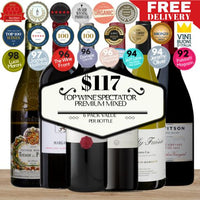
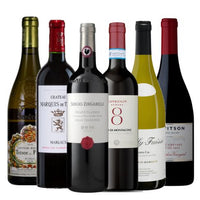
Top Wine Spectator Premium Mixed Pack – 6 Pack Value Discover excellence in every glass with this curated selection of six premium wines, all highly rated by Wine Spectator. This exclusive mixed pack brings together world-class reds and whites celebrated for their quality, character, and craftsmanship. Perfect for collectors, discerning drinkers, or as an impressive gift, it offers a true taste of wines recognised on the global stage.This exclusive collection features meticulously selected wines, each earning accolades from the renowned Wine Spectator.
1 x Chateau Marquis de Terme, Margaux 2016 - Bordeaux , France
94/100 Jeff Leve, The Wine Cellar Insider 93/100 Neal Martin, Vinous 92/100 Lisa Perrotti-Brown, Robert Parker's Wine Advocate 92/100 Falstaff Magazin 92/100 Wine Enthusiast 91/100 Decanter 91/100 Jeb Dunnuck 90/100 Wine Spectator
Silver, International Wine & Spirit Competition
Organic
Jeff Leve “...Soft, polished, round and with fruit to spare, this is showing great today and will only get better with time...floral nuances to the licorice, cherry, black raspberry and smoky overtones. ”
Neal Martin, Vinous “...Elegant and cohesive, this is a fine Margaux .........crushed violet and incense infusing the vivacious black fruit. The lightly spiced, medium-bodied palate features supple tannins, a fine bead of acidity and a pinch of white pepper on the finish.”
Julia Harding MW “Deep cherry. Fragrant with sweet dark-red and black fruit and a touch of oak sweetness. Firm, chewy, not trying to charm at the moment but it’s all in place, just needs to open and blossom.”
Wine Spectator "Warm in feel, with dark plum, cassis and cherry compote flavors forming the core. Generally open in feel, with light cocoa, tobacco and alder notes adding spine and texture to offset the tasty fruit."
60% Cabernet Sauvignon, 35% Merlot and 5% Petit Verdot
Chateau Marquis de Terme is a Bordeaux wine estate founded in 1661.
Château Marquis de Terme’s Margaux wine is a legendary Bordeaux wine estate, classified as a 'Quatrième Cru (Fourth Growth) Classé' in the 1855 Classification of Bordeaux wines. American President Thomas Jefferson - himself a wine connoisseur, visited Bordeaux in 1787 - declaring Château Marquis de Terme as one of the 16 best Bordeaux wines he tasted.
Chateau Marquis de Terme began organic farming on a small parcel of vines with their first organic wine being the 2013 vintage. They are now farming their vineyards entirely organically achieving organic certification in 2017. Sitting on the doorstep of Margaux, Château Marquis de Terme is emblematic of both how many Bordeaux châteaux were once created and of the famous Margaux terroir. Though a Grand Cru Classé and world-renowned wine, the family owned estate is dedicated to premium wine-making and world class organic practices. The location of the estate at the heart of the Margaux appellation offers a climate that is heavily influenced by both the Gironde estuary and Bay of Biscay, as well as the sheltering effects of the coastal pine forests that protect the vines from the westerly and northwesterly winds.
Margaux is an important appellation in the Haut-Médoc district of Bordeaux, southwestern France. The appellation is famous for producing supple, perfumed wines, predominantly from Cabernet Sauvignon. The Margaux appellation contains 21 cru classé properties from the 1855 Bordeaux Classification (20 of which still exist), more than any other Left Bank appellation.
Bordeaux, in the southwest of France, needs little introduction as one of the world's most famous, prestigious and prolific wine regions. Its three trump cards are diversity, quality and quantity. The majority of Bordeaux wines (nearly 90 percent of production volume) are the dry, medium- and full-bodied red Bordeaux Blends that established its reputation. The finest (and most expensive) of these come from the great châteaux of the Haut-Médoc and the Right Bank appellations Saint-Émilion and Pomerol. The legendary reds are complemented by high-quality white wines, both dry styles (particularly from Pessac-Léognan) and the sweet, botrytized nectars of Sauternes.
A Bordeaux Blend is any combination of those grape varieties typically used to make the red wines of Bordeaux. Cabernet Sauvignon is widely accepted as a compulsory component of any Bordeaux Blend along with Merlot. In fact, the majority of Bordeaux Blend wines are often made exclusively from a blend of these two varieties. The remaining components are Cabernet Franc, Petit Verdot and Malbec. 1 x Château Maucoil Châteauneuf-du-Pape Trésor White (Organic) 2014 - Rhône Valley, France
90/100 Wine Spectator 90/100 Wine Enthusiast 90/100 Robert Parker
30% Grenache Blanc, 30% Clairette, 30% Bourboulenc and 10% Roussanne
Wine Enthusiast "This is a rich, toasty white Châteauneuf-du-Pape. Notes of honey, melon and pineapple mark the nose and palate, while the finish is warm and long, with lingering hints of popcorn and roasted nuts."
Jeb Dunnuck "More tropical in character with plenty of pineapple, peach and subtle brioche, the 2014 Châteauneuf du Pape Blanc Tresor des Papes is medium-bodied, beautifully textured, and lengthy with a dry finish. This shows a touch more class and purity than the traditional cuvée and should have a longer drink window as well."
The history of Château Maucoil began several centuries ago. Ancient documents state that its first occupants were Romans who set up a base for Caesar’s legions. Later, Joseph de La Pise, Lord of Maucoil and archivist of the House of Orange-Nassau, the Dutch royal family, inherited the estate and the castle which was built in 1624. From then on, winegrowing became an intrinsic part of the history of Château Maucoil.
The 45 hectares of vines in the Châteauneuf-du-Pape appellation have been organic agriculture since 2011. Château Maucoil uses ancient methods such as furrowing, forming mounds and ploughing to tend the vineyard.
Originally from Bordeaux, the Lavau family who now own Château Maucoil, have been involved with winemaking for generations, and have had vineyards ranging from Bordeaux to Tunisia. In 1964 they were seduced by the richness and quality of the Provencal soil and settled down to make wine in the Rhone Valley.
Châteauneuf-du-Pape is a historic village between the towns of Orange and Avignon, in France's southern Rhône Valley. It is famous for powerful, full-bodied red wines made predominantly from the classic southern Rhône grape trio: Grenache, Syrah and Mourvèdre. These three varieties are behind the vast majority of the appellation's red wines, although a total of eighteen are approved for use – a mix of red and white grape varieties.
Southern Rhone White Blend is a blanket term used to describe the various combinations of white wine grapes used in the southern half of the Rhone Valley. The principal varieties involved in a white wine from the southern Rhone are any combination of Grenache Blanc, Marsanne, Roussanne, Viognier, Ugni Blanc, Clairette, Bourboulenc and Picpoul.
1 x Esperienza Numero 8 Brunello di Montalcino 2018 - Tuscany, Italy
Winesearcher "This is more affordable than many Brunello di Montalcino wines. Not as widely known as other Brunello di Montalcino wines. This wine has been becoming increasingly popular over the past year."
Vivino, Yomme (Five Star Buyer rating) "Stupendous Sangiovese balanced and already with some complexity."
Vivino, Boris Kingston (Vivino's N# 3 Wine Rater) "Everything you want from a Brunello..... Impressive and delicious. Elegant, integrated barrel and light cherry. Intense and rich bouquet. Palette of rich acidity, marzipan character and juicy, concentrated fruit. Hint of prunes, delichious strawberry, a slight hint of vanilla and a crisp cherry character. And a sureprisingly feature of blueberry. Long finish." (2009 vintage)
Winemaker "Intense ruby red, complex on the nose with aromas of plums, ripe black cherries and red berries, well balanced with notes of tobacco and liquorice, also beautiful harmony on the palate, elegant tannins and a long finish, can be stored very well"
Sangiovese 100%
Rocca delle Macìe was established in 1973, when film producer Italo Zingarelli – of Ettore Scola’s “We All Loved Each Other So Much” fame, and also the wildly popular series of films featuring comedy duo Bud Spencer and Terence Hill (including “They Call Me Trinity” and “Trinity Is Still My Name”) – decided to realize his lifelong dream by acquiring the “Le Macìe” estate – extending across 93 hectares (230 acres) in all, of which only two were under vine – in order to create a winery in the heart of the Chianti Classico zone.
The company estate now extends to more than 500 hectares (1250 acres) with, in total, more than 200 (500 acres) used as vineyards and 22 (54 acres) as olive groves, subdivided across the company’s six estates: Le Macìe, Sant’Alfonso, Fizzano e le Tavolelle in the Chianti Classico Area, in addition to the Campomaccione and Casa Maria estates in the Morellino di Scansano Area (Maremma).
The Chianti region in Italy's Tuscany wine growing region is split between Chianti and Chianti Classico. Accordingly, two separate DOCG designations apply to wines from the Chianti region: the Chianti Classico DOCG for the heartland of Chianti, and Chianti DOCG for all other Chianti regions. (In 1984, the Chianti region was promoted from DOC to DOCG - Italy’s highest classification - and in 1996, Chianti Classico - the historic heartland of the region - DOCG was created, which gave autonomy to that region. In the last 20 years, a consortium of Chianti Classico producers have researched new Sangiovese clones, replanted vineyards, updated cellar practices and generally made Chianti Classico DOCG a world-class appellation. Chianti Classico must contain a minimum of 75% Sangiovese. In the 2014 edition of its annual compendium of wine ratings, Gambero Rosso noted that Chianti Classico DOCG wines were noteworthy for their “significant return to a more defined style, true to tradition.” The typical Chianti Classico wine is a ruby-red, Sangiovese-based wine with aromas of violets and cherries and a hint of earthy spice.
The Chianti DOCG designation covers wines from six Chianti sub-zones (Colli Pisane, Colli Fiorentini, Colli Senesi, Colli Aretini, Montalbano and Rufina) as well as all other Chianti wines. The Chianti Classico DOCG is located in the very center of Tuscany, between Florence and Sienna.
Brunello di Montalcino is a wine made with 100% Sangiovese with Italy’s highest DOCG classification. Sangiovese is the wine that most wine critics cite to be the best in all of Italy. Brunello di Montalcino is made with a local Tuscan type of Sangiovese referred to as Brunello or Sangiovese Grosso. Some also call it Prugnolo Gentile. Noted for having thicker-skinned berries, and because of this, Brunello produces wines with exceptionally bold fruit flavors, high tannin, and high acidity. The fruit is a contributes to the enduring popularity of Brunello di Montalcino.
Sangiovese (or Nielluccio in Corsica), a dark-berried vine, is the most widely planted grape variety in Italy. Virtually synonymous with the red wines of Tuscany, and all the romanticism that goes with the territory, Sangiovese is the core constituent in some of the great names in Italian wine. Italy's love affair with Sangiovese – and indeed the world's – is generations old, though recent grapevine research suggests the variety is not as ancient as once thought.
1 x Hewitson "Old Garden" Mourvèdre 2010 – Barossa Valley, South Australia
97/100 James Halliday 96/100 Decanter 96/100 The Wine Front 94/100 Jeremy Oliver 92/100 Robert Parker, Wine Advocate 92/100 CellarTracker 96/100 James Halliday (2009 vintage) 95/100 The Wine Front (2009 vintage) 93+/100 Robert Parker, Wine Advocate (2009 vintage) 93/100 Jeremy Oliver (2009 vintage) 91/100 CellarTracker (2009 vintage) 91/100 Wine Enthusiast (2009 vintage) 90/100 Wine Spectator (2009 vintage) 90/100 Wine & Spirit Magazine (2009 vintage) Bronze - James Suckling (2009 vintage) Bronze - Huon Hooke, The Real Review (2009 vintage)
James Halliday 5 Star Winery James Suckling Top 100 Top Value Wine 2020 James Halliday Top 100 Winery 2017 Top Rated Other Red and Blend of the Year 2024 - Halliday Wine Companion
Bronze - International Wine Challenge (2009 vintage)
James Halliday "Clear crimson; a wine that is complete and confident in itself, effortlessly filling the bouquet and palate with its small red and black fruits, a shimmer of tannins throughout, and a lingering finish. Vines planted 1853."
Decanter "Dark, heady spice and orange peel notes saturate the red cherry and blackberry fruit; terrific vinosity, well-framed by textured tannins."
Robert Parker, Wine Advocate "With a medium density of garnet color, the 2010 Mourvedre Old Garden is evolving into a meat and earth-laced bake berry and preserved plum character with nuances of new leather and underbrush. Medium to full-bodied, it delivers plenty of earthy/savory flavor with a firm backbone of chewy tannins and a good, long finish."
James Halliday "ght, clear, but bright red; the mother/daughter relationship with '10 Baby Bush Mourvedre is immediately obvious; this wine has greater intensity to its red fruits, but the same lithe grace and the remarkably fine, almost silky, tannins. Will live for a long, long time." (2009 vintage)
Robert Parker, Wine Advocate "Produced of 100% Mourvedre coming from 1853 vines, believed to be the oldest Mourvedre vines on the planet, the 2009 Old Garden Mourvedre is medium-deep garnet-purple colored giving a whole array of complex aromas: warm mulberries, black raspberries, kirsch, fruit cake, baking spices, game, dusty earth and sandalwood. Medium bodied, it is elegantly fruited in the mouth with silky tannins, very crisp acid and a long finish with plenty of spice, red berry and savory layers." (2009 vintage)
Wine Enthusiast "Hewitson, the Old Garden—source for this wine—was planted in 1853, likely making it the oldest Mourvèdre in existence. This vintage is bright-fruited, offering notes of strawberry, raspberry and even watermelon, framed by hints of cedar, vanilla and dark chocolate. The tannins are supple, letting crisp acidity drive the long finish." (2009 vintage)
James Suckling "Simple strawberry aromas with a hint of meat. Simple and thin." (2009 vintage)
Huon Hooke, The Real Review "Medium-light red, slight purple. Earthy, leathery and animal aromas. Slightly funky. Rather lean, linear, funky and not very flattering taste. Very earthy and not fresh or primary. Very drying powdery tannins flood the palate. Fruit is a bit light-on. " (2009 vintage)
Australian Wine Companion "Established in 1998 Hewitson winery is situated in the heart of the Barossa Valley on the historic Seppeltsfield Road and boasts some of the oldest vines in the world. Hewitson fruit is sourced from historic, dry-grown vineyards in the Barossa Valley and also from single-site vineyards in Eden Valley, McLaren Vale and the Adelaide Hills."
Frederick Wildman "Dean Hewitson founded his eponymous winery in 1998. He is a highly respected Australian winemaker ...Hewitson has worked at wineries in Australia, France, Italy and Oregon. Hewitson then moved to the U.S. where he earned a Masters from UC-Davis. On his return home, Dean brought a wealth of knowledge, practical experience and a driving passion to produce wines not only from Barossa Valley but also from the McLaren Vale and the Adelaide Hills regions.
Hewitson fundamentally believes great wines are the expression of the soils they are grown in and the season in which they are grown. With his longstanding focus on terroir—specific terroir plots in fact—many of Hewitson’s wines are single vineyard. He sources grapes from not only his own vineyards but also from long-standing grower contracts including a few sourced from some of the oldest living, still productive vines on plots that date back to the mid-19th century and are pre-phylloxera. His ‘Old Garden’ Mourvèdre is a single-vineyard wine, whose vines were planted in 1853 in Barossa Valley and are reputed to be the oldest Mourvèdre vines in the world. Hewitson’s ‘Miss Harry’ is sourced from a Grenache vineyard planted in 1880, also thought to be the oldest Grenache in existence.
Due to Hewitson’s education and experience in Australia, California and France, Hewitson wines combine Old-World traditions with New-World fruit purity. And while he clearly excels with Rhône Valley grape varieties, Hewitson also produces award-winning Riesling and Sauvignon Blanc. A practitioner in solar energy, water recycling and encouraging natural biodiversity, Hewitson produces wines in an environmentally sustainable fashion."
James Halliday "Dean Hewitson was a winemaker at Petaluma [one of Australia's leading wineries] for 10 years, during which time he managed to do three vintages in France and one in Oregon as well as undertaking his Masters at the University of California, Davis. It is hardly surprising that the wines are immaculately made from a technical viewpoint. Dean sources 30-year-old Riesling from the Eden Valley and 70-year-old shiraz from McLaren Vale; he also makes a Barossa Valley Mourvedre from vines planted in 1853 at Rowland Flat, and Barossa Valley Shiraz and Grenache from 60-year-old vines at Tanunda."
The Barossa Valley is an extremely important wine-producing region within the Barossa zone of South Australia, particularly associated with powerful red wines from the red wine grape variety Shiraz. A prestigious and internationally renowned region, it is not only home to some of the oldest vineyards and wineries in Australia but produces some of its most recognizable and sought-after brands. A striking feature of the Barossa Valley's wine landscape is the presence of very old vines, proudly showcased on many wine labels and during vineyard tours.
Mourvedre is a black-skinned variety that has been grown in vineyards all around the western Mediterranean for centuries. Thought to have originated in Spain, it is now grown extensively throughout the Iberian Peninsula, southern France, California and South Australia. Single-variety Mourvedre or Monastrell wines are not particularly common, but as the curiosity of the average wine consumer increases, so more and more producers are experimenting with making wines from 100 per cent Mourvedre.
1 x Sergio Zingarelli Chianti Classico Gran Selezione 2019 - Tuscany, Italy
Corona - Vini Buoni d'Italia 5 Grappoli - Bibenda 3 Biccheri - Gambero Rosso 3 Stelle Oro - Veronelli Oro - Civiltà del Bere – WOW (2018 vintage) Finalista 2 bicchieri rossi - Gambero Rosso (2018 vintage) 5 Grappoli - Bibenda (2018 vintage)
Gold - Decanter World Wine Awards Gold - London Wine Competition Bronze - Korea Wine Challenge Gold - Decanter World Wine Awards (2018 vintage)
James Suckling "Extremely perfumed, with blackberry, lavender and rose-petal aromas and flavors. Medium-bodied with an integrated palate and very fine tannins that give length and definition to the wine. Some citrus undertones, too."
Wine Enthusiast "Leather, pencil shavings and balsamic vinegar on the nose mingle with wild herbs, especially oregano, with mint, cherry and chocolate arriving later. The palate has more cherries surrounded by blood orange jam before a shot of espresso on the slightly bitter finish that lasts thanks to sturdy tannins."
Raffaele Vecchione, Wine Critic "Slightly reductive in the primary profile showing notes of raspberries, black prunes, plums and mixed blue flowers. Medium bodied, soft tannins and a serious, essential finale which balances equilibrium and distension."
Falstaff "Bright ruby red with garnet hints. Slightly reductive on the nose at first, then rich, sour cherry, dried rose petals and a touch of white pepper. Well balanced on the palate, with velvety tannins and lively acidity, a long and elegant finish."
Robert Parker, Wine Advocate "...offers the extra richness and concentration that came naturally to the 2019 growing season. There are aromas of baked cherry, sweet earth and black olive that are characteristic of Sangiovese."
James Suckling "Sweet-berry, bark and pine-needle aromas with some cedar. Flowers, too. Medium-to full-bodied, fresh and bright with firm tannins and a lively acidity. Crunchy and vivid. Firm tannins. Austere, in a sophisticated way." (2018 vintage)
Wine Enthusiast "Notes of dark chocolate, spices and cherry syrup with metallic hints of crushed rocks make for a luxurious nose with a palate to match, nearly spicy with pepper and acidity and structured if opulent tannins." (2018 vintage)
Robert Parker, Wine Advocate "....offers pretty brightness and intensity with layers of dark currant, cherry and crushed mineral with lingering smoke and spice. This is the estate's top-end wine to pair with a hearty Tuscan cut of T-bone steak." (2018 vintage)
Falstaff "Elegantly shining deep ruby. Graceful bouquet of wild berries, fresh cherry and mint, accompanied by light leather notes. Fresh and steely on the palate, with great traction. Vivid, fine-grained tannin, beautiful fruit core into the persistent finish." (2018 vintage)
Raffaele Vecchione, Wine Critic "Wilted flowers, calendula, pumpkin and chinotto are the primary scents of this Gran Selezione. Medium bodied, light tannins and a finale of medium progression." (2018 vintage)
Rocca delle Macìe was established in 1973, when film producer Italo Zingarelli – of Ettore Scola’s “We All Loved Each Other So Much” fame, and also the wildly popular series of films featuring comedy duo Bud Spencer and Terence Hill (including “They Call Me Trinity” and “Trinity Is Still My Name”) – decided to realize his lifelong dream by acquiring the “Le Macìe” estate – extending across 93 hectares (230 acres) in all, of which only two were under vine – in order to create a winery in the heart of the Chianti Classico zone.
The estate now extends to more than 500 hectares (1250 acres) with, in total, more than 200 (500 acres) used as vineyards and 22 (54 acres) as olive groves, subdivided across the company’s six estates: Le Macìe, Sant’Alfonso, Fizzano e le Tavolelle in the Chianti Classico Area, in addition to the Campomaccione and Casa Maria estates in the Morellino di Scansano Area (Maremma).
The Chianti region in Italy's Tuscany wine growing region is split between Chianti and Chianti Classico. Accordingly, two separate DOCG designations apply to wines from the Chianti region: the Chianti Classico DOCG for the heartland of Chianti, and Chianti DOCG for all other Chianti regions. (In 1984, the Chianti region was promoted from DOC to DOCG - Italy’s highest classification - and in 1996, Chianti Classico - the historic heartland of the region - DOCG was created, which gave autonomy to that region. In the last 20 years, a consortium of Chianti Classico producers have researched new Sangiovese clones, replanted vineyards, updated cellar practices and generally made Chianti Classico DOCG a world-class appellation. Chianti Classico must contain a minimum of 75% Sangiovese. In the 2014 edition of its annual compendium of wine ratings, Gambero Rosso noted that Chianti Classico DOCG wines were noteworthy for their “significant return to a more defined style, true to tradition.” The typical Chianti Classico wine is a ruby-red, Sangiovese-based wine with aromas of violets and cherries and a hint of earthy spice.
The Chianti DOCG designation covers wines from six Chianti sub-zones (Colli Pisane, Colli Fiorentini, Colli Senesi, Colli Aretini, Montalbano and Rufina) as well as all other Chianti wines. The Chianti Classico DOCG is located in the very center of Tuscany, between Florence and Sienna." "Tuscany is Italy's third most planted region (behind Sicily and Apulia) but it is eighth in terms of output, reflecting both the poor soil of Tuscany and deliberate efforts to limit yields and increase the quality in the wine. After Piedmont and the Veneto, Tuscany produces the third-highest volume of DOC/DOCG wines. More than 80% of the regions' production is in red wine, with the Sangiovese grape being Tuscany's' most prominent grape. Trebbiano is the leading white variety of the region.
The history of viticulture in Tuscany dates back to the Etruscans in the 8th century BC. From the fall of the Roman Empire and throughout the Middle Ages, monasteries were the main purveyors of wines in the region. As the aristocratic and merchant classes emerged, they inherited the share-cropping system of agriculture known as mezzadria. Many Tuscan landowners would turn their half of the grape harvest into wine that would be sold to merchants in Florence. Following the end of the Napoleonic Wars, Tuscany returned to the rule of the Habsburgs. Chianti, Chianti Classico, Brunello di Montalcino, Vino Nobile di Montepulciano and Super Tuscan are Tuscany’s best known wines.
Sangiovese (or Nielluccio in Corsica), a dark-berried vine, is the most widely planted grape variety in Italy. Virtually synonymous with the red wines of Tuscany, and all the romanticism that goes with the territory, Sangiovese is the core constituent in some of the great names in Italian wine. Italy's love affair with Sangiovese – and indeed the world's – is generations old, though recent grapevine research suggests the variety is not as ancient as once thought.
Cabernet Sauvignon is one of the most famous red wine grape variety on Earth. It is rivaled in this regard only by its Bordeaux stablemate Merlot, and its opposite number in Burgundy, Pinot Noir. From its origins in Bordeaux, Cabernet has successfully spread to almost every winegrowing country in the world. It is now the key grape variety in many first-rate New World wine regions, most notably Napa Valley, Coonawarra and Maipo Valley. Wherever they come from, Cabernet Sauvignon wines always seem to demonstrate a handful of common character traits: deep color, good tannin structure, moderate acidity and aromas of blackcurrant, tomato leaf, dark spices and cedarwood.Rocca delle Macìe was established in 1973, when film producer Italo Zingarelli – of Ettore Scola’s “We All Loved Each Other So Much” fame, and also the wildly popular series of films featuring comedy duo Bud Spencer and Terence Hill (including “They Call Me Trinity” and “Trinity Is Still My Name”) – decided to realize his lifelong dream by acquiring the “Le Macìe” estate – extending across 93 hectares (230 acres) in all, of which only two were under vine – in order to create a winery in the heart of the Chianti Classico zone.
1 x Georges Duboeuf Premier Cru Pouilly-Fuisse 2021 - Burgundy, France
James Suckling "Poached pears, baked apples and blanched almonds on the nose. Lemon curd and subtle spice notes, too. Medium-to full-bodied with a creamy, juicy palate. Finishes fresh." (2020 vintage)
Vinatis Wine & Champagne "The 2020 Pouilly-Fuissé 1er Cru from Vins Georges Duboeuf delighted me with its perfect balance. Its white-fleshed fruit aromas and subtle buttery touch create an exquisite harmony, while its elegant finish on the palate makes it an unforgettable choice for lovers of elegant, flavoursome wines." (2020 vintage)
100% Chardonnay
This wine is produced by Les Vins Georges Duboeuf which is one of the largest wine producers in France founded by the late Georges Duboeuf who was affectionately known as 'le roi du Beaujolais' (the king of Beaujolais) or sometimes pape du Beaujolais (Pope of Beaujolais). Les Vins Georges Duboeuf produces a staggering 3 million cases of wine annually. The company is most well-known for its popularization and production of Beaujolais wines. In 2018 Georges’ passed control of his company to his son Franck Duboeuf, who is considered to be one of the key specialists in Beaujolais, its terroir and its wine, and has shifted production to focus more on Beaujolais Nouveau.
Pouilly-Fuissé is the appellation for the finest white wines of southern Burgundy's Maconnais district. There is no Premier Cru system within the appellation, so quality is indicated through the reputations of producers and their vineyards.
Burgundy (Bourgogne in French) is an historic and highly respected wine region in eastern France. Burgundy wines have long had devout followers throughout the world and continue to do so today. Although Bordeaux produces about four times as much wine every year, Burgundy’s estimated 74,000 acres (30,000ha) of vineyards are considered to be of equal importance, producing some of the most exclusive wines on Earth.
The two key grape varieties of Burgundy are Pinot Noir and Chardonnay, both members of the extended 'Pinot' family of grape varieties. There are others too, of course, like Aligoté, Pinot Gris, Gamay, and Sauvignon Blanc but the primary focus of Burgundy’s production is Pinot Noir for Bourgogne Rouge and Chardonnay for Bourgogne Blanc. Located in the east-central part of France, Burgundy has 5 primary wine growing areas; Chablis – “shab-lee” Côte de Nuits – the night slope, Côte de Beaune – the slope of Beaune, Côte Chalonnaise – the Chalon slope, Mâconnais – the region of Mâcon.
Chardonnay is one of the world’s most popular grapes, Chardonnay is made in a wide range of styles from lean, to rich, creamy white wines aged in oak. Bolder, richer, full-bodied and buttery Chardonnays are made using oak and are produced in California, Burgundy, and Australia. Unoaked chardonnays such as Chablis and those produced in Chile, New Zealand, and other parts of France are leaner and often crisp and mineraly, with delicate flavors. By law, if a label says “Chablis,” it must be Chardonnay.
Top Wine Spectator Premium Mixed Pack – 6 Pack Value Discover excellence in every glass with this curated selection of six premium wines, all highly rated by Wine Spectator. This exclusive mixed pack brings together world-class reds and whites celebrated for their quality, character, and craftsmanship. Perfect for collectors, discerning drinkers, or as an impressive gift, it offers a true taste of wines recognised on the global stage.This exclusive collection features meticulously selected wines, each earning accolades from the renowned Wine Spectator.
1 x Chateau Marquis de Terme, Margaux 2016 - Bordeaux , France
94/100 Jeff Leve, The Wine Cellar Insider 93/100 Neal Martin, Vinous 92/100 Lisa Perrotti-Brown, Robert Parker's Wine Advocate 92/100 Falstaff Magazin 92/100 Wine Enthusiast 91/100 Decanter 91/100 Jeb Dunnuck 90/100 Wine Spectator
Silver, International Wine & Spirit Competition
Organic
Jeff Leve “...Soft, polished, round and with fruit to spare, this is showing great today and will only get better with time...floral nuances to the licorice, cherry, black raspberry and smoky overtones. ”
Neal Martin, Vinous “...Elegant and cohesive, this is a fine Margaux .........crushed violet and incense infusing the vivacious black fruit. The lightly spiced, medium-bodied palate features supple tannins, a fine bead of acidity and a pinch of white pepper on the finish.”
Julia Harding MW “Deep cherry. Fragrant with sweet dark-red and black fruit and a touch of oak sweetness. Firm, chewy, not trying to charm at the moment but it’s all in place, just needs to open and blossom.”
Wine Spectator "Warm in feel, with dark plum, cassis and cherry compote flavors forming the core. Generally open in feel, with light cocoa, tobacco and alder notes adding spine and texture to offset the tasty fruit."
60% Cabernet Sauvignon, 35% Merlot and 5% Petit Verdot
Chateau Marquis de Terme is a Bordeaux wine estate founded in 1661.
Château Marquis de Terme’s Margaux wine is a legendary Bordeaux wine estate, classified as a 'Quatrième Cru (Fourth Growth) Classé' in the 1855 Classification of Bordeaux wines. American President Thomas Jefferson - himself a wine connoisseur, visited Bordeaux in 1787 - declaring Château Marquis de Terme as one of the 16 best Bordeaux wines he tasted.
Chateau Marquis de Terme began organic farming on a small parcel of vines with their first organic wine being the 2013 vintage. They are now farming their vineyards entirely organically achieving organic certification in 2017. Sitting on the doorstep of Margaux, Château Marquis de Terme is emblematic of both how many Bordeaux châteaux were once created and of the famous Margaux terroir. Though a Grand Cru Classé and world-renowned wine, the family owned estate is dedicated to premium wine-making and world class organic practices. The location of the estate at the heart of the Margaux appellation offers a climate that is heavily influenced by both the Gironde estuary and Bay of Biscay, as well as the sheltering effects of the coastal pine forests that protect the vines from the westerly and northwesterly winds.
Margaux is an important appellation in the Haut-Médoc district of Bordeaux, southwestern France. The appellation is famous for producing supple, perfumed wines, predominantly from Cabernet Sauvignon. The Margaux appellation contains 21 cru classé properties from the 1855 Bordeaux Classification (20 of which still exist), more than any other Left Bank appellation.
Bordeaux, in the southwest of France, needs little introduction as one of the world's most famous, prestigious and prolific wine regions. Its three trump cards are diversity, quality and quantity. The majority of Bordeaux wines (nearly 90 percent of production volume) are the dry, medium- and full-bodied red Bordeaux Blends that established its reputation. The finest (and most expensive) of these come from the great châteaux of the Haut-Médoc and the Right Bank appellations Saint-Émilion and Pomerol. The legendary reds are complemented by high-quality white wines, both dry styles (particularly from Pessac-Léognan) and the sweet, botrytized nectars of Sauternes.
A Bordeaux Blend is any combination of those grape varieties typically used to make the red wines of Bordeaux. Cabernet Sauvignon is widely accepted as a compulsory component of any Bordeaux Blend along with Merlot. In fact, the majority of Bordeaux Blend wines are often made exclusively from a blend of these two varieties. The remaining components are Cabernet Franc, Petit Verdot and Malbec. 1 x Château Maucoil Châteauneuf-du-Pape Trésor White (Organic) 2014 - Rhône Valley, France
90/100 Wine Spectator 90/100 Wine Enthusiast 90/100 Robert Parker
30% Grenache Blanc, 30% Clairette, 30% Bourboulenc and 10% Roussanne
Wine Enthusiast "This is a rich, toasty white Châteauneuf-du-Pape. Notes of honey, melon and pineapple mark the nose and palate, while the finish is warm and long, with lingering hints of popcorn and roasted nuts."
Jeb Dunnuck "More tropical in character with plenty of pineapple, peach and subtle brioche, the 2014 Châteauneuf du Pape Blanc Tresor des Papes is medium-bodied, beautifully textured, and lengthy with a dry finish. This shows a touch more class and purity than the traditional cuvée and should have a longer drink window as well."
The history of Château Maucoil began several centuries ago. Ancient documents state that its first occupants were Romans who set up a base for Caesar’s legions. Later, Joseph de La Pise, Lord of Maucoil and archivist of the House of Orange-Nassau, the Dutch royal family, inherited the estate and the castle which was built in 1624. From then on, winegrowing became an intrinsic part of the history of Château Maucoil.
The 45 hectares of vines in the Châteauneuf-du-Pape appellation have been organic agriculture since 2011. Château Maucoil uses ancient methods such as furrowing, forming mounds and ploughing to tend the vineyard.
Originally from Bordeaux, the Lavau family who now own Château Maucoil, have been involved with winemaking for generations, and have had vineyards ranging from Bordeaux to Tunisia. In 1964 they were seduced by the richness and quality of the Provencal soil and settled down to make wine in the Rhone Valley.
Châteauneuf-du-Pape is a historic village between the towns of Orange and Avignon, in France's southern Rhône Valley. It is famous for powerful, full-bodied red wines made predominantly from the classic southern Rhône grape trio: Grenache, Syrah and Mourvèdre. These three varieties are behind the vast majority of the appellation's red wines, although a total of eighteen are approved for use – a mix of red and white grape varieties.
Southern Rhone White Blend is a blanket term used to describe the various combinations of white wine grapes used in the southern half of the Rhone Valley. The principal varieties involved in a white wine from the southern Rhone are any combination of Grenache Blanc, Marsanne, Roussanne, Viognier, Ugni Blanc, Clairette, Bourboulenc and Picpoul.
1 x Esperienza Numero 8 Brunello di Montalcino 2018 - Tuscany, Italy
Winesearcher "This is more affordable than many Brunello di Montalcino wines. Not as widely known as other Brunello di Montalcino wines. This wine has been becoming increasingly popular over the past year."
Vivino, Yomme (Five Star Buyer rating) "Stupendous Sangiovese balanced and already with some complexity."
Vivino, Boris Kingston (Vivino's N# 3 Wine Rater) "Everything you want from a Brunello..... Impressive and delicious. Elegant, integrated barrel and light cherry. Intense and rich bouquet. Palette of rich acidity, marzipan character and juicy, concentrated fruit. Hint of prunes, delichious strawberry, a slight hint of vanilla and a crisp cherry character. And a sureprisingly feature of blueberry. Long finish." (2009 vintage)
Winemaker "Intense ruby red, complex on the nose with aromas of plums, ripe black cherries and red berries, well balanced with notes of tobacco and liquorice, also beautiful harmony on the palate, elegant tannins and a long finish, can be stored very well"
Sangiovese 100%
Rocca delle Macìe was established in 1973, when film producer Italo Zingarelli – of Ettore Scola’s “We All Loved Each Other So Much” fame, and also the wildly popular series of films featuring comedy duo Bud Spencer and Terence Hill (including “They Call Me Trinity” and “Trinity Is Still My Name”) – decided to realize his lifelong dream by acquiring the “Le Macìe” estate – extending across 93 hectares (230 acres) in all, of which only two were under vine – in order to create a winery in the heart of the Chianti Classico zone.
The company estate now extends to more than 500 hectares (1250 acres) with, in total, more than 200 (500 acres) used as vineyards and 22 (54 acres) as olive groves, subdivided across the company’s six estates: Le Macìe, Sant’Alfonso, Fizzano e le Tavolelle in the Chianti Classico Area, in addition to the Campomaccione and Casa Maria estates in the Morellino di Scansano Area (Maremma).
The Chianti region in Italy's Tuscany wine growing region is split between Chianti and Chianti Classico. Accordingly, two separate DOCG designations apply to wines from the Chianti region: the Chianti Classico DOCG for the heartland of Chianti, and Chianti DOCG for all other Chianti regions. (In 1984, the Chianti region was promoted from DOC to DOCG - Italy’s highest classification - and in 1996, Chianti Classico - the historic heartland of the region - DOCG was created, which gave autonomy to that region. In the last 20 years, a consortium of Chianti Classico producers have researched new Sangiovese clones, replanted vineyards, updated cellar practices and generally made Chianti Classico DOCG a world-class appellation. Chianti Classico must contain a minimum of 75% Sangiovese. In the 2014 edition of its annual compendium of wine ratings, Gambero Rosso noted that Chianti Classico DOCG wines were noteworthy for their “significant return to a more defined style, true to tradition.” The typical Chianti Classico wine is a ruby-red, Sangiovese-based wine with aromas of violets and cherries and a hint of earthy spice.
The Chianti DOCG designation covers wines from six Chianti sub-zones (Colli Pisane, Colli Fiorentini, Colli Senesi, Colli Aretini, Montalbano and Rufina) as well as all other Chianti wines. The Chianti Classico DOCG is located in the very center of Tuscany, between Florence and Sienna.
Brunello di Montalcino is a wine made with 100% Sangiovese with Italy’s highest DOCG classification. Sangiovese is the wine that most wine critics cite to be the best in all of Italy. Brunello di Montalcino is made with a local Tuscan type of Sangiovese referred to as Brunello or Sangiovese Grosso. Some also call it Prugnolo Gentile. Noted for having thicker-skinned berries, and because of this, Brunello produces wines with exceptionally bold fruit flavors, high tannin, and high acidity. The fruit is a contributes to the enduring popularity of Brunello di Montalcino.
Sangiovese (or Nielluccio in Corsica), a dark-berried vine, is the most widely planted grape variety in Italy. Virtually synonymous with the red wines of Tuscany, and all the romanticism that goes with the territory, Sangiovese is the core constituent in some of the great names in Italian wine. Italy's love affair with Sangiovese – and indeed the world's – is generations old, though recent grapevine research suggests the variety is not as ancient as once thought.
1 x Hewitson "Old Garden" Mourvèdre 2010 – Barossa Valley, South Australia
97/100 James Halliday 96/100 Decanter 96/100 The Wine Front 94/100 Jeremy Oliver 92/100 Robert Parker, Wine Advocate 92/100 CellarTracker 96/100 James Halliday (2009 vintage) 95/100 The Wine Front (2009 vintage) 93+/100 Robert Parker, Wine Advocate (2009 vintage) 93/100 Jeremy Oliver (2009 vintage) 91/100 CellarTracker (2009 vintage) 91/100 Wine Enthusiast (2009 vintage) 90/100 Wine Spectator (2009 vintage) 90/100 Wine & Spirit Magazine (2009 vintage) Bronze - James Suckling (2009 vintage) Bronze - Huon Hooke, The Real Review (2009 vintage)
James Halliday 5 Star Winery James Suckling Top 100 Top Value Wine 2020 James Halliday Top 100 Winery 2017 Top Rated Other Red and Blend of the Year 2024 - Halliday Wine Companion
Bronze - International Wine Challenge (2009 vintage)
James Halliday "Clear crimson; a wine that is complete and confident in itself, effortlessly filling the bouquet and palate with its small red and black fruits, a shimmer of tannins throughout, and a lingering finish. Vines planted 1853."
Decanter "Dark, heady spice and orange peel notes saturate the red cherry and blackberry fruit; terrific vinosity, well-framed by textured tannins."
Robert Parker, Wine Advocate "With a medium density of garnet color, the 2010 Mourvedre Old Garden is evolving into a meat and earth-laced bake berry and preserved plum character with nuances of new leather and underbrush. Medium to full-bodied, it delivers plenty of earthy/savory flavor with a firm backbone of chewy tannins and a good, long finish."
James Halliday "ght, clear, but bright red; the mother/daughter relationship with '10 Baby Bush Mourvedre is immediately obvious; this wine has greater intensity to its red fruits, but the same lithe grace and the remarkably fine, almost silky, tannins. Will live for a long, long time." (2009 vintage)
Robert Parker, Wine Advocate "Produced of 100% Mourvedre coming from 1853 vines, believed to be the oldest Mourvedre vines on the planet, the 2009 Old Garden Mourvedre is medium-deep garnet-purple colored giving a whole array of complex aromas: warm mulberries, black raspberries, kirsch, fruit cake, baking spices, game, dusty earth and sandalwood. Medium bodied, it is elegantly fruited in the mouth with silky tannins, very crisp acid and a long finish with plenty of spice, red berry and savory layers." (2009 vintage)
Wine Enthusiast "Hewitson, the Old Garden—source for this wine—was planted in 1853, likely making it the oldest Mourvèdre in existence. This vintage is bright-fruited, offering notes of strawberry, raspberry and even watermelon, framed by hints of cedar, vanilla and dark chocolate. The tannins are supple, letting crisp acidity drive the long finish." (2009 vintage)
James Suckling "Simple strawberry aromas with a hint of meat. Simple and thin." (2009 vintage)
Huon Hooke, The Real Review "Medium-light red, slight purple. Earthy, leathery and animal aromas. Slightly funky. Rather lean, linear, funky and not very flattering taste. Very earthy and not fresh or primary. Very drying powdery tannins flood the palate. Fruit is a bit light-on. " (2009 vintage)
Australian Wine Companion "Established in 1998 Hewitson winery is situated in the heart of the Barossa Valley on the historic Seppeltsfield Road and boasts some of the oldest vines in the world. Hewitson fruit is sourced from historic, dry-grown vineyards in the Barossa Valley and also from single-site vineyards in Eden Valley, McLaren Vale and the Adelaide Hills."
Frederick Wildman "Dean Hewitson founded his eponymous winery in 1998. He is a highly respected Australian winemaker ...Hewitson has worked at wineries in Australia, France, Italy and Oregon. Hewitson then moved to the U.S. where he earned a Masters from UC-Davis. On his return home, Dean brought a wealth of knowledge, practical experience and a driving passion to produce wines not only from Barossa Valley but also from the McLaren Vale and the Adelaide Hills regions.
Hewitson fundamentally believes great wines are the expression of the soils they are grown in and the season in which they are grown. With his longstanding focus on terroir—specific terroir plots in fact—many of Hewitson’s wines are single vineyard. He sources grapes from not only his own vineyards but also from long-standing grower contracts including a few sourced from some of the oldest living, still productive vines on plots that date back to the mid-19th century and are pre-phylloxera. His ‘Old Garden’ Mourvèdre is a single-vineyard wine, whose vines were planted in 1853 in Barossa Valley and are reputed to be the oldest Mourvèdre vines in the world. Hewitson’s ‘Miss Harry’ is sourced from a Grenache vineyard planted in 1880, also thought to be the oldest Grenache in existence.
Due to Hewitson’s education and experience in Australia, California and France, Hewitson wines combine Old-World traditions with New-World fruit purity. And while he clearly excels with Rhône Valley grape varieties, Hewitson also produces award-winning Riesling and Sauvignon Blanc. A practitioner in solar energy, water recycling and encouraging natural biodiversity, Hewitson produces wines in an environmentally sustainable fashion."
James Halliday "Dean Hewitson was a winemaker at Petaluma [one of Australia's leading wineries] for 10 years, during which time he managed to do three vintages in France and one in Oregon as well as undertaking his Masters at the University of California, Davis. It is hardly surprising that the wines are immaculately made from a technical viewpoint. Dean sources 30-year-old Riesling from the Eden Valley and 70-year-old shiraz from McLaren Vale; he also makes a Barossa Valley Mourvedre from vines planted in 1853 at Rowland Flat, and Barossa Valley Shiraz and Grenache from 60-year-old vines at Tanunda."
The Barossa Valley is an extremely important wine-producing region within the Barossa zone of South Australia, particularly associated with powerful red wines from the red wine grape variety Shiraz. A prestigious and internationally renowned region, it is not only home to some of the oldest vineyards and wineries in Australia but produces some of its most recognizable and sought-after brands. A striking feature of the Barossa Valley's wine landscape is the presence of very old vines, proudly showcased on many wine labels and during vineyard tours.
Mourvedre is a black-skinned variety that has been grown in vineyards all around the western Mediterranean for centuries. Thought to have originated in Spain, it is now grown extensively throughout the Iberian Peninsula, southern France, California and South Australia. Single-variety Mourvedre or Monastrell wines are not particularly common, but as the curiosity of the average wine consumer increases, so more and more producers are experimenting with making wines from 100 per cent Mourvedre.
1 x Sergio Zingarelli Chianti Classico Gran Selezione 2019 - Tuscany, Italy
Corona - Vini Buoni d'Italia 5 Grappoli - Bibenda 3 Biccheri - Gambero Rosso 3 Stelle Oro - Veronelli Oro - Civiltà del Bere – WOW (2018 vintage) Finalista 2 bicchieri rossi - Gambero Rosso (2018 vintage) 5 Grappoli - Bibenda (2018 vintage)
Gold - Decanter World Wine Awards Gold - London Wine Competition Bronze - Korea Wine Challenge Gold - Decanter World Wine Awards (2018 vintage)
James Suckling "Extremely perfumed, with blackberry, lavender and rose-petal aromas and flavors. Medium-bodied with an integrated palate and very fine tannins that give length and definition to the wine. Some citrus undertones, too."
Wine Enthusiast "Leather, pencil shavings and balsamic vinegar on the nose mingle with wild herbs, especially oregano, with mint, cherry and chocolate arriving later. The palate has more cherries surrounded by blood orange jam before a shot of espresso on the slightly bitter finish that lasts thanks to sturdy tannins."
Raffaele Vecchione, Wine Critic "Slightly reductive in the primary profile showing notes of raspberries, black prunes, plums and mixed blue flowers. Medium bodied, soft tannins and a serious, essential finale which balances equilibrium and distension."
Falstaff "Bright ruby red with garnet hints. Slightly reductive on the nose at first, then rich, sour cherry, dried rose petals and a touch of white pepper. Well balanced on the palate, with velvety tannins and lively acidity, a long and elegant finish."
Robert Parker, Wine Advocate "...offers the extra richness and concentration that came naturally to the 2019 growing season. There are aromas of baked cherry, sweet earth and black olive that are characteristic of Sangiovese."
James Suckling "Sweet-berry, bark and pine-needle aromas with some cedar. Flowers, too. Medium-to full-bodied, fresh and bright with firm tannins and a lively acidity. Crunchy and vivid. Firm tannins. Austere, in a sophisticated way." (2018 vintage)
Wine Enthusiast "Notes of dark chocolate, spices and cherry syrup with metallic hints of crushed rocks make for a luxurious nose with a palate to match, nearly spicy with pepper and acidity and structured if opulent tannins." (2018 vintage)
Robert Parker, Wine Advocate "....offers pretty brightness and intensity with layers of dark currant, cherry and crushed mineral with lingering smoke and spice. This is the estate's top-end wine to pair with a hearty Tuscan cut of T-bone steak." (2018 vintage)
Falstaff "Elegantly shining deep ruby. Graceful bouquet of wild berries, fresh cherry and mint, accompanied by light leather notes. Fresh and steely on the palate, with great traction. Vivid, fine-grained tannin, beautiful fruit core into the persistent finish." (2018 vintage)
Raffaele Vecchione, Wine Critic "Wilted flowers, calendula, pumpkin and chinotto are the primary scents of this Gran Selezione. Medium bodied, light tannins and a finale of medium progression." (2018 vintage)
Rocca delle Macìe was established in 1973, when film producer Italo Zingarelli – of Ettore Scola’s “We All Loved Each Other So Much” fame, and also the wildly popular series of films featuring comedy duo Bud Spencer and Terence Hill (including “They Call Me Trinity” and “Trinity Is Still My Name”) – decided to realize his lifelong dream by acquiring the “Le Macìe” estate – extending across 93 hectares (230 acres) in all, of which only two were under vine – in order to create a winery in the heart of the Chianti Classico zone.
The estate now extends to more than 500 hectares (1250 acres) with, in total, more than 200 (500 acres) used as vineyards and 22 (54 acres) as olive groves, subdivided across the company’s six estates: Le Macìe, Sant’Alfonso, Fizzano e le Tavolelle in the Chianti Classico Area, in addition to the Campomaccione and Casa Maria estates in the Morellino di Scansano Area (Maremma).
The Chianti region in Italy's Tuscany wine growing region is split between Chianti and Chianti Classico. Accordingly, two separate DOCG designations apply to wines from the Chianti region: the Chianti Classico DOCG for the heartland of Chianti, and Chianti DOCG for all other Chianti regions. (In 1984, the Chianti region was promoted from DOC to DOCG - Italy’s highest classification - and in 1996, Chianti Classico - the historic heartland of the region - DOCG was created, which gave autonomy to that region. In the last 20 years, a consortium of Chianti Classico producers have researched new Sangiovese clones, replanted vineyards, updated cellar practices and generally made Chianti Classico DOCG a world-class appellation. Chianti Classico must contain a minimum of 75% Sangiovese. In the 2014 edition of its annual compendium of wine ratings, Gambero Rosso noted that Chianti Classico DOCG wines were noteworthy for their “significant return to a more defined style, true to tradition.” The typical Chianti Classico wine is a ruby-red, Sangiovese-based wine with aromas of violets and cherries and a hint of earthy spice.
The Chianti DOCG designation covers wines from six Chianti sub-zones (Colli Pisane, Colli Fiorentini, Colli Senesi, Colli Aretini, Montalbano and Rufina) as well as all other Chianti wines. The Chianti Classico DOCG is located in the very center of Tuscany, between Florence and Sienna." "Tuscany is Italy's third most planted region (behind Sicily and Apulia) but it is eighth in terms of output, reflecting both the poor soil of Tuscany and deliberate efforts to limit yields and increase the quality in the wine. After Piedmont and the Veneto, Tuscany produces the third-highest volume of DOC/DOCG wines. More than 80% of the regions' production is in red wine, with the Sangiovese grape being Tuscany's' most prominent grape. Trebbiano is the leading white variety of the region.
The history of viticulture in Tuscany dates back to the Etruscans in the 8th century BC. From the fall of the Roman Empire and throughout the Middle Ages, monasteries were the main purveyors of wines in the region. As the aristocratic and merchant classes emerged, they inherited the share-cropping system of agriculture known as mezzadria. Many Tuscan landowners would turn their half of the grape harvest into wine that would be sold to merchants in Florence. Following the end of the Napoleonic Wars, Tuscany returned to the rule of the Habsburgs. Chianti, Chianti Classico, Brunello di Montalcino, Vino Nobile di Montepulciano and Super Tuscan are Tuscany’s best known wines.
Sangiovese (or Nielluccio in Corsica), a dark-berried vine, is the most widely planted grape variety in Italy. Virtually synonymous with the red wines of Tuscany, and all the romanticism that goes with the territory, Sangiovese is the core constituent in some of the great names in Italian wine. Italy's love affair with Sangiovese – and indeed the world's – is generations old, though recent grapevine research suggests the variety is not as ancient as once thought.
Cabernet Sauvignon is one of the most famous red wine grape variety on Earth. It is rivaled in this regard only by its Bordeaux stablemate Merlot, and its opposite number in Burgundy, Pinot Noir. From its origins in Bordeaux, Cabernet has successfully spread to almost every winegrowing country in the world. It is now the key grape variety in many first-rate New World wine regions, most notably Napa Valley, Coonawarra and Maipo Valley. Wherever they come from, Cabernet Sauvignon wines always seem to demonstrate a handful of common character traits: deep color, good tannin structure, moderate acidity and aromas of blackcurrant, tomato leaf, dark spices and cedarwood.Rocca delle Macìe was established in 1973, when film producer Italo Zingarelli – of Ettore Scola’s “We All Loved Each Other So Much” fame, and also the wildly popular series of films featuring comedy duo Bud Spencer and Terence Hill (including “They Call Me Trinity” and “Trinity Is Still My Name”) – decided to realize his lifelong dream by acquiring the “Le Macìe” estate – extending across 93 hectares (230 acres) in all, of which only two were under vine – in order to create a winery in the heart of the Chianti Classico zone.
1 x Georges Duboeuf Premier Cru Pouilly-Fuisse 2021 - Burgundy, France
James Suckling "Poached pears, baked apples and blanched almonds on the nose. Lemon curd and subtle spice notes, too. Medium-to full-bodied with a creamy, juicy palate. Finishes fresh." (2020 vintage)
Vinatis Wine & Champagne "The 2020 Pouilly-Fuissé 1er Cru from Vins Georges Duboeuf delighted me with its perfect balance. Its white-fleshed fruit aromas and subtle buttery touch create an exquisite harmony, while its elegant finish on the palate makes it an unforgettable choice for lovers of elegant, flavoursome wines." (2020 vintage)
100% Chardonnay
This wine is produced by Les Vins Georges Duboeuf which is one of the largest wine producers in France founded by the late Georges Duboeuf who was affectionately known as 'le roi du Beaujolais' (the king of Beaujolais) or sometimes pape du Beaujolais (Pope of Beaujolais). Les Vins Georges Duboeuf produces a staggering 3 million cases of wine annually. The company is most well-known for its popularization and production of Beaujolais wines. In 2018 Georges’ passed control of his company to his son Franck Duboeuf, who is considered to be one of the key specialists in Beaujolais, its terroir and its wine, and has shifted production to focus more on Beaujolais Nouveau.
Pouilly-Fuissé is the appellation for the finest white wines of southern Burgundy's Maconnais district. There is no Premier Cru system within the appellation, so quality is indicated through the reputations of producers and their vineyards.
Burgundy (Bourgogne in French) is an historic and highly respected wine region in eastern France. Burgundy wines have long had devout followers throughout the world and continue to do so today. Although Bordeaux produces about four times as much wine every year, Burgundy’s estimated 74,000 acres (30,000ha) of vineyards are considered to be of equal importance, producing some of the most exclusive wines on Earth.
The two key grape varieties of Burgundy are Pinot Noir and Chardonnay, both members of the extended 'Pinot' family of grape varieties. There are others too, of course, like Aligoté, Pinot Gris, Gamay, and Sauvignon Blanc but the primary focus of Burgundy’s production is Pinot Noir for Bourgogne Rouge and Chardonnay for Bourgogne Blanc. Located in the east-central part of France, Burgundy has 5 primary wine growing areas; Chablis – “shab-lee” Côte de Nuits – the night slope, Côte de Beaune – the slope of Beaune, Côte Chalonnaise – the Chalon slope, Mâconnais – the region of Mâcon.
Chardonnay is one of the world’s most popular grapes, Chardonnay is made in a wide range of styles from lean, to rich, creamy white wines aged in oak. Bolder, richer, full-bodied and buttery Chardonnays are made using oak and are produced in California, Burgundy, and Australia. Unoaked chardonnays such as Chablis and those produced in Chile, New Zealand, and other parts of France are leaner and often crisp and mineraly, with delicate flavors. By law, if a label says “Chablis,” it must be Chardonnay.