



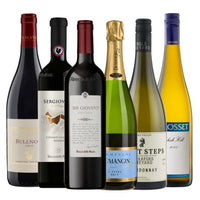

🇸🇬 Celebrate SG with Award-Winning Wines
Celebrate Singapore's National Day with our 🇸🇬 Celebrate SG with Award-Winning Wines collection. Featuring a curated selection of internationally acclaimed wines, this limited edition collection is perfect for sharing with family and friends, gifting loved ones, or raising a toast to Singapore's remarkable journey.
1 x Dumangin J. Fils L'Extra Brut Premier Cru Champagne NV - Champagne, France
93/100 Champagne Guide
90/100 Wine Enthusiast
Bronze- International Wine Challenge
Commended - International Wine Challenge
1 Star - Le Guide Hachette des Vins
Best Champagne under $60 USD, Champagne Guide
Wine Enthusiast "..soft, rich.....apple and crisp pear fruits along with a dry crisp texture....attractive, fruity and dry at the end."
James Suckling "Balanced, with silky bubbles and a fresh finish. This refreshing Champagne is....showing fresh pears, lemons and salted almonds..."
Wine Enthusiast "....freshest citrus along with an apple-skin texture."
James Suckling "...full with fine bubbles and a long and flavourful finish. Focused and intense, yet not too heavy. Plenty of fruit and character in this with some citrus, strawberry and bread dough character."
Bob Campbell Wine Reviews (NZ) "Richer and more complex with more bready lees character and less fruit. Perfectly dry but nicely balanced."
J. Dumangin Fils are one of France's most celebrated boutique champagne houses. J. Dumangin produces exceptional Champagne from their own vineyards in the acclaimed region of Chigny-les-Roses, South of Reims. Dumangin is recognised by the prestigious French wine guide, the Guide Hachette des Vins as a leading producer. The bible of the French wine industry awarded the Dumangin Grand Réserve a Coup de Cœur. The Coup de Coeur (judges' favourite) is the Guide Hachette’s highest possible recommendation.
Champagne is the most iconic sparkling wine in the world, produced in the region of Champagne in France. Synonymous with celebration, champagne is typically produced from a few specific varieties of grapes: pinot noir, chardonnay, and pinot meunier. With effervescent flavours of citrus, almond, and apple, champagne comes in varying levels of sweetness and has a moderate amount of alcohol. The most treasured Champagnes age for a minimum of 3 years.
The Champagne region is located 140 kilometres from Paris, France. While the vines in this region have been producing wine since the Roman era, it is only in the past couple of hundred years that winemakers began producing Champagne using méthode champenoise - the complex method that produces the style of Champagne the world knows and loves today. Another important component of the production of champagne is the chalk and limestone soils which dominate the Champagne region. Vines grown in these conditions result in wines that are high in acidity - a key component to making good sparkling wine. Champagne's northerly location - about as north as grapes can ripen - also allow for higher acidity and lower alcohol levels which are also very important for producing quality sparkling wine.
1 x Giant Steps Tarraford Vineyard Chardonnay 2019 ~ Yarra Valley, Victoria, Australia
95/100 The Wine Front
94/100 Wine Spectator
93/100 Nick's Wine Merchants
Mike Bennie (The Wine Front) "Huge mineral feel, indeed, you’d paste this into the section under ‘Wine; Minerality’ in an encyclopaedia. All pebbles and talc in perfume, sure, some citrus, citrus blossom, faint bread dough notes, but you’re drawn to the flint and element rocky notes primarily. The palate does the same, flint, wet slate, smooth pebbles rolled around the palate, olive brine, green apple juice and lime comes in too. Feels quite firm despite a sense of juiciness and being dart-shaped and long. Finishes with the faintest kiss of salted nuttiness. Just beautiful. Poised and fine."
The Wine Spectator "Stylish and memorable, with a touch of salted caramel adding a rich, savory edge, yet the core is pure and juicy, featuring lively Meyer lemon, Asian pear and lime sherbet flavors that show wonderful transparency and intensity, followed by candied ginger notes on the finish. Drink now through 2022. 530 cases made, 200 cases imported."
Giant Steps is a privately owned, estate based, Yarra Valley grower and winemaker. Giant Steps has forged a reputation for delivering some of Australia’s most consistent, over-performing, varietal wines. These wines have received global acclaim and established a strong reputation in restaurants and fine wine stores around the world.
Since 2003 Giant Steps wines have collectively been awarded 19 trophies and over 50 gold medals at major international and domestic wine shows, and has been named one of the Top 100 Wineries in the World by Wine & Spirits Magazine, US for each of the last three years.
Owner Phil Sexton came to wine via beer. He started Little Creatures, a favourite of Aussie hopheads, in Perth (Western Australia).
Yarra Valley is a region with a cool climate, best known for its Chardonnay and Pinot Noir. Yarra Valley is an hour’s drive east of Melbourne. Located in a protected valley, Tarraford Vineyard has a discrete microclimate that is cooler than neighbouring sites.
1 x Grosset Polish Hill Riesling (Organic) 2025 ~ Clare Valley, Australia
98/100 James Halliday - Weekend Australian Magazine
97/100 Robert Parker, Wine Advocate
97/100 Rob Geddes MW
Wines of Australia 2023 Top 100
Top 50 Australia's Most Collected Wines 2023 - Wine Ark
Top 50 of Australia’s Most Collected wines for 2019 – #11
Top 5 Rieslings – #1 - Gourmet Traveller Wine
Langton Classification VI: Rated ‘Exceptional’
Wine Ark: ‘Australia’s Most Collected Riesling’
Halliday's Top 100 - Weekend Australian Magazine "One of five Australian Rieslings listed (and one of just two from the Clare Valley), James Halliday has described this wine as ‘irresistible One of five Australian Rieslings listed (and one of just two from the Clare Valley), James Halliday has described this wine as ‘irresistible’!"
James Halliday - Weekend Australian Magazine "The cool, late vintage and reduced yield come together in a glorious riesling that is so delicious now it will be hard to give it the 10 or so years that will see it develop even more ravishing flavours and a lingering caress of silvery acidity."
Wine Advocate "The 2023 Polish Hill Riesling is utterly superb. It has the flesh and body that only the Clare can deliver; it is shaped by coiled acidity, and it ripples through the finish with unfettered fruit power. It's a glorious thing, this wine. It's looking precise, focused and floral through the lens of the 2023 season."
Rob Geddes MW "Polish Hill is the counterpoint to Spring Vale, where Watervale's lavish jonquil floral rose florals are countered with tense varietal purity of lime and lime blossom aromas and depth. Springvale has a remarkable ginger spice, a feature of the 23 vintage and is also recommended. The Polish Hill v23 wine has minerality and line typical of the region with excellent texture, flavour length, fruit weight and generosity with lavish fruit yet still focused and long with delicious flavour intensity and a slight firmness that augurs well for a long life."
Mike Bennie - Halliday Wine Companion "An outstanding release of this vaunted wine. It's intense, it's racy, it's complex and nuanced in its fruit, spice, mineral and subtle savoury elements, all of it woven into an extremely persistent and poised textural experience. There's stacks of flavour in all this, yet held within a tensile thrust of raciness and faint chalky pucker. And long, very long. One for the ages here."
Wine Enthusiast "2023 was a cool, late-ripening vintage in the Clare and the resulting wines are elegant and filigreed—approachable now, but with the structure and complexity to age for decades. Delicate aromas of lemon-lime, peach blossom, beeswax and lavender soap open. Like a soft hold of the hand, they lead gently to a pristine palate that's dry with high-toned fruit and prickly acidity. Texturally it feels both lightly creamy and chalky all at once."
Campbell Mattinson, The Wine Front "Grosset’s Polish Hill is renowned for its reserve, particularly on release, but this rendition has both its quality and its fruit intensity sitting front and centre. This really does announce itself. Flavours of lemon, lime, grapefruit, chalk and citrus blossom explode onto the palate in the most commanding and authoritative of ways, and then extend (mighty) lengthily through the finish. It’s a lay down misére. It’s scented, intense and sustained. It’s a wine of great beauty."
James Sucklng "Subdued aromas of talc, chalk, orchard fruits, tatami straw, finger lime and fresh lemonade. Dry and tightly furled to a point that verges on severity. There is bountiful extract that pummels the cheeks and stains the palate, suggestive of a bright future despite the unyielding youthfulness now. From biodynamically grown grapes."
Decanter Magazine ~ The World’s Top 10 White Winemakers #6 Jeffrey Grosset
"When the young Jeffrey Grosset launched his own winery in the Clare Valley in the early 1980’s, he was swimming against the tide. Back then, Chardonnay was the rising star of Australian Wine. But Grosset wanted to make Riesling, and to focus on letting the grapes speak for themselves. The rest of the Australian wine industry has, of course, caught up with Grosset since, thanks in part to the example set by this focused, restlessly intelligent winemaker. By consistently producing arguably Australia’s two best Rieslings – the flowery, lime-rich Watervale and the steely, firm Polish Hill – Grosset has not only helped steer the reversal in this variety’s fortunes, but has provided one of the country’s most powerful arguments in favour of the reality of terroir"
Grosset Wines are an independently owned winery producing highly regarded premium wines. Established in 1981, the winery is situated in the historic township of Auburn at the southern tip of the Clare Valley, 100 kilometres north of Adelaide.
Jeffrey Grosset, owner and founder, has always been an innovator, challenging tradition and questioning accepted practices. He campaigned to institute the legal integrity of the Riesling grape in Australia, was a leading proponent for the introduction of screwcap closures and privately funded research into the subject.
Grosset Wines’ philosophy has remained steadfast over thirty years. The emphasis is on purity of fruit. The estate vineyards, which are ACO certified organic, are hand tended and each bunch of grapes is harvested at optimum ripeness.
The winemaking process is gentle and uncomplicated. With dedication, discipline and the application of knowledge garnered through decades of experience, the result is the finest expression of variety and place.
Clare Valley is the northernmost wine region within the Mount Lofty Ranges zone of South Australia, located 81 miles (130km) north of the state capital, Adelaide. It is one of the most picturesque wine regions of Australia, with a tradition in winemaking going back to the early 19th century when the first vines were planted. Riesling reigns supreme in Clare Valley. The drier styles are recognized as some of the best in the world.
Riesling is a light-skinned, aromatic grape of German origin which is – if the majority of top wine critics are to be believed – the world's finest white wine grape variety. The Riesling vine holds a very different place in the wine world to such great grapes as Cabernet Sauvignon, Merlot or Chardonnay. While these immensely popular varieties have conquered every corner of the winegrowing world, Riesling is conspicuously absent from the core wine regions of France, Spain and Italy. Riesling's home is the regions that trace the middle Rhine and the lower Mosel, two of Europe's great wine rivers.
1 x Te Mata Bullnose Syrah 2018 ~ Hawkes Bay, New Zealand
97/100 Sam Kim
96/100 Huon Hooke
96/100 Cameron Douglas
Te Mata Estate is regarded as one of New Zealand’s most important wine producers
Sam Kim "The palate is concentrated, focused and delightfully flowing with outstanding depth and intensity, while remaining elegant and poised, leading to an extremely long expansive finish. Harmonious, seamless and flawlessly precise. Combining exquisite refinement and undeniable power, this latest offering is another stunning beauty under this iconic label...The gorgeously perfumed bouquet shows Black Doris plum, sweet raspberry, violet, olive and toasted almond characters with a whiff of fragrant spice. "
Jancis Robinson "Confected black fruit, finely layered tannins, a touch of bacon and smoke on the finish. Dry, savoury, meaty persistence."
Cameron Douglas "A great bouquet, the fine nose of Syrah with white and black peppercorn, roses and lavender, a core of red currants, black cherry and Doris plum, some sweet olive and new leather. Firm, youthful and dry with an abundance of tannins and acidity."
Decanter "A very modern take on Syrah which turns up the chocolate and cappuccino characters to create a rich and silky wine. There’s dark cherry and ripe raspberry fruit to balance the roasted coffee tannins with an acid spike. Extended skin contact and a warmish fermentation have given this depth and elegance."
Gary Walsh "Ras el hanout (راس الحانوت) is a spice mix that means ‘head of the shop’, and maybe we have a bull in a shop here, such is the level of exotic spice and perfume pumping out of the glass. In with that, some lavender and vanilla, cherry and redcurrant, a smattering of green herb too. It’s light to medium-bodied, fine emery tannin, juicy raspberry acidity and flavour, inner-mouth perfume and spiced wood aromatic, and a dusty white pepper texture and taste on a cool long finish. Nice and ‘minerally’ too. You have to like them spicy and lithe, and if so, this’ll be close to the top of the shop for you."
Huon Hooke "...a pronounced spicy, peppery aroma, the palate sweet rich and deep in very elegant, classy fruit flavour. The tannins are ample and refined, balanced and the wine is overall delicious. Black pepper, subtle cloves and other spices. It has a core of fruit sweetness that is utterly delicious."
World of Fine Wine 'Getting to know a legend' "A visit to one of the world’s greatest fine-wine estates should be an integral part of any tour of New Zealand. On the East Coast of New Zealand’s North Island is the independently owned, family-run, Te Mata Estate. Owners and staff still work on vineyards that began growing Cabernet, Chardonnay, and Pinot Noir back in the 1890s, making it the country’s oldest wine estate. Since 1905, this winery has been winning gold medals globally, which led to these sites becoming the country’s first to be protected by law due to their viticultural history...Te Mata Estate wines are currently available in 45 countries and have been presented at some of the world’s top tables— including to President Barrack Obama, President Xi Jinping, and Queen Elizabeth II’s Diamond Jubilee."
Raymond Chan "Te Mata Estate was the standard by which every other wine producer could be judged against, as the full range of styles has always been impeccable. In the earlier days, Hawke’s Bay was the scene of New Zealand’s quality wine, so it was very apt to have Te Mata Estate as the point of reference. Even when other regions developed, and Marlborough grew larger, and other varietals such as Pinot Noir became important, one could understand the state of the New Zealand wine industry by how Te Mata Estate behaved or reacted to influences, whether internal or international."
Te Mata Estate is regarded as one of New Zealand’s most important wine producers. It is New Zealand's oldest winery, oldest wine estate and has the oldest winery cellars in the country - in continuous operation since 1895. Coleraine is Te Mata's most acclaimed wine and is often regarded as New Zealand's best red wine.
Hawke's Bay is located on the east coast of the North Island in and around the cities of Napier, Hastings and Havelock North. This historic region has New Zealand's second-largest wine industry (after Marlborough) and is highly regarded for its red Bordeaux Blend wines. Cabernet Sauvignon, Merlot, Syrah and Chardonnay are all planted widely across the region. Over the years, the region has won international acclaim for its very high-quality Bordeaux-style reds and full-bodied Chardonnays. Syrah, produced in a classic European style with strong black-pepper flavors, is another grape variety thought to have great potential here.
Syrah is a dark-skinned red wine grape. Its origins have been popularly debated, but its modern viticultural home is unquestionably the northern Rhône Valley of eastern France. In Australia, Syrah is the flagship variety and has developed such a distinct personality that it is essentially regarded as a distinct variety, is commonly known as Shiraz.
1 x Ser Gioveto Toscana "Super Tuscan" 2012 - Tuscany, Italy
94/100 James Suckling
Bronze - Wine Spectator
Super Tuscan
Organic - currently undergoing certification
Wine Spectator "Laced with dark fruit flavors and firm, dense tannins, this well-proportioned red shows both elegance and power."
James Suckling "Aromas of iodine, dried berries and stones follow through to a full body, round and chewy tannins and a shaved-chocolate, lemon peel and plum aftertaste."
Michael Apstein 95/100 points "This wine was originally created in 1985 as a Super Tuscan by Italo Zingarelli, the company’s founder, and named for his son, Sergio, the current head of the company. With the 2015 vintage, they eliminated the Cabernet Sauvignon and Merlot and now use only Sangiovese from a single site, their Pian della Casina vineyard. It’s now a Chianti Classico Riserva, not a “Super Tuscan,” but it is definitely still super. The 2016 version is sensational. Gently explosive, is combines both savory and dark cherry-like flavors into a seamless package. It has wonderful density without being heavy. Lovely discreet bitterness in the exceptionally long and uplifting finish adds appeal. The bright Tuscan acidity amplifies its charms. Remarkably enjoyable now, its impeccable balance suggests you will be rewarded with cellaring the stellar wine." (2016 vintage. written on May 19, 2020)
Rocca delle Macìe was established in 1973, when film producer Italo Zingarelli – of Ettore Scola’s “We All Loved Each Other So Much” fame, and also the wildly popular series of films featuring comedy duo Bud Spencer and Terence Hill (including “They Call Me Trinity” and “Trinity Is Still My Name”) – decided to realize his lifelong dream by acquiring the “Le Macìe” estate – extending across 93 hectares (230 acres) in all, of which only two were under vine – in order to create a winery in the heart of the Chianti Classico zone.
The estate now extends to more than 500 hectares (1250 acres) with, in total, more than 200 (500 acres) used as vineyards and 22 (54 acres) as olive groves, subdivided across the company’s six estates: Le Macìe, Sant’Alfonso, Fizzano e le Tavolelle in the Chianti Classico Area, in addition to the Campomaccione and Casa Maria estates in the Morellino di Scansano Area (Maremma).
Super Tuscan refers to a style of red wine that originated in Tuscany, Italy, in the early 1970s. Many examples come from the region of Maremma, on the Tyrrhenian Sea coast in the southwest of Tuscany. The earliest Super Tuscan wines were high quality red wines made by noble winemaking families that did not fit into the Italian Denominazione di Origine Controllata (DOC) classification system because they used grapes not allowed by the rules of the DOCs in the region.
Super Tuscan wines vary in style, but the influence of Bordeaux is apparent in their use of new oak barrels and French grapes like cabernet sauvignon and merlot in addition to sangiovese, the classic grape of Tuscany. The best Super Tuscans are rich and full-bodied, with well-integrated tannins and spice from oak, and can age for decades.
Tuscany is Italy's third most planted region (behind Sicily and Apulia) but it is eighth in terms of output, reflecting both the poor soil of Tuscany and deliberate efforts to limit yields and increase the quality in the wine. After Piedmont and the Veneto, Tuscany produces the third-highest volume of DOC/DOCG wines. More than 80% of the regions' production is in red wine, with the Sangiovese grape being Tuscany's' most prominent grape. Trebbiano is the leading white variety of the region.
The history of viticulture in Tuscany dates back to the Etruscans in the 8th century BC. From the fall of the Roman Empire and throughout the Middle Ages, monasteries were the main purveyors of wines in the region. As the aristocratic and merchant classes emerged, they inherited the share-cropping system of agriculture known as mezzadria. Many Tuscan landowners would turn their half of the grape harvest into wine that would be sold to merchants in Florence. Following the end of the Napoleonic Wars, Tuscany returned to the rule of the Habsburgs. Chianti, Chianti Classico, Brunello di Montalcino, Vino Nobile di Montepulciano and Super Tuscan are Tuscany’s best known wines.
1 x Sergioveto Chianti Classico Riserva 2019 - Tuscany, Italy
93/100 James Suckling
93/100 Bruce Sanderson, Wine Spectator
92/100 Danielle Callegari, Wine Enthusiast
Gold Medal, Mundus Vini
Bronze Medal, Wine Spectator
James Suckling "Subtle and complex aromas of red berries, mushrooms, blood orange and nutmeg. A medium-bodied Chianti Classico, showing dusty tannins and juicy, savory berry fruit on the palate. Silky and effortless. "
Bruce Sanderson, Wine Spectator "Rich, laced with cherry, raspberry, earth and underbrush flavors. Revealing weighty, well-integrated tannins, this is balanced overall and tightens up on the finish."
Danielle Callegari, Wine Enthusiast "The nose layers soil and pencil shavings on top of strawberries and cherries and then chocolate and coffee, before the palate luxuriates in chocolate-cherry notes with a texture that's dense and velvety but maintains its integrity with angular tannins."
Robert Parker, Wine Advocate "A 100% expression of Sangiovese, the Rocca delle Macìe 2019 Chianti Classico Riserva SerGioveto shows hints of baked plum, candied fruit and spice with dusty mineral and good overall definition. This Riserva is limited to a production of 6,500 bottles. Its mid-weight definition would pair nicely across from a classic spaghetti and meat sauce."
Stephen Blandford, The Real Review "Garnet colour. On the nose there is strawberry jam and crushed, dried herbs, some woody, cedary notes also evident. The palate has a mix of slightly syrupy fruit with peppery spice and somewhat rasping, grippy tannins, the finish a touch warm. The wine seems to lack punch and definition at this stage."
Rocca delle Macìe was established in 1973, when film producer Italo Zingarelli – of Ettore Scola’s “We All Loved Each Other So Much” fame, and also the wildly popular series of films featuring comedy duo Bud Spencer and Terence Hill (including “They Call Me Trinity” and “Trinity Is Still My Name”) – decided to realize his lifelong dream by acquiring the “Le Macìe” estate – extending across 93 hectares (230 acres) in all, of which only two were under vine – in order to create a winery in the heart of the Chianti Classico zone.
The Chianti region in Italy's Tuscany wine growing region is split between Chianti and Chianti Classico. Accordingly, two separate DOCG designations apply to wines from the Chianti region: the Chianti Classico DOCG for the heartland of Chianti, and Chianti DOCG for all other Chianti regions. (In 1984, the Chianti region was promoted from DOC to DOCG - Italy’s highest classification - and in 1996, Chianti Classico - the historic heartland of the region - DOCG was created, which gave autonomy to that region. In the last 20 years, a consortium of Chianti Classico producers have researched new Sangiovese clones, replanted vineyards, updated cellar practices and generally made Chianti Classico DOCG a world-class appellation. Chianti Classico must contain a minimum of 75% Sangiovese. In the 2014 edition of its annual compendium of wine ratings, Gambero Rosso noted that Chianti Classico DOCG wines were noteworthy for their “significant return to a more defined style, true to tradition.” The typical Chianti Classico wine is a ruby-red, Sangiovese-based wine with aromas of violets and cherries and a hint of earthy spice.
Sangiovese (or Nielluccio in Corsica), a dark-berried vine, is the most widely planted grape variety in Italy. Virtually synonymous with the red wines of Tuscany, and all the romanticism that goes with the territory, Sangiovese is the core constituent in some of the great names in Italian wine. Italy's love affair with Sangiovese – and indeed the world's – is generations old, though recent grapevine research suggests the variety is not as ancient as once thought.
Celebrate Singapore's National Day with our 🇸🇬 Celebrate SG with Award-Winning Wines collection. Featuring a curated selection of internationally acclaimed wines, this limited edition collection is perfect for sharing with family and friends, gifting loved ones, or raising a toast to Singapore's remarkable journey.
1 x Dumangin J. Fils L'Extra Brut Premier Cru Champagne NV - Champagne, France
93/100 Champagne Guide
90/100 Wine Enthusiast
Bronze- International Wine Challenge
Commended - International Wine Challenge
1 Star - Le Guide Hachette des Vins
Best Champagne under $60 USD, Champagne Guide
Wine Enthusiast "..soft, rich.....apple and crisp pear fruits along with a dry crisp texture....attractive, fruity and dry at the end."
James Suckling "Balanced, with silky bubbles and a fresh finish. This refreshing Champagne is....showing fresh pears, lemons and salted almonds..."
Wine Enthusiast "....freshest citrus along with an apple-skin texture."
James Suckling "...full with fine bubbles and a long and flavourful finish. Focused and intense, yet not too heavy. Plenty of fruit and character in this with some citrus, strawberry and bread dough character."
Bob Campbell Wine Reviews (NZ) "Richer and more complex with more bready lees character and less fruit. Perfectly dry but nicely balanced."
J. Dumangin Fils are one of France's most celebrated boutique champagne houses. J. Dumangin produces exceptional Champagne from their own vineyards in the acclaimed region of Chigny-les-Roses, South of Reims. Dumangin is recognised by the prestigious French wine guide, the Guide Hachette des Vins as a leading producer. The bible of the French wine industry awarded the Dumangin Grand Réserve a Coup de Cœur. The Coup de Coeur (judges' favourite) is the Guide Hachette’s highest possible recommendation.
Champagne is the most iconic sparkling wine in the world, produced in the region of Champagne in France. Synonymous with celebration, champagne is typically produced from a few specific varieties of grapes: pinot noir, chardonnay, and pinot meunier. With effervescent flavours of citrus, almond, and apple, champagne comes in varying levels of sweetness and has a moderate amount of alcohol. The most treasured Champagnes age for a minimum of 3 years.
The Champagne region is located 140 kilometres from Paris, France. While the vines in this region have been producing wine since the Roman era, it is only in the past couple of hundred years that winemakers began producing Champagne using méthode champenoise - the complex method that produces the style of Champagne the world knows and loves today. Another important component of the production of champagne is the chalk and limestone soils which dominate the Champagne region. Vines grown in these conditions result in wines that are high in acidity - a key component to making good sparkling wine. Champagne's northerly location - about as north as grapes can ripen - also allow for higher acidity and lower alcohol levels which are also very important for producing quality sparkling wine.
1 x Giant Steps Tarraford Vineyard Chardonnay 2019 ~ Yarra Valley, Victoria, Australia
95/100 The Wine Front
94/100 Wine Spectator
93/100 Nick's Wine Merchants
Mike Bennie (The Wine Front) "Huge mineral feel, indeed, you’d paste this into the section under ‘Wine; Minerality’ in an encyclopaedia. All pebbles and talc in perfume, sure, some citrus, citrus blossom, faint bread dough notes, but you’re drawn to the flint and element rocky notes primarily. The palate does the same, flint, wet slate, smooth pebbles rolled around the palate, olive brine, green apple juice and lime comes in too. Feels quite firm despite a sense of juiciness and being dart-shaped and long. Finishes with the faintest kiss of salted nuttiness. Just beautiful. Poised and fine."
The Wine Spectator "Stylish and memorable, with a touch of salted caramel adding a rich, savory edge, yet the core is pure and juicy, featuring lively Meyer lemon, Asian pear and lime sherbet flavors that show wonderful transparency and intensity, followed by candied ginger notes on the finish. Drink now through 2022. 530 cases made, 200 cases imported."
Giant Steps is a privately owned, estate based, Yarra Valley grower and winemaker. Giant Steps has forged a reputation for delivering some of Australia’s most consistent, over-performing, varietal wines. These wines have received global acclaim and established a strong reputation in restaurants and fine wine stores around the world.
Since 2003 Giant Steps wines have collectively been awarded 19 trophies and over 50 gold medals at major international and domestic wine shows, and has been named one of the Top 100 Wineries in the World by Wine & Spirits Magazine, US for each of the last three years.
Owner Phil Sexton came to wine via beer. He started Little Creatures, a favourite of Aussie hopheads, in Perth (Western Australia).
Yarra Valley is a region with a cool climate, best known for its Chardonnay and Pinot Noir. Yarra Valley is an hour’s drive east of Melbourne. Located in a protected valley, Tarraford Vineyard has a discrete microclimate that is cooler than neighbouring sites.
1 x Grosset Polish Hill Riesling (Organic) 2025 ~ Clare Valley, Australia
98/100 James Halliday - Weekend Australian Magazine
97/100 Robert Parker, Wine Advocate
97/100 Rob Geddes MW
Wines of Australia 2023 Top 100
Top 50 Australia's Most Collected Wines 2023 - Wine Ark
Top 50 of Australia’s Most Collected wines for 2019 – #11
Top 5 Rieslings – #1 - Gourmet Traveller Wine
Langton Classification VI: Rated ‘Exceptional’
Wine Ark: ‘Australia’s Most Collected Riesling’
Halliday's Top 100 - Weekend Australian Magazine "One of five Australian Rieslings listed (and one of just two from the Clare Valley), James Halliday has described this wine as ‘irresistible One of five Australian Rieslings listed (and one of just two from the Clare Valley), James Halliday has described this wine as ‘irresistible’!"
James Halliday - Weekend Australian Magazine "The cool, late vintage and reduced yield come together in a glorious riesling that is so delicious now it will be hard to give it the 10 or so years that will see it develop even more ravishing flavours and a lingering caress of silvery acidity."
Wine Advocate "The 2023 Polish Hill Riesling is utterly superb. It has the flesh and body that only the Clare can deliver; it is shaped by coiled acidity, and it ripples through the finish with unfettered fruit power. It's a glorious thing, this wine. It's looking precise, focused and floral through the lens of the 2023 season."
Rob Geddes MW "Polish Hill is the counterpoint to Spring Vale, where Watervale's lavish jonquil floral rose florals are countered with tense varietal purity of lime and lime blossom aromas and depth. Springvale has a remarkable ginger spice, a feature of the 23 vintage and is also recommended. The Polish Hill v23 wine has minerality and line typical of the region with excellent texture, flavour length, fruit weight and generosity with lavish fruit yet still focused and long with delicious flavour intensity and a slight firmness that augurs well for a long life."
Mike Bennie - Halliday Wine Companion "An outstanding release of this vaunted wine. It's intense, it's racy, it's complex and nuanced in its fruit, spice, mineral and subtle savoury elements, all of it woven into an extremely persistent and poised textural experience. There's stacks of flavour in all this, yet held within a tensile thrust of raciness and faint chalky pucker. And long, very long. One for the ages here."
Wine Enthusiast "2023 was a cool, late-ripening vintage in the Clare and the resulting wines are elegant and filigreed—approachable now, but with the structure and complexity to age for decades. Delicate aromas of lemon-lime, peach blossom, beeswax and lavender soap open. Like a soft hold of the hand, they lead gently to a pristine palate that's dry with high-toned fruit and prickly acidity. Texturally it feels both lightly creamy and chalky all at once."
Campbell Mattinson, The Wine Front "Grosset’s Polish Hill is renowned for its reserve, particularly on release, but this rendition has both its quality and its fruit intensity sitting front and centre. This really does announce itself. Flavours of lemon, lime, grapefruit, chalk and citrus blossom explode onto the palate in the most commanding and authoritative of ways, and then extend (mighty) lengthily through the finish. It’s a lay down misére. It’s scented, intense and sustained. It’s a wine of great beauty."
James Sucklng "Subdued aromas of talc, chalk, orchard fruits, tatami straw, finger lime and fresh lemonade. Dry and tightly furled to a point that verges on severity. There is bountiful extract that pummels the cheeks and stains the palate, suggestive of a bright future despite the unyielding youthfulness now. From biodynamically grown grapes."
Decanter Magazine ~ The World’s Top 10 White Winemakers #6 Jeffrey Grosset
"When the young Jeffrey Grosset launched his own winery in the Clare Valley in the early 1980’s, he was swimming against the tide. Back then, Chardonnay was the rising star of Australian Wine. But Grosset wanted to make Riesling, and to focus on letting the grapes speak for themselves. The rest of the Australian wine industry has, of course, caught up with Grosset since, thanks in part to the example set by this focused, restlessly intelligent winemaker. By consistently producing arguably Australia’s two best Rieslings – the flowery, lime-rich Watervale and the steely, firm Polish Hill – Grosset has not only helped steer the reversal in this variety’s fortunes, but has provided one of the country’s most powerful arguments in favour of the reality of terroir"
Grosset Wines are an independently owned winery producing highly regarded premium wines. Established in 1981, the winery is situated in the historic township of Auburn at the southern tip of the Clare Valley, 100 kilometres north of Adelaide.
Jeffrey Grosset, owner and founder, has always been an innovator, challenging tradition and questioning accepted practices. He campaigned to institute the legal integrity of the Riesling grape in Australia, was a leading proponent for the introduction of screwcap closures and privately funded research into the subject.
Grosset Wines’ philosophy has remained steadfast over thirty years. The emphasis is on purity of fruit. The estate vineyards, which are ACO certified organic, are hand tended and each bunch of grapes is harvested at optimum ripeness.
The winemaking process is gentle and uncomplicated. With dedication, discipline and the application of knowledge garnered through decades of experience, the result is the finest expression of variety and place.
Clare Valley is the northernmost wine region within the Mount Lofty Ranges zone of South Australia, located 81 miles (130km) north of the state capital, Adelaide. It is one of the most picturesque wine regions of Australia, with a tradition in winemaking going back to the early 19th century when the first vines were planted. Riesling reigns supreme in Clare Valley. The drier styles are recognized as some of the best in the world.
Riesling is a light-skinned, aromatic grape of German origin which is – if the majority of top wine critics are to be believed – the world's finest white wine grape variety. The Riesling vine holds a very different place in the wine world to such great grapes as Cabernet Sauvignon, Merlot or Chardonnay. While these immensely popular varieties have conquered every corner of the winegrowing world, Riesling is conspicuously absent from the core wine regions of France, Spain and Italy. Riesling's home is the regions that trace the middle Rhine and the lower Mosel, two of Europe's great wine rivers.
1 x Te Mata Bullnose Syrah 2018 ~ Hawkes Bay, New Zealand
97/100 Sam Kim
96/100 Huon Hooke
96/100 Cameron Douglas
Te Mata Estate is regarded as one of New Zealand’s most important wine producers
Sam Kim "The palate is concentrated, focused and delightfully flowing with outstanding depth and intensity, while remaining elegant and poised, leading to an extremely long expansive finish. Harmonious, seamless and flawlessly precise. Combining exquisite refinement and undeniable power, this latest offering is another stunning beauty under this iconic label...The gorgeously perfumed bouquet shows Black Doris plum, sweet raspberry, violet, olive and toasted almond characters with a whiff of fragrant spice. "
Jancis Robinson "Confected black fruit, finely layered tannins, a touch of bacon and smoke on the finish. Dry, savoury, meaty persistence."
Cameron Douglas "A great bouquet, the fine nose of Syrah with white and black peppercorn, roses and lavender, a core of red currants, black cherry and Doris plum, some sweet olive and new leather. Firm, youthful and dry with an abundance of tannins and acidity."
Decanter "A very modern take on Syrah which turns up the chocolate and cappuccino characters to create a rich and silky wine. There’s dark cherry and ripe raspberry fruit to balance the roasted coffee tannins with an acid spike. Extended skin contact and a warmish fermentation have given this depth and elegance."
Gary Walsh "Ras el hanout (راس الحانوت) is a spice mix that means ‘head of the shop’, and maybe we have a bull in a shop here, such is the level of exotic spice and perfume pumping out of the glass. In with that, some lavender and vanilla, cherry and redcurrant, a smattering of green herb too. It’s light to medium-bodied, fine emery tannin, juicy raspberry acidity and flavour, inner-mouth perfume and spiced wood aromatic, and a dusty white pepper texture and taste on a cool long finish. Nice and ‘minerally’ too. You have to like them spicy and lithe, and if so, this’ll be close to the top of the shop for you."
Huon Hooke "...a pronounced spicy, peppery aroma, the palate sweet rich and deep in very elegant, classy fruit flavour. The tannins are ample and refined, balanced and the wine is overall delicious. Black pepper, subtle cloves and other spices. It has a core of fruit sweetness that is utterly delicious."
World of Fine Wine 'Getting to know a legend' "A visit to one of the world’s greatest fine-wine estates should be an integral part of any tour of New Zealand. On the East Coast of New Zealand’s North Island is the independently owned, family-run, Te Mata Estate. Owners and staff still work on vineyards that began growing Cabernet, Chardonnay, and Pinot Noir back in the 1890s, making it the country’s oldest wine estate. Since 1905, this winery has been winning gold medals globally, which led to these sites becoming the country’s first to be protected by law due to their viticultural history...Te Mata Estate wines are currently available in 45 countries and have been presented at some of the world’s top tables— including to President Barrack Obama, President Xi Jinping, and Queen Elizabeth II’s Diamond Jubilee."
Raymond Chan "Te Mata Estate was the standard by which every other wine producer could be judged against, as the full range of styles has always been impeccable. In the earlier days, Hawke’s Bay was the scene of New Zealand’s quality wine, so it was very apt to have Te Mata Estate as the point of reference. Even when other regions developed, and Marlborough grew larger, and other varietals such as Pinot Noir became important, one could understand the state of the New Zealand wine industry by how Te Mata Estate behaved or reacted to influences, whether internal or international."
Te Mata Estate is regarded as one of New Zealand’s most important wine producers. It is New Zealand's oldest winery, oldest wine estate and has the oldest winery cellars in the country - in continuous operation since 1895. Coleraine is Te Mata's most acclaimed wine and is often regarded as New Zealand's best red wine.
Hawke's Bay is located on the east coast of the North Island in and around the cities of Napier, Hastings and Havelock North. This historic region has New Zealand's second-largest wine industry (after Marlborough) and is highly regarded for its red Bordeaux Blend wines. Cabernet Sauvignon, Merlot, Syrah and Chardonnay are all planted widely across the region. Over the years, the region has won international acclaim for its very high-quality Bordeaux-style reds and full-bodied Chardonnays. Syrah, produced in a classic European style with strong black-pepper flavors, is another grape variety thought to have great potential here.
Syrah is a dark-skinned red wine grape. Its origins have been popularly debated, but its modern viticultural home is unquestionably the northern Rhône Valley of eastern France. In Australia, Syrah is the flagship variety and has developed such a distinct personality that it is essentially regarded as a distinct variety, is commonly known as Shiraz.
1 x Ser Gioveto Toscana "Super Tuscan" 2012 - Tuscany, Italy
94/100 James Suckling
Bronze - Wine Spectator
Super Tuscan
Organic - currently undergoing certification
Wine Spectator "Laced with dark fruit flavors and firm, dense tannins, this well-proportioned red shows both elegance and power."
James Suckling "Aromas of iodine, dried berries and stones follow through to a full body, round and chewy tannins and a shaved-chocolate, lemon peel and plum aftertaste."
Michael Apstein 95/100 points "This wine was originally created in 1985 as a Super Tuscan by Italo Zingarelli, the company’s founder, and named for his son, Sergio, the current head of the company. With the 2015 vintage, they eliminated the Cabernet Sauvignon and Merlot and now use only Sangiovese from a single site, their Pian della Casina vineyard. It’s now a Chianti Classico Riserva, not a “Super Tuscan,” but it is definitely still super. The 2016 version is sensational. Gently explosive, is combines both savory and dark cherry-like flavors into a seamless package. It has wonderful density without being heavy. Lovely discreet bitterness in the exceptionally long and uplifting finish adds appeal. The bright Tuscan acidity amplifies its charms. Remarkably enjoyable now, its impeccable balance suggests you will be rewarded with cellaring the stellar wine." (2016 vintage. written on May 19, 2020)
Rocca delle Macìe was established in 1973, when film producer Italo Zingarelli – of Ettore Scola’s “We All Loved Each Other So Much” fame, and also the wildly popular series of films featuring comedy duo Bud Spencer and Terence Hill (including “They Call Me Trinity” and “Trinity Is Still My Name”) – decided to realize his lifelong dream by acquiring the “Le Macìe” estate – extending across 93 hectares (230 acres) in all, of which only two were under vine – in order to create a winery in the heart of the Chianti Classico zone.
The estate now extends to more than 500 hectares (1250 acres) with, in total, more than 200 (500 acres) used as vineyards and 22 (54 acres) as olive groves, subdivided across the company’s six estates: Le Macìe, Sant’Alfonso, Fizzano e le Tavolelle in the Chianti Classico Area, in addition to the Campomaccione and Casa Maria estates in the Morellino di Scansano Area (Maremma).
Super Tuscan refers to a style of red wine that originated in Tuscany, Italy, in the early 1970s. Many examples come from the region of Maremma, on the Tyrrhenian Sea coast in the southwest of Tuscany. The earliest Super Tuscan wines were high quality red wines made by noble winemaking families that did not fit into the Italian Denominazione di Origine Controllata (DOC) classification system because they used grapes not allowed by the rules of the DOCs in the region.
Super Tuscan wines vary in style, but the influence of Bordeaux is apparent in their use of new oak barrels and French grapes like cabernet sauvignon and merlot in addition to sangiovese, the classic grape of Tuscany. The best Super Tuscans are rich and full-bodied, with well-integrated tannins and spice from oak, and can age for decades.
Tuscany is Italy's third most planted region (behind Sicily and Apulia) but it is eighth in terms of output, reflecting both the poor soil of Tuscany and deliberate efforts to limit yields and increase the quality in the wine. After Piedmont and the Veneto, Tuscany produces the third-highest volume of DOC/DOCG wines. More than 80% of the regions' production is in red wine, with the Sangiovese grape being Tuscany's' most prominent grape. Trebbiano is the leading white variety of the region.
The history of viticulture in Tuscany dates back to the Etruscans in the 8th century BC. From the fall of the Roman Empire and throughout the Middle Ages, monasteries were the main purveyors of wines in the region. As the aristocratic and merchant classes emerged, they inherited the share-cropping system of agriculture known as mezzadria. Many Tuscan landowners would turn their half of the grape harvest into wine that would be sold to merchants in Florence. Following the end of the Napoleonic Wars, Tuscany returned to the rule of the Habsburgs. Chianti, Chianti Classico, Brunello di Montalcino, Vino Nobile di Montepulciano and Super Tuscan are Tuscany’s best known wines.
1 x Sergioveto Chianti Classico Riserva 2019 - Tuscany, Italy
93/100 James Suckling
93/100 Bruce Sanderson, Wine Spectator
92/100 Danielle Callegari, Wine Enthusiast
Gold Medal, Mundus Vini
Bronze Medal, Wine Spectator
James Suckling "Subtle and complex aromas of red berries, mushrooms, blood orange and nutmeg. A medium-bodied Chianti Classico, showing dusty tannins and juicy, savory berry fruit on the palate. Silky and effortless. "
Bruce Sanderson, Wine Spectator "Rich, laced with cherry, raspberry, earth and underbrush flavors. Revealing weighty, well-integrated tannins, this is balanced overall and tightens up on the finish."
Danielle Callegari, Wine Enthusiast "The nose layers soil and pencil shavings on top of strawberries and cherries and then chocolate and coffee, before the palate luxuriates in chocolate-cherry notes with a texture that's dense and velvety but maintains its integrity with angular tannins."
Robert Parker, Wine Advocate "A 100% expression of Sangiovese, the Rocca delle Macìe 2019 Chianti Classico Riserva SerGioveto shows hints of baked plum, candied fruit and spice with dusty mineral and good overall definition. This Riserva is limited to a production of 6,500 bottles. Its mid-weight definition would pair nicely across from a classic spaghetti and meat sauce."
Stephen Blandford, The Real Review "Garnet colour. On the nose there is strawberry jam and crushed, dried herbs, some woody, cedary notes also evident. The palate has a mix of slightly syrupy fruit with peppery spice and somewhat rasping, grippy tannins, the finish a touch warm. The wine seems to lack punch and definition at this stage."
Rocca delle Macìe was established in 1973, when film producer Italo Zingarelli – of Ettore Scola’s “We All Loved Each Other So Much” fame, and also the wildly popular series of films featuring comedy duo Bud Spencer and Terence Hill (including “They Call Me Trinity” and “Trinity Is Still My Name”) – decided to realize his lifelong dream by acquiring the “Le Macìe” estate – extending across 93 hectares (230 acres) in all, of which only two were under vine – in order to create a winery in the heart of the Chianti Classico zone.
The Chianti region in Italy's Tuscany wine growing region is split between Chianti and Chianti Classico. Accordingly, two separate DOCG designations apply to wines from the Chianti region: the Chianti Classico DOCG for the heartland of Chianti, and Chianti DOCG for all other Chianti regions. (In 1984, the Chianti region was promoted from DOC to DOCG - Italy’s highest classification - and in 1996, Chianti Classico - the historic heartland of the region - DOCG was created, which gave autonomy to that region. In the last 20 years, a consortium of Chianti Classico producers have researched new Sangiovese clones, replanted vineyards, updated cellar practices and generally made Chianti Classico DOCG a world-class appellation. Chianti Classico must contain a minimum of 75% Sangiovese. In the 2014 edition of its annual compendium of wine ratings, Gambero Rosso noted that Chianti Classico DOCG wines were noteworthy for their “significant return to a more defined style, true to tradition.” The typical Chianti Classico wine is a ruby-red, Sangiovese-based wine with aromas of violets and cherries and a hint of earthy spice.
Sangiovese (or Nielluccio in Corsica), a dark-berried vine, is the most widely planted grape variety in Italy. Virtually synonymous with the red wines of Tuscany, and all the romanticism that goes with the territory, Sangiovese is the core constituent in some of the great names in Italian wine. Italy's love affair with Sangiovese – and indeed the world's – is generations old, though recent grapevine research suggests the variety is not as ancient as once thought.