



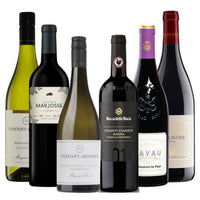
Decanter Award Winners Premium Mixed - 6 Pack Value
Celebrate & enjoy the excellence in winemaking with this outstanding collection of Decanter Award-winning wines. Handpicked for their exceptional quality and craftsmanship, this 6-pack features a premium mix of reds and whites that have captivated critics and wine lovers alike. Each bottle embodies the distinct character and finesse that earned it a coveted spot among the world’s best. Perfect for special occasions, gifting, or elevating your wine experience, this collection is a true testament to the artistry of winemaking. Indulge in award-winning perfection with every sip.
1 x Rocca delle Macie Chianti Classico Riserva Famiglia Zingarelli 2020 - Tuscany, Italy
93/100 Wine Spectator
92/100 Raffaele Vecchione, Wine Critics
92/100 Bacchus Magazine
91/100 Wine Enthusiast
91/100 Falstaff
90/100 Luca Maroni
Silver - Mundus Vini
Silver - London Wine Competition
Bronze - Decanter
Raffaele Vecchione, Wine Critics "Dark in the sensory profile showing notes of black prunes, blackberries, black tea leaves, chinotto and bergamot. Full bodied, soft tannins and a finale of medium smoothness."
Bacchus Magazine "This Chianti Classico Riserva is truly remarkable! For over 40 years, the Zingarelli family has been dedicated to crafting superb wines, paying meticulous attention to their vineyards and championing the Chianti Classico DOC. Founded in 1973 by the renowned Italian film producer Italo Zingarelli, Rocca delle Macìe is now managed by Italo’s son, Sergio, his wife Daniela, and their two children.To earn the "Riserva" designation, this wine must age in oak barrels for two years before resting in bottle for a minimum of six months prior to release. The result is a rich, intense, full-bodied, and complex Chianti Classico, exuding aromas of cherries, plums, blackcurrants, and spices, enhanced by woody notes. It is robust, long, and elegant on the palate, perfectly balanced and brimming with delightful freshness."
Wine Enthusiast "An almost fiery nose has black pepper, grilled meat, hot tar and graphite, with earthy notes of mushroom and wet leaves underneath. Black cherry and plum sit on top of dark chocolate on the palate, where a bite of astringency from orange pith lifts up the finish."
Falstaff "Medium garnet red with ruby glints. On the nose there are notes of ripe sour cherry, plum and a touch of violet, then slightly savoury. On the palate it is fruit-driven, mouth-filling, with fine-grained tannin and a long finish."
The Chianti region in Italy's Tuscany wine growing region is split between Chianti and Chianti Classico. Accordingly, two separate DOCG designations apply to wines from the Chianti region: the Chianti Classico DOCG for the heartland of Chianti, and Chianti DOCG for all other Chianti regions. (In 1984, the Chianti region was promoted from DOC to DOCG - Italy’s highest classification - and in 1996, Chianti Classico - the historic heartland of the region - DOCG was created, which gave autonomy to that region. In the last 20 years, a consortium of Chianti Classico producers have researched new Sangiovese clones, replanted vineyards, updated cellar practices and generally made Chianti Classico DOCG a world-class appellation. Chianti Classico must contain a minimum of 75% Sangiovese. In the 2014 edition of its annual compendium of wine ratings, Gambero Rosso noted that Chianti Classico DOCG wines were noteworthy for their “significant return to a more defined style, true to tradition.” The typical Chianti Classico wine is a ruby-red, Sangiovese-based wine with aromas of violets and cherries and a hint of earthy spice.
The Chianti DOCG designation covers wines from six Chianti sub-zones (Colli Pisane, Colli Fiorentini, Colli Senesi, Colli Aretini, Montalbano and Rufina) as well as all other Chianti wines. The Chianti Classico DOCG is located in the very center of Tuscany, between Florence and Sienna."
"Tuscany is Italy's third most planted region (behind Sicily and Apulia) but it is eighth in terms of output, reflecting both the poor soil of Tuscany and deliberate efforts to limit yields and increase the quality in the wine. After Piedmont and the Veneto, Tuscany produces the third-highest volume of DOC/DOCG wines. More than 80% of the regions' production is in red wine, with the Sangiovese grape being Tuscany's' most prominent grape. Trebbiano is the leading white variety of the region.
The history of viticulture in Tuscany dates back to the Etruscans in the 8th century BC. From the fall of the Roman Empire and throughout the Middle Ages, monasteries were the main purveyors of wines in the region. As the aristocratic and merchant classes emerged, they inherited the share-cropping system of agriculture known as mezzadria. Many Tuscan landowners would turn their half of the grape harvest into wine that would be sold to merchants in Florence. Following the end of the Napoleonic Wars, Tuscany returned to the rule of the Habsburgs. Chianti, Chianti Classico, Brunello di Montalcino, Vino Nobile di Montepulciano and Super Tuscan are Tuscany’s best known wines.
Sangiovese (or Nielluccio in Corsica), a dark-berried vine, is the most widely planted grape variety in Italy. Virtually synonymous with the red wines of Tuscany, and all the romanticism that goes with the territory, Sangiovese is the core constituent in some of the great names in Italian wine. Italy's love affair with Sangiovese – and indeed the world's – is generations old, though recent grapevine research suggests the variety is not as ancient as once thought.
1 x McHenry Hohnen Calgardup Brook Vineyard Chardonnay (Organic) 2022 ~ Margaret River, Western Australia
96/100 Jane Faulkner, Halliday Wine Companion
95/100 The Wine Front
95/100 Decanter
95/100 Robert Parker, Wine Advocate
93/100 Huon Hooke, The Real Review
93/100 Vinous
5 Stars Winery - Halliday Wine Companion
Top Chardonnay Halliday Wine Companion Awards 2023
Halliday's Wine Companion Awards 2023 - Top Wineries of 2022 & 2023
Organic
Jane Faulkner, Halliday Wine Companion "For whatever reason, this just has the edge compared with its two other chardonnay siblings, which are both excellent. This just seems more high-toned, flinty, racy and linear. Yet it has texture, depth and super length. All the flavours come together seamlessly, the oak a mere seasoning, and moreish acidity ensures this is delicious now and will age well."
Decanter "One of the first Chardonnays I tasted when I moved to Margaret River, and I distinctly remember being wowed by the freshness, salinity and crunchy tension. This has all of that, plus grapefruit pith, lemon curd, mandarin zest, saltbush and a lick of flint. Pure, concentrated fruit offers a lacy acid pop among textural layers that give the wine a delightful pace."
Robert Parker, Wine Advocate "...is tight and fine; it curls in tendrils through the long finish and litters the palate with dehydrated lemon peel, clove buds, white pepper, freshly grated nutmeg, brine and saltbush. It is coastal and fresh, mineral and fine. The vineyard is north-facing and planted on coastal limestone loam, established in 1997. I love the precision and delicacy of this wine. While others may overtake it for my preference in the future, within this release, this is one of the top wines for 2022."
Huon Hooke, The Real Review "Light yellow colour with a reserved, restrained bouquet of beeswax, grapefruit pith, malt, honey, restrained nuttiness and a hint of snuffed candle. In the mouth, it's reserved for this region, with good intensity, tightly focused, linear and long. A more European style chardonnay with restraint, structure, savouriness and subtle complexities of a more worked (as opposed to simple fruit) style of chardonnay. Long follow-through with energising acidity. This could reward cellaring."
Founded by one of the pioneers of the Margaret River winemaking region, David Hohnen and his brother in law, Murray McHenry, an accomplished fine wine retailer. Both have been making wine in Margaret River since the early 1970’s. McHenry Hohnen vineyards are 100% biodynamic. Their three unique vineyards (Burnside, Calgardup and Hazel’s) produce wines that are a reflection of the land. McHenry Hohnen focusses on crafting site-expressive wines and are known for producing some of the region's best wines.
Margaret River is one of the best-known wine regions in Australia, recognized internationally for the quality of its wines and the natural beauty of the region. Although originally renowned for its unusually refined Cabernet Sauvignon and intensely citrusy Chardonnay varieties, the region now produces Semillon Sauvignon Blanc blends and Shiraz.
Located in the south-western corner of Western Australia, it is famous for having a more 'European' wine style than its counterparts across Australia, owing to the regions temperate, coastal location which is very similar to that of Bordeaux.
1 x Lavau Châteauneuf-du-Pape Red 2020 ~ Rhône, France
92/100 James Suckling (2019 vintage)
92/100 Robert Parker (2019 vintage)
91/100 Decanter (2019 vintage)
90/100 Jeb Dunnuck (2019 vintage)
James Suckling "Vibrant, fruity nose of red plums, cherries, raspberries, pomegranates, olives and red tea. It’s full-bodied with firm, creamy tannins. Round and supple. Some chocolate notes on the finish. Fresh and elegant for the appellation. Drink or hold." (2019 vintage)
Robert Parker, Wine Advocate "A solid négoce wine, Lavau's 2019 Chateauneuf du Pape—a blend of 50% Grenache, 40% Syrah and 10% Mourvèdre, all said to be from sandy soils and aged in new barriques and stainless steel tanks—offers up ripe cherries on the nose, plus hints of vanilla and maple syrup. Full-bodied, ripe and supple, with a creamy, plush feel, this is easy to drink, while showing ample depth and charm." (2019 vintage)
Decanter "Holds the new oak remarkably well (50% new), it's not excessive in aroma or texture from this sample. Well balanced with fine tannins and a little salty note - pretty smart stuff. Should be good when it's ready, no excesses here. Best yet from Lavau." (2019 vintage)
Originally from Bordeaux, the Lavau family has been involved with winemaking for generations, and have had vineyards ranging from Bordeaux to Tunisia. In 1964 they were seduced by the richness and quality of the Provencal soil and settled down to make wine in the Rhone Valley. The cellars of Lavau are currently managed by Benoit and Frederic Lavau, who work in partnership with 350 different grape growers.
Châteauneuf-du-Pape is the most famous Southern Rhône appellation and the finest expression of the Grenache grape and Grenache based blends. The name Châteauneuf-du-Pape means ""new castle of the Pope"" and harks back to the early 14th Century when Avignon was chosen as the new home for the Pope's court. It is one of the most renowned appellations in France, famous for a layer of stones called galets (""pebbles"") that surround the vines. The galets soak up heat during the day, and release it during the night, thereby regulating the temperature of the vines.
1 x Chateau Marjosse Pierre Lurton Cuvee Truffiers'Rouge 2018 - Bordeaux, France
93/100 Decanter
91/100 James Suckling
91/100 Jean Marc-Quarin
17/20 Jancis Robinson
15.5/20 La Revue de Vin de France
Owned by one of the world's most famous winemakers, Pierre Lurton - president of two of Bordeaux's best-known chateaux, the Moët Hennessy Louis Vuitton (LVMH) owned Château Cheval Blanc and Château d’Yquem.
100% Merlot..15% new oak
Decanter "Excellent concentration and fruit definition, one to look out for....from the limestone-dominant plateau of Margaux. A clear floral edge on the initial aromatics, leading to redcurrant and tomato leaf, crunchy red cherry and raspberry fruit, deepening in texture as it opens."
James Suckling,''Blackberry, blueberry, wood and mushroom on the nose. Medium-to full-bodied with chewy tannins. Juicy and fruity at first, with freshness and crisp acidity. Flavorful finish. Drink now.''
Château Marjosse is owned by French 'wine royalty', Pierre Lurton - president of two of Bordeaux’s best-known châteaux; the Moët Hennessy Louis Vuitton (LVMH) owned, Château Cheval Blanc and Château d’Yquem, Château Marjosse. Pierre Lurton comes from two of the great Bordeaux families. His father Dominique was the youngest son of the paterfamilias François Lurton; his uncle André Lurton who founded the eponymous wine company; his many cousins run châteaux from Pauillac to Pomerol. His mother is from the famous Lafite family.
The influential Club Enologique asserts that Pierre is the most accomplished wine personality of his famous family. Trained as a doctor but swapping his studies for wine making after four years. At 23 he took over Clos Fourtet in St Emilion, one of the fine Lurton properties, and in 1991 he was appointed head of Château Cheval Blanc (it was bought by Bernard Arnault of LVMH in 1998); in 1999 he took on Château d’Yquem, which had just been added to the Arnault portfolio.
Club Enologique describes Pierre Lurton as having the world’s most corporate wine job. "However he divides his time between two of the world’s most exalted wine properties, but comes down to earth in Entre-deux-Mers, the leafy, unpretentious appellation to the east of Bordeaux at Château Marjoss."
The Château Marjoss estate is located in Entre-deux-Mers, on the right bank of Bordeaux. Initially owned by the wine merchant Bernard Chénier, Château Marjosse was acquired by the Deleuze family, who, in 1990, gave some plots to Pierre Lurton to rent. In 1992, Pierre Lurton, who grew up in Château Reynier, neighbour to this magnificent Chartreuse, moved to a second home in Château Marjosse and, over successive years became the owner of the entire vineyard, as well as the Chartreuse in 2013.
Decanter "Since Lurton bought Château Marjosse in 1994, the estate has improved beyond recognition. Pierre's father, Dominique Lurton, also made over a further 30ha so that, under the Château Marjosse label, Lurton now exploits 42ha of vineyard, six hectares of white and 36ha of Bordeaux red – a total of 300,000 bottles a year. Pierre insists his wine is Bordeaux and not Bordeaux Supérieur because ‘my wine is only supérieur in the bottle’. His objectives are ambitious. As the quality of the terroir with clay-limestone soil is similar to some of the better areas in Saint-Emilion, he hopes to prove that wines from this area can rival those from more prestigious regions."
Sommeliers International "At Château Marjosse the land possesses yet another specific feature, known locally as “la Boulbène”, a silty-clayey texture that has developed on ancient alluvions. The fertility of these soils no longer needs to be proved, because, by chance, they are also found in Saint-Emilion, a terroir that is extremely familiar to the man who manages “Cheval Blanc” …. Pierre Lurton. Assisted in this transformation by Consultant-Oenologist Pascal Poussevin, whose recommendations range from vine growing to wine-making, Pierre Lurton’s estate has now reached its cruising speed … Beyond the fabulous adventures he experiences in his role as manager of Châteaux d’Yquem, Cheval Blanc, as well as estates in South Africa, Latin America and in Australia … it is undoubtedly with “the salt of this land here in the Entre-deux-Mers” that his years of quest for perfection will be revealed. It is clear that this region needs winegrowers of such calibre, those who possess a sixth sense and, using techniques that almost resemble intentional alchemy, transform the grapes they touch into wines that exude the unique character of a specific area."
The Entre-deux-Mers region, nicknamed by wine experts as “Little Tuscany”, is unique and jealously protected by its inhabitants. "There are fifteen appellations that constitute the Entre-deux-Mers. The most well-known of them all, reputed for its dry, lively white wines, is certainly the one which bears the name of this region! The Entre-deux-Mers cultivates a certain speciality in producing white wines, due to its basic geological assets, possessing gravelly-limestone soils, upon which Sémillon, Sauvignon, Muscadelle and even Ugni Blanc grape varieties are planted. But the variety of soils and sub-soils associated with such a complex landscape provides a diversity of terroirs … These are favourable for producing red wines, that are regrettably not sufficiently well-known, but highly prized for the complexity of their aromas, their deep, vivid colour, as well as the concentration and elegance of their tannins." Sommeliers International.
Bordeaux, in the southwest of France, needs little introduction as one of the world's most famous, prestigious and prolific wine regions. Its three trump cards are diversity, quality and quantity. The majority of Bordeaux wines (nearly 90 percent of production volume) are the dry, medium- and full-bodied red Bordeaux Blends that established its reputation. The finest (and most expensive) of these come from the great châteaux of the Haut-Médoc and the Right Bank appellations Saint-Émilion and Pomerol. The legendary reds are complemented by high-quality white wines, both dry styles (particularly from Pessac-Léognan) and the sweet, botrytized nectars of Sauternes.
1 x Te Mata Bullnose Syrah 2018 ~ Hawkes Bay, New Zealand
97/100 Sam Kim
96/100 Huon Hooke
96/100 Cameron Douglas
95/100 The Wine Front
90/100 Decanter World Wine Awards
16.5/20 Jancis Robinson
Te Mata Estate is regarded as one of New Zealand’s most important wine producers
Sam Kim "The palate is concentrated, focused and delightfully flowing with outstanding depth and intensity, while remaining elegant and poised, leading to an extremely long expansive finish. Harmonious, seamless and flawlessly precise. Combining exquisite refinement and undeniable power, this latest offering is another stunning beauty under this iconic label...The gorgeously perfumed bouquet shows Black Doris plum, sweet raspberry, violet, olive and toasted almond characters with a whiff of fragrant spice. "
Jancis Robinson "Confected black fruit, finely layered tannins, a touch of bacon and smoke on the finish. Dry, savoury, meaty persistence."
Cameron Douglas "A great bouquet, the fine nose of Syrah with white and black peppercorn, roses and lavender, a core of red currants, black cherry and Doris plum, some sweet olive and new leather. Firm, youthful and dry with an abundance of tannins and acidity."
Decanter "A very modern take on Syrah which turns up the chocolate and cappuccino characters to create a rich and silky wine. There’s dark cherry and ripe raspberry fruit to balance the roasted coffee tannins with an acid spike. Extended skin contact and a warmish fermentation have given this depth and elegance."
Gary Walsh "Ras el hanout (راس الحانوت) is a spice mix that means ‘head of the shop’, and maybe we have a bull in a shop here, such is the level of exotic spice and perfume pumping out of the glass. In with that, some lavender and vanilla, cherry and redcurrant, a smattering of green herb too. It’s light to medium-bodied, fine emery tannin, juicy raspberry acidity and flavour, inner-mouth perfume and spiced wood aromatic, and a dusty white pepper texture and taste on a cool long finish. Nice and ‘minerally’ too. You have to like them spicy and lithe, and if so, this’ll be close to the top of the shop for you."
Huon Hooke "...a pronounced spicy, peppery aroma, the palate sweet rich and deep in very elegant, classy fruit flavour. The tannins are ample and refined, balanced and the wine is overall delicious. Black pepper, subtle cloves and other spices. It has a core of fruit sweetness that is utterly delicious."
World of Fine Wine 'Getting to know a legend' "A visit to one of the world’s greatest fine-wine estates should be an integral part of any tour of New Zealand. On the East Coast of New Zealand’s North Island is the independently owned, family-run, Te Mata Estate. Owners and staff still work on vineyards that began growing Cabernet, Chardonnay, and Pinot Noir back in the 1890s, making it the country’s oldest wine estate. Since 1905, this winery has been winning gold medals globally, which led to these sites becoming the country’s first to be protected by law due to their viticultural history...Te Mata Estate wines are currently available in 45 countries and have been presented at some of the world’s top tables— including to President Barrack Obama, President Xi Jinping, and Queen Elizabeth II’s Diamond Jubilee."
Raymond Chan "Te Mata Estate was the standard by which every other wine producer could be judged against, as the full range of styles has always been impeccable. In the earlier days, Hawke’s Bay was the scene of New Zealand’s quality wine, so it was very apt to have Te Mata Estate as the point of reference. Even when other regions developed, and Marlborough grew larger, and other varietals such as Pinot Noir became important, one could understand the state of the New Zealand wine industry by how Te Mata Estate behaved or reacted to influences, whether internal or international."
Te Mata Estate is regarded as one of New Zealand’s most important wine producers. It is New Zealand's oldest winery, oldest wine estate and has the oldest winery cellars in the country - in continuous operation since 1895. Coleraine is Te Mata's most acclaimed wine and is often regarded as New Zealand's best red wine.
Hawke's Bay is located on the east coast of the North Island in and around the cities of Napier, Hastings and Havelock North. This historic region has New Zealand's second-largest wine industry (after Marlborough) and is highly regarded for its red Bordeaux Blend wines. Cabernet Sauvignon, Merlot, Syrah and Chardonnay are all planted widely across the region. Over the years, the region has won international acclaim for its very high-quality Bordeaux-style reds and full-bodied Chardonnays. Syrah, produced in a classic European style with strong black-pepper flavors, is another grape variety thought to have great potential here.
1 x McHenry Hohnen Hazels Vineyard Chardonnay (Organic) 2019 ~ Margaret River, Western Australia
97/100 Wine Pilot, Angus Hughson
95/100 Halliday Wine Companion, Erin Larkin
95/100 The Real Review, Aaron Brasher
91/100 Decanter World Wine Awards
5 Star Winery - James Halliday (2016 vintage)
"Halliday Wine Companion - Australian Winery of the Year 2022 & 2023"
Halliday Wine Companion, Erin Larkin "All 3 single-vineyard chardonnays are made in the same manner: hand picked, whole-bunch pressed, wild fermented in barrel (25% new) with full solids and partial mlf. White spice, nectarine, coastal spray and crushed macadamia on the nose. The palate is where the mlf is evident; it creates a creamy, buttery texture that sits alongside the pink grapefruit and mandarin pith. Blossom and red apple skin round out the palate, the saline acidity forms curls of sensation as it fades."
Wine Pilot, Angus Hughson "Bright mid straw and a beautifully reserved expression of premium Margaret River Chardonnay. There is impressive aromatic precision and focus with fruits in the citrus and floral spectrum and nougat-scented oak. Also some flinty/smoky leesy elements add superb detail. It is then dry, taut and acid driven with palpable palate tension but also a silkiness and a chalky texture; love the balance and fruit purity as it unfurls. Finally, a picture of refinement and balance with a supremely long finish accented by doughy, citrus and floral complexity. This builds beautifully in the glass over time too which bodes very well for the future."
The Real Review, Aaron Brasher "Quite lifted aromas of nectarine, white flowers, nuts, bacon fat and vanilla. Powerful on the palate—white stone fruit, guava and creamy oak are all at play. Acidity is fine and focused and manages the powerful fruit admirably. There's some grip and texture that adds to the mouth-feel and the length is impressive."
Tasting Notes "Mandarin peal, white blossom and ruby grapefruit aromas give way to stone fruit and a seductive nougat element. Creamy, nutty and textured, this Chardonnay is both powerful in fruit concentration and restrained by a precise acid line. A layered wine with persistence, power and grace and a true representation of this south Margaret River vineyard just inland from the coast."
Founded by one of the pioneers of the Margaret River winemaking region, David Hohnen, and his brother in law, Murray McHenry, an accomplished fine wine retailer. Both have been making wine in Margaret River since the early 1970s. McHenry Hohnen vineyards are 100% biodynamic. Their three unique vineyards (Burnside, Calgardup and Hazel’s) produce wines that are a reflection of the land. McHenry Hohnen focus on crafting site expressive wines and are known for producing some of the region's best wines.
Margaret River is one of the best known wine regions in Australia, recognized internationally for the quality of its wines and the natural beauty of the region. Although originally renowned for its unusually refined cabernet sauvignon and intensely citrusy chardonnay varieties, the region now produces high quality Semillon-Sauvignon blends and Shiraz.
Located in the south-western corner of Western Australia, it is famous for having a more 'European' wine style than its counterparts across Australia, owing to the regions temperate, coastal location which is very similar to that of Bordeaux
Celebrate & enjoy the excellence in winemaking with this outstanding collection of Decanter Award-winning wines. Handpicked for their exceptional quality and craftsmanship, this 6-pack features a premium mix of reds and whites that have captivated critics and wine lovers alike. Each bottle embodies the distinct character and finesse that earned it a coveted spot among the world’s best. Perfect for special occasions, gifting, or elevating your wine experience, this collection is a true testament to the artistry of winemaking. Indulge in award-winning perfection with every sip.
1 x Rocca delle Macie Chianti Classico Riserva Famiglia Zingarelli 2020 - Tuscany, Italy
93/100 Wine Spectator
92/100 Raffaele Vecchione, Wine Critics
92/100 Bacchus Magazine
91/100 Wine Enthusiast
91/100 Falstaff
90/100 Luca Maroni
Silver - Mundus Vini
Silver - London Wine Competition
Bronze - Decanter
Raffaele Vecchione, Wine Critics "Dark in the sensory profile showing notes of black prunes, blackberries, black tea leaves, chinotto and bergamot. Full bodied, soft tannins and a finale of medium smoothness."
Bacchus Magazine "This Chianti Classico Riserva is truly remarkable! For over 40 years, the Zingarelli family has been dedicated to crafting superb wines, paying meticulous attention to their vineyards and championing the Chianti Classico DOC. Founded in 1973 by the renowned Italian film producer Italo Zingarelli, Rocca delle Macìe is now managed by Italo’s son, Sergio, his wife Daniela, and their two children.To earn the "Riserva" designation, this wine must age in oak barrels for two years before resting in bottle for a minimum of six months prior to release. The result is a rich, intense, full-bodied, and complex Chianti Classico, exuding aromas of cherries, plums, blackcurrants, and spices, enhanced by woody notes. It is robust, long, and elegant on the palate, perfectly balanced and brimming with delightful freshness."
Wine Enthusiast "An almost fiery nose has black pepper, grilled meat, hot tar and graphite, with earthy notes of mushroom and wet leaves underneath. Black cherry and plum sit on top of dark chocolate on the palate, where a bite of astringency from orange pith lifts up the finish."
Falstaff "Medium garnet red with ruby glints. On the nose there are notes of ripe sour cherry, plum and a touch of violet, then slightly savoury. On the palate it is fruit-driven, mouth-filling, with fine-grained tannin and a long finish."
The Chianti region in Italy's Tuscany wine growing region is split between Chianti and Chianti Classico. Accordingly, two separate DOCG designations apply to wines from the Chianti region: the Chianti Classico DOCG for the heartland of Chianti, and Chianti DOCG for all other Chianti regions. (In 1984, the Chianti region was promoted from DOC to DOCG - Italy’s highest classification - and in 1996, Chianti Classico - the historic heartland of the region - DOCG was created, which gave autonomy to that region. In the last 20 years, a consortium of Chianti Classico producers have researched new Sangiovese clones, replanted vineyards, updated cellar practices and generally made Chianti Classico DOCG a world-class appellation. Chianti Classico must contain a minimum of 75% Sangiovese. In the 2014 edition of its annual compendium of wine ratings, Gambero Rosso noted that Chianti Classico DOCG wines were noteworthy for their “significant return to a more defined style, true to tradition.” The typical Chianti Classico wine is a ruby-red, Sangiovese-based wine with aromas of violets and cherries and a hint of earthy spice.
The Chianti DOCG designation covers wines from six Chianti sub-zones (Colli Pisane, Colli Fiorentini, Colli Senesi, Colli Aretini, Montalbano and Rufina) as well as all other Chianti wines. The Chianti Classico DOCG is located in the very center of Tuscany, between Florence and Sienna."
"Tuscany is Italy's third most planted region (behind Sicily and Apulia) but it is eighth in terms of output, reflecting both the poor soil of Tuscany and deliberate efforts to limit yields and increase the quality in the wine. After Piedmont and the Veneto, Tuscany produces the third-highest volume of DOC/DOCG wines. More than 80% of the regions' production is in red wine, with the Sangiovese grape being Tuscany's' most prominent grape. Trebbiano is the leading white variety of the region.
The history of viticulture in Tuscany dates back to the Etruscans in the 8th century BC. From the fall of the Roman Empire and throughout the Middle Ages, monasteries were the main purveyors of wines in the region. As the aristocratic and merchant classes emerged, they inherited the share-cropping system of agriculture known as mezzadria. Many Tuscan landowners would turn their half of the grape harvest into wine that would be sold to merchants in Florence. Following the end of the Napoleonic Wars, Tuscany returned to the rule of the Habsburgs. Chianti, Chianti Classico, Brunello di Montalcino, Vino Nobile di Montepulciano and Super Tuscan are Tuscany’s best known wines.
Sangiovese (or Nielluccio in Corsica), a dark-berried vine, is the most widely planted grape variety in Italy. Virtually synonymous with the red wines of Tuscany, and all the romanticism that goes with the territory, Sangiovese is the core constituent in some of the great names in Italian wine. Italy's love affair with Sangiovese – and indeed the world's – is generations old, though recent grapevine research suggests the variety is not as ancient as once thought.
1 x McHenry Hohnen Calgardup Brook Vineyard Chardonnay (Organic) 2022 ~ Margaret River, Western Australia
96/100 Jane Faulkner, Halliday Wine Companion
95/100 The Wine Front
95/100 Decanter
95/100 Robert Parker, Wine Advocate
93/100 Huon Hooke, The Real Review
93/100 Vinous
5 Stars Winery - Halliday Wine Companion
Top Chardonnay Halliday Wine Companion Awards 2023
Halliday's Wine Companion Awards 2023 - Top Wineries of 2022 & 2023
Organic
Jane Faulkner, Halliday Wine Companion "For whatever reason, this just has the edge compared with its two other chardonnay siblings, which are both excellent. This just seems more high-toned, flinty, racy and linear. Yet it has texture, depth and super length. All the flavours come together seamlessly, the oak a mere seasoning, and moreish acidity ensures this is delicious now and will age well."
Decanter "One of the first Chardonnays I tasted when I moved to Margaret River, and I distinctly remember being wowed by the freshness, salinity and crunchy tension. This has all of that, plus grapefruit pith, lemon curd, mandarin zest, saltbush and a lick of flint. Pure, concentrated fruit offers a lacy acid pop among textural layers that give the wine a delightful pace."
Robert Parker, Wine Advocate "...is tight and fine; it curls in tendrils through the long finish and litters the palate with dehydrated lemon peel, clove buds, white pepper, freshly grated nutmeg, brine and saltbush. It is coastal and fresh, mineral and fine. The vineyard is north-facing and planted on coastal limestone loam, established in 1997. I love the precision and delicacy of this wine. While others may overtake it for my preference in the future, within this release, this is one of the top wines for 2022."
Huon Hooke, The Real Review "Light yellow colour with a reserved, restrained bouquet of beeswax, grapefruit pith, malt, honey, restrained nuttiness and a hint of snuffed candle. In the mouth, it's reserved for this region, with good intensity, tightly focused, linear and long. A more European style chardonnay with restraint, structure, savouriness and subtle complexities of a more worked (as opposed to simple fruit) style of chardonnay. Long follow-through with energising acidity. This could reward cellaring."
Founded by one of the pioneers of the Margaret River winemaking region, David Hohnen and his brother in law, Murray McHenry, an accomplished fine wine retailer. Both have been making wine in Margaret River since the early 1970’s. McHenry Hohnen vineyards are 100% biodynamic. Their three unique vineyards (Burnside, Calgardup and Hazel’s) produce wines that are a reflection of the land. McHenry Hohnen focusses on crafting site-expressive wines and are known for producing some of the region's best wines.
Margaret River is one of the best-known wine regions in Australia, recognized internationally for the quality of its wines and the natural beauty of the region. Although originally renowned for its unusually refined Cabernet Sauvignon and intensely citrusy Chardonnay varieties, the region now produces Semillon Sauvignon Blanc blends and Shiraz.
Located in the south-western corner of Western Australia, it is famous for having a more 'European' wine style than its counterparts across Australia, owing to the regions temperate, coastal location which is very similar to that of Bordeaux.
1 x Lavau Châteauneuf-du-Pape Red 2020 ~ Rhône, France
92/100 James Suckling (2019 vintage)
92/100 Robert Parker (2019 vintage)
91/100 Decanter (2019 vintage)
90/100 Jeb Dunnuck (2019 vintage)
James Suckling "Vibrant, fruity nose of red plums, cherries, raspberries, pomegranates, olives and red tea. It’s full-bodied with firm, creamy tannins. Round and supple. Some chocolate notes on the finish. Fresh and elegant for the appellation. Drink or hold." (2019 vintage)
Robert Parker, Wine Advocate "A solid négoce wine, Lavau's 2019 Chateauneuf du Pape—a blend of 50% Grenache, 40% Syrah and 10% Mourvèdre, all said to be from sandy soils and aged in new barriques and stainless steel tanks—offers up ripe cherries on the nose, plus hints of vanilla and maple syrup. Full-bodied, ripe and supple, with a creamy, plush feel, this is easy to drink, while showing ample depth and charm." (2019 vintage)
Decanter "Holds the new oak remarkably well (50% new), it's not excessive in aroma or texture from this sample. Well balanced with fine tannins and a little salty note - pretty smart stuff. Should be good when it's ready, no excesses here. Best yet from Lavau." (2019 vintage)
Originally from Bordeaux, the Lavau family has been involved with winemaking for generations, and have had vineyards ranging from Bordeaux to Tunisia. In 1964 they were seduced by the richness and quality of the Provencal soil and settled down to make wine in the Rhone Valley. The cellars of Lavau are currently managed by Benoit and Frederic Lavau, who work in partnership with 350 different grape growers.
Châteauneuf-du-Pape is the most famous Southern Rhône appellation and the finest expression of the Grenache grape and Grenache based blends. The name Châteauneuf-du-Pape means ""new castle of the Pope"" and harks back to the early 14th Century when Avignon was chosen as the new home for the Pope's court. It is one of the most renowned appellations in France, famous for a layer of stones called galets (""pebbles"") that surround the vines. The galets soak up heat during the day, and release it during the night, thereby regulating the temperature of the vines.
1 x Chateau Marjosse Pierre Lurton Cuvee Truffiers'Rouge 2018 - Bordeaux, France
93/100 Decanter
91/100 James Suckling
91/100 Jean Marc-Quarin
17/20 Jancis Robinson
15.5/20 La Revue de Vin de France
Owned by one of the world's most famous winemakers, Pierre Lurton - president of two of Bordeaux's best-known chateaux, the Moët Hennessy Louis Vuitton (LVMH) owned Château Cheval Blanc and Château d’Yquem.
100% Merlot..15% new oak
Decanter "Excellent concentration and fruit definition, one to look out for....from the limestone-dominant plateau of Margaux. A clear floral edge on the initial aromatics, leading to redcurrant and tomato leaf, crunchy red cherry and raspberry fruit, deepening in texture as it opens."
James Suckling,''Blackberry, blueberry, wood and mushroom on the nose. Medium-to full-bodied with chewy tannins. Juicy and fruity at first, with freshness and crisp acidity. Flavorful finish. Drink now.''
Château Marjosse is owned by French 'wine royalty', Pierre Lurton - president of two of Bordeaux’s best-known châteaux; the Moët Hennessy Louis Vuitton (LVMH) owned, Château Cheval Blanc and Château d’Yquem, Château Marjosse. Pierre Lurton comes from two of the great Bordeaux families. His father Dominique was the youngest son of the paterfamilias François Lurton; his uncle André Lurton who founded the eponymous wine company; his many cousins run châteaux from Pauillac to Pomerol. His mother is from the famous Lafite family.
The influential Club Enologique asserts that Pierre is the most accomplished wine personality of his famous family. Trained as a doctor but swapping his studies for wine making after four years. At 23 he took over Clos Fourtet in St Emilion, one of the fine Lurton properties, and in 1991 he was appointed head of Château Cheval Blanc (it was bought by Bernard Arnault of LVMH in 1998); in 1999 he took on Château d’Yquem, which had just been added to the Arnault portfolio.
Club Enologique describes Pierre Lurton as having the world’s most corporate wine job. "However he divides his time between two of the world’s most exalted wine properties, but comes down to earth in Entre-deux-Mers, the leafy, unpretentious appellation to the east of Bordeaux at Château Marjoss."
The Château Marjoss estate is located in Entre-deux-Mers, on the right bank of Bordeaux. Initially owned by the wine merchant Bernard Chénier, Château Marjosse was acquired by the Deleuze family, who, in 1990, gave some plots to Pierre Lurton to rent. In 1992, Pierre Lurton, who grew up in Château Reynier, neighbour to this magnificent Chartreuse, moved to a second home in Château Marjosse and, over successive years became the owner of the entire vineyard, as well as the Chartreuse in 2013.
Decanter "Since Lurton bought Château Marjosse in 1994, the estate has improved beyond recognition. Pierre's father, Dominique Lurton, also made over a further 30ha so that, under the Château Marjosse label, Lurton now exploits 42ha of vineyard, six hectares of white and 36ha of Bordeaux red – a total of 300,000 bottles a year. Pierre insists his wine is Bordeaux and not Bordeaux Supérieur because ‘my wine is only supérieur in the bottle’. His objectives are ambitious. As the quality of the terroir with clay-limestone soil is similar to some of the better areas in Saint-Emilion, he hopes to prove that wines from this area can rival those from more prestigious regions."
Sommeliers International "At Château Marjosse the land possesses yet another specific feature, known locally as “la Boulbène”, a silty-clayey texture that has developed on ancient alluvions. The fertility of these soils no longer needs to be proved, because, by chance, they are also found in Saint-Emilion, a terroir that is extremely familiar to the man who manages “Cheval Blanc” …. Pierre Lurton. Assisted in this transformation by Consultant-Oenologist Pascal Poussevin, whose recommendations range from vine growing to wine-making, Pierre Lurton’s estate has now reached its cruising speed … Beyond the fabulous adventures he experiences in his role as manager of Châteaux d’Yquem, Cheval Blanc, as well as estates in South Africa, Latin America and in Australia … it is undoubtedly with “the salt of this land here in the Entre-deux-Mers” that his years of quest for perfection will be revealed. It is clear that this region needs winegrowers of such calibre, those who possess a sixth sense and, using techniques that almost resemble intentional alchemy, transform the grapes they touch into wines that exude the unique character of a specific area."
The Entre-deux-Mers region, nicknamed by wine experts as “Little Tuscany”, is unique and jealously protected by its inhabitants. "There are fifteen appellations that constitute the Entre-deux-Mers. The most well-known of them all, reputed for its dry, lively white wines, is certainly the one which bears the name of this region! The Entre-deux-Mers cultivates a certain speciality in producing white wines, due to its basic geological assets, possessing gravelly-limestone soils, upon which Sémillon, Sauvignon, Muscadelle and even Ugni Blanc grape varieties are planted. But the variety of soils and sub-soils associated with such a complex landscape provides a diversity of terroirs … These are favourable for producing red wines, that are regrettably not sufficiently well-known, but highly prized for the complexity of their aromas, their deep, vivid colour, as well as the concentration and elegance of their tannins." Sommeliers International.
Bordeaux, in the southwest of France, needs little introduction as one of the world's most famous, prestigious and prolific wine regions. Its three trump cards are diversity, quality and quantity. The majority of Bordeaux wines (nearly 90 percent of production volume) are the dry, medium- and full-bodied red Bordeaux Blends that established its reputation. The finest (and most expensive) of these come from the great châteaux of the Haut-Médoc and the Right Bank appellations Saint-Émilion and Pomerol. The legendary reds are complemented by high-quality white wines, both dry styles (particularly from Pessac-Léognan) and the sweet, botrytized nectars of Sauternes.
1 x Te Mata Bullnose Syrah 2018 ~ Hawkes Bay, New Zealand
97/100 Sam Kim
96/100 Huon Hooke
96/100 Cameron Douglas
95/100 The Wine Front
90/100 Decanter World Wine Awards
16.5/20 Jancis Robinson
Te Mata Estate is regarded as one of New Zealand’s most important wine producers
Sam Kim "The palate is concentrated, focused and delightfully flowing with outstanding depth and intensity, while remaining elegant and poised, leading to an extremely long expansive finish. Harmonious, seamless and flawlessly precise. Combining exquisite refinement and undeniable power, this latest offering is another stunning beauty under this iconic label...The gorgeously perfumed bouquet shows Black Doris plum, sweet raspberry, violet, olive and toasted almond characters with a whiff of fragrant spice. "
Jancis Robinson "Confected black fruit, finely layered tannins, a touch of bacon and smoke on the finish. Dry, savoury, meaty persistence."
Cameron Douglas "A great bouquet, the fine nose of Syrah with white and black peppercorn, roses and lavender, a core of red currants, black cherry and Doris plum, some sweet olive and new leather. Firm, youthful and dry with an abundance of tannins and acidity."
Decanter "A very modern take on Syrah which turns up the chocolate and cappuccino characters to create a rich and silky wine. There’s dark cherry and ripe raspberry fruit to balance the roasted coffee tannins with an acid spike. Extended skin contact and a warmish fermentation have given this depth and elegance."
Gary Walsh "Ras el hanout (راس الحانوت) is a spice mix that means ‘head of the shop’, and maybe we have a bull in a shop here, such is the level of exotic spice and perfume pumping out of the glass. In with that, some lavender and vanilla, cherry and redcurrant, a smattering of green herb too. It’s light to medium-bodied, fine emery tannin, juicy raspberry acidity and flavour, inner-mouth perfume and spiced wood aromatic, and a dusty white pepper texture and taste on a cool long finish. Nice and ‘minerally’ too. You have to like them spicy and lithe, and if so, this’ll be close to the top of the shop for you."
Huon Hooke "...a pronounced spicy, peppery aroma, the palate sweet rich and deep in very elegant, classy fruit flavour. The tannins are ample and refined, balanced and the wine is overall delicious. Black pepper, subtle cloves and other spices. It has a core of fruit sweetness that is utterly delicious."
World of Fine Wine 'Getting to know a legend' "A visit to one of the world’s greatest fine-wine estates should be an integral part of any tour of New Zealand. On the East Coast of New Zealand’s North Island is the independently owned, family-run, Te Mata Estate. Owners and staff still work on vineyards that began growing Cabernet, Chardonnay, and Pinot Noir back in the 1890s, making it the country’s oldest wine estate. Since 1905, this winery has been winning gold medals globally, which led to these sites becoming the country’s first to be protected by law due to their viticultural history...Te Mata Estate wines are currently available in 45 countries and have been presented at some of the world’s top tables— including to President Barrack Obama, President Xi Jinping, and Queen Elizabeth II’s Diamond Jubilee."
Raymond Chan "Te Mata Estate was the standard by which every other wine producer could be judged against, as the full range of styles has always been impeccable. In the earlier days, Hawke’s Bay was the scene of New Zealand’s quality wine, so it was very apt to have Te Mata Estate as the point of reference. Even when other regions developed, and Marlborough grew larger, and other varietals such as Pinot Noir became important, one could understand the state of the New Zealand wine industry by how Te Mata Estate behaved or reacted to influences, whether internal or international."
Te Mata Estate is regarded as one of New Zealand’s most important wine producers. It is New Zealand's oldest winery, oldest wine estate and has the oldest winery cellars in the country - in continuous operation since 1895. Coleraine is Te Mata's most acclaimed wine and is often regarded as New Zealand's best red wine.
Hawke's Bay is located on the east coast of the North Island in and around the cities of Napier, Hastings and Havelock North. This historic region has New Zealand's second-largest wine industry (after Marlborough) and is highly regarded for its red Bordeaux Blend wines. Cabernet Sauvignon, Merlot, Syrah and Chardonnay are all planted widely across the region. Over the years, the region has won international acclaim for its very high-quality Bordeaux-style reds and full-bodied Chardonnays. Syrah, produced in a classic European style with strong black-pepper flavors, is another grape variety thought to have great potential here.
1 x McHenry Hohnen Hazels Vineyard Chardonnay (Organic) 2019 ~ Margaret River, Western Australia
97/100 Wine Pilot, Angus Hughson
95/100 Halliday Wine Companion, Erin Larkin
95/100 The Real Review, Aaron Brasher
91/100 Decanter World Wine Awards
5 Star Winery - James Halliday (2016 vintage)
"Halliday Wine Companion - Australian Winery of the Year 2022 & 2023"
Halliday Wine Companion, Erin Larkin "All 3 single-vineyard chardonnays are made in the same manner: hand picked, whole-bunch pressed, wild fermented in barrel (25% new) with full solids and partial mlf. White spice, nectarine, coastal spray and crushed macadamia on the nose. The palate is where the mlf is evident; it creates a creamy, buttery texture that sits alongside the pink grapefruit and mandarin pith. Blossom and red apple skin round out the palate, the saline acidity forms curls of sensation as it fades."
Wine Pilot, Angus Hughson "Bright mid straw and a beautifully reserved expression of premium Margaret River Chardonnay. There is impressive aromatic precision and focus with fruits in the citrus and floral spectrum and nougat-scented oak. Also some flinty/smoky leesy elements add superb detail. It is then dry, taut and acid driven with palpable palate tension but also a silkiness and a chalky texture; love the balance and fruit purity as it unfurls. Finally, a picture of refinement and balance with a supremely long finish accented by doughy, citrus and floral complexity. This builds beautifully in the glass over time too which bodes very well for the future."
The Real Review, Aaron Brasher "Quite lifted aromas of nectarine, white flowers, nuts, bacon fat and vanilla. Powerful on the palate—white stone fruit, guava and creamy oak are all at play. Acidity is fine and focused and manages the powerful fruit admirably. There's some grip and texture that adds to the mouth-feel and the length is impressive."
Tasting Notes "Mandarin peal, white blossom and ruby grapefruit aromas give way to stone fruit and a seductive nougat element. Creamy, nutty and textured, this Chardonnay is both powerful in fruit concentration and restrained by a precise acid line. A layered wine with persistence, power and grace and a true representation of this south Margaret River vineyard just inland from the coast."
Founded by one of the pioneers of the Margaret River winemaking region, David Hohnen, and his brother in law, Murray McHenry, an accomplished fine wine retailer. Both have been making wine in Margaret River since the early 1970s. McHenry Hohnen vineyards are 100% biodynamic. Their three unique vineyards (Burnside, Calgardup and Hazel’s) produce wines that are a reflection of the land. McHenry Hohnen focus on crafting site expressive wines and are known for producing some of the region's best wines.
Margaret River is one of the best known wine regions in Australia, recognized internationally for the quality of its wines and the natural beauty of the region. Although originally renowned for its unusually refined cabernet sauvignon and intensely citrusy chardonnay varieties, the region now produces high quality Semillon-Sauvignon blends and Shiraz.
Located in the south-western corner of Western Australia, it is famous for having a more 'European' wine style than its counterparts across Australia, owing to the regions temperate, coastal location which is very similar to that of Bordeaux