



Italian Prestige Red Collection
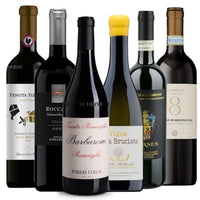
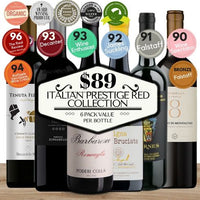
Celebrate the excellence of Italian winemaking with the Italian Prestige Red Collection. Featuring a handpicked selection of premium red wines from some of Italy's most renowned wine regions, this collection showcases outstanding craftsmanship, regional character, and timeless elegance. Rich in flavour, beautifully balanced, and full of personality, these wines are perfect for fine dining, entertaining, gifting, or adding to your cellar.
1 x Roccato Toscana "Super Tuscan" Cabernet Sauvignon 2020 - Tuscany, Italy
93/100 Wine Enthusiast
90/100 Wine Spectator
Organic - currently undergoing certification
Wine Enthusiast "The nose is primarily savory, with notes of cured meat, topsoil and graphite, but undertones of sour cherries and tart berries provide some buzz. The ebb and flow of earthiness and astringency continues on the palate, while insistent tannins and lively acidity provide structure for that interplay."
Robert Parker "The full-bodied Rocca delle Macìe 2019 Cabernet Sauvignon Roccato (with 6,500 bottles released) shows sweet fruit, dark cherry, toasted almond and milky cinnamon cream. Fourteen months of barrique aging plays a big role in the intensity and textural support of this wine. It feels rich over the palate and thick around the middle."
Winemaker "Very intense ruby red tending to garnet with aging. Broad and persistent, with hints of red fruits and spices ranging from cacao, to vanilla to coffee. Warm and well balanced, with a dense network of tannins that well support and sustain the long aromatic
persistence.
100% Cabernet Sauvignon
Rocca delle Macìe was established in 1973, when film producer Italo Zingarelli – of Ettore Scola’s “We All Loved Each Other So Much” fame, and also the wildly popular series of films featuring comedy duo Bud Spencer and Terence Hill (including “They Call Me Trinity” and “Trinity Is Still My Name”) – decided to realize his lifelong dream by acquiring the “Le Macìe” estate – extending across 93 hectares (230 acres) in all, of which only two were under vine – in order to create a winery in the heart of the Chianti Classico zone.
The estate now extends to more than 500 hectares (1250 acres) with, in total, more than 200 (500 acres) used as vineyards and 22 (54 acres) as olive groves, subdivided across the company’s six estates: Le Macìe, Sant’Alfonso, Fizzano e le Tavolelle in the Chianti Classico Area, in addition to the Campomaccione and Casa Maria estates in the Morellino di Scansano Area (Maremma).
The Chianti region in Italy's Tuscany wine growing region is split between Chianti and Chianti Classico. Accordingly, two separate DOCG designations apply to wines from the Chianti region: the Chianti Classico DOCG for the heartland of Chianti, and Chianti DOCG for all other Chianti regions. (In 1984, the Chianti region was promoted from DOC to DOCG - Italy’s highest classification - and in 1996, Chianti Classico - the historic heartland of the region - DOCG was created, which gave autonomy to that region. In the last 20 years, a consortium of Chianti Classico producers have researched new Sangiovese clones, replanted vineyards, updated cellar practices and generally made Chianti Classico DOCG a world-class appellation. Chianti Classico must contain a minimum of 75% Sangiovese. In the 2014 edition of its annual compendium of wine ratings, Gambero Rosso noted that Chianti Classico DOCG wines were noteworthy for their “significant return to a more defined style, true to tradition.” The typical Chianti Classico wine is a ruby-red, Sangiovese-based wine with aromas of violets and cherries and a hint of earthy spice.
The history of viticulture in Tuscany dates back to the Etruscans in the 8th century BC. From the fall of the Roman Empire and throughout the Middle Ages, monasteries were the main purveyors of wines in the region. As the aristocratic and merchant classes emerged, they inherited the share-cropping system of agriculture known as mezzadria. Many Tuscan landowners would turn their half of the grape harvest into wine that would be sold to merchants in Florence. Following the end of the Napoleonic Wars, Tuscany returned to the rule of the Habsburgs. Chianti, Chianti Classico, Brunello di Montalcino, Vino Nobile di Montepulciano and Super Tuscan are Tuscany’s best known wines.
Cabernet Sauvignon is one of the most famous red wine grape variety on Earth. It is rivaled in this regard only by its Bordeaux stablemate Merlot, and its opposite number in Burgundy, Pinot Noir. From its origins in Bordeaux, Cabernet has successfully spread to almost every winegrowing country in the world. It is now the key grape variety in many first-rate New World wine regions, most notably Napa Valley, Coonawarra and Maipo Valley. Wherever they come from, Cabernet Sauvignon wines always seem to demonstrate a handful of common character traits: deep color, good tannin structure, moderate acidity and aromas of blackcurrant, tomato leaf, dark spices and cedarwood.
1 x Poderi Colla Barbaresco Tenuta Roncaglie (Organic) 2020 - Barbaresco, Italy
96/100 Stephen Blandford, The Real Review
94/100 Raffaele Vecchione, Winecritics
Stephen Blandford, The Real Review "..A lovely wine of poise and balance. Excellent. ...This wine is rounded and finely textural, sweet fruit flavours discreet and wrapped in threads of firm tannins, supple of body with an impressively lingering finish. Pale ruby tending to garnet. A heady bouquet redolent of rose petals, red cherry and sour plum (susine), cinnamon and warm earth, all underscored by toasty oak."
Raffaele Vecchione, Winecritics "Structured and decisive, it shows a good amount of new wood in the sensory profile that slightly dominates the delicate bouquet made up of red flowers, mandarin peel, chamomile, helichrysum, and iris. Full-bodied, perfectly extracted tannins, and a warm and solid finish that will need time to unwind."
Winemaker "Deep garnet red, complex and rich aromas of blackberries, spices, undergrowth, dog rose and violets. A 'classic' Barbaresco with the elegance of the Roncaglie cru: rich, enveloping and intense in the mouth. Personality and pleasantness with a very long finish of smooth tannins, and great ageing potential. It is a great wine for the whole meal, and it perfectly pairs with red meats and feathered game."
100% Nebbiolo
Antonio Galloni, Vinous Poderi "....Poderi Colla - it is hard to believe - remains one of the under the radar gems in Piedmont. Specifically, the Barbaresco (and Barolo, too) is consistently outstanding."
Poderi Colla is a highly regarded Italian, family owned winery with a rich history dating back to the 1700s. The winery is known for its dedication to crafting wines that reflect the unique terroir of the Langhe region in Piedmont. The winery was founded by the Colla family, who have produced wine for more than five generations. Brothers Tino and Beppe Colla brought Poderi Colla to international fame. Prominent figures in the winemaking world, the bothers studied winemaking in Burgundy and brought Pinot Noir cuttings back to Italy to propegate at their family's wine estate. Tino and Beppe Colla both played significant roles in elevating the reputation of Barolo and Barbaresco wines to international acclaim.
The Poderi Colla winery focuses on sustainable viticulture and traditional winemaking techniques, producing wines that showcase the authentic flavors of the grapes. Poderi Colla produces a range of wines, including Barolo, Barbaresco, Dolcetto, Nebbiolo, and other regional varieties. Their Barolo and Barbaresco wines are especially revered, and they often age them in large oak casks to allow the wines to develop complex and nuanced flavors over time.
Talk to us at Pop Up Wine and we'll gladly organise a tour of the Poderi Colla winery when you are next in Italy. We can arrange a tour of the vineyards, cellars, and tasting rooms where you will be able to learn about the winemaking process and sample Poderi Colla wines. Visiting the estate offers an opportunity to experience the beauty of the Langhe region while enjoying some of Italy's finest wines.
The Barbaresco wine region is one of the most prestigious wine-producing areas in Italy, located in the Piedmont region of northwestern Italy. It is renowned for producing some of the finest red wines in the world, made primarily from the Nebbiolo grape variety. Barbaresco is situated in the Langhe hills, in the province of Cuneo, near the town of Alba. The Nebbiolo grape is the hallmark of Barbaresco wines. This variety is known for its thick skin, high acidity, and pronounced tannins, which contribute to the wine's structure and aging potential. Barbaresco wines made from Nebbiolo are typically elegant, aromatic, and complex.
Aging
According to the regulations, Barbaresco wines must be aged for a minimum of two years, of which at least nine months must be spent in oak barrels. For Barbaresco Riserva wines, the aging period increases to a minimum of four years, with at least two years in oak barrels.
Nebbiolo Grape and Barbaresco Wine
The Nebbiolo grape is the hallmark of Barbaresco wines. This variety is known for its thick skin, high acidity, and pronounced tannins, which contribute to the wine's structure and aging potential. Barbaresco wines made from Nebbiolo are typically elegant, aromatic, and complex.
The Langhe is a prestigious winemaking region located in the Piedmont region of northwestern Italy. It is a UNESCO World Heritage site and is renowned for its outstanding wines, picturesque landscapes, and rich culinary traditions. Here's some information about the Langhe winemaking region. The Langhe region experiences a continental climate with some Mediterranean influences from the nearby Ligurian Sea. The area benefits from a combination of factors such as sunlight exposure, altitude, and soil composition, which create an ideal environment for growing high-quality grapes. The region's terroir is primarily composed of limestone, clay, and sandstone soils, which contribute to the unique flavors and characteristics of Langhe wines. The Langhe is famous for its production of red wines, with Nebbiolo, Barbera, and Dolcetto being the prominent grape varieties. Nebbiolo is the noble grape of the region and is responsible for producing some of Italy's most iconic wines, such as Barolo and Barbaresco. Barbera and Dolcetto are also widely planted and play significant roles in producing well-regarded wines, including Barbera d'Alba and Dolcetto d'Alba. Barolo and Barbaresco are the crown jewels of the Langhe region. Both wines are made from 100% Nebbiolo grapes and are renowned for their complexity, age-worthiness, and distinctive flavors. Barolo, often referred to as the "King of Wines," typically displays robust tannins and flavors of cherry, tar, and roses. Barbaresco, considered its slightly more delicate counterpart, is known for its elegance and finesse."
Nebbiolo is the grape variety behind the top-quality red wines of Piedmont, northwestern Italy, the most notable of which are Barolo and Barbaresco. Nebbiolo wines are distinguished by their strong tannins, high acidity and distinctive scent – often described as "tar and roses". They also tend to lose color. Within just a few years of vintage, most Nebbiolo wines begin fading from deep, violet-tinged ruby to a beautiful brick orange.
1 x Esperienza Numero 8 Brunello di Montalcino 2018 - Tuscany, Italy
Winesearcher "This is more affordable than many Brunello di Montalcino wines. Not as widely known as other Brunello di Montalcino wines. This wine has been becoming increasingly popular over the past year."
Vivino, Yomme (Five Star Buyer rating) "Stupendous Sangiovese balanced and already with some complexity."
Winemaker "Intense ruby red, complex on the nose with aromas of plums, ripe black cherries and red berries, well balanced with notes of tobacco and liquorice, also beautiful harmony on the palate, elegant tannins and a long finish, can be stored very well"
Sangiovese 100%
Rocca delle Macìe was established in 1973, when film producer Italo Zingarelli – of Ettore Scola’s “We All Loved Each Other So Much” fame, and also the wildly popular series of films featuring comedy duo Bud Spencer and Terence Hill (including “They Call Me Trinity” and “Trinity Is Still My Name”) – decided to realize his lifelong dream by acquiring the “Le Macìe” estate – extending across 93 hectares (230 acres) in all, of which only two were under vine – in order to create a winery in the heart of the Chianti Classico zone.
The Chianti DOCG designation covers wines from six Chianti sub-zones (Colli Pisane, Colli Fiorentini, Colli Senesi, Colli Aretini, Montalbano and Rufina) as well as all other Chianti wines. The Chianti Classico DOCG is located in the very center of Tuscany, between Florence and Sienna.
Brunello di Montalcino is a wine made with 100% Sangiovese with Italy’s highest DOCG classification. Sangiovese is the wine that most wine critics cite to be the best in all of Italy. Brunello di Montalcino is made with a local Tuscan type of Sangiovese referred to as Brunello or Sangiovese Grosso. Some also call it Prugnolo Gentile. Noted for having thicker-skinned berries, and because of this, Brunello produces wines with exceptionally bold fruit flavors, high tannin, and high acidity. The fruit is a contributes to the enduring popularity of Brunello di Montalcino.
Sangiovese (or Nielluccio in Corsica), a dark-berried vine, is the most widely planted grape variety in Italy. Virtually synonymous with the red wines of Tuscany, and all the romanticism that goes with the territory, Sangiovese is the core constituent in some of the great names in Italian wine. Italy's love affair with Sangiovese – and indeed the world's – is generations old, though recent grapevine research suggests the variety is not as ancient as once thought.
1 x Tenuta Fizzano Chianti Classico Gran Selezione 2020 - Tuscany, Italy
93/100 Wine Ethusiast
93/100 Decanter
93/100 Raffaele Vecchione, Wine Critics
Silver - London Wine Competition
Organic - currently undergoing certification
Wine Ethusiast "The nose offers first cherries and cranberries, then pencil shavings and crushed rocks and finally grilled meat and soy sauce, while the palate is bright with fresh, lightly astringent notes of more cranberry, deepening with cherry and strawberry and a last hint of bitter cocoa."
Decanter "Purchased in 1984, the Fizzano estate is comprised of 35 hectares of vines with an expansive southwestern exposure on gentle slopes. The 2020 is already showing its charms with strawberry, plum and pepper making way for hints of hyacinth and anise. Well-weighted, it's ample and generous though not heavy, packed with youthful fruit and a real juiciness. The tannins are chalky and restrained, and there's lovely balance. This is refined predominantly in 35hl oak barrels with just a small percentage in barriques."
Raffaele Vecchione, Wine Critics "Rich and spicy on the nose showing notes of black prunes, blackberries, coriander, white pepper and quinine. Full bodied, soft tannins and a finale which shows fullness and a sunny disposition."
Rocca delle Macìe was established in 1973, when film producer Italo Zingarelli – of Ettore Scola’s “We All Loved Each Other So Much” fame, and also the wildly popular series of films featuring comedy duo Bud Spencer and Terence Hill (including “They Call Me Trinity” and “Trinity Is Still My Name”) – decided to realize his lifelong dream by acquiring the “Le Macìe” estate – extending across 93 hectares (230 acres) in all, of which only two were under vine – in order to create a winery in the heart of the Chianti Classico zone.
The Chianti DOCG designation covers wines from six Chianti sub-zones (Colli Pisane, Colli Fiorentini, Colli Senesi, Colli Aretini, Montalbano and Rufina) as well as all other Chianti wines. The Chianti Classico DOCG is located in the very center of Tuscany, between Florence and Sienna.
Tuscany is Italy's third most planted region (behind Sicily and Apulia) but it is eighth in terms of output, reflecting both the poor soil of Tuscany and deliberate efforts to limit yields and increase the quality in the wine. After Piedmont and the Veneto, Tuscany produces the third-highest volume of DOC/DOCG wines. More than 80% of the regions' production is in red wine, with the Sangiovese grape being Tuscany's' most prominent grape. Trebbiano is the leading white variety of the region.
Sangiovese (or Nielluccio in Corsica), a dark-berried vine, is the most widely planted grape variety in Italy. Virtually synonymous with the red wines of Tuscany, and all the romanticism that goes with the territory, Sangiovese is the core constituent in some of the great names in Italian wine. Italy's love affair with Sangiovese – and indeed the world's – is generations old, though recent grapevine research suggests the variety is not as ancient as once thought.
1 x Castello di Gabiano - Barbera D'Asti 'Adornes Superiore' 2013 ~ Piedmont, Italy
89/100 Wine Enthusiast
88/100 Wine & Spirits Magazine
Wine Enthusiast rater
James Suckling favourite
Kerin O' Keefe, Wine Enthusiast "Tobacco, dark berry and new leather aromas take shape in the glass. The structured, juicy palate offers blackberry jam, licorice and white pepper alongside polished tannins."
The Castello di Gabiano vineyard and winery, situated in the Piedmont Region of the northwest of Italy, boasts more than a century of history. In the 8th century, a document signed by Carlo Magno indicated the presence of a “Cortem magnam nomina Gabianam,” proving the land has been owned by the Gabiano family since that time. Today, Giacomo Cattaneo Adorno, the last Marquis of Gabiano, and his wife Emanuela are personally involved in the winery.
Castello di Gabiano vineyards are planted on the highest fields with exposure at noon. The chalky clay soil enhances the wines' unique terroir. Two different prunings are made throughout the year: the first one in July, which equalizes the bunches, the second one in August, aims to achieve the maximum concentration and quality. Harvest in small cases with an accurate selection of the best grapes. Fermentation with native yeast in cement tanks and oak vats. Many délestages and pumping over ensures a rich extraction with the calcareous clay soils giving great structure and complexity to this wine. The wine is finished in barrels for 18 months and in bottle for 12 months.
Barbera d’Asti is one of the most famous wines from the Piedmont region of north-western Italy. It became a DOC in 1970 and was upgraded to its DOCG classification in 2008, adding to Piedmont's impressive haul of DOCG titles (the highest level of Italian wine classification). The Barbera d'Asti title covers the area around the town of Asti, and exclusively focuses on red wines made from Barbera. Softer and more approachable in its youth than the Nebbiolo used to make Piedmont's most prestigious wines, Barbera is a firm favourite among winemakers and consumers. It is also the region's most widely planted red-wine variety.
The Asti area is located in the hilly areas of the Asti and Alessandria provinces in eastern Piedmont, where the region shares its borders with Lombardy and Emilia-Romagna. The vineyards which produce Barbera d'Asti wine are typically situated on hilly terrain, ranging in altitude anywhere from 300ft to 1000ft (90m to 305m). They span a relatively large area that adjoins the production area of Barbera d’Alba to the north-east.
According to DOC regulations, any Barbera d'Asti wine must consist of at least 85% Barbera. The remaining 15% can comprise Freisa, Grignolino and Dolcetto. The bottles must not be released for sale before 1 March in the year after harvest and must achieve a minimum final alcohol level of at least 11.5% alcohol by volume. There is also a Superiore designation which requires a minimum of 12 months of ageing, with at least six months of this time spent in barrel.
Barbera d'Asti is a particularly good ageing wine, with the potential to reward cellaring for up to eight years. At its best it is a rich, tangy, full-bodied wine characterized by an intense ruby-red color which graduates towards garnet red with age. It is a full-bodied wine whose flavors become more balanced and appealing as it matures.
1 x Vigna L'Aja Bruciata Maremma Toscana Vermentino Superiore 2022 - Tuscany, Italy
92/100 James Suckling
91/100 Vinum
91/100 Falstaff
91/100 Michael Godel, WineAlign
James Suckling "Fresh and crunchy white showing notes of sliced apples, nectarines, white flowers and some flinty reduction. Medium-bodied, sleek and delicious, with crunchy acidity and a polished texture. Nicely filled with fruit. Juicy finish."
Falstaff "Bright, pale straw yellow with silver nuances. A finely drawn nose with scents of sage, lemon balm and grapefruit. Beautiful playfulness on the palate, juicy on the attack, well-defined fruit, lots of peach."
Michael Godel, WineAlign "Second vintage for the white wine brainchild of Andrea Zingarelli and the first labeled under the new DOC of Maremma Toscana Vermentino DOC. Winemakers Luca Francioni and son Duccio are very much a part of this project with the intention to make a vermentino of flesh and karst with some potential to age. This second attempt really makes an impression because of how it expresses place with more brightness and harmony between its parts. The citrus is here, as are those mineral elements from 2021 but without the overt phenolic and botanical aromas. Length is better, precision is finer and finesse bringing this vermentino into better focus"
Winemaker "Color: pale straw, tending towards greenish. Bouquet: very fine varietal aromas, overall floral and fruity.Taste: savory, rounded, and elegant, with a fresh and harmonious aroma, and a rhythmic longevity."
100% Vermentino
Rocca delle Macìe was established in 1973, when Italo Zingarelli – producer of Ettore Scola’s “We All Loved Each Other So Much”, and also of the wildly popular series of films featuring comedy duo Bud Spencer and Terence Hill (including “They Call Me Trinity” and “Trinity Is Still My Name”) – decided to realize his lifelong dream by acquiring the “Le Macìe” estate – extending across 93 hectares (230 acres) in all, of which only two were
The Chianti region is located in Tuscany, that romantic area of central Italy known for its sweeping landscapes, burning hot sun and its wealth of art and food history. Like most other wines made in the Old World, Chianti derives its name not from the grape used to make the wine, which is Sangiovese, but from the region where it is made.
For a Chianti to be a Chianti, it must be produced in the Chianti region and be made from at least 80% Sangiovese grapes. While most Chiantis are 100% Sangiovese, some winemakers in the region like to blend the Sangiovese with a little Cabernet, Merlot or Syrah to soften the finish of the wine.
The Chianti region in Italy's Tuscany wine growing region is split between Chianti and Chianti Classico. Accordingly, two separate DOCG designations apply to wines from the Chianti region: the Chianti Classico DOCG for the heartland of Chianti, and Chianti DOCG for all other Chianti regions. (In 1984, the Chianti region was promoted from DOC to DOCG - Italy’s highest classification - and in 1996, Chianti Classico - the historic heartland of the region - DOCG was created, which gave autonomy to that region. In the last 20 years, a consortium of Chianti Classico producers have researched new Sangiovese clones, replanted vineyards, updated cellar practices and generally made Chianti Classico DOCG a world-class appellation. Chianti Classico must contain a minimum of 75% Sangiovese. In the 2014 edition of its annual compendium of wine ratings, Gambero Rosso noted that Chianti Classico DOCG wines were noteworthy for their “significant return to a more defined style, true to tradition.” The typical Chianti Classico wine is a ruby-red, Sangiovese-based wine with aromas of violets and cherries and a hint of earthy spice.
The Chianti DOCG designation covers wines from six Chianti sub-zones (Colli Pisane, Colli Fiorentini, Colli Senesi, Colli Aretini, Montalbano and Rufina) as well as all other Chianti wines. The Chianti Classico DOCG is located in the very center of Tuscany, between Florence and Sienna."
Celebrate the excellence of Italian winemaking with the Italian Prestige Red Collection. Featuring a handpicked selection of premium red wines from some of Italy's most renowned wine regions, this collection showcases outstanding craftsmanship, regional character, and timeless elegance. Rich in flavour, beautifully balanced, and full of personality, these wines are perfect for fine dining, entertaining, gifting, or adding to your cellar.
1 x Roccato Toscana "Super Tuscan" Cabernet Sauvignon 2020 - Tuscany, Italy
93/100 Wine Enthusiast
90/100 Wine Spectator
Organic - currently undergoing certification
Wine Enthusiast "The nose is primarily savory, with notes of cured meat, topsoil and graphite, but undertones of sour cherries and tart berries provide some buzz. The ebb and flow of earthiness and astringency continues on the palate, while insistent tannins and lively acidity provide structure for that interplay."
Robert Parker "The full-bodied Rocca delle Macìe 2019 Cabernet Sauvignon Roccato (with 6,500 bottles released) shows sweet fruit, dark cherry, toasted almond and milky cinnamon cream. Fourteen months of barrique aging plays a big role in the intensity and textural support of this wine. It feels rich over the palate and thick around the middle."
Winemaker "Very intense ruby red tending to garnet with aging. Broad and persistent, with hints of red fruits and spices ranging from cacao, to vanilla to coffee. Warm and well balanced, with a dense network of tannins that well support and sustain the long aromatic
persistence.
100% Cabernet Sauvignon
Rocca delle Macìe was established in 1973, when film producer Italo Zingarelli – of Ettore Scola’s “We All Loved Each Other So Much” fame, and also the wildly popular series of films featuring comedy duo Bud Spencer and Terence Hill (including “They Call Me Trinity” and “Trinity Is Still My Name”) – decided to realize his lifelong dream by acquiring the “Le Macìe” estate – extending across 93 hectares (230 acres) in all, of which only two were under vine – in order to create a winery in the heart of the Chianti Classico zone.
The estate now extends to more than 500 hectares (1250 acres) with, in total, more than 200 (500 acres) used as vineyards and 22 (54 acres) as olive groves, subdivided across the company’s six estates: Le Macìe, Sant’Alfonso, Fizzano e le Tavolelle in the Chianti Classico Area, in addition to the Campomaccione and Casa Maria estates in the Morellino di Scansano Area (Maremma).
The Chianti region in Italy's Tuscany wine growing region is split between Chianti and Chianti Classico. Accordingly, two separate DOCG designations apply to wines from the Chianti region: the Chianti Classico DOCG for the heartland of Chianti, and Chianti DOCG for all other Chianti regions. (In 1984, the Chianti region was promoted from DOC to DOCG - Italy’s highest classification - and in 1996, Chianti Classico - the historic heartland of the region - DOCG was created, which gave autonomy to that region. In the last 20 years, a consortium of Chianti Classico producers have researched new Sangiovese clones, replanted vineyards, updated cellar practices and generally made Chianti Classico DOCG a world-class appellation. Chianti Classico must contain a minimum of 75% Sangiovese. In the 2014 edition of its annual compendium of wine ratings, Gambero Rosso noted that Chianti Classico DOCG wines were noteworthy for their “significant return to a more defined style, true to tradition.” The typical Chianti Classico wine is a ruby-red, Sangiovese-based wine with aromas of violets and cherries and a hint of earthy spice.
The history of viticulture in Tuscany dates back to the Etruscans in the 8th century BC. From the fall of the Roman Empire and throughout the Middle Ages, monasteries were the main purveyors of wines in the region. As the aristocratic and merchant classes emerged, they inherited the share-cropping system of agriculture known as mezzadria. Many Tuscan landowners would turn their half of the grape harvest into wine that would be sold to merchants in Florence. Following the end of the Napoleonic Wars, Tuscany returned to the rule of the Habsburgs. Chianti, Chianti Classico, Brunello di Montalcino, Vino Nobile di Montepulciano and Super Tuscan are Tuscany’s best known wines.
Cabernet Sauvignon is one of the most famous red wine grape variety on Earth. It is rivaled in this regard only by its Bordeaux stablemate Merlot, and its opposite number in Burgundy, Pinot Noir. From its origins in Bordeaux, Cabernet has successfully spread to almost every winegrowing country in the world. It is now the key grape variety in many first-rate New World wine regions, most notably Napa Valley, Coonawarra and Maipo Valley. Wherever they come from, Cabernet Sauvignon wines always seem to demonstrate a handful of common character traits: deep color, good tannin structure, moderate acidity and aromas of blackcurrant, tomato leaf, dark spices and cedarwood.
1 x Poderi Colla Barbaresco Tenuta Roncaglie (Organic) 2020 - Barbaresco, Italy
96/100 Stephen Blandford, The Real Review
94/100 Raffaele Vecchione, Winecritics
Stephen Blandford, The Real Review "..A lovely wine of poise and balance. Excellent. ...This wine is rounded and finely textural, sweet fruit flavours discreet and wrapped in threads of firm tannins, supple of body with an impressively lingering finish. Pale ruby tending to garnet. A heady bouquet redolent of rose petals, red cherry and sour plum (susine), cinnamon and warm earth, all underscored by toasty oak."
Raffaele Vecchione, Winecritics "Structured and decisive, it shows a good amount of new wood in the sensory profile that slightly dominates the delicate bouquet made up of red flowers, mandarin peel, chamomile, helichrysum, and iris. Full-bodied, perfectly extracted tannins, and a warm and solid finish that will need time to unwind."
Winemaker "Deep garnet red, complex and rich aromas of blackberries, spices, undergrowth, dog rose and violets. A 'classic' Barbaresco with the elegance of the Roncaglie cru: rich, enveloping and intense in the mouth. Personality and pleasantness with a very long finish of smooth tannins, and great ageing potential. It is a great wine for the whole meal, and it perfectly pairs with red meats and feathered game."
100% Nebbiolo
Antonio Galloni, Vinous Poderi "....Poderi Colla - it is hard to believe - remains one of the under the radar gems in Piedmont. Specifically, the Barbaresco (and Barolo, too) is consistently outstanding."
Poderi Colla is a highly regarded Italian, family owned winery with a rich history dating back to the 1700s. The winery is known for its dedication to crafting wines that reflect the unique terroir of the Langhe region in Piedmont. The winery was founded by the Colla family, who have produced wine for more than five generations. Brothers Tino and Beppe Colla brought Poderi Colla to international fame. Prominent figures in the winemaking world, the bothers studied winemaking in Burgundy and brought Pinot Noir cuttings back to Italy to propegate at their family's wine estate. Tino and Beppe Colla both played significant roles in elevating the reputation of Barolo and Barbaresco wines to international acclaim.
The Poderi Colla winery focuses on sustainable viticulture and traditional winemaking techniques, producing wines that showcase the authentic flavors of the grapes. Poderi Colla produces a range of wines, including Barolo, Barbaresco, Dolcetto, Nebbiolo, and other regional varieties. Their Barolo and Barbaresco wines are especially revered, and they often age them in large oak casks to allow the wines to develop complex and nuanced flavors over time.
Talk to us at Pop Up Wine and we'll gladly organise a tour of the Poderi Colla winery when you are next in Italy. We can arrange a tour of the vineyards, cellars, and tasting rooms where you will be able to learn about the winemaking process and sample Poderi Colla wines. Visiting the estate offers an opportunity to experience the beauty of the Langhe region while enjoying some of Italy's finest wines.
The Barbaresco wine region is one of the most prestigious wine-producing areas in Italy, located in the Piedmont region of northwestern Italy. It is renowned for producing some of the finest red wines in the world, made primarily from the Nebbiolo grape variety. Barbaresco is situated in the Langhe hills, in the province of Cuneo, near the town of Alba. The Nebbiolo grape is the hallmark of Barbaresco wines. This variety is known for its thick skin, high acidity, and pronounced tannins, which contribute to the wine's structure and aging potential. Barbaresco wines made from Nebbiolo are typically elegant, aromatic, and complex.
Aging
According to the regulations, Barbaresco wines must be aged for a minimum of two years, of which at least nine months must be spent in oak barrels. For Barbaresco Riserva wines, the aging period increases to a minimum of four years, with at least two years in oak barrels.
Nebbiolo Grape and Barbaresco Wine
The Nebbiolo grape is the hallmark of Barbaresco wines. This variety is known for its thick skin, high acidity, and pronounced tannins, which contribute to the wine's structure and aging potential. Barbaresco wines made from Nebbiolo are typically elegant, aromatic, and complex.
The Langhe is a prestigious winemaking region located in the Piedmont region of northwestern Italy. It is a UNESCO World Heritage site and is renowned for its outstanding wines, picturesque landscapes, and rich culinary traditions. Here's some information about the Langhe winemaking region. The Langhe region experiences a continental climate with some Mediterranean influences from the nearby Ligurian Sea. The area benefits from a combination of factors such as sunlight exposure, altitude, and soil composition, which create an ideal environment for growing high-quality grapes. The region's terroir is primarily composed of limestone, clay, and sandstone soils, which contribute to the unique flavors and characteristics of Langhe wines. The Langhe is famous for its production of red wines, with Nebbiolo, Barbera, and Dolcetto being the prominent grape varieties. Nebbiolo is the noble grape of the region and is responsible for producing some of Italy's most iconic wines, such as Barolo and Barbaresco. Barbera and Dolcetto are also widely planted and play significant roles in producing well-regarded wines, including Barbera d'Alba and Dolcetto d'Alba. Barolo and Barbaresco are the crown jewels of the Langhe region. Both wines are made from 100% Nebbiolo grapes and are renowned for their complexity, age-worthiness, and distinctive flavors. Barolo, often referred to as the "King of Wines," typically displays robust tannins and flavors of cherry, tar, and roses. Barbaresco, considered its slightly more delicate counterpart, is known for its elegance and finesse."
Nebbiolo is the grape variety behind the top-quality red wines of Piedmont, northwestern Italy, the most notable of which are Barolo and Barbaresco. Nebbiolo wines are distinguished by their strong tannins, high acidity and distinctive scent – often described as "tar and roses". They also tend to lose color. Within just a few years of vintage, most Nebbiolo wines begin fading from deep, violet-tinged ruby to a beautiful brick orange.
1 x Esperienza Numero 8 Brunello di Montalcino 2018 - Tuscany, Italy
Winesearcher "This is more affordable than many Brunello di Montalcino wines. Not as widely known as other Brunello di Montalcino wines. This wine has been becoming increasingly popular over the past year."
Vivino, Yomme (Five Star Buyer rating) "Stupendous Sangiovese balanced and already with some complexity."
Winemaker "Intense ruby red, complex on the nose with aromas of plums, ripe black cherries and red berries, well balanced with notes of tobacco and liquorice, also beautiful harmony on the palate, elegant tannins and a long finish, can be stored very well"
Sangiovese 100%
Rocca delle Macìe was established in 1973, when film producer Italo Zingarelli – of Ettore Scola’s “We All Loved Each Other So Much” fame, and also the wildly popular series of films featuring comedy duo Bud Spencer and Terence Hill (including “They Call Me Trinity” and “Trinity Is Still My Name”) – decided to realize his lifelong dream by acquiring the “Le Macìe” estate – extending across 93 hectares (230 acres) in all, of which only two were under vine – in order to create a winery in the heart of the Chianti Classico zone.
The Chianti DOCG designation covers wines from six Chianti sub-zones (Colli Pisane, Colli Fiorentini, Colli Senesi, Colli Aretini, Montalbano and Rufina) as well as all other Chianti wines. The Chianti Classico DOCG is located in the very center of Tuscany, between Florence and Sienna.
Brunello di Montalcino is a wine made with 100% Sangiovese with Italy’s highest DOCG classification. Sangiovese is the wine that most wine critics cite to be the best in all of Italy. Brunello di Montalcino is made with a local Tuscan type of Sangiovese referred to as Brunello or Sangiovese Grosso. Some also call it Prugnolo Gentile. Noted for having thicker-skinned berries, and because of this, Brunello produces wines with exceptionally bold fruit flavors, high tannin, and high acidity. The fruit is a contributes to the enduring popularity of Brunello di Montalcino.
Sangiovese (or Nielluccio in Corsica), a dark-berried vine, is the most widely planted grape variety in Italy. Virtually synonymous with the red wines of Tuscany, and all the romanticism that goes with the territory, Sangiovese is the core constituent in some of the great names in Italian wine. Italy's love affair with Sangiovese – and indeed the world's – is generations old, though recent grapevine research suggests the variety is not as ancient as once thought.
1 x Tenuta Fizzano Chianti Classico Gran Selezione 2020 - Tuscany, Italy
93/100 Wine Ethusiast
93/100 Decanter
93/100 Raffaele Vecchione, Wine Critics
Silver - London Wine Competition
Organic - currently undergoing certification
Wine Ethusiast "The nose offers first cherries and cranberries, then pencil shavings and crushed rocks and finally grilled meat and soy sauce, while the palate is bright with fresh, lightly astringent notes of more cranberry, deepening with cherry and strawberry and a last hint of bitter cocoa."
Decanter "Purchased in 1984, the Fizzano estate is comprised of 35 hectares of vines with an expansive southwestern exposure on gentle slopes. The 2020 is already showing its charms with strawberry, plum and pepper making way for hints of hyacinth and anise. Well-weighted, it's ample and generous though not heavy, packed with youthful fruit and a real juiciness. The tannins are chalky and restrained, and there's lovely balance. This is refined predominantly in 35hl oak barrels with just a small percentage in barriques."
Raffaele Vecchione, Wine Critics "Rich and spicy on the nose showing notes of black prunes, blackberries, coriander, white pepper and quinine. Full bodied, soft tannins and a finale which shows fullness and a sunny disposition."
Rocca delle Macìe was established in 1973, when film producer Italo Zingarelli – of Ettore Scola’s “We All Loved Each Other So Much” fame, and also the wildly popular series of films featuring comedy duo Bud Spencer and Terence Hill (including “They Call Me Trinity” and “Trinity Is Still My Name”) – decided to realize his lifelong dream by acquiring the “Le Macìe” estate – extending across 93 hectares (230 acres) in all, of which only two were under vine – in order to create a winery in the heart of the Chianti Classico zone.
The Chianti DOCG designation covers wines from six Chianti sub-zones (Colli Pisane, Colli Fiorentini, Colli Senesi, Colli Aretini, Montalbano and Rufina) as well as all other Chianti wines. The Chianti Classico DOCG is located in the very center of Tuscany, between Florence and Sienna.
Tuscany is Italy's third most planted region (behind Sicily and Apulia) but it is eighth in terms of output, reflecting both the poor soil of Tuscany and deliberate efforts to limit yields and increase the quality in the wine. After Piedmont and the Veneto, Tuscany produces the third-highest volume of DOC/DOCG wines. More than 80% of the regions' production is in red wine, with the Sangiovese grape being Tuscany's' most prominent grape. Trebbiano is the leading white variety of the region.
Sangiovese (or Nielluccio in Corsica), a dark-berried vine, is the most widely planted grape variety in Italy. Virtually synonymous with the red wines of Tuscany, and all the romanticism that goes with the territory, Sangiovese is the core constituent in some of the great names in Italian wine. Italy's love affair with Sangiovese – and indeed the world's – is generations old, though recent grapevine research suggests the variety is not as ancient as once thought.
1 x Castello di Gabiano - Barbera D'Asti 'Adornes Superiore' 2013 ~ Piedmont, Italy
89/100 Wine Enthusiast
88/100 Wine & Spirits Magazine
Wine Enthusiast rater
James Suckling favourite
Kerin O' Keefe, Wine Enthusiast "Tobacco, dark berry and new leather aromas take shape in the glass. The structured, juicy palate offers blackberry jam, licorice and white pepper alongside polished tannins."
The Castello di Gabiano vineyard and winery, situated in the Piedmont Region of the northwest of Italy, boasts more than a century of history. In the 8th century, a document signed by Carlo Magno indicated the presence of a “Cortem magnam nomina Gabianam,” proving the land has been owned by the Gabiano family since that time. Today, Giacomo Cattaneo Adorno, the last Marquis of Gabiano, and his wife Emanuela are personally involved in the winery.
Castello di Gabiano vineyards are planted on the highest fields with exposure at noon. The chalky clay soil enhances the wines' unique terroir. Two different prunings are made throughout the year: the first one in July, which equalizes the bunches, the second one in August, aims to achieve the maximum concentration and quality. Harvest in small cases with an accurate selection of the best grapes. Fermentation with native yeast in cement tanks and oak vats. Many délestages and pumping over ensures a rich extraction with the calcareous clay soils giving great structure and complexity to this wine. The wine is finished in barrels for 18 months and in bottle for 12 months.
Barbera d’Asti is one of the most famous wines from the Piedmont region of north-western Italy. It became a DOC in 1970 and was upgraded to its DOCG classification in 2008, adding to Piedmont's impressive haul of DOCG titles (the highest level of Italian wine classification). The Barbera d'Asti title covers the area around the town of Asti, and exclusively focuses on red wines made from Barbera. Softer and more approachable in its youth than the Nebbiolo used to make Piedmont's most prestigious wines, Barbera is a firm favourite among winemakers and consumers. It is also the region's most widely planted red-wine variety.
The Asti area is located in the hilly areas of the Asti and Alessandria provinces in eastern Piedmont, where the region shares its borders with Lombardy and Emilia-Romagna. The vineyards which produce Barbera d'Asti wine are typically situated on hilly terrain, ranging in altitude anywhere from 300ft to 1000ft (90m to 305m). They span a relatively large area that adjoins the production area of Barbera d’Alba to the north-east.
According to DOC regulations, any Barbera d'Asti wine must consist of at least 85% Barbera. The remaining 15% can comprise Freisa, Grignolino and Dolcetto. The bottles must not be released for sale before 1 March in the year after harvest and must achieve a minimum final alcohol level of at least 11.5% alcohol by volume. There is also a Superiore designation which requires a minimum of 12 months of ageing, with at least six months of this time spent in barrel.
Barbera d'Asti is a particularly good ageing wine, with the potential to reward cellaring for up to eight years. At its best it is a rich, tangy, full-bodied wine characterized by an intense ruby-red color which graduates towards garnet red with age. It is a full-bodied wine whose flavors become more balanced and appealing as it matures.
1 x Vigna L'Aja Bruciata Maremma Toscana Vermentino Superiore 2022 - Tuscany, Italy
92/100 James Suckling
91/100 Vinum
91/100 Falstaff
91/100 Michael Godel, WineAlign
James Suckling "Fresh and crunchy white showing notes of sliced apples, nectarines, white flowers and some flinty reduction. Medium-bodied, sleek and delicious, with crunchy acidity and a polished texture. Nicely filled with fruit. Juicy finish."
Falstaff "Bright, pale straw yellow with silver nuances. A finely drawn nose with scents of sage, lemon balm and grapefruit. Beautiful playfulness on the palate, juicy on the attack, well-defined fruit, lots of peach."
Michael Godel, WineAlign "Second vintage for the white wine brainchild of Andrea Zingarelli and the first labeled under the new DOC of Maremma Toscana Vermentino DOC. Winemakers Luca Francioni and son Duccio are very much a part of this project with the intention to make a vermentino of flesh and karst with some potential to age. This second attempt really makes an impression because of how it expresses place with more brightness and harmony between its parts. The citrus is here, as are those mineral elements from 2021 but without the overt phenolic and botanical aromas. Length is better, precision is finer and finesse bringing this vermentino into better focus"
Winemaker "Color: pale straw, tending towards greenish. Bouquet: very fine varietal aromas, overall floral and fruity.Taste: savory, rounded, and elegant, with a fresh and harmonious aroma, and a rhythmic longevity."
100% Vermentino
Rocca delle Macìe was established in 1973, when Italo Zingarelli – producer of Ettore Scola’s “We All Loved Each Other So Much”, and also of the wildly popular series of films featuring comedy duo Bud Spencer and Terence Hill (including “They Call Me Trinity” and “Trinity Is Still My Name”) – decided to realize his lifelong dream by acquiring the “Le Macìe” estate – extending across 93 hectares (230 acres) in all, of which only two were
The Chianti region is located in Tuscany, that romantic area of central Italy known for its sweeping landscapes, burning hot sun and its wealth of art and food history. Like most other wines made in the Old World, Chianti derives its name not from the grape used to make the wine, which is Sangiovese, but from the region where it is made.
For a Chianti to be a Chianti, it must be produced in the Chianti region and be made from at least 80% Sangiovese grapes. While most Chiantis are 100% Sangiovese, some winemakers in the region like to blend the Sangiovese with a little Cabernet, Merlot or Syrah to soften the finish of the wine.
The Chianti region in Italy's Tuscany wine growing region is split between Chianti and Chianti Classico. Accordingly, two separate DOCG designations apply to wines from the Chianti region: the Chianti Classico DOCG for the heartland of Chianti, and Chianti DOCG for all other Chianti regions. (In 1984, the Chianti region was promoted from DOC to DOCG - Italy’s highest classification - and in 1996, Chianti Classico - the historic heartland of the region - DOCG was created, which gave autonomy to that region. In the last 20 years, a consortium of Chianti Classico producers have researched new Sangiovese clones, replanted vineyards, updated cellar practices and generally made Chianti Classico DOCG a world-class appellation. Chianti Classico must contain a minimum of 75% Sangiovese. In the 2014 edition of its annual compendium of wine ratings, Gambero Rosso noted that Chianti Classico DOCG wines were noteworthy for their “significant return to a more defined style, true to tradition.” The typical Chianti Classico wine is a ruby-red, Sangiovese-based wine with aromas of violets and cherries and a hint of earthy spice.
The Chianti DOCG designation covers wines from six Chianti sub-zones (Colli Pisane, Colli Fiorentini, Colli Senesi, Colli Aretini, Montalbano and Rufina) as well as all other Chianti wines. The Chianti Classico DOCG is located in the very center of Tuscany, between Florence and Sienna."