[{"id":417324171496,"handle":"premium-wine-sale","title":"9.9 Premium Wine Sale","updated_at":"2026-10-03T19:00:38+08:00","body_html":"","published_at":"2024-02-20T18:15:49+08:00","sort_order":"manual","template_suffix":"","disjunctive":false,"rules":[{"column":"tag","relation":"equals","condition":"High Margin"},{"column":"variant_price","relation":"greater_than","condition":"79"},{"column":"variant_inventory","relation":"greater_than","condition":"0"},{"column":"title","relation":"not_contains","condition":"gift"},{"column":"title","relation":"not_contains","condition":"pack"}],"published_scope":"global","image":{"created_at":"2024-02-20T18:15:47+08:00","alt":"Abstract golden yellow background with concentric circular lines for a premium wine sale banner.","width":1080,"height":300,"src":"\/\/popupwine.com.sg\/cdn\/shop\/collections\/3.3_Banner_638f4153-8928-48c1-bca2-8d9ab17225b2.webp?v=1790035729"}},{"id":417323843816,"handle":"wine-sale-singapore","title":"9.9 Sale","updated_at":"2026-10-05T19:00:41+08:00","body_html":"\u003cspan data-mce-fragment=\"1\"\u003e200+ WINES \u0026amp; CHAMPAGNE ON SALE\u003c\/span\u003e","published_at":"2024-02-20T17:55:40+08:00","sort_order":"manual","template_suffix":"","disjunctive":false,"rules":[{"column":"tag","relation":"equals","condition":"High Margin"},{"column":"variant_inventory","relation":"greater_than","condition":"0"}],"published_scope":"global","image":{"created_at":"2024-02-20T17:55:38+08:00","alt":"Abstract yellow background with concentric circular lines for a 9.9 sale banner.","width":1080,"height":300,"src":"\/\/popupwine.com.sg\/cdn\/shop\/collections\/3.3_Banner.webp?v=1790035724"}},{"id":418305573096,"handle":"french-italian-wine-sale","title":"9.9 SALE FRENCH \u0026 ITALIAN WINES","updated_at":"2026-10-05T19:00:41+08:00","body_html":"","published_at":"2024-03-19T14:56:21+08:00","sort_order":"manual","template_suffix":"","disjunctive":true,"rules":[{"column":"title","relation":"contains","condition":"France"},{"column":"title","relation":"contains","condition":"Italy"},{"column":"variant_inventory","relation":"greater_than","condition":"0"}],"published_scope":"global","image":{"created_at":"2024-03-19T14:56:20+08:00","alt":"Abstract yellow background with concentric circular ripple patterns","width":1080,"height":300,"src":"\/\/popupwine.com.sg\/cdn\/shop\/collections\/New_Year_Website_Collection_Banner_d60e2c4a-8775-45b8-9199-ddd655b80e42.webp?v=1790035739"}},{"id":417381056744,"handle":"six-packs-sale","title":"9.9 Six Packs Sale","updated_at":"2026-10-03T12:20:12+08:00","body_html":"","published_at":"2024-02-21T10:45:15+08:00","sort_order":"manual","template_suffix":"","disjunctive":false,"rules":[{"column":"type","relation":"equals","condition":"Mixed Box"},{"column":"variant_inventory","relation":"greater_than","condition":"0"}],"published_scope":"global","image":{"created_at":"2024-02-21T10:45:14+08:00","alt":"Yellow background with subtle concentric circular patterns for 9.9 Six Packs Sale.","width":1080,"height":300,"src":"\/\/popupwine.com.sg\/cdn\/shop\/collections\/3.3_Banner_f99e41e5-86ee-42da-81b9-310354e1f01e.webp?v=1790035736"}},{"id":412473721064,"handle":"monthly-sale","title":"9.9 Wine Sale","updated_at":"2026-10-05T19:00:41+08:00","body_html":"","published_at":"2023-03-27T15:24:07+08:00","sort_order":"manual","template_suffix":"pf-c2eaba93","disjunctive":false,"rules":[{"column":"tag","relation":"equals","condition":"High Margin"},{"column":"variant_inventory","relation":"greater_than","condition":"0"}],"published_scope":"global"},{"id":413894377704,"handle":"all-collection","title":"All Collection","updated_at":"2026-10-05T19:00:41+08:00","body_html":"\u003cp\u003eSAME-DAY DELIVERY\u003c\/p\u003e","published_at":"2023-09-21T11:53:33+08:00","sort_order":"price-asc","template_suffix":"","disjunctive":false,"rules":[{"column":"variant_price","relation":"greater_than","condition":"10"}],"published_scope":"global","image":{"created_at":"2023-09-21T11:53:47+08:00","alt":"Diverse group of friends cheering with glasses of red and white wine at an outdoor dinner party.","width":1733,"height":1155,"src":"\/\/popupwine.com.sg\/cdn\/shop\/collections\/Stocksy_txp91860811H1X000_Medium_433874-2.webp?v=1790035680"}},{"id":420355834088,"handle":"all-wine-collection","title":"All Wine Collection","updated_at":"2026-10-05T19:00:41+08:00","body_html":"","published_at":"2024-05-31T13:45:23+08:00","sort_order":"price-asc","template_suffix":"","disjunctive":false,"rules":[{"column":"variant_price","relation":"greater_than","condition":"10"},{"column":"vendor","relation":"not_equals","condition":"B28 - Consignment"},{"column":"vendor","relation":"not_equals","condition":"ARDBEG"},{"column":"vendor","relation":"not_equals","condition":"ANTIQUARY"},{"column":"vendor","relation":"not_equals","condition":"Arran"},{"column":"vendor","relation":"not_equals","condition":"Amrut"},{"column":"vendor","relation":"not_equals","condition":"Le Vigne Whisky"},{"column":"vendor","relation":"not_equals","condition":"DAILUAINE"},{"column":"vendor","relation":"not_equals","condition":"Douglas Laing \u0026 Co"},{"column":"type","relation":"not_equals","condition":"Event"},{"column":"type","relation":"not_equals","condition":"Event Catering"},{"column":"type","relation":"not_equals","condition":"Events"},{"column":"type","relation":"not_equals","condition":"Wine Tasting"},{"column":"type","relation":"not_equals","condition":"Wine Catering"}],"published_scope":"global","image":{"created_at":"2024-05-31T13:45:57+08:00","alt":"A diverse group of friends cheering with glasses of red and white wine at an outdoor dining table.","width":1733,"height":1155,"src":"\/\/popupwine.com.sg\/cdn\/shop\/collections\/Stocksy_txp91860811H1X000_Medium_433874-2_1cf65e94-c571-4078-be92-abd0b6cf3db9.webp?v=1790035761"}},{"id":441064521960,"handle":"bar-store-closing-wine-sale","title":"Bar \u0026 Store Closing Down Sale","updated_at":"2026-10-05T19:00:41+08:00","body_html":"\u003cp\u003eUp to \u003cstrong data-start=\"478\" data-end=\"514\"\u003e50% off wine, Champagne \u0026amp; whisky\u003c\/strong\u003e! Shop online or visit our store before \u003cstrong data-start=\"554\" data-end=\"569\"\u003eDecember 30\u003c\/strong\u003e to secure the best deals.\u003c\/p\u003e","published_at":"2025-12-18T18:10:51+08:00","sort_order":"best-selling","template_suffix":"","disjunctive":false,"rules":[{"column":"tag","relation":"equals","condition":"High Margin"},{"column":"variant_inventory","relation":"greater_than","condition":"0"}],"published_scope":"global","image":{"created_at":"2025-12-18T18:10:50+08:00","alt":"Solid red background banner for bar and store closing down sale.","width":1080,"height":300,"src":"\/\/popupwine.com.sg\/cdn\/shop\/collections\/Warehouse_Collection_Banner_1.jpg?v=1790035791"}},{"id":441063964904,"handle":"bar-store-closing-sale","title":"Bar \u0026 Store Closing Sale","updated_at":"2026-10-05T19:00:41+08:00","body_html":"\u003cp\u003eVisit Pop Up Wine’s bar at Upper Thomson \u003cstrong data-start=\"2009\" data-end=\"2053\"\u003ebefore it closes for good on 30 December\u003c\/strong\u003e. Shop \u003cstrong data-start=\"2060\" data-end=\"2092\"\u003eover 200 award-winning wines\u003c\/strong\u003e at closing-sale prices and grab limited-stock bottles before they’re gone. Can’t make it in person? Our \u003cstrong data-start=\"2197\" data-end=\"2226\"\u003eonline store remains open\u003c\/strong\u003e for delivery.\u003c\/p\u003e","published_at":"2025-12-18T17:49:21+08:00","sort_order":"best-selling","template_suffix":"pf-ed908053","disjunctive":false,"rules":[{"column":"tag","relation":"equals","condition":"High Margin"},{"column":"variant_inventory","relation":"greater_than","condition":"0"}],"published_scope":"global"},{"id":409231786216,"handle":"black-friday","title":"Black Friday","updated_at":"2026-10-05T19:00:41+08:00","body_html":"","published_at":"2022-11-11T07:59:24+08:00","sort_order":"manual","template_suffix":"pf-8ea88873","disjunctive":false,"rules":[{"column":"tag","relation":"equals","condition":"High Margin"},{"column":"variant_inventory","relation":"greater_than","condition":"0"}],"published_scope":"global"},{"id":409233195240,"handle":"black-friday-premium-wine-sale","title":"BLACK FRIDAY PREMIUM WINE SALE","updated_at":"2026-10-03T19:00:38+08:00","body_html":"","published_at":"2022-11-11T09:53:28+08:00","sort_order":"manual","template_suffix":"","disjunctive":false,"rules":[{"column":"tag","relation":"equals","condition":"High Margin"},{"column":"variant_price","relation":"greater_than","condition":"79"},{"column":"variant_inventory","relation":"greater_than","condition":"0"}],"published_scope":"global","image":{"created_at":"2022-11-11T09:53:26+08:00","alt":"Blurred golden bokeh lights on a dark background for Black Friday premium wine sale.","width":1080,"height":300,"src":"\/\/popupwine.com.sg\/cdn\/shop\/collections\/Black_Friday_Website_Collection_Banner_8410b2eb-7808-480e-a5a0-fe4f4b2a258a.png?v=1790035616"}},{"id":409232605416,"handle":"black-friday-sale-1","title":"BLACK FRIDAY SALE","updated_at":"2026-10-05T19:00:41+08:00","body_html":"","published_at":"2022-11-11T09:09:18+08:00","sort_order":"manual","template_suffix":"","disjunctive":false,"rules":[{"column":"tag","relation":"equals","condition":"High Margin"}],"published_scope":"global","image":{"created_at":"2022-11-11T09:09:15+08:00","alt":"Blurred golden bokeh lights against a dark background for a Black Friday sale banner.","width":1080,"height":300,"src":"\/\/popupwine.com.sg\/cdn\/shop\/collections\/Black_Friday_Website_Collection_Banner_886dd99a-f41e-48a9-85d5-55789b3e9f69.png?v=1790035610"}},{"id":411388838120,"handle":"chinese-new-year-festive-wines","title":"CHINESE NEW YEAR FESTIVE WINES","updated_at":"2026-10-05T19:00:41+08:00","body_html":"","published_at":"2023-01-17T09:55:41+08:00","sort_order":"manual","template_suffix":"","disjunctive":false,"rules":[{"column":"variant_price","relation":"greater_than","condition":"49"},{"column":"tag","relation":"equals","condition":"High Margin"},{"column":"title","relation":"not_contains","condition":"gift"},{"column":"title","relation":"not_contains","condition":"pack"}],"published_scope":"global","image":{"created_at":"2023-01-17T09:56:10+08:00","alt":"Green Chinese dragon figurine on a red background with decorative paper fans.","width":1080,"height":300,"src":"\/\/popupwine.com.sg\/cdn\/shop\/collections\/CNY_Website_Collection_Banner_65808a7c-4c2f-4920-898a-fde9e8121625.png?v=1790035657"}},{"id":409780715752,"handle":"chinese-new-year-sale","title":"Chinese New Year Sale","updated_at":"2026-10-05T19:00:41+08:00","body_html":"\u003cp\u003e\u003cspan data-mce-fragment=\"1\"\u003e2\u003c\/span\u003e\u003cspan data-mce-fragment=\"1\"\u003e00+ WINES ON SALE\u003c\/span\u003e\u003c\/p\u003e","published_at":"2022-12-27T16:44:06+08:00","sort_order":"price-asc","template_suffix":"","disjunctive":false,"rules":[{"column":"tag","relation":"equals","condition":"High Margin"},{"column":"variant_inventory","relation":"greater_than","condition":"0"}],"published_scope":"global","image":{"created_at":"2022-12-27T16:44:04+08:00","alt":"Red Chinese New Year banner with gold dragon illustrations and traditional borders","width":1696,"height":848,"src":"\/\/popupwine.com.sg\/cdn\/shop\/collections\/can_you_create_me_a_thin_banner_for_collection_that_is_CNY_theme_also.jpg?v=1790035651"}},{"id":415860424936,"handle":"christmas-wine-gifts","title":"Christmas Wine \u0026 Gifts","updated_at":"2026-10-05T19:00:41+08:00","body_html":"","published_at":"2023-12-22T14:58:32+08:00","sort_order":"manual","template_suffix":"","disjunctive":false,"rules":[{"column":"tag","relation":"equals","condition":"High Margin"},{"column":"variant_inventory","relation":"greater_than","condition":"0"}],"published_scope":"global","image":{"created_at":"2023-12-22T14:58:30+08:00","alt":"Festive red background with blurred colorful Christmas bokeh lights","width":1080,"height":300,"src":"\/\/popupwine.com.sg\/cdn\/shop\/collections\/Stocksy_txpf0f271d6wnG300_Small_1611818_d14fa1f6-b3cb-4468-910e-a0d35c0a401c.webp?v=1790035690"}},{"id":405997486312,"handle":"cisco","title":"CISCO","updated_at":"2026-10-05T19:00:41+08:00","body_html":"","published_at":"2022-08-12T11:17:21+08:00","sort_order":"best-selling","template_suffix":"","disjunctive":false,"rules":[{"column":"tag","relation":"equals","condition":"High Margin"},{"column":"variant_inventory","relation":"greater_than","condition":"0"}],"published_scope":"global"},{"id":446633148648,"handle":"critics-top-wines","updated_at":"2026-10-05T11:56:14+08:00","published_at":"2026-05-20T21:24:14+08:00","sort_order":"best-selling","template_suffix":"","published_scope":"global","title":"CRITICS TOP WINES","body_html":""},{"id":393888858344,"handle":"black-friday-sale","title":"CYBER MONDAY SALE","updated_at":"2026-10-05T19:00:41+08:00","body_html":"","published_at":"2021-11-23T09:12:14+08:00","sort_order":"best-selling","template_suffix":"collection","disjunctive":false,"rules":[{"column":"tag","relation":"equals","condition":"high margin"}],"published_scope":"web"},{"id":393702113512,"handle":"easter-wine-sale","title":"EASTER WINE SALE 2022","updated_at":"2026-10-05T19:00:41+08:00","body_html":"","published_at":"2021-11-19T16:03:23+08:00","sort_order":"price-asc","template_suffix":"","disjunctive":false,"rules":[{"column":"is_price_reduced","relation":"is_set","condition":""},{"column":"variant_inventory","relation":"greater_than","condition":"0"}],"published_scope":"web","image":{"created_at":"2021-11-19T17:59:45+08:00","alt":"Abstract pink background with irregular black dots for Easter wine sale banner","width":1080,"height":300,"src":"\/\/popupwine.com.sg\/cdn\/shop\/collections\/Black_Friday_Website_Collection_Banner.png?v=1790035535"}},{"id":416300007656,"handle":"family-chinese-new-year-gifts","title":"FAMILY CHINESE NEW YEAR GIFTS","updated_at":"2026-10-05T11:56:14+08:00","body_html":"","published_at":"2024-01-10T09:53:24+08:00","sort_order":"manual","template_suffix":"","disjunctive":false,"rules":[{"column":"tag","relation":"equals","condition":"High Margin"},{"column":"variant_price","relation":"greater_than","condition":"79"},{"column":"type","relation":"not_contains","condition":"Valentine"},{"column":"type","relation":"not_contains","condition":"pack"}],"published_scope":"global","image":{"created_at":"2024-01-10T09:53:23+08:00","alt":"Green Chinese dragon figurine on a red background with a traditional folding fan.","width":1080,"height":300,"src":"\/\/popupwine.com.sg\/cdn\/shop\/collections\/CNY_Website_Collection_Banner_f00a8549-8eb2-42a5-a314-9151ff40c4f7.png?v=1790035698"}},{"id":413626237160,"handle":"high-margin-wines","title":"High Margin Wines","updated_at":"2026-10-05T19:00:41+08:00","body_html":"","published_at":"2023-08-07T15:55:06+08:00","sort_order":"price-asc","template_suffix":"","disjunctive":false,"rules":[{"column":"tag","relation":"equals","condition":"High Margin"},{"column":"title","relation":"not_contains","condition":"pack"},{"column":"variant_inventory","relation":"greater_than","condition":"0"}],"published_scope":"global"},{"id":209076682903,"handle":"mixed-wine-boxes","title":"Mixed Wine Boxes","updated_at":"2026-10-03T12:20:09+08:00","body_html":"\u003cmeta charset=\"utf-8\"\u003e\n\u003ch3\u003ePREMIUM VALUE MIXED WINE BOXES IN SINGAPORE - DELIVERED TODAY - FROM THE WORLD'S BEST GROWING WINE REGIONS\u003c\/h3\u003e","published_at":"2020-07-27T11:07:09+08:00","sort_order":"price-asc","template_suffix":"","disjunctive":false,"rules":[{"column":"type","relation":"equals","condition":"Mixed Box"},{"column":"variant_inventory","relation":"greater_than","condition":"0"}],"published_scope":"global","image":{"created_at":"2020-07-27T11:17:35+08:00","alt":"Mixed wine boxes in Singapore","width":1200,"height":413,"src":"\/\/popupwine.com.sg\/cdn\/shop\/collections\/pexels-photo-87224_edited.jpg?v=1613112881"}},{"id":188931652,"handle":"new","title":"New","updated_at":"2026-10-05T19:00:41+08:00","body_html":"","published_at":"2016-07-21T08:43:00+08:00","sort_order":"manual","template_suffix":"","disjunctive":false,"rules":[{"column":"type","relation":"not_contains","condition":"Event"},{"column":"variant_inventory","relation":"greater_than","condition":"1"}],"published_scope":"global"},{"id":378823049448,"handle":"new-wines","title":"NEW WINES","updated_at":"2026-10-05T19:00:41+08:00","body_html":"","published_at":"2021-11-09T16:03:44+08:00","sort_order":"created-desc","template_suffix":"","disjunctive":false,"rules":[{"column":"variant_price","relation":"greater_than","condition":"0"},{"column":"title","relation":"not_contains","condition":"gift"},{"column":"title","relation":"not_contains","condition":"catering"},{"column":"variant_inventory","relation":"greater_than","condition":"0"}],"published_scope":"global"},{"id":395242930408,"handle":"new-year-wines","title":"NEW YEAR","updated_at":"2026-10-05T19:00:41+08:00","body_html":"CELEBRATE WITH AWARD-WINNING WINES","published_at":"2021-12-23T14:17:45+08:00","sort_order":"manual","template_suffix":"","disjunctive":false,"rules":[{"column":"tag","relation":"equals","condition":"High Margin"},{"column":"variant_inventory","relation":"greater_than","condition":"0"}],"published_scope":"global","image":{"created_at":"2021-12-24T11:00:56+08:00","alt":"Abstract blue and gold bokeh lights for a New Year celebratory background","width":1080,"height":300,"src":"\/\/popupwine.com.sg\/cdn\/shop\/collections\/New_Year_Website_Collection_Banner.png?v=1790035574"}},{"id":395158192360,"handle":"new-year","title":"NEW YEAR Landing Page","updated_at":"2026-10-05T19:00:41+08:00","body_html":"","published_at":"2021-12-21T15:16:34+08:00","sort_order":"manual","template_suffix":"pf-11a4201d","disjunctive":false,"rules":[{"column":"tag","relation":"equals","condition":"High Margin"},{"column":"variant_inventory","relation":"greater_than","condition":"0"}],"published_scope":"global"},{"id":279333339287,"handle":"open-house-wine-tasting-sale","title":"OPEN HOUSE WINE TASTING \u0026 SALE","updated_at":"2026-10-05T19:00:41+08:00","body_html":"","published_at":"2022-02-25T13:07:11+08:00","sort_order":"manual","template_suffix":"collection","disjunctive":false,"rules":[{"column":"variant_price","relation":"greater_than","condition":"19"},{"column":"title","relation":"not_contains","condition":"CATERING"}],"published_scope":"global"},{"id":378889732328,"handle":"open-house-wine-tasting-sale-1","title":"Open House Wine Tasting \u0026 Sale","updated_at":"2026-10-05T19:00:41+08:00","body_html":"","published_at":"2021-11-10T13:39:26+08:00","sort_order":"manual","template_suffix":"collection","disjunctive":false,"rules":[{"column":"variant_price","relation":"greater_than","condition":"19"},{"column":"title","relation":"not_contains","condition":"CATERING"}],"published_scope":"global","image":{"created_at":"2023-07-13T10:31:53+08:00","alt":"Yellow background with a pattern of evenly spaced white dots","width":1080,"height":300,"src":"\/\/popupwine.com.sg\/cdn\/shop\/collections\/Warehouse_Collection_Banner.webp?v=1790035534"}},{"id":363776136,"handle":"other-white-wine","title":"Other white Wine","updated_at":"2026-10-05T19:00:41+08:00","body_html":"\u003cmeta charset=\"utf-8\"\u003e\n\u003ch3\u003ePREMIUM VIOGNIER, GRENACHE BLANC, ROUSSANNE, MUSCADELLE, SAUTERNES - DELIVERED TODAY - FROM\u003cspan\u003e \u003c\/span\u003eTHE WORLD'S\u003cspan\u003e \u003c\/span\u003eBEST GROWING WINE REGIONS\u003c\/h3\u003e\n\u003cdiv class=\"ui-layout\"\u003e\n\u003cdiv class=\"ui-layout__sections\"\u003e\n\u003cdiv class=\"ui-layout__section ui-layout__section--primary\"\u003e\n\u003cdiv class=\"ui-layout__item\" id=\"product-outer-variants\" data-tg-refresh=\"product-outer-variants\" data-define='{\n productVariantOptions: new Shopify.ProductVariantOptions(this,\n [{\"position\":1,\"name\":\"Size\",\"values\":[]}],\n [],\n {\n maxOptions: 3,\n maxOptionNameLength: 255,\n optionTitleDelimiter: \"\\u003cspan class=\\\"type--subdued\\\"\\u003e \\u0026bull; \\u003c\\\/span\\u003e\",\n maxVariants: 100,\n maxOptionLength: 255,\n hasFulfillmentServices: true,\n showNewCard: false,\n isMultiLocation: false,\n locations: [{\"id\":13809188907,\"name\":\"#14 Event Ipad - Champagne\",\"address1\":\"\",\"address2\":\"\",\"city\":\"\",\"zip\":\"\",\"province\":\"\",\"country\":\"SG\",\"phone\":\"\",\"created_at\":\"2018-05-11T17:16:22+08:00\",\"updated_at\":\"2018-08-17T14:44:08+08:00\",\"country_code\":\"SG\",\"country_name\":\"Singapore\",\"province_code\":null,\"legacy\":false,\"active\":true},{\"id\":13809156139,\"name\":\"#15 Event Ipad\",\"address1\":\"\",\"address2\":\"\",\"city\":\"\",\"zip\":\"\",\"province\":\"\",\"country\":\"SG\",\"phone\":\"\",\"created_at\":\"2018-05-11T17:16:04+08:00\",\"updated_at\":\"2018-05-11T17:16:04+08:00\",\"country_code\":\"SG\",\"country_name\":\"Singapore\",\"province_code\":null,\"legacy\":false,\"active\":true},{\"id\":32003656,\"name\":\"5B Goodwood Hill\",\"address1\":\"1 Keong Saik\",\"address2\":\"\",\"city\":\"Singapore\",\"zip\":\"089109\",\"province\":\"\",\"country\":\"SG\",\"phone\":\"98311037\",\"created_at\":\"2017-08-30T04:03:47+08:00\",\"updated_at\":\"2019-05-10T06:39:28+08:00\",\"country_code\":\"SG\",\"country_name\":\"Singapore\",\"province_code\":null,\"legacy\":false,\"active\":true},{\"id\":31594888,\"name\":\"FBA App\",\"address1\":null,\"address2\":null,\"city\":null,\"zip\":null,\"province\":null,\"country\":\"SG\",\"phone\":null,\"created_at\":\"2017-08-25T01:48:21+08:00\",\"updated_at\":\"2017-11-01T04:15:18+08:00\",\"country_code\":\"SG\",\"country_name\":\"Singapore\",\"province_code\":null,\"legacy\":true,\"active\":true},{\"id\":130249,\"name\":\"For events prior to 11\\\/5\\\/18 External Events - #15 \\\/ #14 \\\/ #2 \\\/ #1\",\"address1\":\"\",\"address2\":\"\",\"city\":\"Singapore\",\"zip\":\"\",\"province\":\"\",\"country\":\"SG\",\"phone\":\"98311037\",\"created_at\":\"2014-06-05T21:11:55+08:00\",\"updated_at\":\"2018-05-11T17:17:20+08:00\",\"country_code\":\"SG\",\"country_name\":\"Singapore\",\"province_code\":null,\"legacy\":false,\"active\":true},{\"id\":38928392,\"name\":\"SAAS - Nassim Hill - #12\",\"address1\":\"50A Nassim Hill\",\"address2\":\"\",\"city\":\"\",\"zip\":\"258478\",\"province\":\"\",\"country\":\"SG\",\"phone\":\"\",\"created_at\":\"2017-11-11T21:37:39+08:00\",\"updated_at\":\"2017-12-04T11:54:12+08:00\",\"country_code\":\"SG\",\"country_name\":\"Singapore\",\"province_code\":null,\"legacy\":false,\"active\":true}],\n primaryLocation: {\"id\":32003656,\"name\":\"5B Goodwood Hill\",\"address1\":\"1 Keong Saik\",\"address2\":\"\",\"city\":\"Singapore\",\"zip\":\"089109\",\"province\":\"\",\"country\":\"SG\",\"phone\":\"98311037\",\"created_at\":\"2017-08-30T04:03:47+08:00\",\"updated_at\":\"2019-05-10T06:39:28+08:00\",\"country_code\":\"SG\",\"country_name\":\"Singapore\",\"province_code\":null,\"legacy\":false,\"active\":true},\n fulfillmentServices: [{\"id\":1237960,\"name\":\"FBA App\",\"handle\":\"fba-app\",\"email\":\"help@anchanto.com\",\"include_pending_stock\":false,\"requires_shipping_method\":true,\"service_name\":\"FBA App\",\"inventory_management\":true,\"tracking_support\":true,\"provider_id\":null,\"location_id\":31594888}],\n moneyPlaceholder: \"0.00\",\n showProductCost: true,\n showMargin: true,\n i18n: {\"edit\":\"Edit\",\"location\":\"location\",\"available\":\"available\",\"available_at\":\"available at\",\"not_stocked\":\"Not stocked\",\"all_locations\":\"All locations\"},\n }\n )}'\u003e\n\u003cdiv data-context=\"productVariantOptions\"\u003e\n\u003csection class=\"ui-card\"\u003e\n\u003cdiv class=\"ui-card__section\" data-bind-show=\"requiresShipping\"\u003e\n\u003cdiv class=\"ui-type-container\"\u003e\n\u003cdiv class=\"ui-stack ui-stack--wrap ui-stack--vertical ui-stack--spacing-tight\"\u003e\n\u003cdiv class=\"ui-stack ui-stack--wrap ui-stack--vertical\"\u003e\n\u003cdiv class=\"ui-form__group\" define=\"{customsAddress: new Shopify.AddressOperations(this, null)}\"\u003e\n\u003cdiv class=\"next-input-wrapper\"\u003e\n\u003cdiv class=\"ui-select__wrapper\"\u003e\u003c\/div\u003e\n\u003c\/div\u003e\n\u003c\/div\u003e\n\u003cdiv class=\"autocomplete-wrapper next-input-wrapper\"\u003e\n\u003cdiv data-context=\"hsCodeAutocomplete\" data-define=\"{\n hsCodeAutocomplete: new Shopify.HsCodeAutocomplete(\n this,\n \u0026quot;\\\/admin\\\/hs_codes\\\/search\u0026quot;,\n {\u0026quot;errors\u0026quot;:{\u0026quot;invalid_hs_code\u0026quot;:\u0026quot;That HS code doesn't exist. Check the code or search by keyword instead.\u0026quot;,\u0026quot;invalid_text\u0026quot;:\u0026quot;There are no suggestions matching your search. Check the spelling or try a different search.\u0026quot;,\u0026quot;results_not_selected\u0026quot;:\u0026quot;Select an HS code from the list of suggestions.\u0026quot;}}\n )\n }\"\u003e\n\u003cdiv class=\"ui-popover__container ui-popover__container--full-width-container\"\u003e\u003c\/div\u003e\n\u003c\/div\u003e\n\u003c\/div\u003e\n\u003c\/div\u003e\n\u003c\/div\u003e\n\u003c\/div\u003e\n\u003c\/div\u003e\n\u003csection class=\"ui-card__section\"\u003e\n\u003cdiv class=\"ui-type-container\"\u003e\u003c\/div\u003e\n\u003c\/section\u003e\n\u003c\/section\u003e\n\u003csection class=\"ui-card\"\u003e\u003cheader class=\"ui-card__header\"\u003e\n\u003cdiv class=\"ui-stack ui-stack--wrap\"\u003e\n\u003cdiv class=\"ui-stack-item ui-stack-item--fill\"\u003e\n\u003ch2 class=\"ui-heading\"\u003e\u003c\/h2\u003e\n\u003c\/div\u003e\n\u003c\/div\u003e\n\u003c\/header\u003e\u003c\/section\u003e\n\u003c\/div\u003e\n\u003c\/div\u003e\n\u003c\/div\u003e\n\u003cdiv class=\"ui-layout__section ui-layout__section--secondary\"\u003e\n\u003cdiv class=\"ui-layout__item\"\u003e\n\u003csection class=\"ui-card ui-card--type-aside\"\u003e\n\u003cdiv class=\"ui-card__section\"\u003e\n\u003cdiv class=\"ui-type-container\"\u003e\n\u003cdiv class=\"next-input-wrapper\"\u003e\n\u003cdiv class=\"ui-popover__container ui-popover__container--full-width-container\" data-context=\"product_typeAutocomplete\" data-define=\"{ 'product_typeAutocomplete': new Shopify.AutocompleteV2.SingleSelectRemoteSourceAutocomplete(this, \u0026quot;\\\/admin\\\/products\\\/types?limit=5000\u0026quot;, \u0026quot;types\u0026quot;, {\u0026quot;maxLength\u0026quot;:255}) }\"\u003e\n\u003cdiv\u003e\n\u003cdiv class=\"next-field__connected-wrapper autocomplete-popover-wrapper\"\u003e\u003c\/div\u003e\n\u003c\/div\u003e\n\u003c\/div\u003e\n\u003c\/div\u003e\n\u003c\/div\u003e\n\u003c\/div\u003e\n\u003c\/section\u003e\n\u003c\/div\u003e\n\u003c\/div\u003e\n\u003c\/div\u003e\n\u003c\/div\u003e","published_at":"2019-03-08T16:40:17+08:00","sort_order":"price-asc","template_suffix":"","disjunctive":false,"rules":[{"column":"tag","relation":"equals","condition":"other white"},{"column":"variant_inventory","relation":"greater_than","condition":"0"}],"published_scope":"global","image":{"created_at":"2019-02-28T13:05:20+08:00","alt":"Pouring white wine from a clear bottle into a small glass on a table","width":1200,"height":800,"src":"\/\/popupwine.com.sg\/cdn\/shop\/collections\/203167-675x450-whitewine.jpg?v=1790035504"}},{"id":407557865704,"handle":"premium-bargain","title":"Premium Bargains","updated_at":"2026-10-04T18:59:14+08:00","body_html":"","published_at":"2022-09-20T11:09:45+08:00","sort_order":"manual","template_suffix":"","disjunctive":false,"rules":[{"column":"variant_price","relation":"greater_than","condition":"59"},{"column":"type","relation":"not_contains","condition":"Wine Catering"},{"column":"type","relation":"not_contains","condition":"Gifts"},{"column":"variant_inventory","relation":"greater_than","condition":"0"}],"published_scope":"global","image":{"created_at":"2023-09-28T00:30:22+08:00","alt":"Premium Bargains - Pop Up Wine","width":1024,"height":284,"src":"\/\/popupwine.com.sg\/cdn\/shop\/collections\/586de058-dd62-4a22-96a6-cb32fb2c8064.jpg?v=1695832223"}},{"id":378822557928,"handle":"premium-wine-sale-open-house-wine-tasting-sale","title":"PREMIUM WINE SALE - OPEN HOUSE WINE TASTING \u0026 SALE","updated_at":"2026-10-05T11:56:14+08:00","body_html":"","published_at":"2022-02-25T13:11:40+08:00","sort_order":"price-asc","template_suffix":"","disjunctive":false,"rules":[{"column":"tag","relation":"equals","condition":"High Margin"},{"column":"variant_price","relation":"greater_than","condition":"60"},{"column":"title","relation":"not_contains","condition":"GIFT"}],"published_scope":"global","image":{"created_at":"2023-09-28T00:30:31+08:00","alt":"PREMIUM WINE SALE - OPEN HOUSE WINE TASTING \u0026 SALE - Pop Up Wine","width":1080,"height":300,"src":"\/\/popupwine.com.sg\/cdn\/shop\/collections\/11.11_Collection_Banner_2_35eff3cc-1dd6-4c47-a53e-1ab821c84263.jpg?v=1695832232"}},{"id":416456376552,"handle":"warehouse-premium-wine-sale","title":"Premium Wine Warehouse Sale","updated_at":"2026-10-05T16:44:32+08:00","body_html":"","published_at":"2024-01-16T10:38:48+08:00","sort_order":"manual","template_suffix":"","disjunctive":false,"rules":[{"column":"tag","relation":"equals","condition":"High Margin"},{"column":"variant_price","relation":"greater_than","condition":"69"},{"column":"type","relation":"not_contains","condition":"Gifts"},{"column":"type","relation":"not_contains","condition":"CNY"},{"column":"type","relation":"not_contains","condition":"Valentine"},{"column":"title","relation":"not_contains","condition":"pack"}],"published_scope":"global","image":{"created_at":"2024-01-16T10:38:46+08:00","alt":"","width":1080,"height":300,"src":"\/\/popupwine.com.sg\/cdn\/shop\/collections\/Warehouse_Collection_Banner_eadd80e7-316d-4da6-85af-008f4b37eebb.jpg?v=1790836944"}},{"id":509431021800,"handle":"premium-wine-market-fair-sale","title":"Premium Wine – Market Fair Sale","updated_at":"2026-10-05T17:07:53+08:00","body_html":"\u003cp\u003ePremium wines from leading wine regions\u003c\/p\u003e","published_at":"2026-10-05T17:07:47+08:00","sort_order":"most-relevant","template_suffix":null,"disjunctive":false,"rules":[],"published_scope":"global","image":{"created_at":"2026-10-05T17:07:45+08:00","alt":"Premium wine selection at Pop Up Wine Singapore","width":1080,"height":300,"src":"\/\/popupwine.com.sg\/cdn\/shop\/collections\/Warehouse_Collection_Banner_1_570cd2f9-2182-4a31-945d-5b0ecea50b83.jpg?v=1791191266"}},{"id":276697219223,"handle":"premium-high-margin-wines","title":"premium-high-margin-wines","updated_at":"2026-10-05T11:56:14+08:00","body_html":"","published_at":"2021-09-07T12:15:56+08:00","sort_order":"price-asc","template_suffix":"","disjunctive":false,"rules":[{"column":"tag","relation":"equals","condition":"High Margin"},{"column":"variant_price","relation":"greater_than","condition":"80"},{"column":"title","relation":"not_contains","condition":"pack"}],"published_scope":"global"},{"id":405997715688,"handle":"primetime","title":"PrimeTime","updated_at":"2026-10-05T19:00:41+08:00","body_html":"","published_at":"2022-08-12T11:21:42+08:00","sort_order":"best-selling","template_suffix":"","disjunctive":false,"rules":[{"column":"tag","relation":"equals","condition":"High Margin"},{"column":"variant_inventory","relation":"greater_than","condition":"0"}],"published_scope":"global"},{"id":409780486376,"handle":"reunion-dinner","title":"REUNION DINNER","updated_at":"2026-10-05T19:00:41+08:00","body_html":"\u003ch3 data-mce-fragment=\"1\"\u003e\u003cspan data-mce-fragment=\"1\"\u003eWINE \u0026amp; WHISKY \u003c\/span\u003e\u003c\/h3\u003e","published_at":"2022-12-27T16:24:19+08:00","sort_order":"best-selling","template_suffix":"","disjunctive":false,"rules":[{"column":"variant_price","relation":"greater_than","condition":"49"},{"column":"title","relation":"not_contains","condition":"Pack"},{"column":"title","relation":"not_contains","condition":"Gift"},{"column":"title","relation":"not_contains","condition":"party"},{"column":"title","relation":"not_contains","condition":"EXPOSÉ"},{"column":"variant_inventory","relation":"greater_than","condition":"1"}],"published_scope":"global","image":{"created_at":"2023-09-28T00:30:16+08:00","alt":"REUNION DINNER - Pop Up Wine","width":1696,"height":848,"src":"\/\/popupwine.com.sg\/cdn\/shop\/collections\/can_you_create_me_a_thin_banner_for_collection_that_is_CNY_theme_also_3f74c799-2ca2-45f8-aa4a-99e231e50cd1.jpg?v=1769066920"}},{"id":24333621,"handle":"sale","title":"Sale","updated_at":"2026-10-05T19:00:41+08:00","body_html":"\u003c!--\u003ch3\u003eOur sale wines represent unquestionable value of up to 40% off where you will buy them elsewhere in Singapore. All are direct imports so have been carefully cellared since launch. All are excellent drinking. \u003c\/h3\u003e--\u003e\n\u003ch3\u003e\u003cspan\u003eGet in While they Last \u003c\/span\u003e\u003c\/h3\u003e","published_at":"2022-04-21T13:44:06+08:00","sort_order":"price-asc","template_suffix":"","disjunctive":false,"rules":[{"column":"is_price_reduced","relation":"is_set","condition":""},{"column":"type","relation":"not_contains","condition":"Damaged Label"},{"column":"tag","relation":"equals","condition":"High Margin"},{"column":"variant_inventory","relation":"greater_than","condition":"0"}],"published_scope":"global","image":{"created_at":"2023-09-28T00:30:31+08:00","alt":"Sale - Pop Up Wine","width":1080,"height":300,"src":"\/\/popupwine.com.sg\/cdn\/shop\/collections\/Sale_Collection_Banner.jpg?v=1695832232"}},{"id":402647122152,"handle":"sale-limited-supply","title":"Sale Limited Supply","updated_at":"2026-10-05T19:00:41+08:00","body_html":"","published_at":"2022-05-30T16:57:58+08:00","sort_order":"best-selling","template_suffix":"pf-837d7817","disjunctive":false,"rules":[{"column":"is_price_reduced","relation":"is_set","condition":""},{"column":"type","relation":"not_contains","condition":"Damaged Label"},{"column":"tag","relation":"equals","condition":"High Margin"},{"column":"variant_inventory","relation":"greater_than","condition":"0"}],"published_scope":"web"},{"id":22715961,"handle":"all","title":"Shop All Wines Online in Singapore","updated_at":"2026-10-05T19:00:41+08:00","body_html":"PREMIUM WINES - DELIVERED TODAY - FROM THE WORLD'S BEST GROWING WINE REGIONS","published_at":"2019-08-08T18:04:10+08:00","sort_order":"price-asc","template_suffix":"","disjunctive":false,"rules":[{"column":"variant_price","relation":"greater_than","condition":"0"},{"column":"type","relation":"not_contains","condition":"Event"},{"column":"title","relation":"not_contains","condition":"beer"},{"column":"type","relation":"not_contains","condition":"Damaged Label"},{"column":"title","relation":"not_contains","condition":"Christmas Gift-Wrap \u0026 Personalised Christmas Card"},{"column":"title","relation":"not_contains","condition":"Event"},{"column":"title","relation":"not_contains","condition":"Glasses"},{"column":"type","relation":"not_contains","condition":"Events"},{"column":"type","relation":"not_contains","condition":"Hire"},{"column":"type","relation":"not_contains","condition":"Christmas Food"},{"column":"type","relation":"not_contains","condition":"Christmas"},{"column":"type","relation":"not_contains","condition":"Event Catering"},{"column":"type","relation":"not_contains","condition":"Wine Catering"},{"column":"type","relation":"not_contains","condition":"Event Equipment"},{"column":"type","relation":"not_contains","condition":"Events\/Media"},{"column":"type","relation":"not_contains","condition":"Warehouse Equipment"},{"column":"type","relation":"not_contains","condition":"Office Equipment"},{"column":"type","relation":"not_contains","condition":"OFFICE"},{"column":"variant_inventory","relation":"greater_than","condition":"0"}],"published_scope":"global","image":{"created_at":"2016-07-13T08:42:14+08:00","alt":"A diverse group of friends cheering with glasses of red and white wine at an outdoor party.","width":1733,"height":1155,"src":"\/\/popupwine.com.sg\/cdn\/shop\/collections\/Stocksy_txp91860811H1X000_Medium_433874-2.jpg?v=1790035492"}},{"id":397116113128,"handle":"tax-free-wine","title":"Tax Free Wine","updated_at":"2026-10-03T12:20:09+08:00","body_html":"","published_at":"2022-02-01T09:46:39+08:00","sort_order":"best-selling","template_suffix":"","disjunctive":false,"rules":[{"column":"variant_price","relation":"greater_than","condition":"129.0"},{"column":"title","relation":"not_contains","condition":"pack"},{"column":"type","relation":"not_contains","condition":"Gifts"},{"column":"type","relation":"not_contains","condition":"whisky"},{"column":"type","relation":"not_contains","condition":"Single Malt"},{"column":"type","relation":"not_contains","condition":"Easter"},{"column":"type","relation":"not_contains","condition":"Christmas"},{"column":"type","relation":"not_contains","condition":"New Year"},{"column":"type","relation":"not_contains","condition":"CNY"},{"column":"type","relation":"not_contains","condition":"Mother's Day"},{"column":"type","relation":"not_contains","condition":"Chocolate"},{"column":"type","relation":"not_contains","condition":"gift card"},{"column":"vendor","relation":"not_contains","condition":"THE B28 WHISKY"},{"column":"vendor","relation":"not_contains","condition":"The B28 WHISKY - Consignment"},{"column":"variant_inventory","relation":"greater_than","condition":"0"}],"published_scope":"global"},{"id":414223270120,"handle":"test","title":"Test","updated_at":"2026-10-05T19:00:41+08:00","body_html":"","published_at":"2023-10-16T18:06:45+08:00","sort_order":"price-asc","template_suffix":"","disjunctive":false,"rules":[{"column":"variant_inventory","relation":"greater_than","condition":"1"},{"column":"variant_inventory","relation":"less_than","condition":"21"}],"published_scope":"global"},{"id":412665643240,"handle":"top-decanter-wines","updated_at":"2026-10-05T19:00:41+08:00","published_at":"2023-04-12T10:40:05+08:00","sort_order":"price-asc","template_suffix":"","published_scope":"global","title":"Top Decanter Wines","body_html":"","image":{"created_at":"2024-04-09T16:01:24+08:00","alt":"A row of red and white wine bottles lined up on a shelf.","width":1080,"height":300,"src":"\/\/popupwine.com.sg\/cdn\/shop\/collections\/Awards_Shopify_Collection_Banner_926b735f-4905-4fe8-bebf-2d87012d7729.jpg?v=1790035659"}},{"id":264160870551,"handle":"top-picks-wines","title":"TOP PICKS","updated_at":"2026-10-05T19:00:41+08:00","body_html":"","published_at":"2021-04-13T12:38:32+08:00","sort_order":"price-asc","template_suffix":"","disjunctive":false,"rules":[{"column":"tag","relation":"equals","condition":"High Margin"}],"published_scope":"global"},{"id":405508653288,"handle":"top-rated-wines","title":"Top Rated Wines","updated_at":"2026-10-05T19:00:41+08:00","body_html":"","published_at":"2022-08-03T13:42:51+08:00","sort_order":"best-selling","template_suffix":"","disjunctive":false,"rules":[{"column":"variant_inventory","relation":"greater_than","condition":"0"},{"column":"tag","relation":"equals","condition":"High Margin"}],"published_scope":"global","image":{"created_at":"2023-09-28T01:29:46+08:00","alt":"Top Rated Wines - Pop Up Wine","width":1080,"height":300,"src":"\/\/popupwine.com.sg\/cdn\/shop\/collections\/top-rated-wines-pop-up-wine.webp?v=1695835786"}},{"id":412242215144,"handle":"top-value-wines","title":"Top Value Wines","updated_at":"2026-10-05T19:00:41+08:00","body_html":"","published_at":"2023-03-13T17:20:52+08:00","sort_order":"manual","template_suffix":"","disjunctive":false,"rules":[{"column":"variant_price","relation":"greater_than","condition":"39"},{"column":"title","relation":"not_contains","condition":"WINE DISCOVERY ~ ITALIAN WINE THUR 20 APRIL 2023 ~ 6:30-8:30PM"},{"column":"title","relation":"not_contains","condition":"INTRODUCTION TO WINE ~ THUR 30 MARCH 2023 ~ 6:30-8:30PM"},{"column":"title","relation":"not_contains","condition":"gift"},{"column":"variant_inventory","relation":"greater_than","condition":"1"}],"published_scope":"global"},{"id":396119179496,"handle":"top-wines-2021","title":"Top Wines 2021","updated_at":"2026-10-05T19:00:41+08:00","body_html":"","published_at":"2022-01-12T19:02:40+08:00","sort_order":"best-selling","template_suffix":"collection","disjunctive":false,"rules":[{"column":"tag","relation":"equals","condition":"High Margin"}],"published_scope":"web"},{"id":404110147816,"handle":"top-wines-mid-2022","title":"Top Wines Mid 2022","updated_at":"2026-10-05T19:00:41+08:00","body_html":"","published_at":"2022-06-29T15:13:04+08:00","sort_order":"best-selling","template_suffix":"","disjunctive":false,"rules":[{"column":"tag","relation":"equals","condition":"High Margin"}],"published_scope":"global"},{"id":409386483944,"handle":"under-100","title":"under $100","updated_at":"2026-10-05T19:00:41+08:00","body_html":"","published_at":"2022-11-22T09:42:12+08:00","sort_order":"manual","template_suffix":"","disjunctive":true,"rules":[{"column":"variant_price","relation":"less_than","condition":"101"},{"column":"variant_inventory","relation":"greater_than","condition":"0"},{"column":"title","relation":"not_equals","condition":"South East Asia's Wine Boom ~ Expert Discussion ~ Pop Up Wine Warehouse ~ Thurs 27 April ~ 6-7:30pm"}],"published_scope":"global","image":{"created_at":"2023-09-28T01:29:49+08:00","alt":"under $100 - Pop Up Wine","width":1080,"height":300,"src":"\/\/popupwine.com.sg\/cdn\/shop\/collections\/under-dollar100-pop-up-wine.webp?v=1695835790"}},{"id":407327080680,"handle":"under-60","title":"Under $60","updated_at":"2026-10-05T19:00:41+08:00","body_html":"","published_at":"2022-09-14T12:28:00+08:00","sort_order":"best-selling","template_suffix":"","disjunctive":true,"rules":[{"column":"variant_price","relation":"less_than","condition":"60"},{"column":"title","relation":"not_contains","condition":"South East Asia's Wine Boom ~ Expert Discussion ~ Pop Up Wine Warehouse ~ Thurs 27 April ~ 6-7:30pm"},{"column":"title","relation":"not_contains","condition":"Pack"}],"published_scope":"global","image":{"created_at":"2023-09-28T01:30:05+08:00","alt":"Under $60 - Pop Up Wine","width":1080,"height":300,"src":"\/\/popupwine.com.sg\/cdn\/shop\/collections\/under-dollar60-pop-up-wine.jpg?v=1695835805"}},{"id":416455622888,"handle":"warehouse-sale","title":"Warehouse WIine Sale","updated_at":"2026-10-05T19:00:41+08:00","body_html":"","published_at":"2024-01-16T09:49:03+08:00","sort_order":"manual","template_suffix":"collection","disjunctive":false,"rules":[{"column":"type","relation":"not_contains","condition":"Event Catering"},{"column":"type","relation":"not_contains","condition":"event equipment"},{"column":"type","relation":"not_contains","condition":"Beer"},{"column":"type","relation":"not_contains","condition":"Hire"},{"column":"variant_inventory","relation":"greater_than","condition":"0"}],"published_scope":"global"},{"id":416455819496,"handle":"warehouse-sale-wine-tasting","title":"Warehouse Wine Sale","updated_at":"2026-10-05T19:00:41+08:00","body_html":"","published_at":"2024-01-16T10:03:55+08:00","sort_order":"manual","template_suffix":"","disjunctive":false,"rules":[{"column":"type","relation":"not_contains","condition":"Event Catering"},{"column":"type","relation":"not_contains","condition":"event equipment"},{"column":"type","relation":"not_contains","condition":"Event"},{"column":"type","relation":"not_contains","condition":"Events\/Media"},{"column":"type","relation":"not_contains","condition":"Hire"},{"column":"type","relation":"not_contains","condition":"Events"},{"column":"type","relation":"not_contains","condition":"Gifts"},{"column":"type","relation":"not_contains","condition":"Event Catering"},{"column":"type","relation":"not_contains","condition":"Wine Catering"},{"column":"variant_inventory","relation":"greater_than","condition":"1"}],"published_scope":"global","image":{"created_at":"2024-01-16T10:03:53+08:00","alt":"","width":1080,"height":300,"src":"\/\/popupwine.com.sg\/cdn\/shop\/collections\/Warehouse_Collection_Banner.jpg?v=1790836887"}},{"id":509430464744,"handle":"wine-whisky-market-fair","title":"Wine \u0026 Whisky Market Fair","updated_at":"2026-10-05T19:00:41+08:00","body_html":"\u003cp\u003eWine, whisky, tastings and workshops in Singapore\u003c\/p\u003e","published_at":"2026-10-05T16:49:31+08:00","sort_order":"most-relevant","template_suffix":"pf-e71d21ca","disjunctive":false,"rules":[],"published_scope":"global"},{"id":509430759656,"handle":"wine-whisky-market-fair-sale","title":"Wine \u0026 Whisky Market Fair Sale","updated_at":"2026-10-05T19:00:41+08:00","body_html":"\u003cp\u003eWine and whisky deals in Singapore\u003c\/p\u003e","published_at":"2026-10-05T16:55:11+08:00","sort_order":"most-relevant","template_suffix":null,"disjunctive":false,"rules":[],"published_scope":"global","image":{"created_at":"2026-10-05T16:55:09+08:00","alt":"Wine and whisky selection at Pop Up Wine Market Fair Sale Singapore","width":1080,"height":300,"src":"\/\/popupwine.com.sg\/cdn\/shop\/collections\/Warehouse_Collection_Banner_1_96348ac9-e93c-48df-9141-f0f8e2ceb145.jpg?v=1791190510"}},{"id":413895557352,"handle":"wine-party-packs-collection","title":"Wine Party Packs Collection","updated_at":"2026-10-05T11:56:14+08:00","body_html":"\u003cp\u003ePremium Value Mixed Boxes in Singapore - Delivered Today!\u003c\/p\u003e","published_at":"2023-09-21T17:55:52+08:00","sort_order":"manual","template_suffix":"","disjunctive":false,"rules":[{"column":"type","relation":"equals","condition":"Mixed Box"}],"published_scope":"global","image":{"created_at":"2023-09-21T17:55:50+08:00","alt":"Wine Party Packs Collection - Pop Up Wine","width":1200,"height":413,"src":"\/\/popupwine.com.sg\/cdn\/shop\/collections\/pexels-photo-87224_edited.webp?v=1695832275"}},{"id":409683230952,"handle":"wine-sale","title":"WINE SALE","updated_at":"2026-10-05T19:00:41+08:00","body_html":"","published_at":"2022-12-19T14:34:23+08:00","sort_order":"manual","template_suffix":"","disjunctive":true,"rules":[{"column":"type","relation":"equals","condition":"BLANC"},{"column":"type","relation":"equals","condition":"Barbaresco"},{"column":"type","relation":"equals","condition":"Bordeaux Red Blend"},{"column":"type","relation":"equals","condition":"Bordeaux"},{"column":"type","relation":"equals","condition":"Cabernet Merlot"},{"column":"type","relation":"equals","condition":"Cabernet"},{"column":"type","relation":"equals","condition":"Cabernet Sauvignon"},{"column":"type","relation":"equals","condition":"Cabernet Sauvignon Merlot"},{"column":"type","relation":"equals","condition":"Cabernet Sauvignon, Merlot Shiraz"},{"column":"type","relation":"equals","condition":"Cabernet Shiraz"},{"column":"type","relation":"equals","condition":"Cabernet – Grenache – Syrah"},{"column":"type","relation":"equals","condition":"Carignan Noir"},{"column":"type","relation":"equals","condition":"Chardonnay"},{"column":"type","relation":"equals","condition":"Chardonnay Box"},{"column":"type","relation":"equals","condition":"Chianti"},{"column":"type","relation":"equals","condition":"Châteauneuf-du-Pape"},{"column":"type","relation":"equals","condition":"GSM - Grenache, Syrah Mourvedre"},{"column":"type","relation":"equals","condition":"Gamay"},{"column":"type","relation":"equals","condition":"Gamay Box"},{"column":"type","relation":"equals","condition":"Grenache"},{"column":"type","relation":"equals","condition":"Grenache, Syrah"},{"column":"type","relation":"equals","condition":"Grenache, Syrah, Cinsault"},{"column":"type","relation":"equals","condition":"Malbec"},{"column":"type","relation":"equals","condition":"Merlot"},{"column":"type","relation":"equals","condition":"Mixed Box"},{"column":"type","relation":"equals","condition":"Montepulciano"},{"column":"type","relation":"equals","condition":"Mourvedre"},{"column":"type","relation":"equals","condition":"Nebbiolo"},{"column":"type","relation":"equals","condition":"Pinot Grigio"},{"column":"type","relation":"equals","condition":"Pinot Gris"},{"column":"type","relation":"equals","condition":"Pinot Gris \/ Grigio"},{"column":"type","relation":"equals","condition":"Pinot Gris Box"},{"column":"type","relation":"equals","condition":"Pinot Noir"},{"column":"type","relation":"equals","condition":"Pinot Noir Box"},{"column":"type","relation":"equals","condition":"Primitivo"},{"column":"type","relation":"equals","condition":"Red"},{"column":"type","relation":"equals","condition":"Red Blend"},{"column":"type","relation":"equals","condition":"Red Blend Box"},{"column":"type","relation":"equals","condition":"Red Box"},{"column":"type","relation":"equals","condition":"Riesling"},{"column":"type","relation":"equals","condition":"Riesling Box"},{"column":"type","relation":"equals","condition":"Rosé"},{"column":"type","relation":"equals","condition":"Roussanne"},{"column":"type","relation":"equals","condition":"Roussanne Box"},{"column":"type","relation":"equals","condition":"Sangiovese"},{"column":"type","relation":"equals","condition":"SAUTERNES"},{"column":"type","relation":"equals","condition":"Sauvignon Blanc"},{"column":"type","relation":"equals","condition":"Sauvignon Blanc Semillion"},{"column":"type","relation":"equals","condition":"Shiraz"},{"column":"type","relation":"equals","condition":"Vermentino"},{"column":"type","relation":"equals","condition":"White Blend"},{"column":"type","relation":"equals","condition":"Vernaccia"},{"column":"type","relation":"equals","condition":"Viognier"}],"published_scope":"global","image":{"created_at":"2022-12-19T14:34:21+08:00","alt":"WINE SALE - Pop Up Wine","width":1080,"height":300,"src":"\/\/popupwine.com.sg\/cdn\/shop\/collections\/123_c3dbec93-84c8-425b-999a-33984817bd0c.webp?v=1695832275"}}]
["High Margin","Mixed white wine","other white","White Box","Wholesale"]
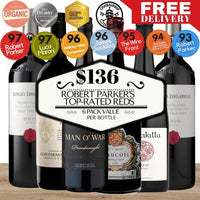
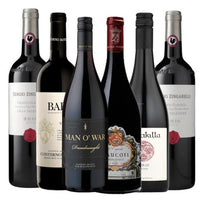
A curated selection of highly rated red wines recognised by Robert Parker Wine Advocate, bringing together bold, expressive and elegant styles from renowned wine regions.
Each bottle has been selected for its quality, character and outstanding drinking appeal, making this collection ideal for red wine lovers who appreciate critically acclaimed wines and want to enjoy a variety of impressive styles in one collection.
Great scores, exceptional reds and plenty of character in every bottle. 🍷
1 x Conterno Fantino - Barolo Vigna del Gris 2018 ~ Piedmont, Italy
95/100 James Suckling 94/100 Robert Parker, Wine Advocate 93/100 Falstaff 91/100 Antonio Galloni, Vinous 17.5/20 Jancis Robinson
Organic
James Suckling "Dense nose with licorice-tinged, crushed raspberries and blackberries. Full-bodied and full-fruited palate, then there’s a steady, velvety-tannin build through the long finish. Really well structured and polished. Showing great promise. Excellent 2018 from the Monforte d’Alba zone."
Robert Parker, Wine Advocate "...is elegant and woven tightly together with small berry fruits, redcurrant, wild lilac and violet, crushed stone and licorice root. With fruit from Monforte d'Alba, the wine is streamlined and silky, but you also sense the power and tightness of the inner fiber that locks it all together with seamless precision."
Falstaff "Brilliant ruby red with a delicately lightening edge. Very spicy on the nose, of kitchen herbs, pepper, some aniseed, then leather and wet stone, then again dried rose petals, very varied. Full-bodied on the palate, with very close-meshed tannins, shows a lot of pressure, lacks some draft on the palate overall."
Jancis Robinson "Lustrous ruby. Taut and compact on the nose and slow to reveal itself, except for the minerally savoury hints. Supple, juicy, mouth-filling and complex fruit with a deep layer of slightly drying tannins. Very long aromatic and focused finish but far from ready."
Organic wines are made from grapes grown without pesticides, following strict organic standards. Organic wines are produced in vineyards that do not use synthetic chemicals. Certified organic wines by CCPB in Italy.
Founded in 1982, Conterno Fantino testifies to the talent and vision of viticulturist Claudio Conterno and his partner, oenologist Guido Fantino. These great wines start in exceptional vineyard sites in Monforte d’Alba. Conterno Fantino’s historical nucleus is Ginestra, one of Monforte’s historical crus documented as far back as the 1800’s. is based on a hillside close to the village of Monforte d'Alba. The focus of the estate falls to four key grape varieties: Nebbiolo, Barbera, Dolcetto and Chardonnay.
Barolo is a traditional hillside village in the rolling hills of Piedmont, northwestern Italy. The vineyards and wineries there have long been famous for producing some of Italy's very finest red wines – predominantly from the region's signature grape variety, Nebbiolo.
Nebbiolo is the grape variety behind the top-quality red wines of Piedmont, northwestern Italy, the most notable of which are Barolo and Barbaresco. Nebbiolo wines are distinguished by their strong tannins, high acidity and distinctive scent – often described as "tar and roses". They also tend to lose color. Within just a few years of vintage, most Nebbiolo wines begin fading from deep, violet-tinged ruby to a beautiful brick orange.
1 x Man O' War Dreadnought Syrah 2019 ~ Waiheke Island, New Zealand
93/100Bob Campbell MW (2018 vintage) 93/100 CamDouglas MS (2018 vintage) 92/100 Robert Parker (2016 vintage)
Bronze - Decanter World Wine Awards (2017 vintage)
Bob Campbell MW "Rich, intense and classy syrah with plum, dark berry, five-spice, chocolate-mocha and nutty oak flavours. A robust yet stylish wine, with a solid backbone of ripe tannins suggesting good cellaring potential."
CamDouglas MS "A developing bouquet showcasing aromas of fresh and dried red currants, raspberry and tart plums. A violet and leather quality alongside some toatsy barrel spices, anise and clove layer in complexity and depth. Delicious on the palate, reflrecting all the bouquet has to offer, firm tannins and a backbone of acidity. The dry finish highlights the tannins, but the fruit flavours and violet anise combination also leave an impression on the finish. "
Jancis Robinson "Tank sample.Meaty and peppery with rich plummy fruit on the nose. Relatively light in body. Delicately structured with a long, spicy, leathery finish. Refined and sophisticated with moderate length and a lovely savoury tone. It's so non-fruit centric! Lots of goût de terroir."
Cam Douglas "Immediately recognisable and seductive bouquet with aromas of blackberry and raspberry, dark plums and black pepper. The aromas expand to include clove and cocoa, toasty wood and dark dry rocky soil impressions. On the palate - dry, weighty, firm textures from tannins, warming alcohol and an abundance of acidity. Fruit flavours reflect the palate led by dark raspberry and black cherry. Persistent and engaging throughout the palate, well made and ready." (2017 vintage)
Robert Parker "...continues this cuvée's run of successes. Violets, peppery spices and mulberry notes appear on the nose, while the medium to full-bodied palate adds flavors of raspberries, espresso and chocolate. Silky and immediately approachable, it doesn't have the richness or concentration of the best vintages." (2016 vintage)
Man O'War Vineyards is a leading New Zealand wine producer on Waiheke Island in the Hauraki Gulf. It is known for its consistently high-quality range of wines made from grape varieties like Chardonnay, Syrah, Merlot and Cabernet Sauvignon. Each small parcel of vines is carefully tended and harvested by hand, then vinified separately, fusing classic Old World techniques with innovative New World ideas.
Waiheke Island is a wine-producing region just 18km east of Auckland city. This hilly island is home to a healthy population of hippies and artists, as well as some of Auckland's most famous vineyards. Waiheke Island's specialty is elegant Bordeaux Blend wines made from Cabernet Sauvignon and Merlot, but Syrah and Chardonnay are also important grape varieties planted here.
Syrah is a dark-skinned red wine grape. Its origins have been popularly debated, but its modern viticultural home is unquestionably the northern Rhône Valley of eastern France. In Australia, Syrah is the flagship variety and has developed such a distinct personality that it is essentially regarded as a distinct variety, is commonly known as Shiraz.
1 x Château Maucoil Châteauneuf-du-Pape Esprit Red 2010 ~ Southern Rhone, France
92/100 Wine Enthuasiat 92/100 Wine Spectator 92/100 Robert Parker, Wine Advocate 15.5 Bettane et Desseauve
Wine Enthuasiat "Superripe and lavishly oaked, the 2010 L'Esprit is loaded with jammy cherry fruit topped with vanilla cream. It's full bodied, plushly textured and slightly warming, with some chewy wood tannins on the finish."
Robert Parker, Wine Advocate "A step up and a gorgeous, elegant and layered effort, the 2010 Chateauneuf du Pape Esprit de Maucoil offers loads of blackberry, black raspberry and cassis to go with underlying spice-box, licorice and earthy notes. Full-bodied, seamless and pure, with a textured, rich profile, it’s a knockout effort to drink over the coming decade or longer."
Robert Parker, Wine Advocate "The finest wine of this trio is the 2009 Chateauneuf du Pape l’Esprit de Maucoil. It offers classic kirsch liqueur, loamy soil, pepper and garrigue notes as well as a long, fleshy, medium to full-bodied personality. With impressive purity and overall balance, this seductive Chateauneuf du Pape." (2009 vintage)
Winemaker "Strong colour with garnet nuances. Deep on the nose,infused with Kirsch-like and jammy centuating its complexity. On the palate, aromas of black fruit and garrigue scrubland are elegantly underpinned by polished tannins and remarkable freshness. This is a wine with a great deal of breadth, an elegant, rich smoothness, and good development potential which will come out over time.
Château Maucoil has been under the care of several different illustrious wine growing families over the centuries, but it is now owned and managed by the talented winemakers Frederic and Benoit Lavau. With the consulting advice of famed French winemaker Stephane Derenoncourt, the Lavau brothers have been making stellar and highly awarded wines and today are one of the few producers to continue to cultivate all 13 permitted grape varieties permitted by the Châteauneuf-du-Pape regulations.
Châteauneuf-du-Pape is a historic village between the towns of Orange and Avignon, in France's southern Rhône Valley. It is famous for powerful, full-bodied red wines made predominantly from the classic southern Rhône grape trio: Grenache, Syrah and Mourvèdre. These three varieties are behind the vast majority of the appellation's red wines, although a total of eighteen are approved for use – a mix of red and white grape varieties.
A Southern Rhône Red Blend refers to a wide range of grape varieties blended together in the southern reaches of the Rhône Valley of southern France. While the blend could theoretically consist of any of a wide range of grape varieties, it is usually made up of Grenache, Syrah and Mourvèdre, in varying proportions, typically with Grenache and Syrah as the dominant partners.
1 x Clonakilla Shiraz Viognier 2022 - Canberra, Australia
97100 Robert Parker, Wine Advocate 96/100 Jane Faulkner, Halliday Wine Companion 96/100 James Suckling 95/100 Mike Bennie, The Wine Front
Ranked 4th - James Suckling Top 100 Aussie Wines 2019
James Halliday Best Varietal Awards: 2021 Best Shiraz Viognier Wines
Robert Parker, Wine Advocate "The 2022 Shiraz Viognier is sensational, but that assessment isn't breaking any ground. It includes 5% Viognier co-fermented and had 20% to 35% whole bunches in the ferment. Lacy, ethereal and structural, this is equal part Boscobel rose (which, to me, smells of raspberry leaf tea and rose essence) and roasted meat juices. It is sweet and savory, spicy and svelte and peppered by layers of pastrami and roast beetroot. There are notes of earth, licorice, black tea, jasmine flowers in summer and lashings of dried exotic spices. This is affirming and good, so good. Drink it now for Pinot-esque pleasure or in 15-20 years for elegant, meaty, ethereal, fresh, complex, layered excitement. All good either way. This is one of my favorite Australian Shirazes."
Jane Faulkner, Halliday Wine Companion "A cooler year has produced a pared-back, elegant and finer style that’s as exciting as any vintage. It’s peppery, spicy, a little sappy, laden with cranberries, pomegranate tartness, amaro and rosehips – quite exotic really. Accents on red cherries and red plums with oak spices and woodsy inputs bolstering the flavour profile and structure. It’s medium bodied, with the filagree tannins etched in as the acidity takes the lead to finish long and pure. Lovely now, and in good time, it will blossom further."
James Suckling "A cool, attenuated vintage that seems to possess the prerequisites for prodigious grace and long-term aging: extract, freshness and guile. All of this without an ounce of heaviness, such is the gentle mid-weighted timbre of this beautiful expression. For those seeking Barossa or Brunello, look elsewhere! But for those who seek poise, detail and mellifluous drinkability with a balletic gait, this gorgeous wine's patina of Sichuan pepper, clove, red fruits, violet, iodine and dried porcini delivers on all fronts. A supremely sophisticated wine that takes patience to unravel."
Huon Hooke, The Real Review "Seamless, harmonious wine with a lingering farewell. A wine of purity and unalloyed beauty."
Mike Bennie, The Wiine Front "Beauty in quiet spaces...gossamer threads drawn in a complex tapestry."
Vinum Wine Magazine "From the Murrumbateman vineyard, located 700 metres above sea level near Canberra. A blend of 95% Syrah and 5% Viognier, with one-third of the stems co-fermented. A lively, spirited Shiraz with fresh wild berries, mint, meadow herbs, and earthy notes. On the palate, it is firm, displaying remarkable finesse and vibrant energy."
Robert Parker, Wine Advocate "...a very interesting and impressive trend has emerged.It has notes of rose petals, raspberry leaf tea, brine, licorice root, redcurrant, tobacco leaf and even a hint of orange rind/bergamot. The palate is shaped by very fine tannins that cascade across the mouth, leaving a trail of cocoa nib, clove bud and again with the orange zest/bergamot suggestion." (2021 vintage)
Clonakilla is an Australian winery based in the Canberra wine region of Murrumbateman, New South Wales. Clonakilla was the first commercial winery to open in the region and founder John Kirk is often referred to as the "father" of the wine industry in the area. Clonakilla, which translates as "meadow of the church", are most famous for their Shiraz-Viognier. Wine critic, James Halliday describes Clonakilla as "paving the way for numerous others to follow" and yet that it "remains the icon".
Canberra is a sleeping giant of Australian wine. The ability of this region to produce world-class wines in only a relatively short history is almost second to none in the whole country. With the ability to produce everything from perfumed and tightly wound Syrah, to razor-sharp Riesling and a wide array of emerging varieties and techniques, Canberra will be one of the ‘must-watch’ wine-producing regions in Australia for many years to come.
Shiraz is the name given to the dark-skinned Syrah grape when grown in Australia and selected pockets of the New World. Though genetically identical, the stylistic differences between Shiraz and Syrah are usually pronounced.
Shiraz is so important to Australian viticulture that it is the most planted grape variety in the majority of Australian vineyards and has become virtually synonymous with the country's wine regions, and in particular the Barossa Valley.
2 x Sergio Zingarelli Chianti Classico Gran Selezione 2015 - Tuscany, Italy
97/100 Luca Maroni 95/100 Daniele Cernilli - Guida Essenziale 94/100 James Suckling 94/100 Raffaela Vecchione, Wine Critic 94/100 Wine Spectator 93/100 I Vini di Veronelli 92/100 Robert Parket, Wine Advocate
Best Italian Wine of the Year - Forbes Gold - The Drink Business Silver - Decanter World Wine Awards
James Suckling "Very ripe and rich red with dried-berry, plum, mushroom and bark character on the nose and palate. Fully body. Velvety texture."
Raffaela Vecchione, Wine Critic "Potent and assertive on the nose, displaying dark notes of marasca cherry, dark chocolate, and cassis. Full-bodied, with soft and velvety tannins and an energetic, well-gripped finish. A standout at Casa Rocca delle Macie."
Robert Parket, Wine Advocate "This is the top-shelf wine from Sergio Zingarelli. His namesake 2015 Chianti Classico Gran Selezione Sergio Zingarelli (100% Sangiovese) shows rich concentration and a seamless delivery of aromas that spans from black cherry and plum to spice and moist pipe tobacco. The fruit here is soft and luscious, and the mouthfeel is medium in length. It would turn a platter of modest carne asada soft tacos into an important dinner. "
Rocca delle Macìe was established in 1973, when film producer Italo Zingarelli – of Ettore Scola’s “We All Loved Each Other So Much” fame, and also the wildly popular series of films featuring comedy duo Bud Spencer and Terence Hill (including “They Call Me Trinity” and “Trinity Is Still My Name”) – decided to realize his lifelong dream by acquiring the “Le Macìe” estate – extending across 93 hectares (230 acres) in all, of which only two were under vine – in order to create a winery in the heart of the Chianti Classico zone.
The estate now extends to more than 500 hectares (1250 acres) with, in total, more than 200 (500 acres) used as vineyards and 22 (54 acres) as olive groves, subdivided across the company’s six estates: Le Macìe, Sant’Alfonso, Fizzano e le Tavolelle in the Chianti Classico Area, in addition to the Campomaccione and Casa Maria estates in the Morellino di Scansano Area (Maremma).
The Chianti region in Italy's Tuscany wine growing region is split between Chianti and Chianti Classico. Accordingly, two separate DOCG designations apply to wines from the Chianti region: the Chianti Classico DOCG for the heartland of Chianti, and Chianti DOCG for all other Chianti regions. (In 1984, the Chianti region was promoted from DOC to DOCG - Italy’s highest classification - and in 1996, Chianti Classico - the historic heartland of the region - DOCG was created, which gave autonomy to that region. In the last 20 years, a consortium of Chianti Classico producers have researched new Sangiovese clones, replanted vineyards, updated cellar practices and generally made Chianti Classico DOCG a world-class appellation. Chianti Classico must contain a minimum of 75% Sangiovese. In the 2014 edition of its annual compendium of wine ratings, Gambero Rosso noted that Chianti Classico DOCG wines were noteworthy for their “significant return to a more defined style, true to tradition.” The typical Chianti Classico wine is a ruby-red, Sangiovese-based wine with aromas of violets and cherries and a hint of earthy spice.
The Chianti DOCG designation covers wines from six Chianti sub-zones (Colli Pisane, Colli Fiorentini, Colli Senesi, Colli Aretini, Montalbano and Rufina) as well as all other Chianti wines. The Chianti Classico DOCG is located in the very center of Tuscany, between Florence and Sienna." "Tuscany is Italy's third most planted region (behind Sicily and Apulia) but it is eighth in terms of output, reflecting both the poor soil of Tuscany and deliberate efforts to limit yields and increase the quality in the wine. After Piedmont and the Veneto, Tuscany produces the third-highest volume of DOC/DOCG wines. More than 80% of the regions' production is in red wine, with the Sangiovese grape being Tuscany's' most prominent grape. Trebbiano is the leading white variety of the region.
The history of viticulture in Tuscany dates back to the Etruscans in the 8th century BC. From the fall of the Roman Empire and throughout the Middle Ages, monasteries were the main purveyors of wines in the region. As the aristocratic and merchant classes emerged, they inherited the share-cropping system of agriculture known as mezzadria. Many Tuscan landowners would turn their half of the grape harvest into wine that would be sold to merchants in Florence. Following the end of the Napoleonic Wars, Tuscany returned to the rule of the Habsburgs. Chianti, Chianti Classico, Brunello di Montalcino, Vino Nobile di Montepulciano and Super Tuscan are Tuscany’s best known wines.
Sangiovese (or Nielluccio in Corsica), a dark-berried vine, is the most widely planted grape variety in Italy. Virtually synonymous with the red wines of Tuscany, and all the romanticism that goes with the territory, Sangiovese is the core constituent in some of the great names in Italian wine. Italy's love affair with Sangiovese – and indeed the world's – is generations old, though recent grapevine research suggests the variety is not as ancient as once thought.
Cabernet Sauvignon is one of the most famous red wine grape variety on Earth. It is rivaled in this regard only by its Bordeaux stablemate Merlot, and its opposite number in Burgundy, Pinot Noir. From its origins in Bordeaux, Cabernet has successfully spread to almost every winegrowing country in the world. It is now the key grape variety in many first-rate New World wine regions, most notably Napa Valley, Coonawarra and Maipo Valley. Wherever they come from, Cabernet Sauvignon wines always seem to demonstrate a handful of common character traits: deep color, good tannin structure, moderate acidity and aromas of blackcurrant, tomato leaf, dark spices and cedarwood.Rocca delle Macìe was established in 1973, when film producer Italo Zingarelli – of Ettore Scola’s “We All Loved Each Other So Much” fame, and also the wildly popular series of films featuring comedy duo Bud Spencer and Terence Hill (including “They Call Me Trinity” and “Trinity Is Still My Name”) – decided to realize his lifelong dream by acquiring the “Le Macìe” estate – extending across 93 hectares (230 acres) in all, of which only two were under vine – in order to create a winery in the heart of the Chianti Classico zone.
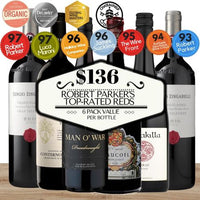
A curated selection of highly rated red wines recognised by Robert Parker Wine Advocate, bringing together bold, expressive and elegant styles from renowned wine regions.
Each bottle has been selected for its quality, character and outstanding drinking appeal, making this collection ideal for red wine lovers who appreciate critically acclaimed wines and want to enjoy a variety of impressive styles in one collection.
Great scores, exceptional reds and plenty of character in every bottle. 🍷
1 x Conterno Fantino - Barolo Vigna del Gris 2018 ~ Piedmont, Italy
95/100 James Suckling 94/100 Robert Parker, Wine Advocate 93/100 Falstaff 91/100 Antonio Galloni, Vinous 17.5/20 Jancis Robinson
Organic
James Suckling "Dense nose with licorice-tinged, crushed raspberries and blackberries. Full-bodied and full-fruited palate, then there’s a steady, velvety-tannin build through the long finish. Really well structured and polished. Showing great promise. Excellent 2018 from the Monforte d’Alba zone."
Robert Parker, Wine Advocate "...is elegant and woven tightly together with small berry fruits, redcurrant, wild lilac and violet, crushed stone and licorice root. With fruit from Monforte d'Alba, the wine is streamlined and silky, but you also sense the power and tightness of the inner fiber that locks it all together with seamless precision."
Falstaff "Brilliant ruby red with a delicately lightening edge. Very spicy on the nose, of kitchen herbs, pepper, some aniseed, then leather and wet stone, then again dried rose petals, very varied. Full-bodied on the palate, with very close-meshed tannins, shows a lot of pressure, lacks some draft on the palate overall."
Jancis Robinson "Lustrous ruby. Taut and compact on the nose and slow to reveal itself, except for the minerally savoury hints. Supple, juicy, mouth-filling and complex fruit with a deep layer of slightly drying tannins. Very long aromatic and focused finish but far from ready."
Organic wines are made from grapes grown without pesticides, following strict organic standards. Organic wines are produced in vineyards that do not use synthetic chemicals. Certified organic wines by CCPB in Italy.
Founded in 1982, Conterno Fantino testifies to the talent and vision of viticulturist Claudio Conterno and his partner, oenologist Guido Fantino. These great wines start in exceptional vineyard sites in Monforte d’Alba. Conterno Fantino’s historical nucleus is Ginestra, one of Monforte’s historical crus documented as far back as the 1800’s. is based on a hillside close to the village of Monforte d'Alba. The focus of the estate falls to four key grape varieties: Nebbiolo, Barbera, Dolcetto and Chardonnay.
Barolo is a traditional hillside village in the rolling hills of Piedmont, northwestern Italy. The vineyards and wineries there have long been famous for producing some of Italy's very finest red wines – predominantly from the region's signature grape variety, Nebbiolo.
Nebbiolo is the grape variety behind the top-quality red wines of Piedmont, northwestern Italy, the most notable of which are Barolo and Barbaresco. Nebbiolo wines are distinguished by their strong tannins, high acidity and distinctive scent – often described as "tar and roses". They also tend to lose color. Within just a few years of vintage, most Nebbiolo wines begin fading from deep, violet-tinged ruby to a beautiful brick orange.
1 x Man O' War Dreadnought Syrah 2019 ~ Waiheke Island, New Zealand
93/100Bob Campbell MW (2018 vintage) 93/100 CamDouglas MS (2018 vintage) 92/100 Robert Parker (2016 vintage)
Bronze - Decanter World Wine Awards (2017 vintage)
Bob Campbell MW "Rich, intense and classy syrah with plum, dark berry, five-spice, chocolate-mocha and nutty oak flavours. A robust yet stylish wine, with a solid backbone of ripe tannins suggesting good cellaring potential."
CamDouglas MS "A developing bouquet showcasing aromas of fresh and dried red currants, raspberry and tart plums. A violet and leather quality alongside some toatsy barrel spices, anise and clove layer in complexity and depth. Delicious on the palate, reflrecting all the bouquet has to offer, firm tannins and a backbone of acidity. The dry finish highlights the tannins, but the fruit flavours and violet anise combination also leave an impression on the finish. "
Jancis Robinson "Tank sample.Meaty and peppery with rich plummy fruit on the nose. Relatively light in body. Delicately structured with a long, spicy, leathery finish. Refined and sophisticated with moderate length and a lovely savoury tone. It's so non-fruit centric! Lots of goût de terroir."
Cam Douglas "Immediately recognisable and seductive bouquet with aromas of blackberry and raspberry, dark plums and black pepper. The aromas expand to include clove and cocoa, toasty wood and dark dry rocky soil impressions. On the palate - dry, weighty, firm textures from tannins, warming alcohol and an abundance of acidity. Fruit flavours reflect the palate led by dark raspberry and black cherry. Persistent and engaging throughout the palate, well made and ready." (2017 vintage)
Robert Parker "...continues this cuvée's run of successes. Violets, peppery spices and mulberry notes appear on the nose, while the medium to full-bodied palate adds flavors of raspberries, espresso and chocolate. Silky and immediately approachable, it doesn't have the richness or concentration of the best vintages." (2016 vintage)
Man O'War Vineyards is a leading New Zealand wine producer on Waiheke Island in the Hauraki Gulf. It is known for its consistently high-quality range of wines made from grape varieties like Chardonnay, Syrah, Merlot and Cabernet Sauvignon. Each small parcel of vines is carefully tended and harvested by hand, then vinified separately, fusing classic Old World techniques with innovative New World ideas.
Waiheke Island is a wine-producing region just 18km east of Auckland city. This hilly island is home to a healthy population of hippies and artists, as well as some of Auckland's most famous vineyards. Waiheke Island's specialty is elegant Bordeaux Blend wines made from Cabernet Sauvignon and Merlot, but Syrah and Chardonnay are also important grape varieties planted here.
Syrah is a dark-skinned red wine grape. Its origins have been popularly debated, but its modern viticultural home is unquestionably the northern Rhône Valley of eastern France. In Australia, Syrah is the flagship variety and has developed such a distinct personality that it is essentially regarded as a distinct variety, is commonly known as Shiraz.
1 x Château Maucoil Châteauneuf-du-Pape Esprit Red 2010 ~ Southern Rhone, France
92/100 Wine Enthuasiat 92/100 Wine Spectator 92/100 Robert Parker, Wine Advocate 15.5 Bettane et Desseauve
Wine Enthuasiat "Superripe and lavishly oaked, the 2010 L'Esprit is loaded with jammy cherry fruit topped with vanilla cream. It's full bodied, plushly textured and slightly warming, with some chewy wood tannins on the finish."
Robert Parker, Wine Advocate "A step up and a gorgeous, elegant and layered effort, the 2010 Chateauneuf du Pape Esprit de Maucoil offers loads of blackberry, black raspberry and cassis to go with underlying spice-box, licorice and earthy notes. Full-bodied, seamless and pure, with a textured, rich profile, it’s a knockout effort to drink over the coming decade or longer."
Robert Parker, Wine Advocate "The finest wine of this trio is the 2009 Chateauneuf du Pape l’Esprit de Maucoil. It offers classic kirsch liqueur, loamy soil, pepper and garrigue notes as well as a long, fleshy, medium to full-bodied personality. With impressive purity and overall balance, this seductive Chateauneuf du Pape." (2009 vintage)
Winemaker "Strong colour with garnet nuances. Deep on the nose,infused with Kirsch-like and jammy centuating its complexity. On the palate, aromas of black fruit and garrigue scrubland are elegantly underpinned by polished tannins and remarkable freshness. This is a wine with a great deal of breadth, an elegant, rich smoothness, and good development potential which will come out over time.
Château Maucoil has been under the care of several different illustrious wine growing families over the centuries, but it is now owned and managed by the talented winemakers Frederic and Benoit Lavau. With the consulting advice of famed French winemaker Stephane Derenoncourt, the Lavau brothers have been making stellar and highly awarded wines and today are one of the few producers to continue to cultivate all 13 permitted grape varieties permitted by the Châteauneuf-du-Pape regulations.
Châteauneuf-du-Pape is a historic village between the towns of Orange and Avignon, in France's southern Rhône Valley. It is famous for powerful, full-bodied red wines made predominantly from the classic southern Rhône grape trio: Grenache, Syrah and Mourvèdre. These three varieties are behind the vast majority of the appellation's red wines, although a total of eighteen are approved for use – a mix of red and white grape varieties.
A Southern Rhône Red Blend refers to a wide range of grape varieties blended together in the southern reaches of the Rhône Valley of southern France. While the blend could theoretically consist of any of a wide range of grape varieties, it is usually made up of Grenache, Syrah and Mourvèdre, in varying proportions, typically with Grenache and Syrah as the dominant partners.
1 x Clonakilla Shiraz Viognier 2022 - Canberra, Australia
97100 Robert Parker, Wine Advocate 96/100 Jane Faulkner, Halliday Wine Companion 96/100 James Suckling 95/100 Mike Bennie, The Wine Front
Ranked 4th - James Suckling Top 100 Aussie Wines 2019
James Halliday Best Varietal Awards: 2021 Best Shiraz Viognier Wines
Robert Parker, Wine Advocate "The 2022 Shiraz Viognier is sensational, but that assessment isn't breaking any ground. It includes 5% Viognier co-fermented and had 20% to 35% whole bunches in the ferment. Lacy, ethereal and structural, this is equal part Boscobel rose (which, to me, smells of raspberry leaf tea and rose essence) and roasted meat juices. It is sweet and savory, spicy and svelte and peppered by layers of pastrami and roast beetroot. There are notes of earth, licorice, black tea, jasmine flowers in summer and lashings of dried exotic spices. This is affirming and good, so good. Drink it now for Pinot-esque pleasure or in 15-20 years for elegant, meaty, ethereal, fresh, complex, layered excitement. All good either way. This is one of my favorite Australian Shirazes."
Jane Faulkner, Halliday Wine Companion "A cooler year has produced a pared-back, elegant and finer style that’s as exciting as any vintage. It’s peppery, spicy, a little sappy, laden with cranberries, pomegranate tartness, amaro and rosehips – quite exotic really. Accents on red cherries and red plums with oak spices and woodsy inputs bolstering the flavour profile and structure. It’s medium bodied, with the filagree tannins etched in as the acidity takes the lead to finish long and pure. Lovely now, and in good time, it will blossom further."
James Suckling "A cool, attenuated vintage that seems to possess the prerequisites for prodigious grace and long-term aging: extract, freshness and guile. All of this without an ounce of heaviness, such is the gentle mid-weighted timbre of this beautiful expression. For those seeking Barossa or Brunello, look elsewhere! But for those who seek poise, detail and mellifluous drinkability with a balletic gait, this gorgeous wine's patina of Sichuan pepper, clove, red fruits, violet, iodine and dried porcini delivers on all fronts. A supremely sophisticated wine that takes patience to unravel."
Huon Hooke, The Real Review "Seamless, harmonious wine with a lingering farewell. A wine of purity and unalloyed beauty."
Mike Bennie, The Wiine Front "Beauty in quiet spaces...gossamer threads drawn in a complex tapestry."
Vinum Wine Magazine "From the Murrumbateman vineyard, located 700 metres above sea level near Canberra. A blend of 95% Syrah and 5% Viognier, with one-third of the stems co-fermented. A lively, spirited Shiraz with fresh wild berries, mint, meadow herbs, and earthy notes. On the palate, it is firm, displaying remarkable finesse and vibrant energy."
Robert Parker, Wine Advocate "...a very interesting and impressive trend has emerged.It has notes of rose petals, raspberry leaf tea, brine, licorice root, redcurrant, tobacco leaf and even a hint of orange rind/bergamot. The palate is shaped by very fine tannins that cascade across the mouth, leaving a trail of cocoa nib, clove bud and again with the orange zest/bergamot suggestion." (2021 vintage)
Clonakilla is an Australian winery based in the Canberra wine region of Murrumbateman, New South Wales. Clonakilla was the first commercial winery to open in the region and founder John Kirk is often referred to as the "father" of the wine industry in the area. Clonakilla, which translates as "meadow of the church", are most famous for their Shiraz-Viognier. Wine critic, James Halliday describes Clonakilla as "paving the way for numerous others to follow" and yet that it "remains the icon".
Canberra is a sleeping giant of Australian wine. The ability of this region to produce world-class wines in only a relatively short history is almost second to none in the whole country. With the ability to produce everything from perfumed and tightly wound Syrah, to razor-sharp Riesling and a wide array of emerging varieties and techniques, Canberra will be one of the ‘must-watch’ wine-producing regions in Australia for many years to come.
Shiraz is the name given to the dark-skinned Syrah grape when grown in Australia and selected pockets of the New World. Though genetically identical, the stylistic differences between Shiraz and Syrah are usually pronounced.
Shiraz is so important to Australian viticulture that it is the most planted grape variety in the majority of Australian vineyards and has become virtually synonymous with the country's wine regions, and in particular the Barossa Valley.
2 x Sergio Zingarelli Chianti Classico Gran Selezione 2015 - Tuscany, Italy
97/100 Luca Maroni 95/100 Daniele Cernilli - Guida Essenziale 94/100 James Suckling 94/100 Raffaela Vecchione, Wine Critic 94/100 Wine Spectator 93/100 I Vini di Veronelli 92/100 Robert Parket, Wine Advocate
Best Italian Wine of the Year - Forbes Gold - The Drink Business Silver - Decanter World Wine Awards
James Suckling "Very ripe and rich red with dried-berry, plum, mushroom and bark character on the nose and palate. Fully body. Velvety texture."
Raffaela Vecchione, Wine Critic "Potent and assertive on the nose, displaying dark notes of marasca cherry, dark chocolate, and cassis. Full-bodied, with soft and velvety tannins and an energetic, well-gripped finish. A standout at Casa Rocca delle Macie."
Robert Parket, Wine Advocate "This is the top-shelf wine from Sergio Zingarelli. His namesake 2015 Chianti Classico Gran Selezione Sergio Zingarelli (100% Sangiovese) shows rich concentration and a seamless delivery of aromas that spans from black cherry and plum to spice and moist pipe tobacco. The fruit here is soft and luscious, and the mouthfeel is medium in length. It would turn a platter of modest carne asada soft tacos into an important dinner. "
Rocca delle Macìe was established in 1973, when film producer Italo Zingarelli – of Ettore Scola’s “We All Loved Each Other So Much” fame, and also the wildly popular series of films featuring comedy duo Bud Spencer and Terence Hill (including “They Call Me Trinity” and “Trinity Is Still My Name”) – decided to realize his lifelong dream by acquiring the “Le Macìe” estate – extending across 93 hectares (230 acres) in all, of which only two were under vine – in order to create a winery in the heart of the Chianti Classico zone.
The estate now extends to more than 500 hectares (1250 acres) with, in total, more than 200 (500 acres) used as vineyards and 22 (54 acres) as olive groves, subdivided across the company’s six estates: Le Macìe, Sant’Alfonso, Fizzano e le Tavolelle in the Chianti Classico Area, in addition to the Campomaccione and Casa Maria estates in the Morellino di Scansano Area (Maremma).
The Chianti region in Italy's Tuscany wine growing region is split between Chianti and Chianti Classico. Accordingly, two separate DOCG designations apply to wines from the Chianti region: the Chianti Classico DOCG for the heartland of Chianti, and Chianti DOCG for all other Chianti regions. (In 1984, the Chianti region was promoted from DOC to DOCG - Italy’s highest classification - and in 1996, Chianti Classico - the historic heartland of the region - DOCG was created, which gave autonomy to that region. In the last 20 years, a consortium of Chianti Classico producers have researched new Sangiovese clones, replanted vineyards, updated cellar practices and generally made Chianti Classico DOCG a world-class appellation. Chianti Classico must contain a minimum of 75% Sangiovese. In the 2014 edition of its annual compendium of wine ratings, Gambero Rosso noted that Chianti Classico DOCG wines were noteworthy for their “significant return to a more defined style, true to tradition.” The typical Chianti Classico wine is a ruby-red, Sangiovese-based wine with aromas of violets and cherries and a hint of earthy spice.
The Chianti DOCG designation covers wines from six Chianti sub-zones (Colli Pisane, Colli Fiorentini, Colli Senesi, Colli Aretini, Montalbano and Rufina) as well as all other Chianti wines. The Chianti Classico DOCG is located in the very center of Tuscany, between Florence and Sienna." "Tuscany is Italy's third most planted region (behind Sicily and Apulia) but it is eighth in terms of output, reflecting both the poor soil of Tuscany and deliberate efforts to limit yields and increase the quality in the wine. After Piedmont and the Veneto, Tuscany produces the third-highest volume of DOC/DOCG wines. More than 80% of the regions' production is in red wine, with the Sangiovese grape being Tuscany's' most prominent grape. Trebbiano is the leading white variety of the region.
The history of viticulture in Tuscany dates back to the Etruscans in the 8th century BC. From the fall of the Roman Empire and throughout the Middle Ages, monasteries were the main purveyors of wines in the region. As the aristocratic and merchant classes emerged, they inherited the share-cropping system of agriculture known as mezzadria. Many Tuscan landowners would turn their half of the grape harvest into wine that would be sold to merchants in Florence. Following the end of the Napoleonic Wars, Tuscany returned to the rule of the Habsburgs. Chianti, Chianti Classico, Brunello di Montalcino, Vino Nobile di Montepulciano and Super Tuscan are Tuscany’s best known wines.
Sangiovese (or Nielluccio in Corsica), a dark-berried vine, is the most widely planted grape variety in Italy. Virtually synonymous with the red wines of Tuscany, and all the romanticism that goes with the territory, Sangiovese is the core constituent in some of the great names in Italian wine. Italy's love affair with Sangiovese – and indeed the world's – is generations old, though recent grapevine research suggests the variety is not as ancient as once thought.
Cabernet Sauvignon is one of the most famous red wine grape variety on Earth. It is rivaled in this regard only by its Bordeaux stablemate Merlot, and its opposite number in Burgundy, Pinot Noir. From its origins in Bordeaux, Cabernet has successfully spread to almost every winegrowing country in the world. It is now the key grape variety in many first-rate New World wine regions, most notably Napa Valley, Coonawarra and Maipo Valley. Wherever they come from, Cabernet Sauvignon wines always seem to demonstrate a handful of common character traits: deep color, good tannin structure, moderate acidity and aromas of blackcurrant, tomato leaf, dark spices and cedarwood.Rocca delle Macìe was established in 1973, when film producer Italo Zingarelli – of Ettore Scola’s “We All Loved Each Other So Much” fame, and also the wildly popular series of films featuring comedy duo Bud Spencer and Terence Hill (including “They Call Me Trinity” and “Trinity Is Still My Name”) – decided to realize his lifelong dream by acquiring the “Le Macìe” estate – extending across 93 hectares (230 acres) in all, of which only two were under vine – in order to create a winery in the heart of the Chianti Classico zone.