



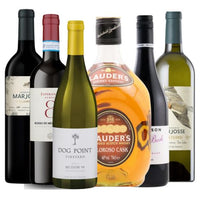
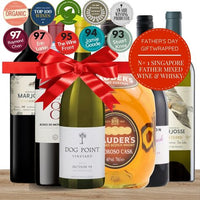
Singapore's N# 1 Father's Day Wine & Whisky Gift Collection
Raise a Glass & Celebrate: Our handpicked selection, deemed the best in Singapore, offers a harmonious blend of sophistication and indulgence, perfect for celebrating the extraordinary fathers in our lives. From rich, complex wines to smooth, aged whiskies, each bottle is a testament to Dad's impeccable taste and unwavering presence. Elevate his special day with the unparalleled luxury of Singapore's N# 1 Father's Day Wine & Whisky Gift Collection.
1 x Hewitson "Baby Bush" Mourvèdre 2021 – Barossa Valley, South Australia
94/100 Ray Jordan, Wine Pilot
93/100 Dave Brookes, Halliday Wine Companion
93/100 Stuart Knox, The Real Review
5 Star Winery - James Halliday
James Suckling Top 100 Top Value Wine 2020
James Halliday Top 100 Winery 2017
Ray Jordan, Wine Pilot "So, this beaut little Mourvèdre is based on fruit created by taking cuttings from the Old Garden Vineyard, planted in 1853. It is such a brilliant and vibrant example of this terrific variety. I have seen this wine evolve over many years, and I have to say it just seems to get better each year. The balance of the fruit and oak is harmonious, allowing the fragrances and seductive aromas to reveal their true beauty. A great entry wine to understand some of the appeal of Mourvèdre."
Dave Brookes, Halliday Wine Companion "The 'baby' mourvèdre vines were established in 1998 from cuttings off the epic 1853-planted Old Garden vineyard. Lots of colour and lots of fruit depth for babies! Rich dark plum, blueberry and black cherry fruits with hints of turned earth, light bramble tones, graphite, dark spice, roasting meats and charcuterie. There is a wee whiff of choc-mint way off in the distance, too, with an impressive fruit density, tight granite dust tannins and bright acid drive finishing pure and savoury."
Stuart Knox, The Real Review "Vibrant ruby red colour. Mulberry, raw beef and ironstone aromas. Lashings of blue and purple fruits fill the core whilst it builds layers of anise, black graphite, and dried blood savouries. Tannins have a fine gravel persistence as it rolls long to the dry finish. Remarkable sense of tension and purity at this price point."
Winemaker "This younger example of Mourvèdre is a ‘Selection Massale’, or cuttings, from our 1853 Old Garden Vineyard. We commenced planting this vineyard in 1998, to ensure a continuation of the 1853 Mourvèdre legacy. Selection Massale is a traditional way of propagating from exceptional, ancient vines. Born from excellent stock, our parent vineyard is known to be the oldest Mourvèdre in the world and has passed on a notable high quality of fruit"
100% Mourvèdre
Australian Wine Companion "Established in 1998 Hewitson winery is situated in the heart of the Barossa Valley on the historic Seppeltsfield Road and boasts some of the oldest vines in the world. Hewitson fruit is sourced from historic, dry-grown vineyards in the Barossa Valley and also from single site vineyards in Eden Valley, McLaren Vale and the Adelaide Hills."
Frederick Wildman "Dean Hewitson founded his eponymous winery in 1998. He is a highly respected Australian winemaker ...Hewitson has worked at wineries in Australia, France, Italy and Oregon. Hewitson then moved to the U.S. where he earned a Masters from UC-Davis. On his return home, Dean brought a wealth of knowledge, practical experience and a driving passion to produce wines not only from Barossa Valley, but also from the McLaren Vale and the Adelaide Hills regions.
Hewitson fundamentally believes great wines are the expression of the soils they are grown in and the season in which they are grown. With his longstanding focus on terroir—specific terroir plots in fact—many of Hewitson’s wines are single vineyard. He sources grapes from not only his own vineyards but also from long-standing grower contracts including a few sourced from some of the oldest living, still productive vines on plots that date back to the mid-19th century and are pre-phylloxera. His ‘Old Garden’ Mourvèdre is a single-vineyard wine, whose vines were planted in 1853 in Barossa Valley and are reputed to be the oldest Mourvèdre vines in the world. Hewitson’s ‘Miss Harry’ is sourced from a Grenache vineyard planted in 1880, also thought to be the oldest Grenache in existence.
Due to Hewitson’s education and experience in Australia, California and France, Hewitson wines combine Old-World traditions with New-World fruit purity. And while he clearly excels with Rhône Valley grape varieties, . A practitioner in solar energy, water recycling and encouraging natural biodiversity, Hewitson produces wines in an environmentally sustainable fashion."
James Halliday "Dean Hewitson was a winemaker at Petaluma [one of Australia's leading wineries] for 10 years, during which time he managed to do three vintages in France and one in Oregon as well as undertaking his Masters at the University of California, Davis. It is hardly surprising that the wines are immaculately made from a technical viewpoint. Dean sources 70-year-old shiraz from McLaren Vale; he also makes a Barossa Valley Mourvedre from vines planted in 1853 at Rowland Flat, and Barossa Valley Shiraz and Grenache from 60-year-old vines at Tanunda."
The Barossa Valley is an extremely important wine-producing region within the Barossa zone of South Australia, particularly associated with powerful red wines from the red wine grape variety Shiraz. A prestigious and internationally renowned region, it is not only home to some of the oldest vineyards and wineries in Australia but produces some of its most recognizable and sought-after brands. A striking feature of the Barossa Valley's wine landscape is the presence of very old vines, proudly showcased on many wine labels and during vineyard tours.
1 x Esperienza Numero 8 Rosso di Montalcino 2020 - Tuscany, Italy
Winemaker "The Tuscan wine Rosso Esipendenza N. 8 has an intense ruby red color with purple hues in the glass. Intense and persistent bouquet with hints of fresh fruit and flowers. Dry flavor with good structure. Medium-structured wine, young and particularly suitable with first courses.'
Rocca delle Macìe was established in 1973, when film producer Italo Zingarelli – of Ettore Scola’s “We All Loved Each Other So Much” fame, and also the wildly popular series of films featuring comedy duo Bud Spencer and Terence Hill (including “They Call Me Trinity” and “Trinity Is Still My Name”) – decided to realize his lifelong dream by acquiring the “Le Macìe” estate – extending across 93 hectares (230 acres) in all, of which only two were under vine – in order to create a winery in the heart of the Chianti Classico zone.
The estate now extends to more than 500 hectares (1250 acres) with, in total, more than 200 (500 acres) used as vineyards and 22 (54 acres) as olive groves, subdivided across the company’s six estates: Le Macìe, Sant’Alfonso, Fizzano e le Tavolelle in the Chianti Classico Area, in addition to the Campomaccione and Casa Maria estates in the Morellino di Scansano Area (Maremma).
The Chianti region in Italy's Tuscany wine growing region is split between Chianti and Chianti Classico. Accordingly, two separate DOCG designations apply to wines from the Chianti region: the Chianti Classico DOCG for the heartland of Chianti, and Chianti DOCG for all other Chianti regions. (In 1984, the Chianti region was promoted from DOC to DOCG - Italy’s highest classification - and in 1996, Chianti Classico - the historic heartland of the region - DOCG was created, which gave autonomy to that region. In the last 20 years, a consortium of Chianti Classico producers have researched new Sangiovese clones, replanted vineyards, updated cellar practices and generally made Chianti Classico DOCG a world-class appellation. Chianti Classico must contain a minimum of 75% Sangiovese. In the 2014 edition of its annual compendium of wine ratings, Gambero Rosso noted that Chianti Classico DOCG wines were noteworthy for their “significant return to a more defined style, true to tradition.” The typical Chianti Classico wine is a ruby-red, Sangiovese-based wine with aromas of violets and cherries and a hint of earthy spice.
The Chianti DOCG designation covers wines from six Chianti sub-zones (Colli Pisane, Colli Fiorentini, Colli Senesi, Colli Aretini, Montalbano and Rufina) as well as all other Chianti wines. The Chianti Classico DOCG is located in the very center of Tuscany, between Florence and Sienna.
A Unesco World Heritage site since 2004, Montalcino is an isolated hilltop village of austere, rural beauty with an intoxicating view over the surrounding valleys of Orcia, Ombrone and Asso. It lies up to 500 metres above sea level, 40 kilometres south of Siena and around 50km from the coast. It is sheltered to the southeast by the inactive volcano, Mount Amiata, one of the highest mountains in Tuscany.
The area where the wines of Montalcino are produced coincides with the historical borders of the Municipality of Montalcino, covering a surface area of 24,000 hectares, only 15% of which is planted with vineyards. The vineyards are the same for Rosso and Brunello, indeed Rosso is often a byproduct of Brunello. However there are 500 hectares where only Rosso is allowed – while all the grapes able to produce Brunello can be declassified to make Rosso, the reverse is not true.
Once called ‘Vermiglio’ (vermilion), Rosso di Montalcino is a dry, fruity red wine produced in the village of Montalcino in Tuscany. Rosso comes from the same area of origin as the prestigious Brunello di Montalcino, sharing the same Mediterranean climate and also based on 100% Sangiovese. However, Rosso di Montalcino is released sooner and is therefore more youthful than Brunello. Rosso di Montalcino has had its own DOC since 1983. Lighter and less extracted than Brunello, the best examples of Rosso di Montalcino. Given the Mediterranean climate, Rosso di Montalcino tends to have more moderate acidity compared to other Sangiovese wines from Tuscany such as Chianti, Chianti Classico, or even Rosso di Montepulciano, which explains its extraordinary drinkability. At the same time, it is often a bit more complex compared to Sangiovese from Maremma, just on the other side of the Orcia river.
1 x Chateau Marjosse Pierre Lurton Cuvee Palombre White 2020 - Bordeaux, France
92/100 James Suckling
93/100 James Sucking (2019 vintage)
Owned by one of the world's most famous winemakers, Pierre Lurton - president of two of Bordeaux's best-known chateaux, the Moët Hennessy Louis Vuitton (LVMH) owned Château Cheval Blanc and Château d’Yquem.
James Suckling, ''..I like the density and concentration, with a delicious creaminess undercut by herb and spice...Almonds, fennel, yoghurt, grapefruit and pear skins on the nose, with some cloves and white pepper.''
Château Marjosse is owned by French 'wine royalty', Pierre Lurton - president of two of Bordeaux’s best-known châteaux; the Moët Hennessy Louis Vuitton (LVMH) owned, Château Cheval Blanc and Château d’Yquem, Château Marjosse. Pierre Lurton comes from two of the great Bordeaux families. His father Dominique was the youngest son of the paterfamilias François Lurton; his uncle André Lurton who founded the eponymous wine company; his many cousins run châteaux from Pauillac to Pomerol. His mother is from the famous Lafite family.
The influential Club Enologique asserts that Pierre is the most accomplished wine personality of his famous family. Trained as a doctor but swapping his studies for wine making after four years. At 23 he took over Clos Fourtet in St Emilion, one of the fine Lurton properties, and in 1991 he was appointed head of Château Cheval Blanc (it was bought by Bernard Arnault of LVMH in 1998); in 1999 he took on Château d’Yquem, which had just been added to the Arnault portfolio.
Club Enologique describes Pierre Lurton as having the world’s most corporate wine job. "However he divides his time between two of the world’s most exalted wine properties, but comes down to earth in Entre-deux-Mers, the leafy, unpretentious appellation to the east of Bordeaux at Château Marjosse."
The Château Marjosse estate is located in Entre-deux-Mers, on the right bank of Bordeaux. Initially owned by the wine merchant Bernard Chénier, Château Marjosse was acquired by the Deleuze family, who, in 1990, gave some plots to Pierre Lurton to rent. In 1992, Pierre Lurton, who grew up in Château Reynier, neighbour to this magnificent Chartreuse, moved to a second home in Château Marjosse and, over successive years became the owner of the entire vineyard, as well as the Chartreuse in 2013.
Decanter "Since Lurton bought Château Marjosse in 1994, the estate has improved beyond recognition. Pierre's father, Dominique Lurton, also made over a further 30ha so that, under the Château Marjosse label, Lurton now exploits 42ha of vineyard, six hectares of white and 36ha of Bordeaux red – a total of 300,000 bottles a year. Pierre insists his wine is Bordeaux and not Bordeaux Supérieur because ‘my wine is only supérieur in the bottle’. His objectives are ambitious. As the quality of the terroir with clay-limestone soil is similar to some of the better areas in Saint-Emilion, he hopes to prove that wines from this area can rival those from more prestigious regions."
Sommeliers International "At Château Marjosse the land possesses yet another specific feature, known locally as “la Boulbène”, a silty-clayey texture that has developed on ancient alluvions. The fertility of these soils no longer needs to be proved, because, by chance, they are also found in Saint-Emilion, a terroir that is extremely familiar to the man who manages “Cheval Blanc” …. Pierre Lurton. Assisted in this transformation by Consultant-Oenologist Pascal Poussevin, whose recommendations range from vine growing to wine-making, Pierre Lurton’s estate has now reached its cruising speed … Beyond the fabulous adventures he experiences in his role as manager of Châteaux d’Yquem, Cheval Blanc, as well as estates in South Africa, Latin America and in Australia … it is undoubtedly with “the salt of this land here in the Entre-deux-Mers” that his years of quest for perfection will be revealed. It is clear that this region needs winegrowers of such calibre, those who possess a sixth sense and, using techniques that almost resemble intentional alchemy, transform the grapes they touch into wines that exude the unique character of a specific area."
The Entre-deux-Mers region, nicknamed by wine experts as “Little Tuscany”, is unique and jealously protected by its inhabitants. "There are fifteen appellations that constitute the Entre-deux-Mers. The most well-known of them all, reputed for its dry, lively white wines, is certainly the one which bears the name of this region! The Entre-deux-Mers cultivates a certain speciality in producing white wines, due to its basic geological assets, possessing gravelly-limestone soils, upon which Sémillon, Sauvignon, Muscadelle and even Ugni Blanc grape varieties are planted. But the variety of soils and sub-soils associated with such a complex landscape provides a diversity of terroirs … These are favourable for producing red wines, that are regrettably not sufficiently well-known, but highly prized for the complexity of their aromas, their deep, vivid colour, as well as the concentration and elegance of their tannins." Sommeliers International.
Bordeaux, in the southwest of France, needs little introduction as one of the world's most famous, prestigious and prolific wine regions. Its three trump cards are diversity, quality and quantity. The majority of Bordeaux wines (nearly 90 percent of production volume) are the dry, medium- and full-bodied red Bordeaux Blends that established its reputation. The finest (and most expensive) of these come from the great châteaux of the Haut-Médoc and the Right Bank appellations Saint-Émilion and Pomerol. The legendary reds are complemented by high-quality white wines, both dry styles (particularly from Pessac-Léognan) and the sweet, botrytized nectars of Sauternes.
1 x LAUDER’S SHERRY EDITION ~ SCOTLAND
700ml
82/100 Whisky Base
Lauder's Sherry Edition - Oloroso cask is the first expression from the Art of Blending series. Drawing its amber hue and sweet palate from its time maturing in seasoned Oloroso Sherry casks. The individual malt and grain whiskies which make up the blend are initially aged in charred bourbon casks. These are combined to form the blend and returned to Oloroso Sherry casks for further maturation.
Nose - Sponge cake with strawberry jam and cream, treacle tart and a crackle of exotic cooking spices.
Mouth - Vanilla-rich malt leads the way, with nods to cinnamon, cooked apple and heather along the way.
Finish - Lingering sweetness of crumbly fudge and fried banana.
Lauder’s Scotch whisky first appeared in 1834 in Glasgow, Scotland. The original blend was developed by Archibald Lauder, and it was awarded with several gold medals in international competitions - you can see these on the label. Lauder’s is a blend of Highland, Lowland, and Speyside malts, and the historic whisky has changed very little since its first expression in 1834. Lauder’s has been in continuous production since 1836, making it one of the oldest brands of Scotch whisky still in distribution.
1 x Chateau Marjosse Pierre Lurton Cuvee Canton Du Loup Rouge 2018 - Bordeaux, France
95/100 The Wine Independent
91/100 James Suckling
16.5/20 Jancis Robinson
Bronze - Jean Marc Quarin
Owned by one of the world's famous winemakers, Pierre Lurton - presiddent of two of Bordeaux's best-known chateaux, the Moet Hennessy Louis Vuitton (LVMH) owned Chateau Cheval Blanc and Chateau d'Yquem.
James Suckling "Firm and structured with a flavorful, dusty finish.....Black fruit, cedar, tobacco and dried leaves on the nose. It's medium-bodied with firm, chewy tannins.
Pierre Lurton “Canton du loup” (Canton of the wolf) has its origin in the red clays, rich in iron, of the limestone plateau of Tizac de Curton. These well-balanced soils, combining clay and the freshness of limestone with filtering properties, offer wines of great concentration and warmth in the mouth. The Canton du Loup 2018 has a ruby red color, reveals fruit aromas with brandy and cocoa....the palate is round, offering a richly structured substance and complex aromas of stone fruits, spices and blond tobacco."
Château Marjosse is owned by French 'wine royalty', Pierre Lurton - president of two of Bordeaux’s best-known châteaux; the Moët Hennessy Louis Vuitton (LVMH) owned, Château Cheval Blanc and Château d’Yquem, Château Marjosse. Pierre Lurton comes from two of the great Bordeaux families. His father Dominique was the youngest son of the paterfamilias François Lurton; his uncle André Lurton who founded the eponymous wine company; his many cousins run châteaux from Pauillac to Pomerol. His mother is from the famous Lafite family.
Club Enologique describes Pierre Lurton as having the world’s most corporate wine job. "However he divides his time between two of the world’s most exalted wine properties, but comes down to earth in Entre-deux-Mers, the leafy, unpretentious appellation to the east of Bordeaux at Château Marjosse."
The Château Marjoss estate is located in Entre-deux-Mers, on the right bank of Bordeaux. Initially owned by the wine merchant Bernard Chénier, Château Marjosse was acquired by the Deleuze family, who, in 1990, gave some plots to Pierre Lurton to rent. In 1992, Pierre Lurton, who grew up in Château Reynier, neighbour to this magnificent Chartreuse, moved to a second home in Château Marjosse and, over successive years became the owner of the entire vineyard, as well as the Chartreuse in 2013.
Decanter "Since Lurton bought Château Marjosse in 1994, the estate has improved beyond recognition. Pierre's father, Dominique Lurton, also made over a further 30ha so that, under the Château Marjosse label, Lurton now exploits 42ha of vineyard, six hectares of white and 36ha of Bordeaux red – a total of 300,000 bottles a year. Pierre insists his wine is Bordeaux and not Bordeaux Supérieur because ‘my wine is only supérieur in the bottle’. His objectives are ambitious. As the quality of the terroir with clay-limestone soil is similar to some of the better areas in Saint-Emilion, he hopes to prove that wines from this area can rival those from more prestigious regions."
Sommeliers International "At Château Marjosse the land possesses yet another specific feature, known locally as “la Boulbène”, a silty-clayey texture that has developed on ancient alluvions. The fertility of these soils no longer needs to be proved, because, by chance, they are also found in Saint-Emilion, a terroir that is extremely familiar to the man who manages “Cheval Blanc” …. Pierre Lurton. Assisted in this transformation by Consultant-Oenologist Pascal Poussevin, whose recommendations range from vine growing to wine-making, Pierre Lurton’s estate has now reached its cruising speed … Beyond the fabulous adventures he experiences in his role as manager of Châteaux d’Yquem, Cheval Blanc, as well as estates in South Africa, Latin America and in Australia … it is undoubtedly with “the salt of this land here in the Entre-deux-Mers” that his years of quest for perfection will be revealed. It is clear that this region needs winegrowers of such calibre, those who possess a sixth sense and, using techniques that almost resemble intentional alchemy, transform the grapes they touch into wines that exude the unique character of a specific area."
The Entre-deux-Mers region, nicknamed by wine experts as “Little Tuscany”, is unique and jealously protected by its inhabitants. "There are fifteen appellations that constitute the Entre-deux-Mers. The most well-known of them all, reputed for its dry, lively white wines, is certainly the one which bears the name of this region! The Entre-deux-Mers cultivates a certain speciality in producing white wines, due to its basic geological assets, possessing gravelly-limestone soils, upon which Sémillon, Sauvignon, Muscadelle and even Ugni Blanc grape varieties are planted. But the variety of soils and sub-soils associated with such a complex landscape provides a diversity of terroirs … These are favourable for producing red wines, that are regrettably not sufficiently well-known, but highly prized for the complexity of their aromas, their deep, vivid colour, as well as the concentration and elegance of their tannins." Sommeliers International.
Merlot is a red wine grape variety with strong historic ties to Bordeaux and the southwest of France. It is the second most-planted red wine grape variety in the world, after Cabernet Sauvignon. Merlot is extremely popular in northern Italy, the United States. Chile has built its reputation mainly on its Merlot-based cuvées. Merlot's flavour profile includes plum and black cherry. Often described as producing smooth, rounded and "easy drinking" wines. Merlot is often used to great effect in blends, and is known in his capacity to make some of the most famous wines in the world.
1 x Dog Point Section 94 Barrel Aged Sauvignon Blanc 2020 - Marlborough, New Zealand
95/100 James Suckling
95/100 Wine Spectator
94/100 Robert Parker's Wine Advocate
93/100 Wine Enthusiast
92/100 Wine & Spirits Magazine
James Suckling "Layers of crushed stones, smoked almonds, green apples, lemon pith, white pepper, licorice and oyster shells. It's so powerful and concentrated. Tightly wound and phenolic with a medium body and sharp acidity. Intense, and just keeps going. Always a sophisticated and complex sauvignon blanc. From organically grown grapes."
Wine Spectator "Stunning, with a complex, aromatic mix of beeswax, litsea oil, vetiver and honeysuckle notes up front, followed by ripe peach, melon and lemon curd flavors at the juicy core. Reveals whiffs of grilled lemon and smoke that swirl around the flavors, as well as a hint of crushed rock minerality on a supple, seamless frame. Gains momentum on the epic finish. Drink now."
Robert Parker's Wine Advocate "The 2020 Section 94 is today five years from its harvest, and it shows a preponderance of yellow fruits, exotic spices, layers of cloves, star anise and fennel, with white cloth and beeswax. It's a powerful, tightly coiled wine of great length and complexity. These evolve favorably in the future, so drinking the estate Sauvignon Blanc in its youth is recommended, while you allow this to age and settle. This is a very impressive wine."
Wine Enthusiast "From one of Marlborough’s most distinctive producers, this single site Sauvignon Blanc is aged and fermented in older French oak barrels in the Pouilly-Fumé style. The resulting wine is golden hued with opulent aromas of roasted nuts, grilled pineapple, lemon oil and gun smoke. The palate is equally rich but restrained, countered by mouthwatering acidity, with focus and flavor depth that lingers long on the finish...from a strong vintage, finds great balance and could cellar for several years."
Wine & Spirits Magazine "From a block at the estate planted in 1992, this wine develops its leesy richness over the course of 18 months in neutral French oak barrels. It’s tense and tightly built around floral apricot and buttery white peach, a ripe, rich, ambitious wine that meets its goals, and warrants cellar time."
Dog Point is one of New Zealand's most loved wineries formed by famous Cloudy Bay's wineries former viticulturalist and winemaker Ivan Sutherland and James Healy. Some years ago they decided to go out on their own creating Dog Point. Dog Point vineyards are some of the earliest vineyards to be planted in Marlborough and have some of the oldest vines in the region. Dog Point is named for the sheep-herding history of the area.
Organic philosophies drive Dog Point's approach to wine growing and in March 2012, 150 hectares of vineyards were certified organic by BioGro New Zealand, with another 60 hectares certified as C1 (2 years in conversion). A flock of around 2,000 sheep including Romney, Perendale Cross and Merino Wiltshire Cross are grazed in the winter to keep the grass low and fertilise as they go.
After pruning; all the prunings, any grass or cover crops are mulched and added to the compost heap. This is spread under the vines to help conserve moisture and improve soil structure. A mob of 25 steers are also grazed on the property.
The Sauvignon Blanc taste is one of the most identifiable in the world of white wines for a few reasons. First, it always has crisp, high acidity. Second, it has a chemical compound called pyrazine which gives grassy, herbal or bell pepper flavors. When grown in cooler climates or picked early, the herbaceous green character is most prominent. In warmer climates or allowed to hang longer on the vine, the pyrazine character diminishes in favor of riper fruit flavors ranging from grapefruit, to passion fruit and guava.
Raise a Glass & Celebrate: Our handpicked selection, deemed the best in Singapore, offers a harmonious blend of sophistication and indulgence, perfect for celebrating the extraordinary fathers in our lives. From rich, complex wines to smooth, aged whiskies, each bottle is a testament to Dad's impeccable taste and unwavering presence. Elevate his special day with the unparalleled luxury of Singapore's N# 1 Father's Day Wine & Whisky Gift Collection.
1 x Hewitson "Baby Bush" Mourvèdre 2021 – Barossa Valley, South Australia
94/100 Ray Jordan, Wine Pilot
93/100 Dave Brookes, Halliday Wine Companion
93/100 Stuart Knox, The Real Review
5 Star Winery - James Halliday
James Suckling Top 100 Top Value Wine 2020
James Halliday Top 100 Winery 2017
Ray Jordan, Wine Pilot "So, this beaut little Mourvèdre is based on fruit created by taking cuttings from the Old Garden Vineyard, planted in 1853. It is such a brilliant and vibrant example of this terrific variety. I have seen this wine evolve over many years, and I have to say it just seems to get better each year. The balance of the fruit and oak is harmonious, allowing the fragrances and seductive aromas to reveal their true beauty. A great entry wine to understand some of the appeal of Mourvèdre."
Dave Brookes, Halliday Wine Companion "The 'baby' mourvèdre vines were established in 1998 from cuttings off the epic 1853-planted Old Garden vineyard. Lots of colour and lots of fruit depth for babies! Rich dark plum, blueberry and black cherry fruits with hints of turned earth, light bramble tones, graphite, dark spice, roasting meats and charcuterie. There is a wee whiff of choc-mint way off in the distance, too, with an impressive fruit density, tight granite dust tannins and bright acid drive finishing pure and savoury."
Stuart Knox, The Real Review "Vibrant ruby red colour. Mulberry, raw beef and ironstone aromas. Lashings of blue and purple fruits fill the core whilst it builds layers of anise, black graphite, and dried blood savouries. Tannins have a fine gravel persistence as it rolls long to the dry finish. Remarkable sense of tension and purity at this price point."
Winemaker "This younger example of Mourvèdre is a ‘Selection Massale’, or cuttings, from our 1853 Old Garden Vineyard. We commenced planting this vineyard in 1998, to ensure a continuation of the 1853 Mourvèdre legacy. Selection Massale is a traditional way of propagating from exceptional, ancient vines. Born from excellent stock, our parent vineyard is known to be the oldest Mourvèdre in the world and has passed on a notable high quality of fruit"
100% Mourvèdre
Australian Wine Companion "Established in 1998 Hewitson winery is situated in the heart of the Barossa Valley on the historic Seppeltsfield Road and boasts some of the oldest vines in the world. Hewitson fruit is sourced from historic, dry-grown vineyards in the Barossa Valley and also from single site vineyards in Eden Valley, McLaren Vale and the Adelaide Hills."
Frederick Wildman "Dean Hewitson founded his eponymous winery in 1998. He is a highly respected Australian winemaker ...Hewitson has worked at wineries in Australia, France, Italy and Oregon. Hewitson then moved to the U.S. where he earned a Masters from UC-Davis. On his return home, Dean brought a wealth of knowledge, practical experience and a driving passion to produce wines not only from Barossa Valley, but also from the McLaren Vale and the Adelaide Hills regions.
Hewitson fundamentally believes great wines are the expression of the soils they are grown in and the season in which they are grown. With his longstanding focus on terroir—specific terroir plots in fact—many of Hewitson’s wines are single vineyard. He sources grapes from not only his own vineyards but also from long-standing grower contracts including a few sourced from some of the oldest living, still productive vines on plots that date back to the mid-19th century and are pre-phylloxera. His ‘Old Garden’ Mourvèdre is a single-vineyard wine, whose vines were planted in 1853 in Barossa Valley and are reputed to be the oldest Mourvèdre vines in the world. Hewitson’s ‘Miss Harry’ is sourced from a Grenache vineyard planted in 1880, also thought to be the oldest Grenache in existence.
Due to Hewitson’s education and experience in Australia, California and France, Hewitson wines combine Old-World traditions with New-World fruit purity. And while he clearly excels with Rhône Valley grape varieties, . A practitioner in solar energy, water recycling and encouraging natural biodiversity, Hewitson produces wines in an environmentally sustainable fashion."
James Halliday "Dean Hewitson was a winemaker at Petaluma [one of Australia's leading wineries] for 10 years, during which time he managed to do three vintages in France and one in Oregon as well as undertaking his Masters at the University of California, Davis. It is hardly surprising that the wines are immaculately made from a technical viewpoint. Dean sources 70-year-old shiraz from McLaren Vale; he also makes a Barossa Valley Mourvedre from vines planted in 1853 at Rowland Flat, and Barossa Valley Shiraz and Grenache from 60-year-old vines at Tanunda."
The Barossa Valley is an extremely important wine-producing region within the Barossa zone of South Australia, particularly associated with powerful red wines from the red wine grape variety Shiraz. A prestigious and internationally renowned region, it is not only home to some of the oldest vineyards and wineries in Australia but produces some of its most recognizable and sought-after brands. A striking feature of the Barossa Valley's wine landscape is the presence of very old vines, proudly showcased on many wine labels and during vineyard tours.
1 x Esperienza Numero 8 Rosso di Montalcino 2020 - Tuscany, Italy
Winemaker "The Tuscan wine Rosso Esipendenza N. 8 has an intense ruby red color with purple hues in the glass. Intense and persistent bouquet with hints of fresh fruit and flowers. Dry flavor with good structure. Medium-structured wine, young and particularly suitable with first courses.'
Rocca delle Macìe was established in 1973, when film producer Italo Zingarelli – of Ettore Scola’s “We All Loved Each Other So Much” fame, and also the wildly popular series of films featuring comedy duo Bud Spencer and Terence Hill (including “They Call Me Trinity” and “Trinity Is Still My Name”) – decided to realize his lifelong dream by acquiring the “Le Macìe” estate – extending across 93 hectares (230 acres) in all, of which only two were under vine – in order to create a winery in the heart of the Chianti Classico zone.
The estate now extends to more than 500 hectares (1250 acres) with, in total, more than 200 (500 acres) used as vineyards and 22 (54 acres) as olive groves, subdivided across the company’s six estates: Le Macìe, Sant’Alfonso, Fizzano e le Tavolelle in the Chianti Classico Area, in addition to the Campomaccione and Casa Maria estates in the Morellino di Scansano Area (Maremma).
The Chianti region in Italy's Tuscany wine growing region is split between Chianti and Chianti Classico. Accordingly, two separate DOCG designations apply to wines from the Chianti region: the Chianti Classico DOCG for the heartland of Chianti, and Chianti DOCG for all other Chianti regions. (In 1984, the Chianti region was promoted from DOC to DOCG - Italy’s highest classification - and in 1996, Chianti Classico - the historic heartland of the region - DOCG was created, which gave autonomy to that region. In the last 20 years, a consortium of Chianti Classico producers have researched new Sangiovese clones, replanted vineyards, updated cellar practices and generally made Chianti Classico DOCG a world-class appellation. Chianti Classico must contain a minimum of 75% Sangiovese. In the 2014 edition of its annual compendium of wine ratings, Gambero Rosso noted that Chianti Classico DOCG wines were noteworthy for their “significant return to a more defined style, true to tradition.” The typical Chianti Classico wine is a ruby-red, Sangiovese-based wine with aromas of violets and cherries and a hint of earthy spice.
The Chianti DOCG designation covers wines from six Chianti sub-zones (Colli Pisane, Colli Fiorentini, Colli Senesi, Colli Aretini, Montalbano and Rufina) as well as all other Chianti wines. The Chianti Classico DOCG is located in the very center of Tuscany, between Florence and Sienna.
A Unesco World Heritage site since 2004, Montalcino is an isolated hilltop village of austere, rural beauty with an intoxicating view over the surrounding valleys of Orcia, Ombrone and Asso. It lies up to 500 metres above sea level, 40 kilometres south of Siena and around 50km from the coast. It is sheltered to the southeast by the inactive volcano, Mount Amiata, one of the highest mountains in Tuscany.
The area where the wines of Montalcino are produced coincides with the historical borders of the Municipality of Montalcino, covering a surface area of 24,000 hectares, only 15% of which is planted with vineyards. The vineyards are the same for Rosso and Brunello, indeed Rosso is often a byproduct of Brunello. However there are 500 hectares where only Rosso is allowed – while all the grapes able to produce Brunello can be declassified to make Rosso, the reverse is not true.
Once called ‘Vermiglio’ (vermilion), Rosso di Montalcino is a dry, fruity red wine produced in the village of Montalcino in Tuscany. Rosso comes from the same area of origin as the prestigious Brunello di Montalcino, sharing the same Mediterranean climate and also based on 100% Sangiovese. However, Rosso di Montalcino is released sooner and is therefore more youthful than Brunello. Rosso di Montalcino has had its own DOC since 1983. Lighter and less extracted than Brunello, the best examples of Rosso di Montalcino. Given the Mediterranean climate, Rosso di Montalcino tends to have more moderate acidity compared to other Sangiovese wines from Tuscany such as Chianti, Chianti Classico, or even Rosso di Montepulciano, which explains its extraordinary drinkability. At the same time, it is often a bit more complex compared to Sangiovese from Maremma, just on the other side of the Orcia river.
1 x Chateau Marjosse Pierre Lurton Cuvee Palombre White 2020 - Bordeaux, France
92/100 James Suckling
93/100 James Sucking (2019 vintage)
Owned by one of the world's most famous winemakers, Pierre Lurton - president of two of Bordeaux's best-known chateaux, the Moët Hennessy Louis Vuitton (LVMH) owned Château Cheval Blanc and Château d’Yquem.
James Suckling, ''..I like the density and concentration, with a delicious creaminess undercut by herb and spice...Almonds, fennel, yoghurt, grapefruit and pear skins on the nose, with some cloves and white pepper.''
Château Marjosse is owned by French 'wine royalty', Pierre Lurton - president of two of Bordeaux’s best-known châteaux; the Moët Hennessy Louis Vuitton (LVMH) owned, Château Cheval Blanc and Château d’Yquem, Château Marjosse. Pierre Lurton comes from two of the great Bordeaux families. His father Dominique was the youngest son of the paterfamilias François Lurton; his uncle André Lurton who founded the eponymous wine company; his many cousins run châteaux from Pauillac to Pomerol. His mother is from the famous Lafite family.
The influential Club Enologique asserts that Pierre is the most accomplished wine personality of his famous family. Trained as a doctor but swapping his studies for wine making after four years. At 23 he took over Clos Fourtet in St Emilion, one of the fine Lurton properties, and in 1991 he was appointed head of Château Cheval Blanc (it was bought by Bernard Arnault of LVMH in 1998); in 1999 he took on Château d’Yquem, which had just been added to the Arnault portfolio.
Club Enologique describes Pierre Lurton as having the world’s most corporate wine job. "However he divides his time between two of the world’s most exalted wine properties, but comes down to earth in Entre-deux-Mers, the leafy, unpretentious appellation to the east of Bordeaux at Château Marjosse."
The Château Marjosse estate is located in Entre-deux-Mers, on the right bank of Bordeaux. Initially owned by the wine merchant Bernard Chénier, Château Marjosse was acquired by the Deleuze family, who, in 1990, gave some plots to Pierre Lurton to rent. In 1992, Pierre Lurton, who grew up in Château Reynier, neighbour to this magnificent Chartreuse, moved to a second home in Château Marjosse and, over successive years became the owner of the entire vineyard, as well as the Chartreuse in 2013.
Decanter "Since Lurton bought Château Marjosse in 1994, the estate has improved beyond recognition. Pierre's father, Dominique Lurton, also made over a further 30ha so that, under the Château Marjosse label, Lurton now exploits 42ha of vineyard, six hectares of white and 36ha of Bordeaux red – a total of 300,000 bottles a year. Pierre insists his wine is Bordeaux and not Bordeaux Supérieur because ‘my wine is only supérieur in the bottle’. His objectives are ambitious. As the quality of the terroir with clay-limestone soil is similar to some of the better areas in Saint-Emilion, he hopes to prove that wines from this area can rival those from more prestigious regions."
Sommeliers International "At Château Marjosse the land possesses yet another specific feature, known locally as “la Boulbène”, a silty-clayey texture that has developed on ancient alluvions. The fertility of these soils no longer needs to be proved, because, by chance, they are also found in Saint-Emilion, a terroir that is extremely familiar to the man who manages “Cheval Blanc” …. Pierre Lurton. Assisted in this transformation by Consultant-Oenologist Pascal Poussevin, whose recommendations range from vine growing to wine-making, Pierre Lurton’s estate has now reached its cruising speed … Beyond the fabulous adventures he experiences in his role as manager of Châteaux d’Yquem, Cheval Blanc, as well as estates in South Africa, Latin America and in Australia … it is undoubtedly with “the salt of this land here in the Entre-deux-Mers” that his years of quest for perfection will be revealed. It is clear that this region needs winegrowers of such calibre, those who possess a sixth sense and, using techniques that almost resemble intentional alchemy, transform the grapes they touch into wines that exude the unique character of a specific area."
The Entre-deux-Mers region, nicknamed by wine experts as “Little Tuscany”, is unique and jealously protected by its inhabitants. "There are fifteen appellations that constitute the Entre-deux-Mers. The most well-known of them all, reputed for its dry, lively white wines, is certainly the one which bears the name of this region! The Entre-deux-Mers cultivates a certain speciality in producing white wines, due to its basic geological assets, possessing gravelly-limestone soils, upon which Sémillon, Sauvignon, Muscadelle and even Ugni Blanc grape varieties are planted. But the variety of soils and sub-soils associated with such a complex landscape provides a diversity of terroirs … These are favourable for producing red wines, that are regrettably not sufficiently well-known, but highly prized for the complexity of their aromas, their deep, vivid colour, as well as the concentration and elegance of their tannins." Sommeliers International.
Bordeaux, in the southwest of France, needs little introduction as one of the world's most famous, prestigious and prolific wine regions. Its three trump cards are diversity, quality and quantity. The majority of Bordeaux wines (nearly 90 percent of production volume) are the dry, medium- and full-bodied red Bordeaux Blends that established its reputation. The finest (and most expensive) of these come from the great châteaux of the Haut-Médoc and the Right Bank appellations Saint-Émilion and Pomerol. The legendary reds are complemented by high-quality white wines, both dry styles (particularly from Pessac-Léognan) and the sweet, botrytized nectars of Sauternes.
1 x LAUDER’S SHERRY EDITION ~ SCOTLAND
700ml
82/100 Whisky Base
Lauder's Sherry Edition - Oloroso cask is the first expression from the Art of Blending series. Drawing its amber hue and sweet palate from its time maturing in seasoned Oloroso Sherry casks. The individual malt and grain whiskies which make up the blend are initially aged in charred bourbon casks. These are combined to form the blend and returned to Oloroso Sherry casks for further maturation.
Nose - Sponge cake with strawberry jam and cream, treacle tart and a crackle of exotic cooking spices.
Mouth - Vanilla-rich malt leads the way, with nods to cinnamon, cooked apple and heather along the way.
Finish - Lingering sweetness of crumbly fudge and fried banana.
Lauder’s Scotch whisky first appeared in 1834 in Glasgow, Scotland. The original blend was developed by Archibald Lauder, and it was awarded with several gold medals in international competitions - you can see these on the label. Lauder’s is a blend of Highland, Lowland, and Speyside malts, and the historic whisky has changed very little since its first expression in 1834. Lauder’s has been in continuous production since 1836, making it one of the oldest brands of Scotch whisky still in distribution.
1 x Chateau Marjosse Pierre Lurton Cuvee Canton Du Loup Rouge 2018 - Bordeaux, France
95/100 The Wine Independent
91/100 James Suckling
16.5/20 Jancis Robinson
Bronze - Jean Marc Quarin
Owned by one of the world's famous winemakers, Pierre Lurton - presiddent of two of Bordeaux's best-known chateaux, the Moet Hennessy Louis Vuitton (LVMH) owned Chateau Cheval Blanc and Chateau d'Yquem.
James Suckling "Firm and structured with a flavorful, dusty finish.....Black fruit, cedar, tobacco and dried leaves on the nose. It's medium-bodied with firm, chewy tannins.
Pierre Lurton “Canton du loup” (Canton of the wolf) has its origin in the red clays, rich in iron, of the limestone plateau of Tizac de Curton. These well-balanced soils, combining clay and the freshness of limestone with filtering properties, offer wines of great concentration and warmth in the mouth. The Canton du Loup 2018 has a ruby red color, reveals fruit aromas with brandy and cocoa....the palate is round, offering a richly structured substance and complex aromas of stone fruits, spices and blond tobacco."
Château Marjosse is owned by French 'wine royalty', Pierre Lurton - president of two of Bordeaux’s best-known châteaux; the Moët Hennessy Louis Vuitton (LVMH) owned, Château Cheval Blanc and Château d’Yquem, Château Marjosse. Pierre Lurton comes from two of the great Bordeaux families. His father Dominique was the youngest son of the paterfamilias François Lurton; his uncle André Lurton who founded the eponymous wine company; his many cousins run châteaux from Pauillac to Pomerol. His mother is from the famous Lafite family.
Club Enologique describes Pierre Lurton as having the world’s most corporate wine job. "However he divides his time between two of the world’s most exalted wine properties, but comes down to earth in Entre-deux-Mers, the leafy, unpretentious appellation to the east of Bordeaux at Château Marjosse."
The Château Marjoss estate is located in Entre-deux-Mers, on the right bank of Bordeaux. Initially owned by the wine merchant Bernard Chénier, Château Marjosse was acquired by the Deleuze family, who, in 1990, gave some plots to Pierre Lurton to rent. In 1992, Pierre Lurton, who grew up in Château Reynier, neighbour to this magnificent Chartreuse, moved to a second home in Château Marjosse and, over successive years became the owner of the entire vineyard, as well as the Chartreuse in 2013.
Decanter "Since Lurton bought Château Marjosse in 1994, the estate has improved beyond recognition. Pierre's father, Dominique Lurton, also made over a further 30ha so that, under the Château Marjosse label, Lurton now exploits 42ha of vineyard, six hectares of white and 36ha of Bordeaux red – a total of 300,000 bottles a year. Pierre insists his wine is Bordeaux and not Bordeaux Supérieur because ‘my wine is only supérieur in the bottle’. His objectives are ambitious. As the quality of the terroir with clay-limestone soil is similar to some of the better areas in Saint-Emilion, he hopes to prove that wines from this area can rival those from more prestigious regions."
Sommeliers International "At Château Marjosse the land possesses yet another specific feature, known locally as “la Boulbène”, a silty-clayey texture that has developed on ancient alluvions. The fertility of these soils no longer needs to be proved, because, by chance, they are also found in Saint-Emilion, a terroir that is extremely familiar to the man who manages “Cheval Blanc” …. Pierre Lurton. Assisted in this transformation by Consultant-Oenologist Pascal Poussevin, whose recommendations range from vine growing to wine-making, Pierre Lurton’s estate has now reached its cruising speed … Beyond the fabulous adventures he experiences in his role as manager of Châteaux d’Yquem, Cheval Blanc, as well as estates in South Africa, Latin America and in Australia … it is undoubtedly with “the salt of this land here in the Entre-deux-Mers” that his years of quest for perfection will be revealed. It is clear that this region needs winegrowers of such calibre, those who possess a sixth sense and, using techniques that almost resemble intentional alchemy, transform the grapes they touch into wines that exude the unique character of a specific area."
The Entre-deux-Mers region, nicknamed by wine experts as “Little Tuscany”, is unique and jealously protected by its inhabitants. "There are fifteen appellations that constitute the Entre-deux-Mers. The most well-known of them all, reputed for its dry, lively white wines, is certainly the one which bears the name of this region! The Entre-deux-Mers cultivates a certain speciality in producing white wines, due to its basic geological assets, possessing gravelly-limestone soils, upon which Sémillon, Sauvignon, Muscadelle and even Ugni Blanc grape varieties are planted. But the variety of soils and sub-soils associated with such a complex landscape provides a diversity of terroirs … These are favourable for producing red wines, that are regrettably not sufficiently well-known, but highly prized for the complexity of their aromas, their deep, vivid colour, as well as the concentration and elegance of their tannins." Sommeliers International.
Merlot is a red wine grape variety with strong historic ties to Bordeaux and the southwest of France. It is the second most-planted red wine grape variety in the world, after Cabernet Sauvignon. Merlot is extremely popular in northern Italy, the United States. Chile has built its reputation mainly on its Merlot-based cuvées. Merlot's flavour profile includes plum and black cherry. Often described as producing smooth, rounded and "easy drinking" wines. Merlot is often used to great effect in blends, and is known in his capacity to make some of the most famous wines in the world.
1 x Dog Point Section 94 Barrel Aged Sauvignon Blanc 2020 - Marlborough, New Zealand
95/100 James Suckling
95/100 Wine Spectator
94/100 Robert Parker's Wine Advocate
93/100 Wine Enthusiast
92/100 Wine & Spirits Magazine
James Suckling "Layers of crushed stones, smoked almonds, green apples, lemon pith, white pepper, licorice and oyster shells. It's so powerful and concentrated. Tightly wound and phenolic with a medium body and sharp acidity. Intense, and just keeps going. Always a sophisticated and complex sauvignon blanc. From organically grown grapes."
Wine Spectator "Stunning, with a complex, aromatic mix of beeswax, litsea oil, vetiver and honeysuckle notes up front, followed by ripe peach, melon and lemon curd flavors at the juicy core. Reveals whiffs of grilled lemon and smoke that swirl around the flavors, as well as a hint of crushed rock minerality on a supple, seamless frame. Gains momentum on the epic finish. Drink now."
Robert Parker's Wine Advocate "The 2020 Section 94 is today five years from its harvest, and it shows a preponderance of yellow fruits, exotic spices, layers of cloves, star anise and fennel, with white cloth and beeswax. It's a powerful, tightly coiled wine of great length and complexity. These evolve favorably in the future, so drinking the estate Sauvignon Blanc in its youth is recommended, while you allow this to age and settle. This is a very impressive wine."
Wine Enthusiast "From one of Marlborough’s most distinctive producers, this single site Sauvignon Blanc is aged and fermented in older French oak barrels in the Pouilly-Fumé style. The resulting wine is golden hued with opulent aromas of roasted nuts, grilled pineapple, lemon oil and gun smoke. The palate is equally rich but restrained, countered by mouthwatering acidity, with focus and flavor depth that lingers long on the finish...from a strong vintage, finds great balance and could cellar for several years."
Wine & Spirits Magazine "From a block at the estate planted in 1992, this wine develops its leesy richness over the course of 18 months in neutral French oak barrels. It’s tense and tightly built around floral apricot and buttery white peach, a ripe, rich, ambitious wine that meets its goals, and warrants cellar time."
Dog Point is one of New Zealand's most loved wineries formed by famous Cloudy Bay's wineries former viticulturalist and winemaker Ivan Sutherland and James Healy. Some years ago they decided to go out on their own creating Dog Point. Dog Point vineyards are some of the earliest vineyards to be planted in Marlborough and have some of the oldest vines in the region. Dog Point is named for the sheep-herding history of the area.
Organic philosophies drive Dog Point's approach to wine growing and in March 2012, 150 hectares of vineyards were certified organic by BioGro New Zealand, with another 60 hectares certified as C1 (2 years in conversion). A flock of around 2,000 sheep including Romney, Perendale Cross and Merino Wiltshire Cross are grazed in the winter to keep the grass low and fertilise as they go.
After pruning; all the prunings, any grass or cover crops are mulched and added to the compost heap. This is spread under the vines to help conserve moisture and improve soil structure. A mob of 25 steers are also grazed on the property.
The Sauvignon Blanc taste is one of the most identifiable in the world of white wines for a few reasons. First, it always has crisp, high acidity. Second, it has a chemical compound called pyrazine which gives grassy, herbal or bell pepper flavors. When grown in cooler climates or picked early, the herbaceous green character is most prominent. In warmer climates or allowed to hang longer on the vine, the pyrazine character diminishes in favor of riper fruit flavors ranging from grapefruit, to passion fruit and guava.