


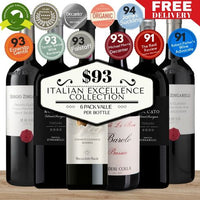
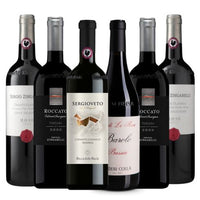
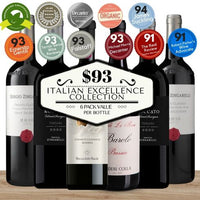
The Italian Excellence Collection
Celebrate the very best of Italy with The Italian Excellence Collection, a curated selection of premium wines from the country’s most renowned regions, including Tuscany, Barolo, and more. Each bottle is handpicked to showcase Italy’s signature elegance, refined structure, and vibrant flavours, offering a true taste of Italian winemaking mastery.
Perfect for connoisseurs, gifting, or special occasions, this collection brings sophistication, diversity, and exceptional quality to every sip. Whether for a celebratory dinner, corporate gifting, or an indulgent tasting experience, The Italian Excellence Collection delivers Italy’s finest in every bottle.
2 x Esperienza Numero 8 Brunello di Montalcino 2018 - Tuscany, Italy
Winesearcher "This is more affordable than many Brunello di Montalcino wines. Not as widely known as other Brunello di Montalcino wines. This wine has been becoming increasingly popular over the past year."
Vivino, Yomme (Five Star Buyer rating) "Stupendous Sangiovese balanced and already with some complexity."
Winemaker "Intense ruby red, complex on the nose with aromas of plums, ripe black cherries and red berries, well balanced with notes of tobacco and liquorice, also beautiful harmony on the palate, elegant tannins and a long finish, can be stored very well"
Sangiovese 100%
Rocca delle Macìe was established in 1973, when film producer Italo Zingarelli – of Ettore Scola’s “We All Loved Each Other So Much” fame, and also the wildly popular series of films featuring comedy duo Bud Spencer and Terence Hill (including “They Call Me Trinity” and “Trinity Is Still My Name”) – decided to realize his lifelong dream by acquiring the “Le Macìe” estate – extending across 93 hectares (230 acres) in all, of which only two were under vine – in order to create a winery in the heart of the Chianti Classico zone.
The company estate now extends to more than 500 hectares (1250 acres) with, in total, more than 200 (500 acres) used as vineyards and 22 (54 acres) as olive groves, subdivided across the company’s six estates: Le Macìe, Sant’Alfonso, Fizzano e le Tavolelle in the Chianti Classico Area, in addition to the Campomaccione and Casa Maria estates in the Morellino di Scansano Area (Maremma).
Brunello di Montalcino is a wine made with 100% Sangiovese with Italy’s highest DOCG classification. Sangiovese is the wine that most wine critics cite to be the best in all of Italy. Brunello di Montalcino is made with a local Tuscan type of Sangiovese referred to as Brunello or Sangiovese Grosso. Some also call it Prugnolo Gentile. Noted for having thicker-skinned berries, and because of this, Brunello produces wines with exceptionally bold fruit flavors, high tannin, and high acidity. The fruit is a contributes to the enduring popularity of Brunello di Montalcino.
1 x Poderi Colla Bussia Dardi Le Rose (Organic) 2018 - Barolo, Italy
93/100 Terrior Sense Wine Reviews / Barolo Terroir, Grapes Crus People Places
91/100 Stephen Blandford, The Real Review
Organic - Winery been operating organically since launch and all wines are organic
Antonio Galloni, Vinous Poderi "...Poderi Colla remains one of the under the radar gems in Piedmont. Specifically, the Barbaresco (and Barolo, too) is consistently outstanding."
Terroir Sense - Ian D'Agata "Poderi Colla is a beautiful hilltop winery located on the outskirts of the hamlet of Treiso, one of the four communes of the Barbaresco production zone. The estate is well-known for the many excellent wines it produces."
Terroir Sense - Ian D'Agata "The perfumed, delicate nose offers aromas of sour red fruits, flowers and spices, complicated by mineral notes. .... I loved this wine’s attractive light touch. Closes clean and juicy, with polished tannins but leaves behind hints of green nuances as well as of small red fruits and minerals."
Stephen Blandford, The Real Review "Garnet colour tending to brick. There's an appealing bouquet of toasty, vanillin notes over spiced plum with some fresh leather and tobacco, violet scents giving a top note. To taste, the wine is firmly structured, almost rustic, with a slight hollowness in the mid-palate accentuating the grippy, though ripe tannins, and savoury elements on the finish."
Terroir Sense - Ian D'Agata "The Dardi Le Rose estate vines are planted on soil that is roughly 63% loam, 20% sand, and 17% clay. The vines are at least 35-60 years old and though not all the rootstocks are known, there is some du Rupestris present which gives very small productions but ensures outstanding drought resistance, a matter of no small consequence given the times of climate change we live in. For this reason, my readers would be wise to look at and buy Colla’s wines in not just the great years, but in hot/dry vintages too, because this estate’s Nebbiolo vines usually suffer less than those of others in similar years."
Winemaker "Intense garnet red, wide and elegant bouquet delicately spiced with hints of flowers, small red fruits and goudron. Rich structure on the palate supported by soft tannins, enveloped in ripe fruit and liquorice. A 'majestic' traditional Nebbiolo with the power, harmony, and complexity of a great orchestra! Extraordinary ageing potential. It is perfect with red meat and furry game dishes, but also for very rich fish dishes, such as baked turbot, as well as for a fine cheese dinner."
Terroir Sense - Ian D'Agata "Poderi Colla's Dardi’s Barolos are much more perfumed and lighter in texture (I mean “lighter” in terms of a Monforte-lightness, which means hardly light at all, of course). In any case, the typical note of Dardi Barolos is a floral one (spicy too depending on the vintage’s growing season characteristics); these are wines that are never outwardly fruity, and their mouthfeel has a certain austerity and tannic presence (in this they do resemble those of Mondoca quite a bit). Colla’s holding is named Dardi Le Rose (also the name of the estate buildings) because of the large presence of roses peppered among the vines."
100% Nebbiolo
Antonio Galloni, Vinous Poderi "...Poderi Colla remains one of the under the radar gems in Piedmont. Specifically, the Barbaresco, and Barolo, too is consistently outstanding."
Poderi Colla is a highly regarded Italian, family owned winery with a rich history dating back to the 1700s. The winery is known for its dedication to crafting wines that reflect the unique terroir of the Langhe region in Piedmont. The winery was founded by the Colla family, who have produced wine for more than five generations. Brothers Tino and Beppe Colla brought Poderi Colla to international fame. Prominent figures in the winemaking world, the bothers studied winemaking in Burgundy and brought Pinot Noir cuttings back to Italy to propegate at their family's wine estate. Tino and Beppe Colla both played significant roles in elevating the reputation of Barolo and Barbaresco wines to international acclaim.
The Poderi Colla winery focuses on sustainable viticulture and traditional winemaking techniques, producing wines that showcase the authentic flavors of the grapes. Poderi Colla produces a range of wines, including Barolo, Barbaresco, Dolcetto, Nebbiolo, and other regional varieties. Their Barolo and Barbaresco wines are especially revered, and they often age them in large oak casks to allow the wines to develop complex and nuanced flavors over time.
Talk to us at Pop Up Wine and we'll gladly organise a tour of the Poderi Colla winery when you are next in Italy. We can arrange a tour of the vineyards, cellars, and tasting rooms where you will be able to learn about the winemaking process and sample Poderi Colla wines. Visiting the estate offers an opportunity to experience the beauty of the Langhe region while enjoying some of Italy's finest wines.
The Barolo wine region is one of the most prestigious and renowned wine-producing areas in Italy. It is located in the Piedmont region of northwestern Italy, specifically in the Cuneo province, and is considered the heartland of the Nebbiolo grape. Barolo is often referred to as the "King of Wines" due to its exceptional quality, complexity, and aging potential. Barolo wines are renowned for their complex and nuanced flavors. They often exhibit aromas of red fruits (such as cherry and raspberry), floral notes (rose and violet), and earthy undertones (tar, leather, and truffles). As the wine ages, these flavors evolve, and secondary characteristics like dried fruit, tobacco, and spice may develop.
Barolo wines are renowned for their complex and nuanced flavors. They often exhibit aromas of red fruits (such as cherry and raspberry), floral notes (rose and violet), and earthy undertones (tar, leather, and truffles). As the wine ages, these flavors evolve, and secondary characteristics like dried fruit, tobacco, and spice may develop.
Barolo and Barbaresco
Barolo shares some similarities with Barbaresco, another esteemed Nebbiolo-based wine produced in the Langhe region. Both wines come from the same grape variety and share similar winemaking techniques. However, Barolo is generally considered more powerful and robust, while Barbaresco is often perceived as more elegant and approachable.
1 x Sergioveto Chianti Classico Riserva 2019 - Tuscany, Italy
93/100 James Suckling
93/100 Bruce Sanderson, Wine Spectator
92/100 Danielle Callegari, Wine Enthusiast
91/100 Robert Parker, Wine Advocate
Bronze - Stephen Blandford, The Real Review
Gold Medal, Mundus Vini
Bronze Medal, Wine Spectator
James Suckling "Subtle and complex aromas of red berries, mushrooms, blood orange and nutmeg. A medium-bodied Chianti Classico, showing dusty tannins and juicy, savory berry fruit on the palate. Silky and effortless. "
Bruce Sanderson, Wine Spectator "Rich, laced with cherry, raspberry, earth and underbrush flavors. Revealing weighty, well-integrated tannins, this is balanced overall and tightens up on the finish."
Danielle Callegari, Wine Enthusiast "The nose layers soil and pencil shavings on top of strawberries and cherries and then chocolate and coffee, before the palate luxuriates in chocolate-cherry notes with a texture that's dense and velvety but maintains its integrity with angular tannins."
Robert Parker, Wine Advocate "A 100% expression of Sangiovese, the Rocca delle Macìe 2019 Chianti Classico Riserva SerGioveto shows hints of baked plum, candied fruit and spice with dusty mineral and good overall definition. This Riserva is limited to a production of 6,500 bottles. Its mid-weight definition would pair nicely across from a classic spaghetti and meat sauce."
Stephen Blandford, The Real Review "Garnet colour. On the nose there is strawberry jam and crushed, dried herbs, some woody, cedary notes also evident. The palate has a mix of slightly syrupy fruit with peppery spice and somewhat rasping, grippy tannins, the finish a touch warm. The wine seems to lack punch and definition at this stage."
Rocca delle Macìe was established in 1973, when film producer Italo Zingarelli – of Ettore Scola’s “We All Loved Each Other So Much” fame, and also the wildly popular series of films featuring comedy duo Bud Spencer and Terence Hill (including “They Call Me Trinity” and “Trinity Is Still My Name”) – decided to realize his lifelong dream by acquiring the “Le Macìe” estate – extending across 93 hectares (230 acres) in all, of which only two were under vine – in order to create a winery in the heart of the Chianti Classico zone.
The Chianti DOCG designation covers wines from six Chianti sub-zones (Colli Pisane, Colli Fiorentini, Colli Senesi, Colli Aretini, Montalbano and Rufina) as well as all other Chianti wines. The Chianti Classico DOCG is located in the very center of Tuscany, between Florence and Sienna."
Sangiovese (or Nielluccio in Corsica), a dark-berried vine, is the most widely planted grape variety in Italy. Virtually synonymous with the red wines of Tuscany, and all the romanticism that goes with the territory, Sangiovese is the core constituent in some of the great names in Italian wine. Italy's love affair with Sangiovese – and indeed the world's – is generations old, though recent grapevine research suggests the variety is not as ancient as once thought.
2 x Roccato Toscana ""Super Tuscan"" Cabernet Sauvignon 2020 - Tuscany, Italy
93/100 Wine Enthusiast
90/100 Wine Spectator
Organic - currently undergoing certification
Wine Enthusiast "The nose is primarily savory, with notes of cured meat, topsoil and graphite, but undertones of sour cherries and tart berries provide some buzz. The ebb and flow of earthiness and astringency continues on the palate, while insistent tannins and lively acidity provide structure for that interplay."
Robert Parker "The full-bodied Rocca delle Macìe 2019 Cabernet Sauvignon Roccato (with 6,500 bottles released) shows sweet fruit, dark cherry, toasted almond and milky cinnamon cream. Fourteen months of barrique aging plays a big role in the intensity and textural support of this wine. It feels rich over the palate and thick around the middle."
Winemaker "Very intense ruby red tending to garnet with aging. Broad and persistent, with hints of red fruits and spices ranging from cacao, to vanilla to coffee. Warm and well balanced, with a dense network of tannins that well support and sustain the long aromatic
persistence.
100% Cabernet Sauvignon
Rocca delle Macìe was established in 1973, when film producer Italo Zingarelli – of Ettore Scola’s “We All Loved Each Other So Much” fame, and also the wildly popular series of films featuring comedy duo Bud Spencer and Terence Hill (including “They Call Me Trinity” and “Trinity Is Still My Name”) – decided to realize his lifelong dream by acquiring the “Le Macìe” estate – extending across 93 hectares (230 acres) in all, of which only two were under vine – in order to create a winery in the heart of the Chianti Classico zone.
The Chianti DOCG designation covers wines from six Chianti sub-zones (Colli Pisane, Colli Fiorentini, Colli Senesi, Colli Aretini, Montalbano and Rufina) as well as all other Chianti wines. The Chianti Classico DOCG is located in the very center of Tuscany, between Florence and Sienna."
"Tuscany is Italy's third most planted region (behind Sicily and Apulia) but it is eighth in terms of output, reflecting both the poor soil of Tuscany and deliberate efforts to limit yields and increase the quality in the wine. After Piedmont and the Veneto, Tuscany produces the third-highest volume of DOC/DOCG wines. More than 80% of the regions' production is in red wine, with the Sangiovese grape being Tuscany's' most prominent grape. Trebbiano is the leading white variety of the region.
The history of viticulture in Tuscany dates back to the Etruscans in the 8th century BC. From the fall of the Roman Empire and throughout the Middle Ages, monasteries were the main purveyors of wines in the region. As the aristocratic and merchant classes emerged, they inherited the share-cropping system of agriculture known as mezzadria. Many Tuscan landowners would turn their half of the grape harvest into wine that would be sold to merchants in Florence. Following the end of the Napoleonic Wars, Tuscany returned to the rule of the Habsburgs. Chianti, Chianti Classico, Brunello di Montalcino, Vino Nobile di Montepulciano and Super Tuscan are Tuscany’s best known wines.
Cabernet Sauvignon is one of the most famous red wine grape variety on Earth. It is rivaled in this regard only by its Bordeaux stablemate Merlot, and its opposite number in Burgundy, Pinot Noir. From its origins in Bordeaux, Cabernet has successfully spread to almost every winegrowing country in the world. It is now the key grape variety in many first-rate New World wine regions, most notably Napa Valley, Coonawarra and Maipo Valley. Wherever they come from, Cabernet Sauvignon wines always seem to demonstrate a handful of common character traits: deep color, good tannin structure, moderate acidity and aromas of blackcurrant, tomato leaf, dark spices and cedarwood.
Celebrate the very best of Italy with The Italian Excellence Collection, a curated selection of premium wines from the country’s most renowned regions, including Tuscany, Barolo, and more. Each bottle is handpicked to showcase Italy’s signature elegance, refined structure, and vibrant flavours, offering a true taste of Italian winemaking mastery.
Perfect for connoisseurs, gifting, or special occasions, this collection brings sophistication, diversity, and exceptional quality to every sip. Whether for a celebratory dinner, corporate gifting, or an indulgent tasting experience, The Italian Excellence Collection delivers Italy’s finest in every bottle.
2 x Esperienza Numero 8 Brunello di Montalcino 2018 - Tuscany, Italy
Winesearcher "This is more affordable than many Brunello di Montalcino wines. Not as widely known as other Brunello di Montalcino wines. This wine has been becoming increasingly popular over the past year."
Vivino, Yomme (Five Star Buyer rating) "Stupendous Sangiovese balanced and already with some complexity."
Winemaker "Intense ruby red, complex on the nose with aromas of plums, ripe black cherries and red berries, well balanced with notes of tobacco and liquorice, also beautiful harmony on the palate, elegant tannins and a long finish, can be stored very well"
Sangiovese 100%
Rocca delle Macìe was established in 1973, when film producer Italo Zingarelli – of Ettore Scola’s “We All Loved Each Other So Much” fame, and also the wildly popular series of films featuring comedy duo Bud Spencer and Terence Hill (including “They Call Me Trinity” and “Trinity Is Still My Name”) – decided to realize his lifelong dream by acquiring the “Le Macìe” estate – extending across 93 hectares (230 acres) in all, of which only two were under vine – in order to create a winery in the heart of the Chianti Classico zone.
The company estate now extends to more than 500 hectares (1250 acres) with, in total, more than 200 (500 acres) used as vineyards and 22 (54 acres) as olive groves, subdivided across the company’s six estates: Le Macìe, Sant’Alfonso, Fizzano e le Tavolelle in the Chianti Classico Area, in addition to the Campomaccione and Casa Maria estates in the Morellino di Scansano Area (Maremma).
Brunello di Montalcino is a wine made with 100% Sangiovese with Italy’s highest DOCG classification. Sangiovese is the wine that most wine critics cite to be the best in all of Italy. Brunello di Montalcino is made with a local Tuscan type of Sangiovese referred to as Brunello or Sangiovese Grosso. Some also call it Prugnolo Gentile. Noted for having thicker-skinned berries, and because of this, Brunello produces wines with exceptionally bold fruit flavors, high tannin, and high acidity. The fruit is a contributes to the enduring popularity of Brunello di Montalcino.
1 x Poderi Colla Bussia Dardi Le Rose (Organic) 2018 - Barolo, Italy
93/100 Terrior Sense Wine Reviews / Barolo Terroir, Grapes Crus People Places
91/100 Stephen Blandford, The Real Review
Organic - Winery been operating organically since launch and all wines are organic
Antonio Galloni, Vinous Poderi "...Poderi Colla remains one of the under the radar gems in Piedmont. Specifically, the Barbaresco (and Barolo, too) is consistently outstanding."
Terroir Sense - Ian D'Agata "Poderi Colla is a beautiful hilltop winery located on the outskirts of the hamlet of Treiso, one of the four communes of the Barbaresco production zone. The estate is well-known for the many excellent wines it produces."
Terroir Sense - Ian D'Agata "The perfumed, delicate nose offers aromas of sour red fruits, flowers and spices, complicated by mineral notes. .... I loved this wine’s attractive light touch. Closes clean and juicy, with polished tannins but leaves behind hints of green nuances as well as of small red fruits and minerals."
Stephen Blandford, The Real Review "Garnet colour tending to brick. There's an appealing bouquet of toasty, vanillin notes over spiced plum with some fresh leather and tobacco, violet scents giving a top note. To taste, the wine is firmly structured, almost rustic, with a slight hollowness in the mid-palate accentuating the grippy, though ripe tannins, and savoury elements on the finish."
Terroir Sense - Ian D'Agata "The Dardi Le Rose estate vines are planted on soil that is roughly 63% loam, 20% sand, and 17% clay. The vines are at least 35-60 years old and though not all the rootstocks are known, there is some du Rupestris present which gives very small productions but ensures outstanding drought resistance, a matter of no small consequence given the times of climate change we live in. For this reason, my readers would be wise to look at and buy Colla’s wines in not just the great years, but in hot/dry vintages too, because this estate’s Nebbiolo vines usually suffer less than those of others in similar years."
Winemaker "Intense garnet red, wide and elegant bouquet delicately spiced with hints of flowers, small red fruits and goudron. Rich structure on the palate supported by soft tannins, enveloped in ripe fruit and liquorice. A 'majestic' traditional Nebbiolo with the power, harmony, and complexity of a great orchestra! Extraordinary ageing potential. It is perfect with red meat and furry game dishes, but also for very rich fish dishes, such as baked turbot, as well as for a fine cheese dinner."
Terroir Sense - Ian D'Agata "Poderi Colla's Dardi’s Barolos are much more perfumed and lighter in texture (I mean “lighter” in terms of a Monforte-lightness, which means hardly light at all, of course). In any case, the typical note of Dardi Barolos is a floral one (spicy too depending on the vintage’s growing season characteristics); these are wines that are never outwardly fruity, and their mouthfeel has a certain austerity and tannic presence (in this they do resemble those of Mondoca quite a bit). Colla’s holding is named Dardi Le Rose (also the name of the estate buildings) because of the large presence of roses peppered among the vines."
100% Nebbiolo
Antonio Galloni, Vinous Poderi "...Poderi Colla remains one of the under the radar gems in Piedmont. Specifically, the Barbaresco, and Barolo, too is consistently outstanding."
Poderi Colla is a highly regarded Italian, family owned winery with a rich history dating back to the 1700s. The winery is known for its dedication to crafting wines that reflect the unique terroir of the Langhe region in Piedmont. The winery was founded by the Colla family, who have produced wine for more than five generations. Brothers Tino and Beppe Colla brought Poderi Colla to international fame. Prominent figures in the winemaking world, the bothers studied winemaking in Burgundy and brought Pinot Noir cuttings back to Italy to propegate at their family's wine estate. Tino and Beppe Colla both played significant roles in elevating the reputation of Barolo and Barbaresco wines to international acclaim.
The Poderi Colla winery focuses on sustainable viticulture and traditional winemaking techniques, producing wines that showcase the authentic flavors of the grapes. Poderi Colla produces a range of wines, including Barolo, Barbaresco, Dolcetto, Nebbiolo, and other regional varieties. Their Barolo and Barbaresco wines are especially revered, and they often age them in large oak casks to allow the wines to develop complex and nuanced flavors over time.
Talk to us at Pop Up Wine and we'll gladly organise a tour of the Poderi Colla winery when you are next in Italy. We can arrange a tour of the vineyards, cellars, and tasting rooms where you will be able to learn about the winemaking process and sample Poderi Colla wines. Visiting the estate offers an opportunity to experience the beauty of the Langhe region while enjoying some of Italy's finest wines.
The Barolo wine region is one of the most prestigious and renowned wine-producing areas in Italy. It is located in the Piedmont region of northwestern Italy, specifically in the Cuneo province, and is considered the heartland of the Nebbiolo grape. Barolo is often referred to as the "King of Wines" due to its exceptional quality, complexity, and aging potential. Barolo wines are renowned for their complex and nuanced flavors. They often exhibit aromas of red fruits (such as cherry and raspberry), floral notes (rose and violet), and earthy undertones (tar, leather, and truffles). As the wine ages, these flavors evolve, and secondary characteristics like dried fruit, tobacco, and spice may develop.
Barolo wines are renowned for their complex and nuanced flavors. They often exhibit aromas of red fruits (such as cherry and raspberry), floral notes (rose and violet), and earthy undertones (tar, leather, and truffles). As the wine ages, these flavors evolve, and secondary characteristics like dried fruit, tobacco, and spice may develop.
Barolo and Barbaresco
Barolo shares some similarities with Barbaresco, another esteemed Nebbiolo-based wine produced in the Langhe region. Both wines come from the same grape variety and share similar winemaking techniques. However, Barolo is generally considered more powerful and robust, while Barbaresco is often perceived as more elegant and approachable.
1 x Sergioveto Chianti Classico Riserva 2019 - Tuscany, Italy
93/100 James Suckling
93/100 Bruce Sanderson, Wine Spectator
92/100 Danielle Callegari, Wine Enthusiast
91/100 Robert Parker, Wine Advocate
Bronze - Stephen Blandford, The Real Review
Gold Medal, Mundus Vini
Bronze Medal, Wine Spectator
James Suckling "Subtle and complex aromas of red berries, mushrooms, blood orange and nutmeg. A medium-bodied Chianti Classico, showing dusty tannins and juicy, savory berry fruit on the palate. Silky and effortless. "
Bruce Sanderson, Wine Spectator "Rich, laced with cherry, raspberry, earth and underbrush flavors. Revealing weighty, well-integrated tannins, this is balanced overall and tightens up on the finish."
Danielle Callegari, Wine Enthusiast "The nose layers soil and pencil shavings on top of strawberries and cherries and then chocolate and coffee, before the palate luxuriates in chocolate-cherry notes with a texture that's dense and velvety but maintains its integrity with angular tannins."
Robert Parker, Wine Advocate "A 100% expression of Sangiovese, the Rocca delle Macìe 2019 Chianti Classico Riserva SerGioveto shows hints of baked plum, candied fruit and spice with dusty mineral and good overall definition. This Riserva is limited to a production of 6,500 bottles. Its mid-weight definition would pair nicely across from a classic spaghetti and meat sauce."
Stephen Blandford, The Real Review "Garnet colour. On the nose there is strawberry jam and crushed, dried herbs, some woody, cedary notes also evident. The palate has a mix of slightly syrupy fruit with peppery spice and somewhat rasping, grippy tannins, the finish a touch warm. The wine seems to lack punch and definition at this stage."
Rocca delle Macìe was established in 1973, when film producer Italo Zingarelli – of Ettore Scola’s “We All Loved Each Other So Much” fame, and also the wildly popular series of films featuring comedy duo Bud Spencer and Terence Hill (including “They Call Me Trinity” and “Trinity Is Still My Name”) – decided to realize his lifelong dream by acquiring the “Le Macìe” estate – extending across 93 hectares (230 acres) in all, of which only two were under vine – in order to create a winery in the heart of the Chianti Classico zone.
The Chianti DOCG designation covers wines from six Chianti sub-zones (Colli Pisane, Colli Fiorentini, Colli Senesi, Colli Aretini, Montalbano and Rufina) as well as all other Chianti wines. The Chianti Classico DOCG is located in the very center of Tuscany, between Florence and Sienna."
Sangiovese (or Nielluccio in Corsica), a dark-berried vine, is the most widely planted grape variety in Italy. Virtually synonymous with the red wines of Tuscany, and all the romanticism that goes with the territory, Sangiovese is the core constituent in some of the great names in Italian wine. Italy's love affair with Sangiovese – and indeed the world's – is generations old, though recent grapevine research suggests the variety is not as ancient as once thought.
2 x Roccato Toscana ""Super Tuscan"" Cabernet Sauvignon 2020 - Tuscany, Italy
93/100 Wine Enthusiast
90/100 Wine Spectator
Organic - currently undergoing certification
Wine Enthusiast "The nose is primarily savory, with notes of cured meat, topsoil and graphite, but undertones of sour cherries and tart berries provide some buzz. The ebb and flow of earthiness and astringency continues on the palate, while insistent tannins and lively acidity provide structure for that interplay."
Robert Parker "The full-bodied Rocca delle Macìe 2019 Cabernet Sauvignon Roccato (with 6,500 bottles released) shows sweet fruit, dark cherry, toasted almond and milky cinnamon cream. Fourteen months of barrique aging plays a big role in the intensity and textural support of this wine. It feels rich over the palate and thick around the middle."
Winemaker "Very intense ruby red tending to garnet with aging. Broad and persistent, with hints of red fruits and spices ranging from cacao, to vanilla to coffee. Warm and well balanced, with a dense network of tannins that well support and sustain the long aromatic
persistence.
100% Cabernet Sauvignon
Rocca delle Macìe was established in 1973, when film producer Italo Zingarelli – of Ettore Scola’s “We All Loved Each Other So Much” fame, and also the wildly popular series of films featuring comedy duo Bud Spencer and Terence Hill (including “They Call Me Trinity” and “Trinity Is Still My Name”) – decided to realize his lifelong dream by acquiring the “Le Macìe” estate – extending across 93 hectares (230 acres) in all, of which only two were under vine – in order to create a winery in the heart of the Chianti Classico zone.
The Chianti DOCG designation covers wines from six Chianti sub-zones (Colli Pisane, Colli Fiorentini, Colli Senesi, Colli Aretini, Montalbano and Rufina) as well as all other Chianti wines. The Chianti Classico DOCG is located in the very center of Tuscany, between Florence and Sienna."
"Tuscany is Italy's third most planted region (behind Sicily and Apulia) but it is eighth in terms of output, reflecting both the poor soil of Tuscany and deliberate efforts to limit yields and increase the quality in the wine. After Piedmont and the Veneto, Tuscany produces the third-highest volume of DOC/DOCG wines. More than 80% of the regions' production is in red wine, with the Sangiovese grape being Tuscany's' most prominent grape. Trebbiano is the leading white variety of the region.
The history of viticulture in Tuscany dates back to the Etruscans in the 8th century BC. From the fall of the Roman Empire and throughout the Middle Ages, monasteries were the main purveyors of wines in the region. As the aristocratic and merchant classes emerged, they inherited the share-cropping system of agriculture known as mezzadria. Many Tuscan landowners would turn their half of the grape harvest into wine that would be sold to merchants in Florence. Following the end of the Napoleonic Wars, Tuscany returned to the rule of the Habsburgs. Chianti, Chianti Classico, Brunello di Montalcino, Vino Nobile di Montepulciano and Super Tuscan are Tuscany’s best known wines.
Cabernet Sauvignon is one of the most famous red wine grape variety on Earth. It is rivaled in this regard only by its Bordeaux stablemate Merlot, and its opposite number in Burgundy, Pinot Noir. From its origins in Bordeaux, Cabernet has successfully spread to almost every winegrowing country in the world. It is now the key grape variety in many first-rate New World wine regions, most notably Napa Valley, Coonawarra and Maipo Valley. Wherever they come from, Cabernet Sauvignon wines always seem to demonstrate a handful of common character traits: deep color, good tannin structure, moderate acidity and aromas of blackcurrant, tomato leaf, dark spices and cedarwood.